

Key Takeaways
- According to the FBI’s 2025 Internet Crime Report, Business Email Compromise (BEC) attacks resulted in more than $3 billion in reported losses in the US. (IC3)
- The Anti-Phishing Working Group (APWG) recorded approximately 3.8 million phishing attacks in 2025. The number was around 3.76 million in 2024. (APWG)
Introduction
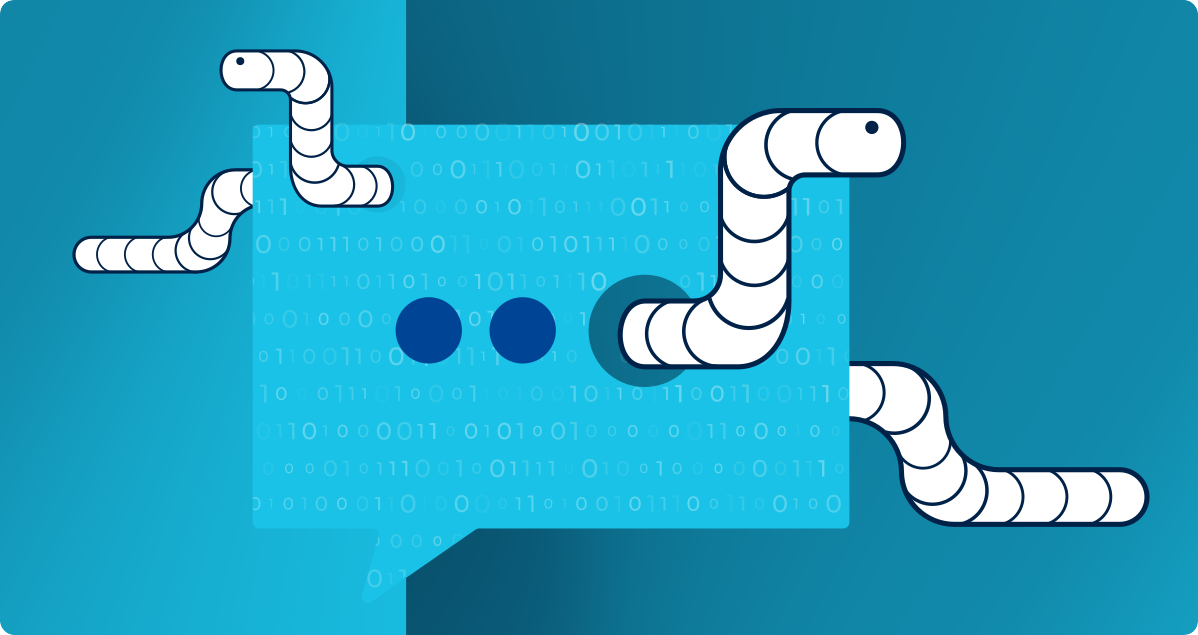
Cybercriminals have adopted a new methodology to carry out cyberattacks. They are now using generative AI to make phishing attacks more convincing. Not just phishing, but this advanced technology helps them carry out other malicious activities with great precision. One such tool that attracted attention among cybercriminals was WormGPT. Through this tool, they can easily generate malicious content without the safety restrictions commonly found in mainstream AI chatbots.
But what is WormGPT, and how does it work? Why should organizations be concerned about this new tool? Let’s answer all these questions so you have clarity on how this tool operates and how to defend against it and other AI-powered cyberattacks.
What Is WormGPT?
WormGPT is a generative AI chatbot designed to assist cybercriminals in activities such as phishing and social engineering. Unlike mainstream AI chatbots, which are designed to restrict harmful requests, the original WormGPT was marketed as a tool capable of generating malicious content with fewer restrictions.
The original WormGPT reportedly used an open-source large language model called ‘GPT-J’. It was in July 2023 when this tool gained attention after being tested by SlashNext researchers. They tested its ability to write emails that could be used in Business Email Compromise (BEC) attacks.
Where Did WormGPT Come From?
The first instance of WormGPT was found on cybercrime forums in 2023, where it was advertised by its developer as an alternative to AI chatbots with safety restrictions. It was targeted at users who are interested in generating content for malicious purposes.
Is WormGPT Still Active?
The original WormGPT service shut down in August 2023 after prolonged unwanted media attention. But the name has continued to appear in connection with newer malicious AI tools and copycat services.
Researchers have also found newer versions of WormGPT that use AI models like Grok and Mixtral. But these versions use different underlying AI models, so their features and capabilities may differ from the original chatbot.
How Does WormGPT Work?
WormGPT uses a large language model (LLM) to generate text or code in response to user instructions. The working is similar to that of other generative AI chatbots, in which responses are produced by predicting text sequences based on patterns learned during training.
The original WormGPT was reportedly based on an open-source language model called ‘GPT-J’. The developer of this tool claimed to have further trained it using malware-related data. But there was no independent verification of the specific training methods and datasets. Unlike popular AI chatbots like ChatGPT, WormGPT was designed to generate harmful content without the same safety restrictions. This meant users could request materials intended for malicious purposes, like an email impersonating a company executive to deceive an employee.
The original WormGPT could only be used to generate content based on what instructions were fed into its system. It could not carry out cyberattacks on its own. Attackers still had to use the generated content to launch an attack.
What Is WormGPT Used For?
When WormGPT arrived on the scene, it was marketed as a tool that could help cybercriminals create malicious content effortlessly. Researchers demonstrated its ability to write convincing phishing emails, but it also has other capabilities, which weren’t thoroughly verified.
Phishing and Spear Phishing
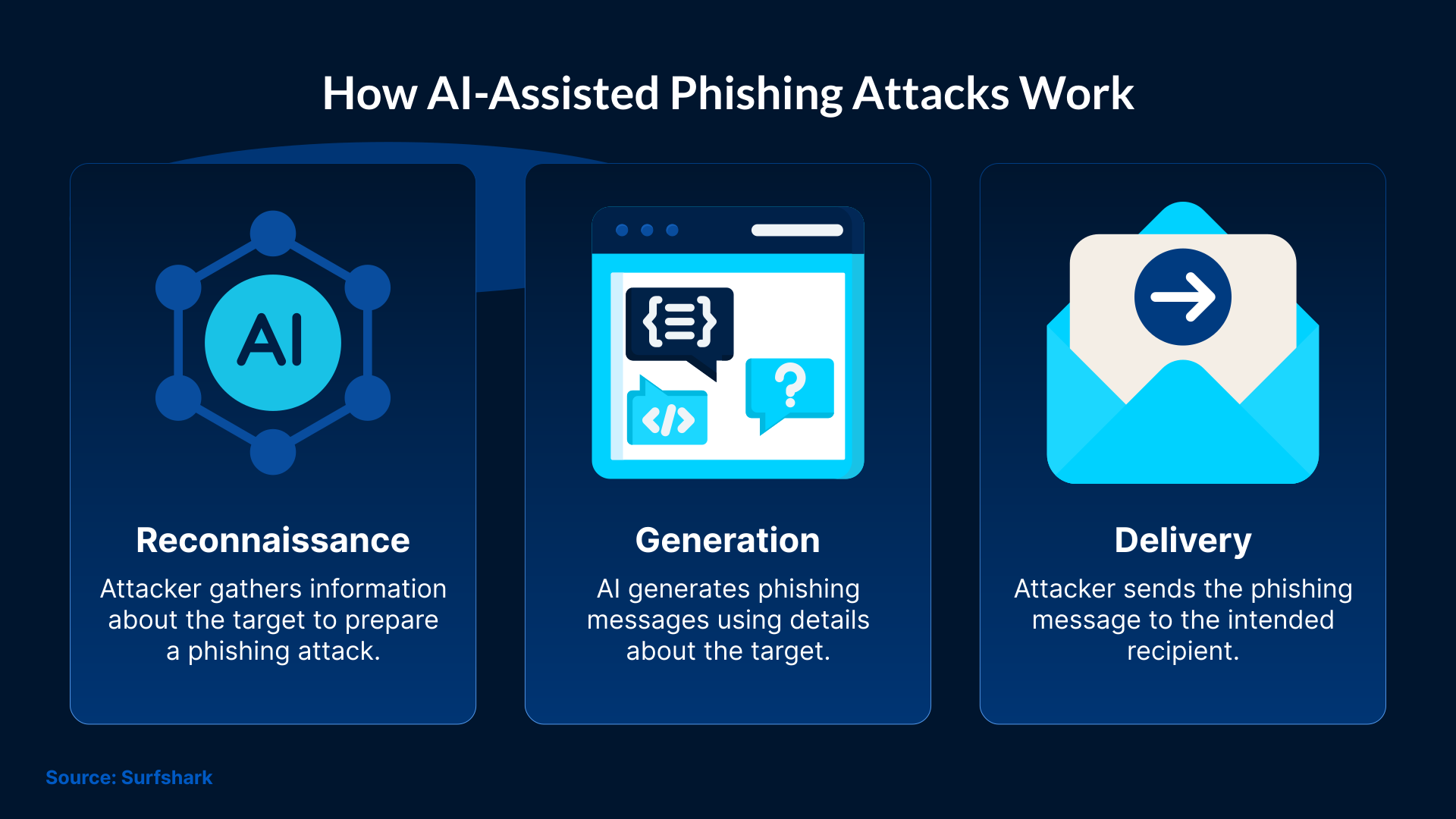
AI tools like WormGPT can be used to create phishing emails. Then, attackers use these emails to trick people into revealing sensitive information or visiting malicious websites. In spear phishing attacks, these messages can be personalized using details about a particular person or organization. This makes those messages appear more credible.
Business Email Compromise (BEC)
In 2023, a test was conducted by SlashNext researchers on WormGPT. The researchers asked the tool to write an email to pressure an account manager to pay a fraudulent invoice. The message was convincing and showed how AI-generated emails can be used by attackers to impersonate executives. With such emails, employees can be easily tricked into approving fraudulent payments.
Social Engineering and Impersonation
Social engineering is a tactic in which attackers manipulate people into taking actions they normally wouldn’t. They can use malicious AI tools to write convincing messages and create a false sense of urgency. This makes it harder for recipients to identify a scam.
Malware and Malicious Code Assistance
WormGPT was also promoted as a tool for writing malicious code. The tool was advertised as capable of writing malware-related scripts. However, there is limited independent evidence showing how reliably the original chatbot could produce working malware.
Reconnaissance and Other Cybercrime Activities
Cybercriminals using AI tools can also analyze publicly available information about potential targets. Those details are then used by attackers to personalize scams or identify possible weaknesses. However, the original WormGPT's reconnaissance capabilities were not demonstrated as independently as its phishing-related capabilities were.
WormGPT vs. ChatGPT: What's the Difference?
Both WormGPT and ChatGPT use generative AI to respond to user instructions, but they were developed to serve different purposes. ChatGPT is designed to help users with professional and personal tasks. It comes with safety measures that limit its assistance with harmful activities, such as phishing scams or malware development. On the other hand, WormGPT was marketed as a tool with few restrictions for cybercriminals, thereby allowing them to generate malicious content.
The underlying technology in both tools also differs. Where ChatGPT uses OpenAI’s GPT models, the original WormGPT was reportedly based on the open-source GPT-J language model.
Having fewer safety restrictions does not necessarily make WormGPT more capable or accurate than ChatGPT. The quality of its response depends on the underlying AI model and the task it is asked to perform.
Why Is WormGPT Dangerous?
WormGPT raises cybersecurity concerns because it can help attackers create convincing malicious content with minimal effort. Just like WormGPT, there are other similar tools that attackers use to make certain cybercrime activities easier to carry out.
More Convincing Phishing and Social Engineering Attacks
AI-generated phishing emails can look more convincing because they may not contain grammar mistakes and typos associated with poorly written scam emails. Attackers can also adjust the wording and tone to make messages seem more trustworthy. As a result, suspicious emails become harder to recognize.
Faster and More Scalable Cyberattacks
Attackers use malicious AI tools to quickly produce multiple versions of deceptive messages. As a result, they can create phishing campaigns much faster. Moreover, it is easier for them to tailor messages to different targets without having to write each one manually.
Lower Technical Barriers for Cybercriminals
Generative AI can help individuals who want to carry out certain malicious tasks but lack sufficient technical skills. Someone who cannot write a convincing phishing email, for example, can use AI to produce a more credible message. For more complex cyberattacks, individuals would require additional tools and technical knowledge.
How Can Organizations Detect and Prevent WormGPT Attacks?
Determining the AI tool used to create a phishing email based on its wording alone is going to be an uphill task for organizations. A better approach for security teams would be to focus on detecting suspicious messages and attacker behavior.
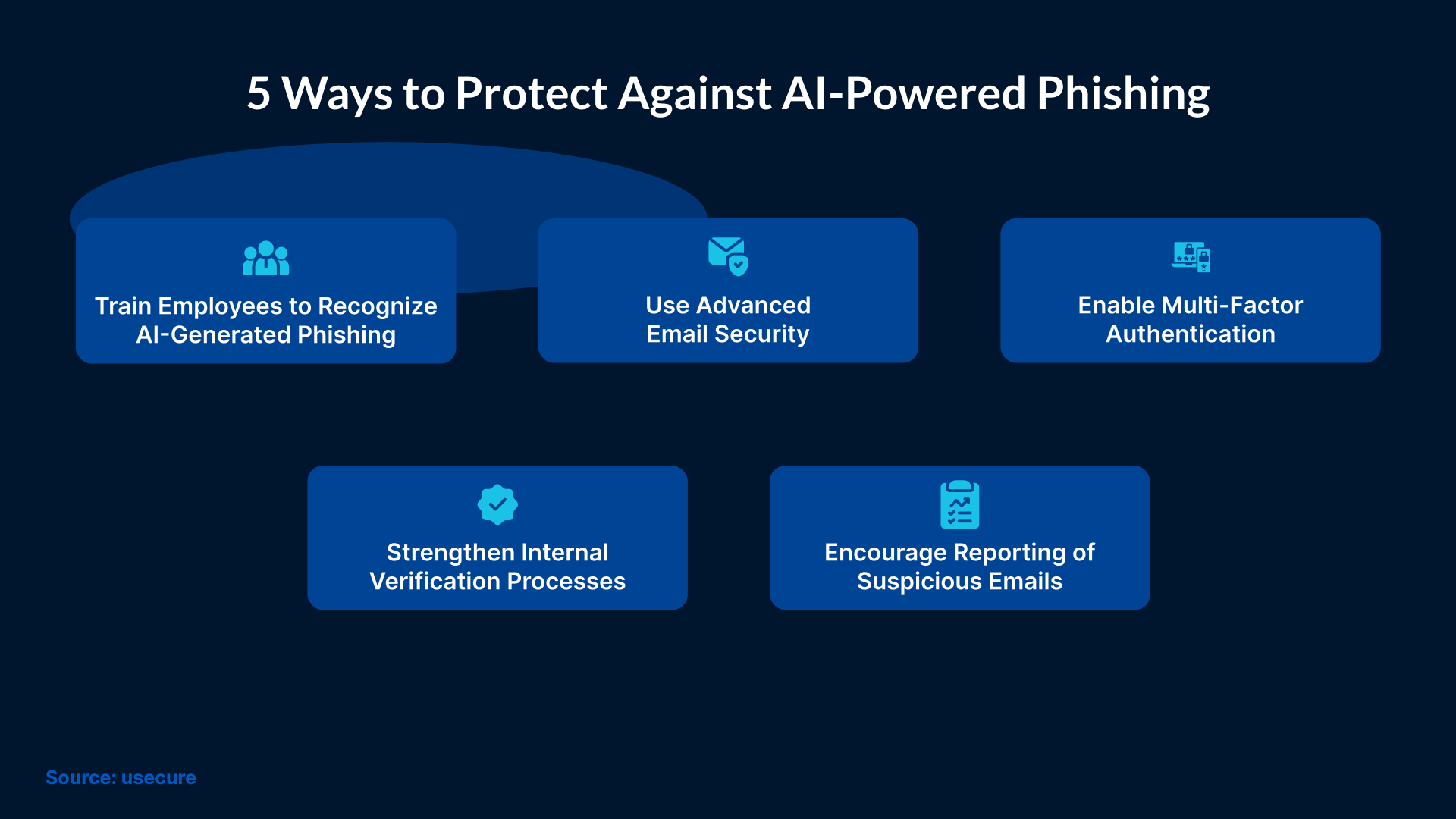
- Improve email security: Use email security solutions to identify potential impersonation attempts. These solutions can also help detect suspicious links and malicious attachments.
- Monitor suspicious activity: Watch for unusual login attempts and unexpected account activity. These could be signs of a compromised account.
- Enable multi-factor authentication (MFA): Use MFA, preferably phishing-resistant methods, to keep accounts safe in case passwords are compromised.
- Train employees: Organizations need to provide training to employees so that they can identify and report phishing emails. AI-generated phishing emails can be harder to recognize because they may look like genuine business communications.
- Verify sensitive requests: Any payment-related requests or changes to financial details need to be confirmed through a trusted communication channel.
Conclusion
WormGPT has shown how cybercriminals can misuse generative AI to carry out phishing and social engineering. Even after the shutdown of the original chatbot in 2023, similar malicious AI tools continue to exist and pose risks to organizations.
As recognizing these threats becomes difficult, businesses need to focus on identifying suspicious activity and responding before an attack causes harm. SafeAeon’s managed email security services can help organizations detect and respond to email-based threats, including AI-generated phishing attempts.