


Key Takeaways
- Harmful messages detected by Infobip increased by 77% in 2025, according to its Fraud & Security Trends 2026 Report.
- Vulnerability exploitation accounted for 21.3% of identified initial infection methods in ENISA's 2025 Threat Landscape Report. Keeping software updated can help protect devices against known vulnerabilities.
Introduction
Receiving a few unexpected text messages may not seem unusual. But receiving hundreds of messages within minutes can be concerning. This phenomenon is called ‘text bombing’. It can make it difficult for people to find important messages or simply use the device. In some cases, attackers use specially crafted text to exploit software bugs and cause apps to crash. No matter how the attack unfolds, the motive is to disrupt normal communication. Let’s find out more about a text bomb, how it works, and what you can do to protect yourself.
What Is a Text Bomb?
A text bomb is a method of disrupting a phone by flooding the messaging application with unwanted messages. It may also involve sending specially crafted text that triggers a software bug. The term is often used to describe text bombing, in which a person receives hundreds of messages in a short period.
There are two main categories of text bombs. The first type is SMS bombing, in which attackers send repeated messages to overwhelm the recipient with notifications. In the second type, specially crafted text or Unicode characters are used to exploit software vulnerabilities. On affected devices, this may cause the application to freeze or crash.
Sometimes, text bombing is also used as a prank, but in many cases, it is used to harass or distract someone from important security notifications.
How Does Text Bombing Work
Text bombing works when large volumes of messages are sent to a phone within a short period. Attackers use automated scripts, bots, or SMS services to generate and deliver hundreds of messages in a short span of time.
In some cases, attackers exploit online forms or services that send verification codes and notifications. They enter the same phone number in order to trigger multiple legitimate services to send messages to the recipient.
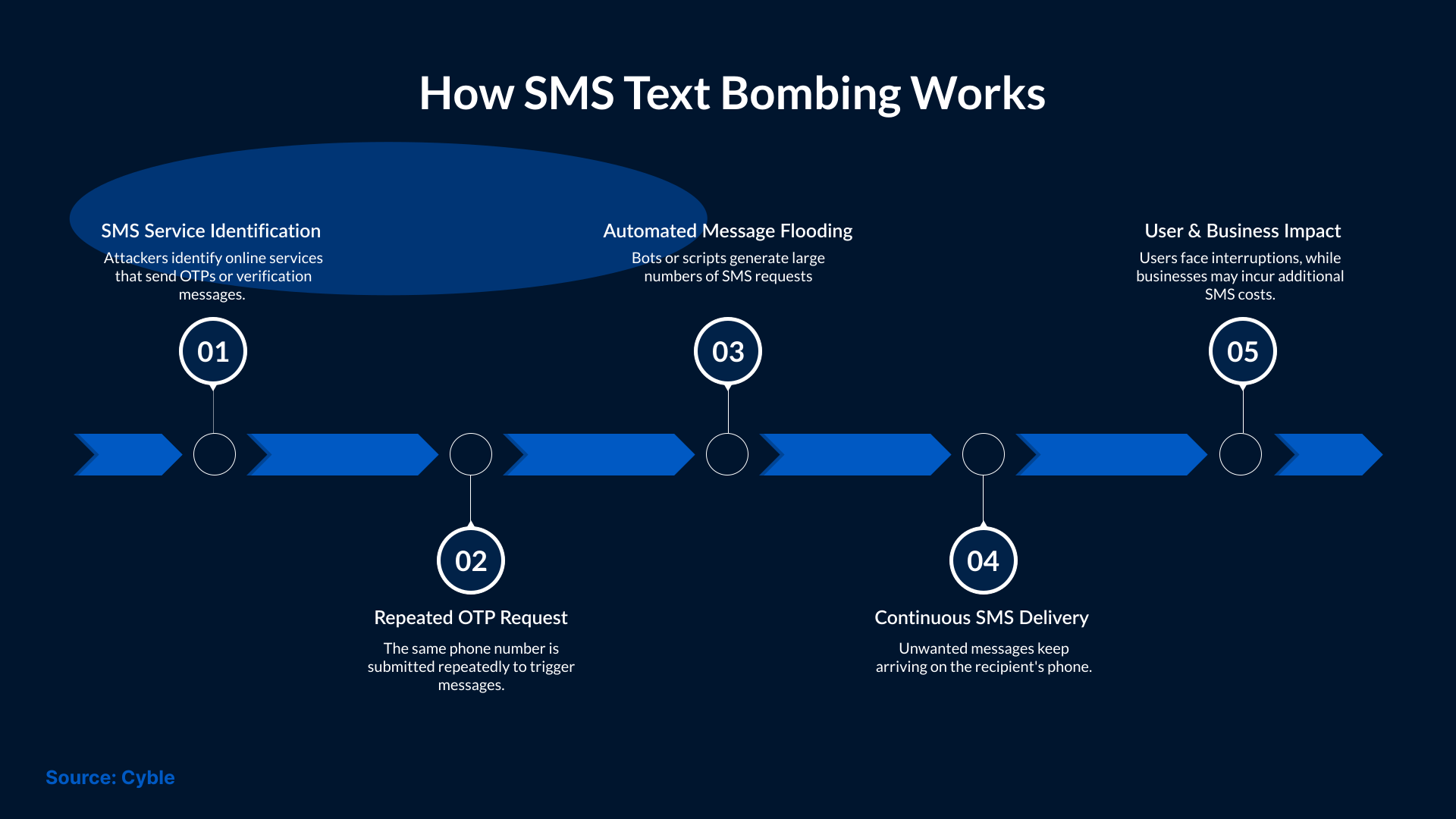
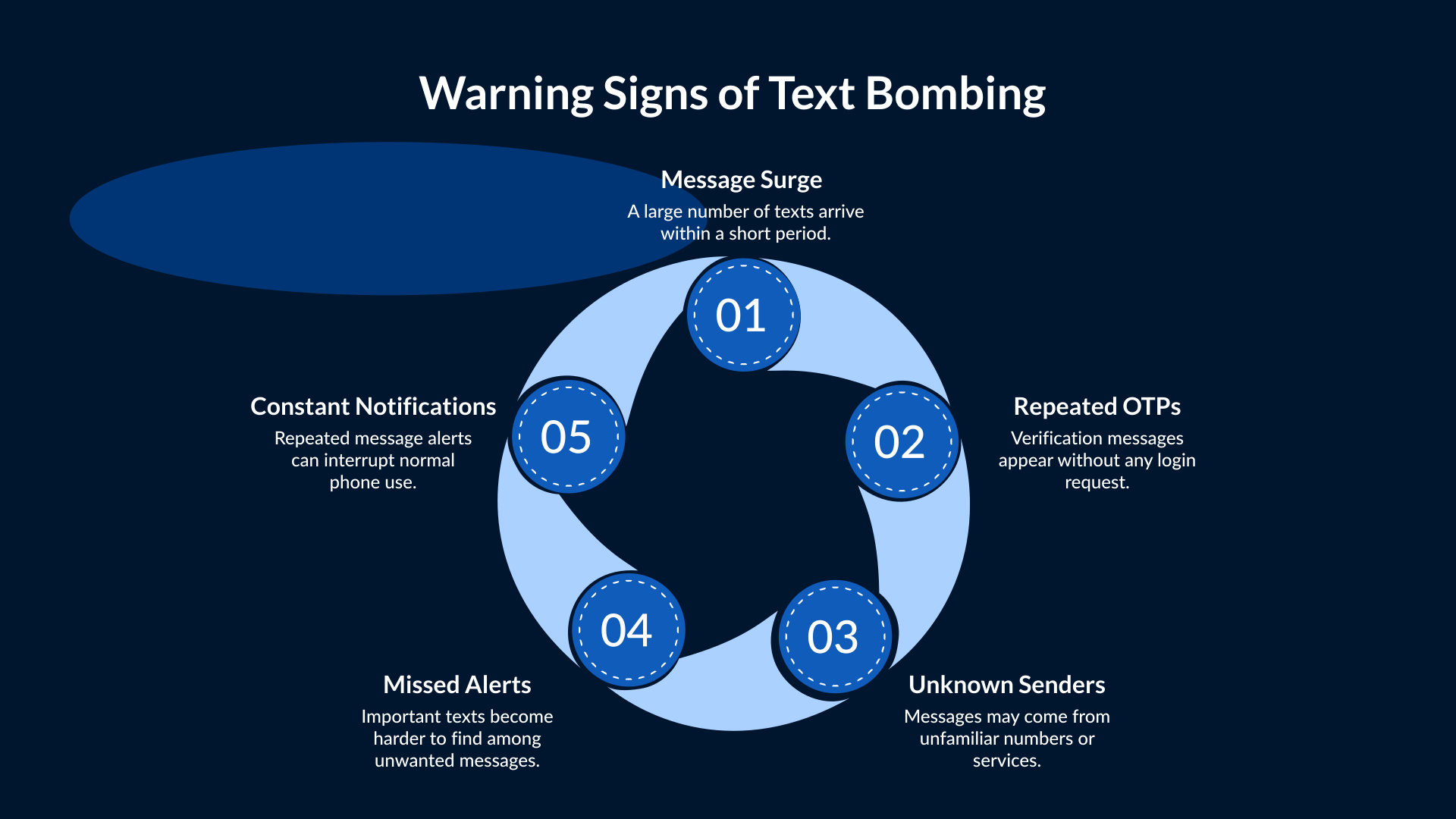
As these messages arrive, the phone may receive a stream of notifications. It becomes hard for users to identify important messages among the hundreds of messages they receive within minutes. Blocking one number may not stop the messages if they are coming from multiple sources.
Code-based text bombs work differently. Instead of relying on message volume, they contain unusual characters that a messaging app may not handle properly. As a result, the app may freeze or crash when someone opens or receives the message.
Types of Text Bombs
Text bombs can be divided into two main types based on how they disrupt a phone or messaging application.
1. SMS or Message-Flood Text Bombs
This type of text bomb involves sending hundreds or thousands of messages to the same phone number within a short period. For this, attackers use automated tools or online services.
The constant flow of messages fills the recipient’s inbox with unwanted texts and triggers continuous notifications. People may also have a hard time finding important messages. These attacks are commonly referred to as SMS flooding or SMS bombing.
2. Code-Based or Unicode Text Bombs
Unlike SMS flooding, this type of text bomb does not require hundreds of messages. A single message is enough to cause problems if it contains characters the receiving application cannot process correctly.
For example, some older versions of messaging apps have had bugs that caused them to freeze or crash while displaying specific Unicode characters. These messages only affect devices running vulnerable software versions.
Real-World Examples of Text Bomb Attacks
In the last few years, there have been several incidents of text bombing and related SMS attacks around the world. Some cases involve repeated harassment, while others involve fraudulent messages or misuse of SMS verification systems.
1. Targeted Text Message Harassment in the US (2025)
In August 2025, a New York man was sentenced to five years of probation by the US Department of Justice for repeatedly harassing a Connecticut resident. He sent over 1,300 text messages and made 72 phone calls. He also left three voicemails. Many of these communications contained threats. Although the case didn’t involve a confirmed automated SMS bombing tool, it shows how a stream of unwanted messages can be used to harass someone.
2. Mass SMS Attacks in Toronto, Canada (2026)
In April 2026, Toronto Police reported the arrest of three men after an investigation into devices known as SMS blasters. Those men were using these special devices that imitated cellular towers. As a result, attackers were able to send fraudulent text messages to nearby phones. It’s estimated that tens of thousands of devices had connected to the equipment over several months. Unlike traditional text bombing, this attack involved mass phishing messages and mobile network disruption.
3. SMS Pumping Attacks Reported by Okta (2025)
In October 2025, Okta reported large-scale SMS pumping attacks, which targeted organizations using Okta and Auth0 identity services. Attackers exploited registration and verification systems to generate large volumes of messages. Those messages were then sent to phone numbers they already control. These attacks were financially motivated because attackers targeted phone numbers in countries with higher SMS charges. They knew that sending repeated SMS messages could increase costs for affected businesses.
What Are the Risks of Text Bombing?
Text bombing can cause more than just unwanted notifications. It can disrupt communication or affect device performance. It can also create security concerns for individuals and businesses. But it depends on the type of attack.
- Communication Disruption: Receiving hundreds of unwanted messages can make it difficult to find important texts, whether personal or work-related.
- Device or App Crashes: Certain code-based text bombs trigger software bugs, which cause affected messaging apps to freeze or crash.
- Harassment and Stress: Receiving unwanted messages repeatedly can disturb the daily routine of individuals and even cause stress, especially when the attack continues over several hours or days.
- Missed Security Alerts: Important notifications, such as login warnings or password reset messages, may get buried under hundreds of unwanted texts.
- Financial Losses for Businesses: Attackers may misuse SMS verification systems to generate excessive messages, which in turn increase the costs for companies that pay for SMS delivery.
These risks vary depending on how the attack is carried out. SMS flooding mainly disrupts communication, while code-based attacks exploit software vulnerabilities.
Text Bombing vs. Spam vs. Smishing
Text bombing, SMS spam, and smishing all involve text messages, but they work differently.
| Aspect | Text Bombing | SMS Spam | Smishing |
|---|---|---|---|
| Purpose | Overwhelm or disrupt a recipient | Send unsolicited messages, often for advertising or scams | Trick recipients into revealing sensitive information or taking harmful actions |
| Method | Sending large numbers of messages within a short period | Sending unwanted messages, often in bulk | Sending deceptive texts that impersonate trusted sources |
| Impact | Communication disruption and missed notifications | Unwanted messages and possible exposure to scams | Credential theft, financial fraud, or account compromise |
| Example | Receiving hundreds of unwanted messages within minutes | Receiving unsolicited promotional texts | Receiving a fake bank alert asking you to click a link |
These are all different threats, but sometimes, they can occur together. For example, a message flood can make it harder to notice a genuine security alert, while a separate smishing message attempts to steal account information.
What to Do If You're Being Text Bombed
If you receive hundreds of unwanted text messages, you should avoid responding to them. Follow these steps to manage the situation and protect your information.
- Don’t reply to unknown senders. If the messages contain any links, don’t click on them. Replying or clicking links in these messages may expose you to further harassment or scams.
- Temporarily mute message notifications to reduce interruptions. However, keep checking your inbox for important messages.
- Enable spam protection features on your phone to filter suspicious messages. You can block individual numbers, although this may not help if messages come from multiple sources.
- Keep screenshots of the messages, including sender details and timestamps. This information will be useful if you decide to report the incident.
- Contact your mobile carrier and report the unwanted messages to them. Also, ask if they have additional filtering or blocking options available.
- Check your account security, especially when you receive unexpected OTPs or password reset messages. If you find signs of unauthorized access, consider changing your passwords.
- Report threatening messages or persistent harassment to the appropriate authorities.
These steps can help reduce interruptions as you determine whether the text bombing is simply unwanted message flooding or part of a broader security threat.
How to Prevent Text Bombing
There is no guaranteed way to prevent every text bombing attack, but with a few security measures, individuals and businesses can reduce the risk of such attacks.
Protection Tips for Individuals
- Avoid sharing your phone number publicly or on untrusted websites.
- Use built-in message filtering features to identify and reduce unwanted SMS messages.
- Check for software updates. If there are pending updates on your device, make sure you install them, as they will help protect it against known vulnerabilities that code-based text bombs may exploit.
Prevention Measures for Businesses
- Limit how frequently users can request OTPs or verification messages to reduce the risk of SMS abuse.
- Check for repeated authentication requests or sudden increases in SMS traffic.
- Use Mobile Device Management (MDM) to keep managed devices updated. This will also help enforce security policies.
These measures can reduce exposure to SMS abuse and certain device vulnerabilities. But keep in mind that they cannot prevent every form of text bombing.
Final Verdict
Text bombing can range from repeated unwanted messages to attacks that exploit software vulnerabilities. Attackers can flood the users’ messaging app with unwanted messages to disrupt communication and hide important notifications. They can also send code-based text bombs to cause affected applications to crash. It’s important for individuals to understand how these attacks work to recognize suspicious activity and respond in an appropriate way.
For businesses, it’s important to manage employee devices and keep software up to date. They should also monitor unusual SMS activity to reduce related security risks. SafeAeon can help businesses manage employee devices. Its Mobile Device Management (MDM) service also helps enforce security policies and keep software up to date.