

Key Takeaways
- 46% of compromised corporate credentials come from non-managed or BYOD systems in which personal and business credentials usually overlap. (Verizon)
- 40% of organizations postpone patch deployments to prevent possible system conflicts. This puts endpoints at risk of compromise. (Market.biz)
Introduction
Endpoint management is a key part of keeping businesses safe from advanced cyber threats. Every device on your network, from computers to smartphones, is an endpoint. This means hackers have many more places to attack. Effective endpoint control is not only a strategic necessity but also a core pillar of cybersecurity.
Endpoint security management is essential because, according to IBM, 90% of successful cyberattacks begin at endpoints, with 70% of data breaches originating there. This shows how important it is to have proactive device management solutions right away. Businesses can protect sensitive data, speed up processes, and lower risks in real time by using cutting-edge endpoint security tools. These solutions enable unified control, making things simpler and safer in distributed and remote work settings.
How Endpoint Management Strengthens Security Posture
Endpoint security tools and device control solutions are designed to protect and monitor all endpoints within an organization. Businesses can stop malware infections, unauthorized access, and data breaches by watching in real time, automating updates, and using advanced threat detection.
Effective endpoint management not only improves security but also makes devices work better, operations more efficient, and ensures compliance with legal standards. These tools also make IT tasks easier, allowing teams to focus on strategic initiatives rather than reactive incident response.
Traditional security methods are no longer enough because cyber threats change so quickly. By investing in effective device management, your company can stay ahead of emerging issues and maintain a strong digital infrastructure. To protect your business's future, consider custom device control solutions and endpoint security tools.
What are the Problems with Managing Endpoints?
Endpoint management has become an important part of corporate security as the number of endpoints grows exponentially. For corporate networks to be safe, endpoints must be well managed, as compromised endpoints can serve as entry points for cyberattacks. These breaches could lead to large-scale data leaks, operational issues, and financial losses.
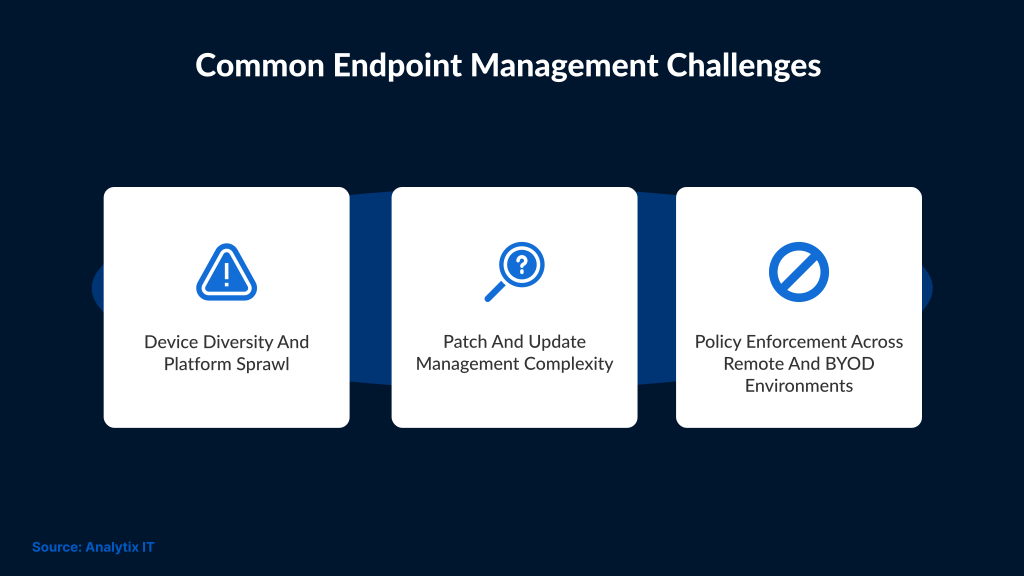
Problems that often come up in endpoint management
There are a few big problems that come with managing endpoints:
Device Diversity: Handling a wide range of devices, including laptops, smartphones, tablets, and Internet of Things (IoT) devices, requires robust device control tools that address each device's specific weaknesses.
Timely Patch and Update Management: It is important to ensure that all endpoints have the latest patches, but this can be hard to achieve, especially in large environments.
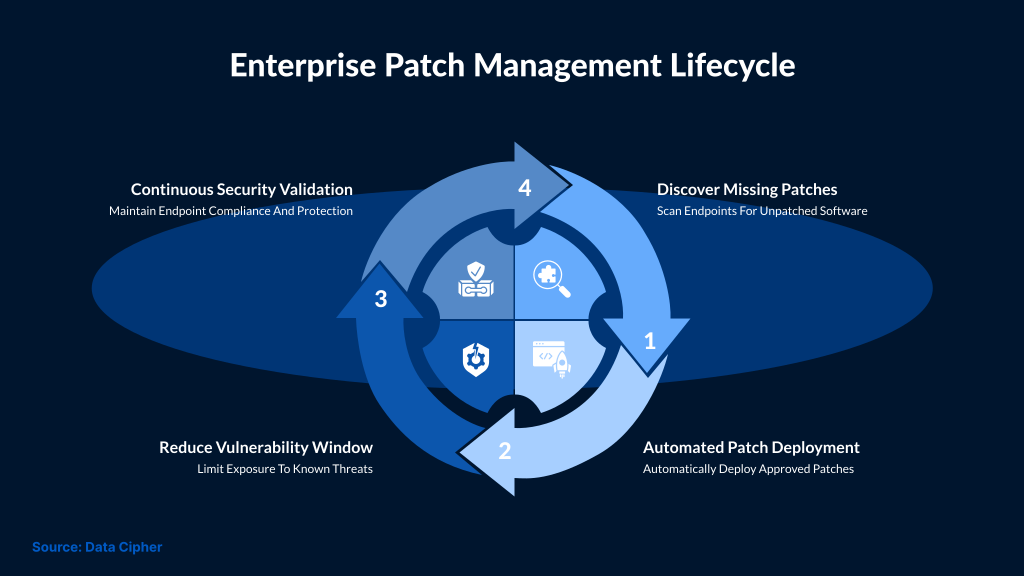
Consistency in policy: When working with remote users or Bring Your Own Device (BYOD) environments, it can be hard to make sure that all endpoints follow the same security rules.
Strategies to Overcome Endpoint Management Challenges
Businesses should address these problems by using a multi-layered approach that combines advanced endpoint security tools with sound management practices. Here are some important strategies:
Behavioral analytics: Use User and Entity Behavior Analytics (UEBA) to find suspicious activities that are different from standard patterns of behavior. This will help you identify threats early.
Cloud-Based Security Solutions: Use cloud-based services to protect endpoints in a way that can be scaled up or down and isn't limited by location.
Network Segmentation: To limit damage, separate important devices and make it hard for attackers to move laterally within the network. Security audits should be conducted regularly to identify gaps and ensure compliance with rules.
Endpoint Resilience Planning: To keep downtime during attacks to a minimum, make strong plans for how to respond to incidents and recover from them that focus on endpoints.
Why it's Important to Protect Endpoints
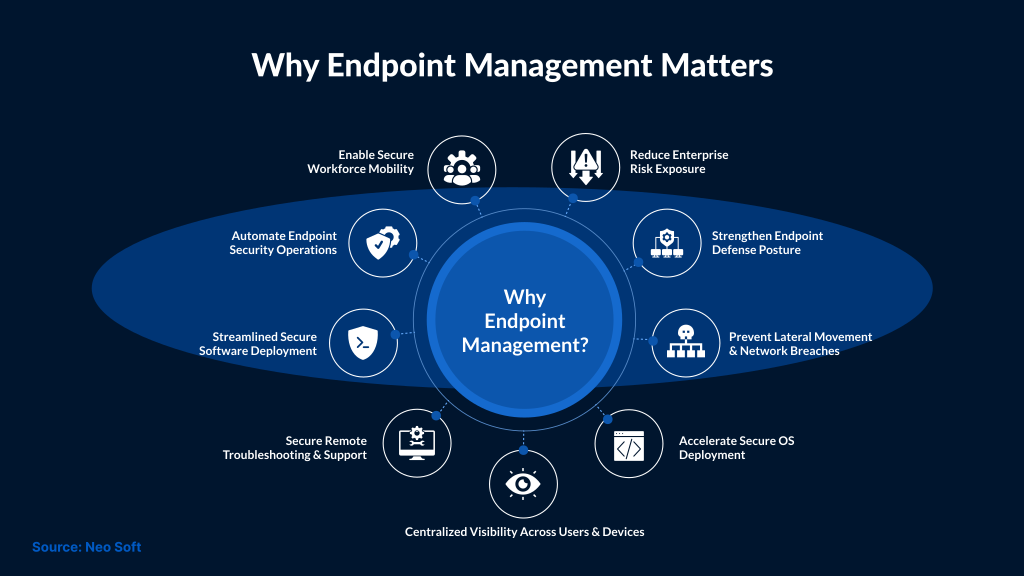
Endpoints are the first line of defense for corporate security. Effective endpoint security keeps sensitive business data safe from unauthorized users, preserving its integrity and confidentiality. Endpoints are easy targets for attackers as the number of connected devices grows due to digital transformation and remote work.
The main pros of Endpoint security include:
Compliance: Endpoint protection ensures that business rules are followed, reducing the risk of penalties or legal issues.
Operational continuity: This keeps business processes running smoothly even when malware, ransomware, and other cyber threats try to disrupt them.
Scalability: Endpoint security tools and advanced device control solutions help businesses handle more devices while keeping strong security.
Key Types of Endpoint Safety
Endpoint security includes a range of tools and methods designed to keep networks and devices safe from advanced cyber threats.
Antivirus and Anti-Malware Protection
These are basic desktop security tools designed to detect, quarantine, and remove harmful software. They protect against malware such as trojans, ransomware, worms, and spyware.
Data Encryption
Encryption converts sensitive data into unreadable ciphertext accessible only with cryptographic keys. It protects info even if the device is lost or stolen.
Endpoint Detection and Response (EDR)
EDR continuously monitors endpoint activity, detects suspicious behavior, and enables automated containment.
Endpoint Protection Platform (EPP)
Antivirus, anti-malware, encryption, firewalls, and intrusion prevention systems are all built into EPP to stop threats before they occur.
Extended Detection and Response (XDR)
XDR brings together data from endpoints, networks, cloud workloads, and apps to give a detailed view of threats. It lets you respond more quickly to complex threats.
Security for IoT
Endpoint management has had to address new problems due to the growing number of IoT devices. Many IoT devices lack advanced security features, leaving them vulnerable to attacks.
Important IoT Security Steps:
- Encryption: Keep data safe while it's being sent and while it's being stored.
- Network Segmentation: Keep IoT devices away from important platforms.
- Continuous Monitoring: Look at how the device acts on a regular basis to find strange things.
- Zero Trust Approach: To lower risks, make sure that every IoT link is authenticated and authorized.
For modern business networks to be safe from new cyber threats, they need full endpoint control. As the number of different devices and remote work grows, it is important to use advanced device control solutions and endpoint security tools to keep operations safe, compliant, and running smoothly. By making endpoint security a priority, businesses can reduce risks, protect private data, and maintain strong defenses in a world where everything is connected.
What are the Policies for Managing Endpoints?
Endpoint management policies are organized lists of rules or guidelines that tell endpoint devices in a company how to be configured, stay safe, and behave. By setting clear rules for how devices can be used and protected, these policies are very important for ensuring endpoint control works effectively. By making the benefits of endpoint control even greater, they help not only IT teams but also end users and the company.
These are some common examples of endpoint control policies:
- Making people use strong passwords and changing their passwords often.
- Full-disk encryption is needed to protect sensitive info.
- Making regular program updates and patch management mandatory.
- Restricting the use of unauthorized applications and unsafe websites.
- Giving lost or stolen devices the ability to be erased remotely.
What are the Pros of Policies for Endpoint Management?
Effective endpoint management policies offer many benefits, including smoother IT operations and greater security. Some important perks are:
1. Better safety measures
Policies for endpoint control make it easier to protect against cyber threats like ransomware and malware. These threats can lead to severe consequences, such as data breaches, poor workflow, damage to your image, and financial losses. Organizations can successfully reduce these risks by implementing strong policies.
2. Keeping data safe
Protecting sensitive data is a key goal of endpoint management rules. These rules stop people who aren't supposed to be there from getting in. This reduces the risk of data theft or misuse by malicious actors.
3. Adherence and compliance
Organizations must strictly follow the rules and laws set by their industries. Endpoint management policies ensure that devices operate in accordance with these standards. This reduces the risk of regulatory fines and protects the company's image.
4. Getting rid of risks
Endpoint policies help identify and fix security holes, reducing the likelihood of security events. This proactive approach makes it easier to manage devices, lowers IT support costs, and increases the company's productivity.
Firms can create a safe and effective IT environment for all stakeholders and workers by implementing strong endpoint management policies. These rules are necessary to stay in line with the law, keep data safe, and reduce risks in a world that is becoming increasingly interconnected.
Conclusion
An effective endpoint control solution is essential for keeping your company's digital ecosystem safe. Businesses can reduce vulnerabilities, boost productivity, and protect themselves from emerging cyber threats by proactively managing and securing endpoints. Using the right tools and strategies protects private data from possible breaches and ensures that operations run smoothly.
SafeAeon offers cutting-edge solutions tailored to your needs if you're looking for a reliable partner to improve your computer security. They ensure your company stays ahead of security threats by effectively managing endpoints. This gives you peace of mind and strong protection. Get in touch with SafeAeon to find out how you can make your IT environment safe and reliable.