


Key Takeaways
- The global median dwell time rose to 14 days in 2025. This shows that attackers can remain undetected for long periods without continuous monitoring and investigation. (Google Cloud)
- Ransomware was involved in 48% of breaches covered by the 2026 Verizon DBIR. This highlights the need for quick investigation and containment during a ransomware incident. (Verizon)
Introduction
As technology grows at a rapid pace, many organizations have switched to new ways of working. Now, hybrid work environments are extremely common, with many organizations hiring employees who work remotely. And then there is the rapid growth of artificial intelligence (AI), which has further changed the way operations are carried out in organizations. Technology has significantly improved the efficiency and accuracy of work, but it has also increased the attack surface.
IT and security teams cannot rely solely on traditional antivirus software and firewalls to detect every threat. They need something extra, something that provides round-the-clock monitoring and quick response. MDR seems to be the right solution in this case. This blog discusses MDR security in detail, covering all aspects so you can decide whether this service is suitable for you.
What Is Managed Detection and Response?
Managed detection and response (MDR) is a cybersecurity service used by organizations to detect, investigate, and respond to cyberthreats. The service offers advanced detection and rapid incident response. It combines technology and human expertise to identify and respond to cyber threats before they spread further.
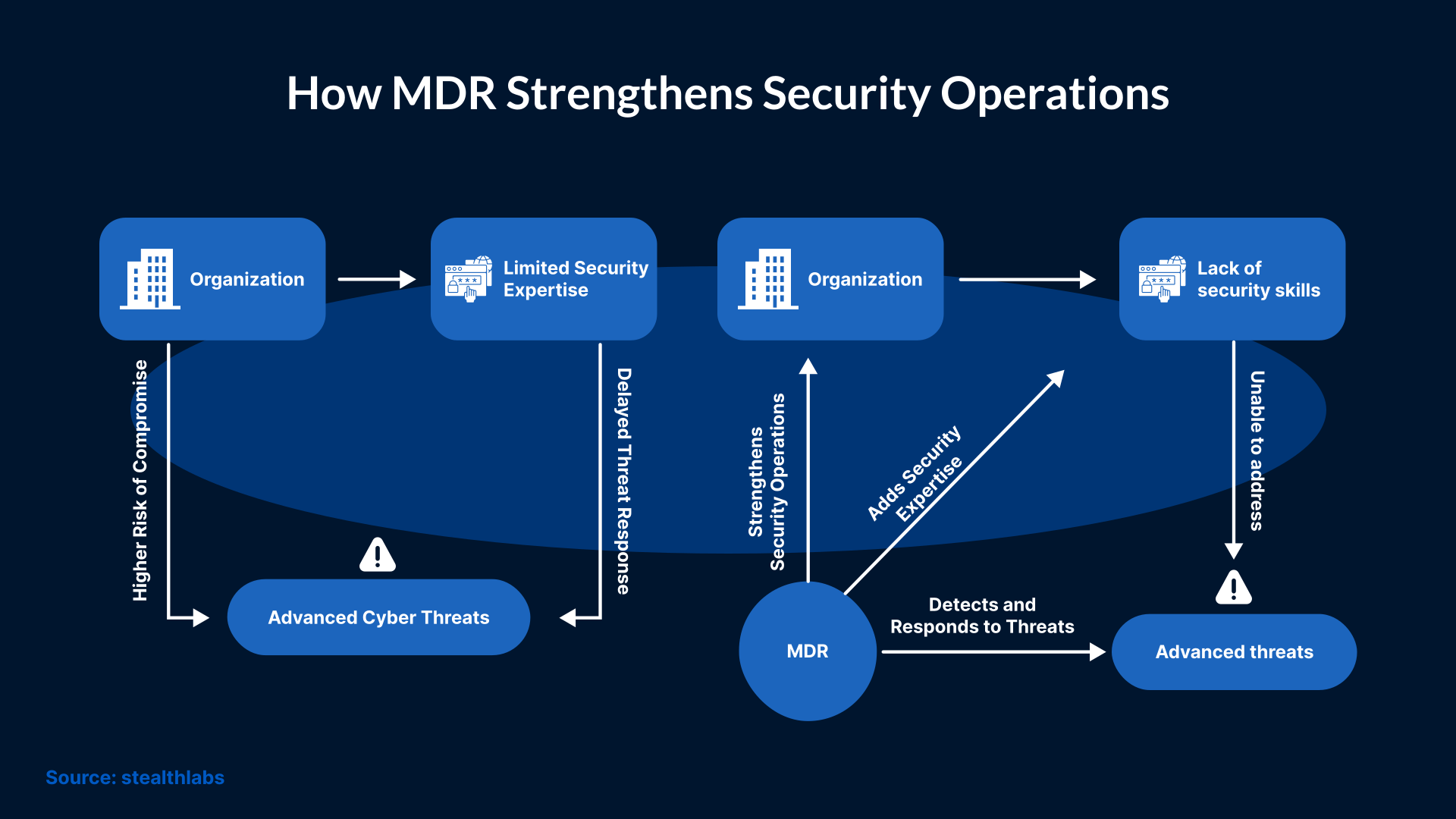
Advancements in technology have made cyberattacks more sophisticated. Therefore, traditional methods won’t be sufficient to protect organizations from cyberattacks. Using an advanced and efficient service like MDR can help organizations strengthen their detection and response capabilities because it gives them access to security analysts without the need to build a complete internal security operations team. While MDR actively monitors and identifies threats across the systems covered by the service, internal teams can focus on other important tasks rather than reviewing hundreds of alerts. On top of that, this service helps preserve your brand reputation and improve customer trust.
Why Do Organizations Need MDR Security?
Relying solely on technology solutions against cyberattacks can leave serious gaps in security. Technology solutions can detect many attacks, but advanced threats may also require human-led threat hunting, investigation, and response. This is where Managed Detection and Response (MDR) services come in. Here are the top five reasons why organizations consider using MDR security:
Strengthen your Cyber Defenses
An MDR provider delivers enhanced protection against advanced cyber threats, including ransomware and sophisticated email attacks. MDR teams can help organizations handle high alert volumes and a wide range of attacks. Moreover, their extensive experience with threat-hunting tools allows them to respond to threats more efficiently.
Free up IT Capacity
Another key advantage of outsourcing MDR services is freeing internal teams from the time-consuming task of reviewing alerts, allowing them to focus on business initiatives. An organization may receive hundreds of alerts each day, and for internal teams to review those alerts can be a daunting task. An MDR provider has the appropriate tools and processes to review alerts, identify real threats, and initiate a suitable response.
Get 24x7 Peace of Mind
The risk of cyberattacks lurks around the clock, so it’s important for organizations to remain prepared all the time. MDR services help with this by offering 24x7 monitoring along with quick detection and response to threats. The service continues to operate beyond office hours, over weekends and holidays. IT and security teams can feel more confident knowing that the devices and data in their organization are being monitored.
Add Expertise, Not Headcount
Detecting cyber threats is a complex task that cannot be accomplished by anyone without a specialized skill set. Organizations can hire professionals to carry out various cybersecurity tasks, but this can increase overall operational expenses. This is where MDR services can be of great benefit, as they have a team with the required expertise. Therefore, an organization doesn’t need to hire professionals for the same task.
Improve Your Cybersecurity ROI
Maintaining a 24x7 threat-hunting team can be expensive because it requires sufficient staffing to cover multiple shifts. Then comes the training and equipment part, which also adds to the cost. On the other hand, MDR services provide a cost-effective way to secure an organization's environment, allowing the cybersecurity budget to be allocated to other important tasks. MDR services can also reduce the risk of a costly data breach and significant financial loss from a major cyber incident.
How Does Managed Detection and Response Work?
Managed detection and response (MDR) works when advanced technology is combined with skilled human expertise. Let’s get into the details of the working of the MDR service:
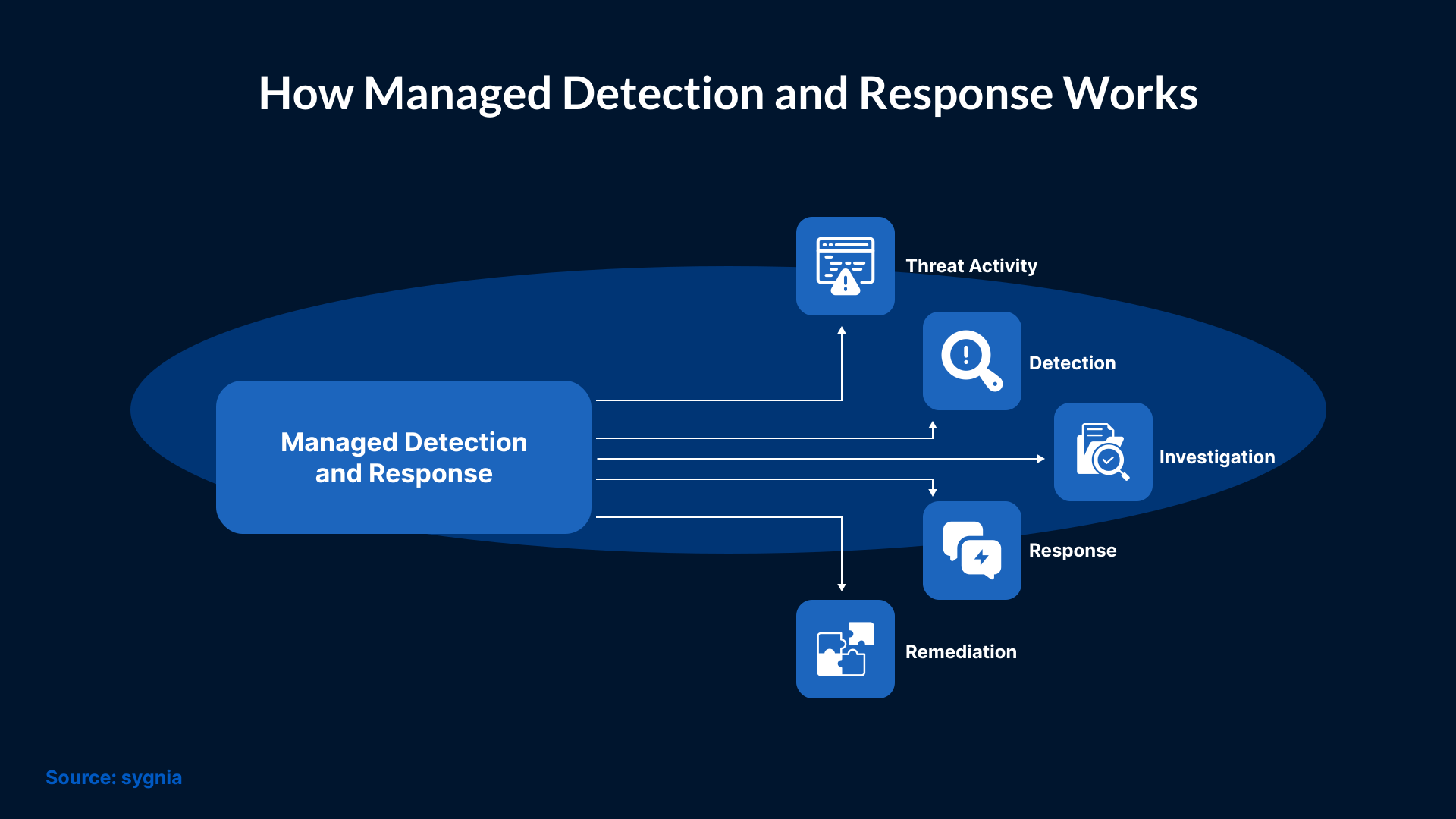
- Continuous monitoring and detection: MDR monitors endpoints and systems using EDR tools. EDR stands for endpoint detection and response. Using these tools, MDR can identify and analyze security events in real-time.
- Event prioritization: MDR assesses the alerts using automated rules, which are then confirmed with human inspection. This is done to prioritize critical threats while closing or deprioritizing low-risk and false-positive events. Prioritizing high-risk alerts allows security teams to focus on high-impact threats without being overwhelmed by noise.
- Threat hunting: Automated detection can identify threats, but when combined with manual threat hunting, it is possible to identify unusual behavior or stealthy attacks. As a result, the chances of identifying hidden threats increase.
- Threat investigation: After detecting a threat, MDR begins an investigation to determine what happened, when it happened, and who or what was impacted. These questions help organizations understand the scope of the incident and plan a suitable response. A detailed investigation also provides actionable insights to prevent similar incidents from happening in the future.
- Guided response: MDR provides actionable remediation guidance to contain and mitigate threats. The goal is to eliminate threats and restore operations as quickly as possible. Additionally, the focus is on acting proactively during a security event.
- Managed remediation: In the end, it all comes down to restoring systems by removing malware, malicious registry entries, and persistence mechanisms.
Core Capabilities of MDR Services
MDR bridges the gap between technology and human expertise. The service is designed to detect, investigate, and respond to security threats in your environment. Here are some of the notable core capabilities of MDR services:
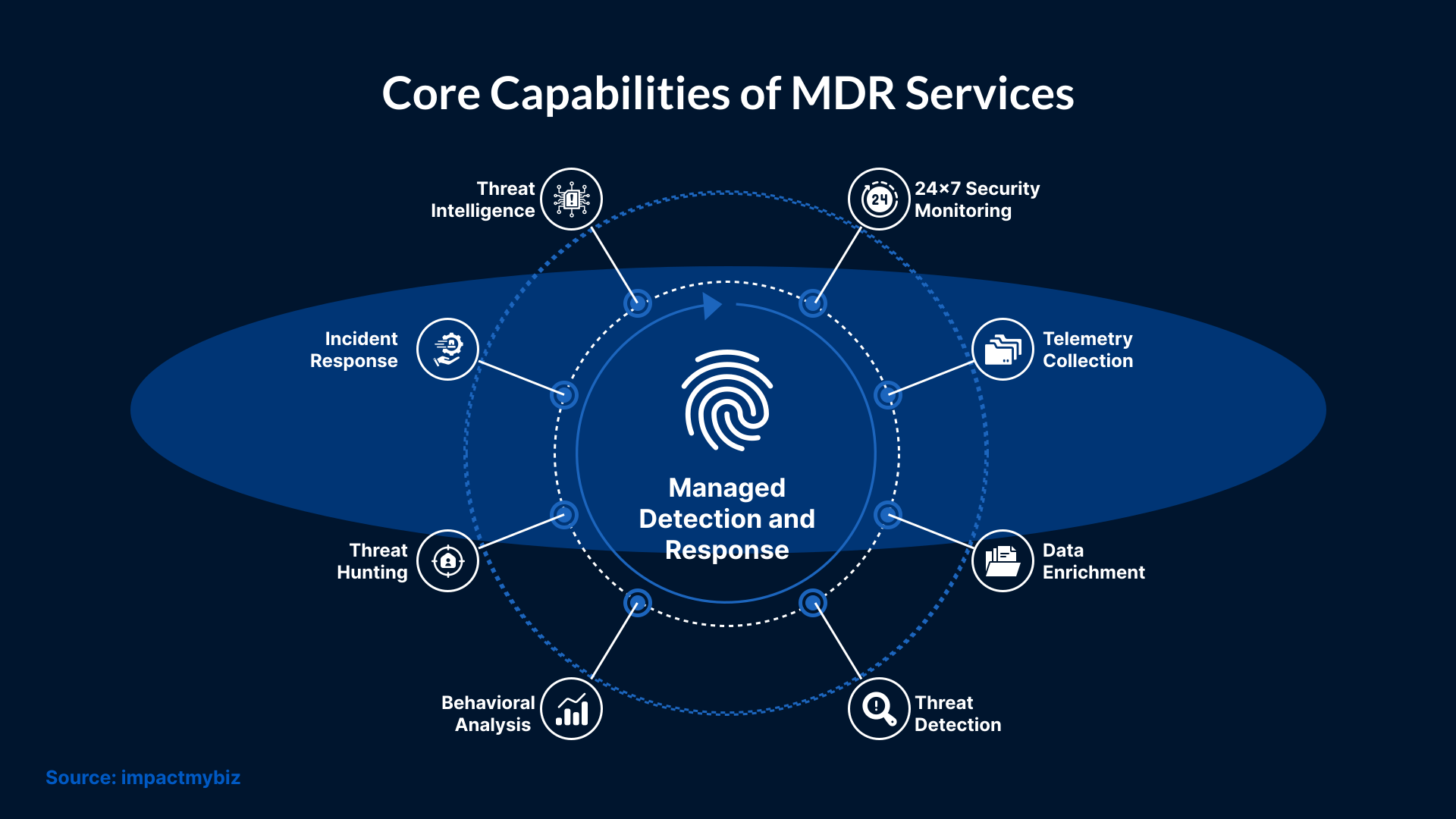
Threat detection and prioritization: MDR leverages several tools and technologies, such as EDR, to monitor the environment 24x7 for suspicious behavior. These systems generate numerous alerts, which can overwhelm teams. This is where MDR is useful because it filters out the noise and prioritizes critical threats.
Threat hunting: MDR allows human experts to actively search the environment for suspicious activity. Traditional detection techniques may miss certain threats. Security analysts use threat hunting to identify behaviors that may be missed by automated tools.
Investigation: When MDR providers identify a potential threat, they investigate what happened and how far it may have spread. They also assess its possible impact. To do so, MDR providers leverage threat intelligence, forensic data, and logs to get the full picture.
Response and remediation: After confirming a threat, MDR providers offer recommendations for responding to it. The response can be in the form of automated actions or guidance from security experts. In some cases, MDR providers offer active remediation services and neutralize threats when the customer’s internal team are not available.
Reporting: MDR providers issue reports on various aspects of an organization’s security, such as identified threats, specific security incidents, and overall security posture. With the help of those reports, internal teams can gain in-depth insights into their environment and identify areas for improvement. The reports also include statistics on alerts, incidents, and response activity.
Combining all these capabilities into a single service helps MDR providers deliver a comprehensive, proactive approach to security. This also helps organizations manage and contain threats before they spread.
What Threats Can MDR Cybersecurity Detect?
It is not possible for preventive controls to stop every attack. Some threats may remain unnoticed until they start affecting users or systems. Fortunately, MDR cybersecurity helps detect such threats before they spread further, enabling analysts to investigate and respond. Here are some notable threats that MDR cybersecurity can detect:
Malware: MDR monitors the behavior of files and programs on endpoints to detect suspicious programs.
Ransomware: MDR identifies unusual encryption activity that may indicate files being locked by attackers.
Credential Theft: MDR detects attempts to extract passwords, tokens, or other authentication data from compromised systems.
Account Takeover: MDR identifies login activity that doesn’t match the normal access pattern of a user.
Privilege Escalation: MDR detects attempts to gain permissions beyond those assigned to a user or application.
Lateral Movement: MDR tracks activity indicating an attacker is active within an environment and moving from one system to another.
Command-and-Control Activity: MDR identifies suspicious communication between compromised systems and attacker-controlled infrastructure.
Persistence: MDR detects unauthorized changes that allow attackers to retain access after a system restart.
Data Exfiltration: MDR identifies unusual data transfers that may indicate information is being sent outside the environment without authorization.
Benefits of Managed Detection and Response Services
Organizations can leverage MDR services to reduce the burden placed on internal security teams when reviewing alerts and detecting suspicious activity. However, these are not the only benefits; there are a lot more that MDR offers.
Enhanced Threat Intelligence: MDR provides organizations with access to advanced threat intelligence feeds. This allows organizations to defend themselves against cyberattacks much better. Intelligence includes not only data about existing threats but also how they operate.
Threat intelligence feeds are updated constantly, which gives organizations better information about the latest attack vectors and strategies used by malicious actors. As a result, security teams can prioritize alerts and conduct threat hunting before attackers cause further damage.
Cost Savings: Setting up an in-house security team is expensive. Finding the right resources, purchasing tools and equipment, salaries, and other overheads can take a significant chunk out of your business's monthly revenue. You can reduce some of these expenses by outsourcing tasks to an MDR service provider. Their experience and expertise can help you manage security operations without building a complete internal team.
Scalability and Flexibility: An MDR service needs to be flexible and responsive because organizations won’t always remain the same. They will expand their network, and so their security needs will change, too. An MDR service must be able to scale its offerings to meet growing business requirements.
Reduced Dwell Time: When it comes to dealing with a cyberattack, speed matters the most. How quickly a security team can detect and respond to a threat will determine the magnitude of damage done. MDR provides 24x7 monitoring and response capabilities, which reduce dwell time. Additionally, faster detection reduces the window of opportunity for attackers to cause damage.
Compliance and regulatory support: Organizations that work in regulated industries take compliance very seriously. MDR services can support organizations with compliance requirements because of their experience with specific frameworks. This allows them to provide comprehensive monitoring and reporting that is in line with industry standards.
Advanced Security Technologies: MDR providers give organizations access to technologies and security tools that they may not manage on their own. The service uses security technologies to help organizations detect and respond to evolving attacks.
MDR vs. EDR, XDR, SIEM, SOC, and MSSP
We are pretty familiar with MDR's functionality and capabilities, but MDR is often compared with EDR, MSSP, SIEM, SOC, and XDR. Let’s compare MDR with each one to understand the differences and which solution works best for your organization.
MDR vs EDR
EDR is among the tools used in an MDR setup. It monitors endpoint activity and supports endpoint investigation and response. MDR uses human expertise and threat investigation to filter real threats that need attention first.
MDR vs XDR
Both MDR (as a service) and XDR (as technology) offer broader visibility into cyber threats originating from different sources. Where XDR consolidates telemetry across endpoints, access controls, and user activity into a unified platform, MDR provides automated threat detection combined with human detection and response. Many organizations combine MDR services with XDR technology to form MXDR for consolidated visibility along with expert-driven threat management.
MDR vs SIEM
SIEM solutions collect and analyze security data from different sources. Organizations may operate the SIEM internally or use a managed service to investigate alerts and support remediation. MDR adds analyst-led investigation and provides clear, actionable steps for customers.
MDR vs SOC
A security operations center (SOC) is the function responsible for monitoring and responding to threats in an organization. It could be an in-house SOC or supported by an external provider. As for MDR, it is a managed service focused on detecting, investigating, and responding to active threats. Organizations already having an internal SOC may use MDR to extend 24x7 coverage or add specialized security expertise.
MDR vs MSSP
An MSSP or Managed Security Service Provider is a third-party company that provides cybersecurity monitoring, threat detection, and infrastructure management. MDR, on the other hand, focuses on threat detection, expert-led investigation, and response. A traditional MSSP may alert you about a potential threat, whereas an MDR service actively investigates the alert, finds its root cause, and provides guidance on containment and recovery.
How to Choose an MDR Provider
The MDR provider you choose can affect the way your organization detects and responds to threats. Here are some crucial factors to consider when choosing an MDR provider:
Monitoring Coverage
An MDR service must monitor the systems you rely on the most. Any visibility gaps in systems can allow important activity to slip by.
Tool Compatibility
Your MDR provider should work with the security tools already in use. Otherwise, you may need to replace tools that still meet your needs.
Alert Investigation
A capable MDR team does more than forward alerts. Analysts review the activity and decide whether it poses a real threat.
Incident Response
You should know how your MDR provider will respond to threats. This is important because some providers only send recommendations, while others take direct action to contain confirmed threats.
Response Time and Escalation
Check how much time your MDR provider takes to respond to serious threats. The SLA should match the risk level of your organization.
Industry Experience
It is better to choose an MDR provider with experience in your industry. The team will understand the threats common to your sector. This can make investigations more relevant.
Incident Reporting
Reports should clearly explain the incident. They should also mention the next steps your team needs to take.
Scalability
Your MDR coverage should scale as your environment grows. It should not require a complete redesign in order to add new users or systems.
Conclusion
MDR gives organizations a better way to deal with threats that may slip past preventive tools. Teams can leverage MDR to spot suspicious activity earlier. The expert analysts help with an in-depth investigation of specific alerts.
However, the quality of MDR varies by provider. It’s important to choose an MDR provider that integrates with your environment and has a clear response process in place before an incident occurs.
SafeAeon provides 24x7 MDR services for organizations that need stronger detection and response support. The service helps internal teams decide next steps after an incident. It also works with existing security tools, which can reduce the need to buy and deploy additional tools.