

Key Takeaways
- The US financial services industry recorded 739 data compromises in 2025, up from 733 in 2024. (Statista)
- Banking and financial services ranked as the sixth most targeted industry for DDoS attacks in Q2 2025. (Cloudflare)
Introduction
The financial sector has always been on the radar of cyber criminals. With billions and trillions of dollars in transactions taking place around the world, one tiny mistake can allow attackers to take financial systems hostage and demand millions of dollars in ransom. For this reason, cybersecurity in finance is not optional; it's paramount to the safety of internal and public-facing systems. This blog discusses the top risks that banking and financial institutions face daily, along with strategies they can implement to protect their environments.
What is Cybersecurity in Finance
Cybersecurity in finance refers to the protection of systems, data, and networks in a financial environment from cyber threats such as phishing, ransomware, credential theft, and more. There are several tools and strategies involved in securing a financial environment and preventing unauthorized access to customer information.
Organizations need to take a wide range of measures to ensure financial cybersecurity, including:
- Firewalls
- Real-time monitoring
- Encryption
- Multi-factor authentication
These security measures help protect data from interception or theft. Besides these, financial cybersecurity is also important from a legal and regulatory standpoint. The financial sector must comply with the laws, regulations, and security standards that apply to its services and operations. Here are three common applicable requirements:
- The Payment Card Industry Data Security Standard (PCI DSS)
- Sarbanes-Oxley Act (SOX)
- Gramm-Leach-Bliley Act (GLBA)
Importance of Cybersecurity in Finance
The role of cybersecurity in financial services cannot be underestimated. Since these organizations handle sensitive data, cybercriminals are always on the hunt to breach the systems and steal that sensitive data, encrypt it and then ask for ransom. For organizations, it’s not just their legal obligation to protect this data, but also a moral responsibility towards their clients and stakeholders. Here are six main reasons why financial services need cybersecurity:
Protecting Sensitive Data: Financial institutions handle sensitive data, including personal information of customers, transaction details, and financial records. Cybercriminals consider this data highly valuable, and gaining access to it enables them to commit fraudulent activities such as identity theft and financial fraud. Cybersecurity teams help ensure that sensitive data remains encrypted and stored securely. They also restrict access to prevent data misuse.
Preventing Financial Loss: Cybercriminals have techniques that allow them to steal money directly from bank accounts or manipulate transaction records. They can also use stolen credit card information for fraudulent purchases. Misery doesn’t end here for organizations, as they might have to pay hefty regulatory fines, legal fees, and compensation costs. Implementing robust cybersecurity for financial services can help prevent these attacks and mitigate their impact.
Maintaining Customer Trust: In the financial sector, trust is paramount. Customers only keep their funds or share financial details with a financial institution if they trust it. But that trust can be shaken with a small cybersecurity breach. Therefore, it’s important for organizations to take strong cybersecurity measures to assure customers of the safety of their data and maintain that long-lasting trust.
Regulatory Compliance: Financial institutions operate in a regulated environment. They must comply with the guidelines of regulatory bodies like the Federal Reserve, the Federal Deposit Insurance Corporation (FDIC), and the Securities and Exchange Commission (SEC). Therefore, SOC-as-a-Service can help financial institutions monitor their environments around the clock and support their compliance efforts.
Enhancing Operational Efficiency: Financial services won’t only safeguard their environment by implementing strong cybersecurity practices but also enhance their operational efficiency. Knowing that all their systems and data are secure, institutions can operate without interruption and reduce downtime caused by cyber incidents. This is important for maintaining customer trust and confidence.
Protection Against Emerging Threats: Cyber threats evolve with each passing year. Strategies used by cybercriminals today won’t be used tomorrow. Financial institutions must take note of this aspect and ensure their cybersecurity measures are up to date to counter future attacks. A proactive approach will not just protect the financial institution against cyber threats but help build a secure ecosystem that customers can trust.
Top Cybersecurity Risks in Financial Services
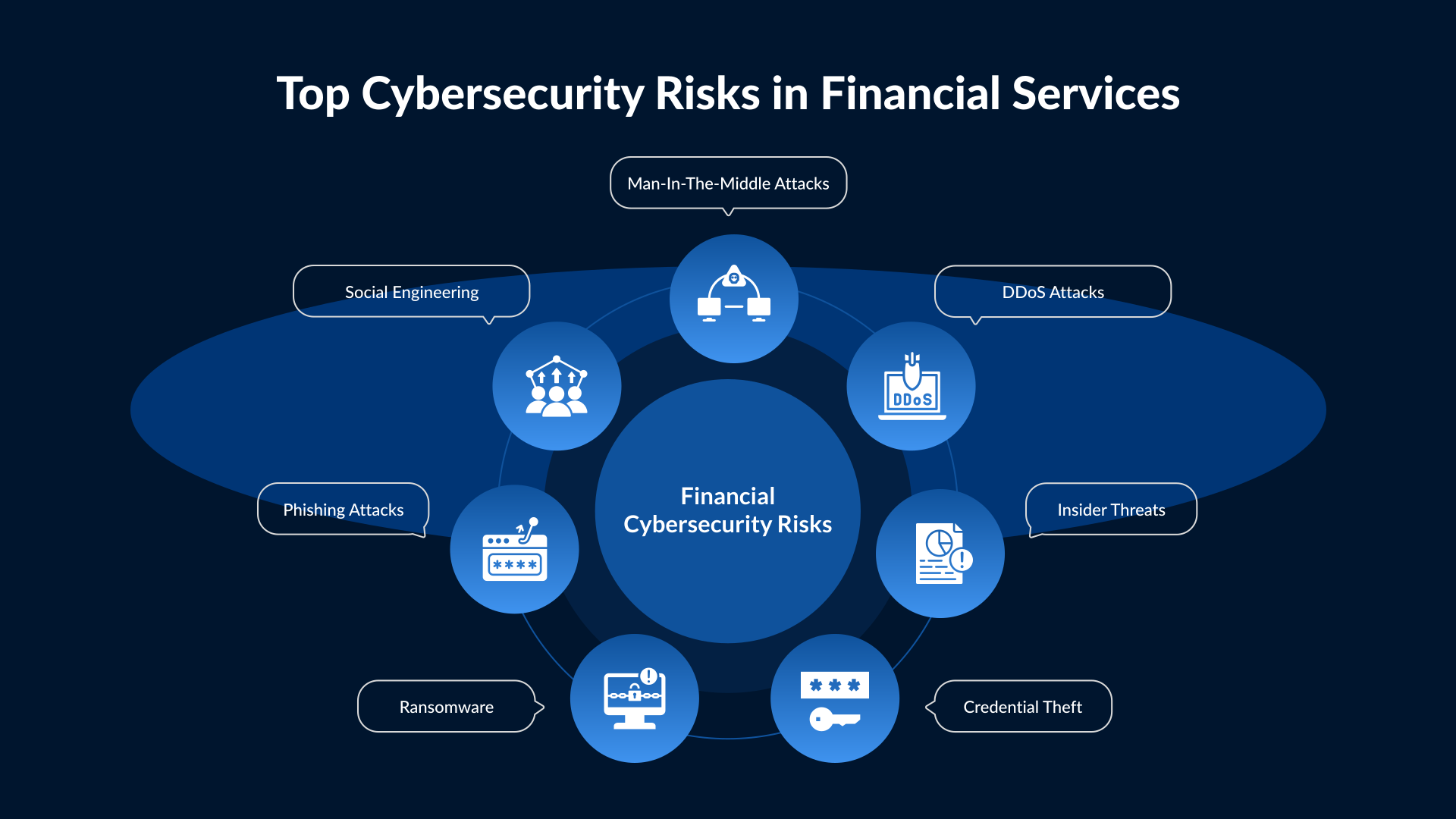
Phishing Attacks: Phishing is one of the most common cyberattacks experienced by banks and financial institutions. Phishing involves fraudulent emails that attackers send to convince people to reveal sensitive information such as credit card numbers, bank account details, passwords, and more. These attacks also target bank employees to gain unauthorized access to accounts or systems.
Malware & Ransomware: Malware is malicious software that can enter a system when a person downloads a harmful attachment or clicks a malicious link. Malware can steal sensitive data or grant unauthorized access to attackers. Ransomware is a type of malware that encrypts files, and attackers demand a ransom to release them.
Credential Theft: When attackers steal usernames, passwords, or authentication codes, it’s known as credential theft. They use this information to take control of customer or employee accounts. Upon taking control of the accounts successfully, they can make unauthorized transactions and steal data.
Insider Threats: Insider threats occur when someone with authorized access intentionally or unintentionally harms an organization, its systems, or data. These threats can be difficult to detect because the activity may come from a legitimate account.
DDoS Attacks: DDoS attacks can cripple a bank's online services by overwhelming them with excessive traffic. Servers, after experiencing high traffic volumes, may crash, causing inconvenience to customers and resulting in overall financial losses. DDoS attacks are often used as a smokescreen to distract internal security teams from more targeted cyberattacks.
Man-in-the-Middle (MitM) Attack: This attack involves intercepting communication between two parties to steal data. Attackers use this attack type to steal data during an online transaction because most financial transactions involve a payment gateway, which is where they can strike and steal information.
Social Engineering: Social engineering attacks involve manipulating individuals into revealing sensitive information or performing actions that can compromise the security of an organization. Common social engineering tactics include pretexting, baiting, and tailgating. Social engineering exploits human psychology to bypass technical security measures, which makes it a serious threat in the financial sector.
Common Financial Services Cybersecurity Challenges
Financial institutions work under a lot of pressure. They must maintain financial records, ensure smooth transactions, and maintain the trust of customers who expect fast and fair approval of their requests. As if these weren’t enough, the risk of cyberattacks always lurks over these institutions. They have to upgrade their aging infrastructure, add better resources, and reduce dependency on external resources. Let’s discuss the common challenges that financial services face on a daily basis:
Aging Systems: Many banks and financial institutions are still using back-end platforms that not many people learn or understand anymore. Updating those platforms can be risky and expensive. At times, organizations don’t update the platforms due to regulatory layering. Instead, they build workarounds that create gaps attackers exploit.
Out-of-Sync Security and Compliance: Banks roll out new apps or digital features from time to time, but these require access to sensitive data. They even expose systems through new connections. To counter this, security teams may request additional testing, which business teams may not appreciate because it requires more time. Somewhere in between, vulnerabilities can originate.
Accidental Breaches: While external actors may try to access an organization’s environment, some breaches occur because of mistakes made by internal teams. A small mistake, like emailing a spreadsheet to the wrong address or uploading a client document to an unsecured folder, can accidentally expose data. Organizations provide training to their teams, but mistakes can still happen because of fatigue or incorrect assumptions. And those mistakes lead to exposure.
Limited Visibility into Third-Party Security: In banking operations, vendors play a key role in processing payments and hosting customer portals. But many institutions have very limited visibility into how those vendors manage risk. If a vendor fails to patch a known vulnerability or lacks access controls, the institution may also bear the brunt.
Errors in Cloud Configuration: Most breaches in cloud infrastructure stem from human oversight. An admin role was assigned too broadly, or a storage bucket was left open; these open gaps that attackers can exploit. It doesn’t matter if the security is in place; if the configuration is off, attackers can find a way into the environment.
Limited Resources in Mid-Sized Organizations: Larger banks and financial institutions can deploy a new SOC or outsource threat detection easily. But smaller organizations have limited resources, which makes it difficult for them to stay proactive. Sometimes, it’s not the question of awareness; it's about the capacity.
The Business Impact of a Financial Cyberattack
A financial cyberattack impacts a business in multiple ways. Check the table below to understand the consequences of an attack on financial institutions:
| Impact | What It Means for Financial Institutions |
|---|---|
| Financial Loss | Cyberattacks can lead to fraudulent transactions, ransom payments, legal costs, incident response expenses, and lost revenue. |
| Service Disruption | Downtime can interrupt online banking, payment processing, trading platforms, loan services, and customer support. |
| Customer Data Exposure | Attackers may access account details, payment information, identification records, and other sensitive financial data. |
| Regulatory Action | A breach can trigger investigations, mandatory reporting, audits, penalties, and increased regulatory scrutiny. |
| Loss of Customer Trust | Customers may lose confidence in an institution that fails to protect their money, accounts, or personal information. |
| Account Compromise | Stolen credentials can be used to take over customer or employee accounts and carry out unauthorized activity. |
| Long-Term Recovery Costs | Institutions may face higher insurance costs, additional security investments, customer loss, and prolonged remediation efforts. |
Financial Services Cybersecurity Regulations and Standards
Financial services operate in a strict regulatory environment to protect sensitive information and meet legal and industry requirements. Three commonly applicable requirements include PCI DSS, SOX, and GLBA.
Payment Card Industry Data Security Standard (PCI DSS)
PCI DSS applies to organizations that handle payment card data. This standard sets security requirements for protecting cardholder information and securing payment systems.
Sarbanes-Oxley Act (SOX)
SOX applies primarily to companies subject to US Securities and Exchange Commission reporting requirements. It requires management to assess and report on internal controls over financial reporting. Cybersecurity comes into play when financial records depend on digital systems.
Gramm-Leach-Bliley Act (GLBA)
GLBA applies to covered financial institutions in the United States. It requires them to protect customers’ nonpublic personal information. Companies are also required to use suitable protection for handling that data.
With these requirements, financial institutions can improve data protection and maintain stronger control over sensitive information.
How Financial Institutions Can Reduce Cyber Risk
It is difficult to prevent cyberattacks, but financial institutions can improve their security posture to reduce cyber risk. Here are seven ways financial institutions can enhance their security posture:
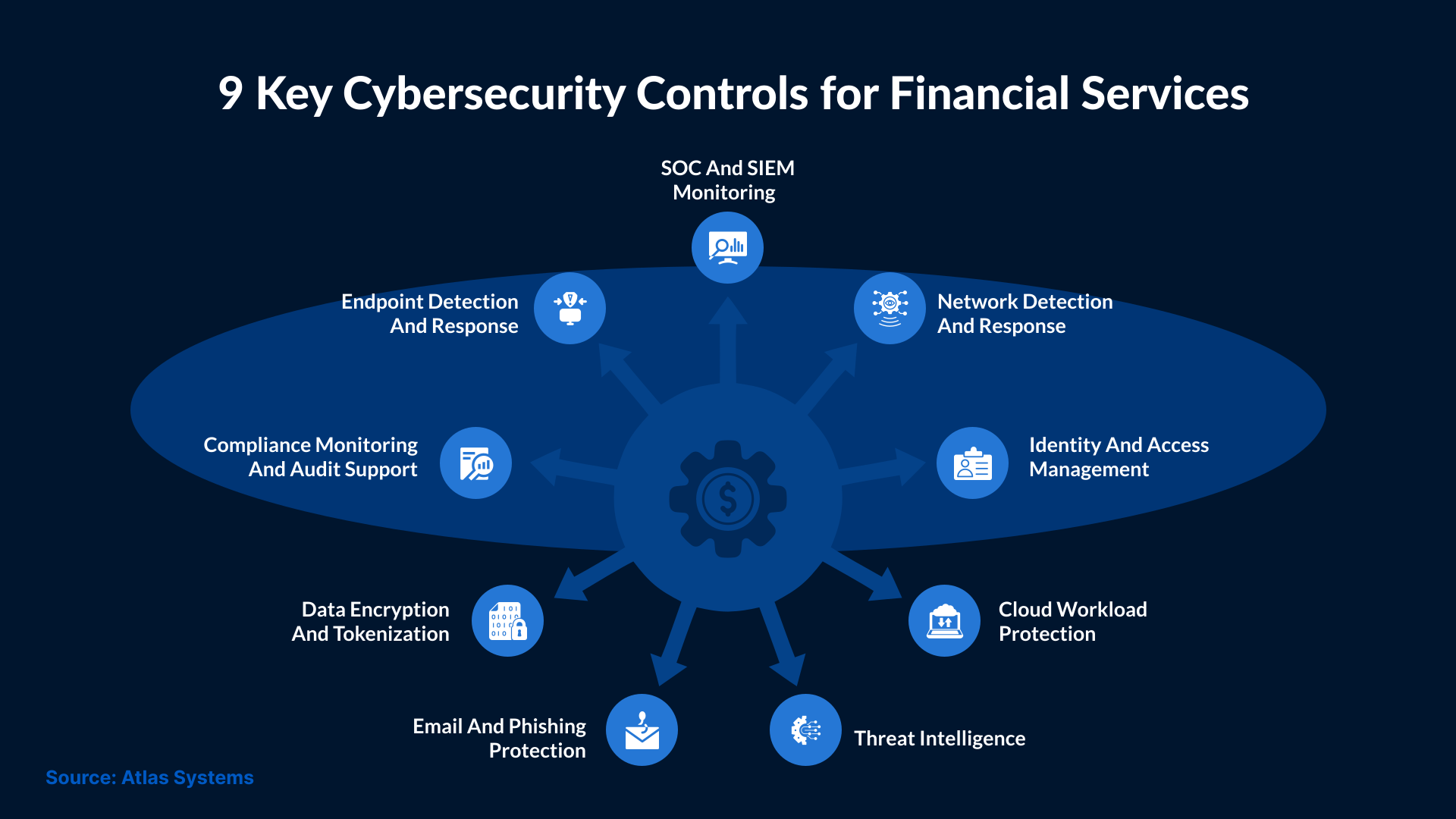
- Multi-Factor Authentication: Instead of relying only on passwords, organizations can add an extra layer of security to make unauthorized access more difficult.
- Regular Security Audits and Pentesting: Simulating real-world attacks is a great way to identify vulnerabilities in an environment. Penetration testing evaluates security measures to determine their effectiveness and identify areas for improvement.
- Employee Training & Awareness: Conduct regular training sessions and awareness campaigns to help employees recognize the latest cyber threats. So, when a future cyberattack occurs, employees will know what steps to take to contain it.
- Encrypt Sensitive Data: Use strong encryption protocols for sensitive data, whether at rest or in transit. Encryption makes sensitive data unreadable without the appropriate key, although attackers may still access it if accounts or encryption keys are compromised.
- Zero Trust Security Model: This model works on the principle of ‘never trust, always verify’. It assumes that no user or system should be implicitly trusted. So, anybody trying to access resources will have to verify themselves.
- Regular Updates & Patch Management: Attackers exploit known vulnerabilities found in outdated software and systems. Make sure systems are up to date, and software applications have the latest security patches.
- Incident Response Plan: Financial institutions need an emergency plan for cyberattacks that they must constantly update. The plan must outline who does what to stop the attack in the early stage. Having a sound plan will help mitigate the damage and restore operations quickly.
How Managed Cybersecurity Supports Financial Institutions
Financial institutions need continuous security coverage, but most don’t have sufficient internal resources to manage every threat. This is where managed cybersecurity services become important. Managed cybersecurity services give financial institutions access to trained security experts who can detect and respond to alerts.
Continuous Threat Monitoring
SOC-as-a-Service monitors systems and security alerts around the clock. Suspicious activity is identified quickly before it can cause major disruption.
Faster Threat Response
MDR-as-a-Service investigates detected threats and supports containment based on the agreed service scope. As a result, the time between detection and response is significantly reduced.
Protection Against Common Attacks
Managed phishing protection helps identify harmful emails at an early stage. DDoS mitigation helps keep online banking and payment services available during a DDoS attack.
Better Control of Internal Risk
Insider threat management monitors unusual user activity. The system alerts when it detects possible account misuse or unauthorized access to sensitive data.
Support for Compliance Requirements
Managed security providers also help with reporting and evidence collection. But it is up to the financial institution to meet its compliance obligations.
More Predictable Security Costs
Managed services can reduce the need to staff every security function internally. They also give financial institutions access to specialized experts without requiring separate teams for each security area.

Conclusion
The risk of cyberattacks on financial institutions will continue to grow. So, the most suitable approach for financial institutions is to improve their security posture. The measures discussed in the blog can help improve cybersecurity and support compliance with applicable regulatory requirements.
Financial institutions with limited resources can opt for managed cybersecurity services from SafeAeon. These services can help protect their environment and support compliance efforts.