

Key Takeaways
- 55% of cybersecurity teams are understaffed, highlighting the challenge businesses face in maintaining enough internal security expertise. (ISACA)
- It took organizations an average of 241 days to identify and contain a data breach in 2025. This shows why continuous monitoring and timely response matter. (IBM)
Introduction
Cyber threats are growing with every passing year and becoming more pervasive. This has put businesses of all sizes under immense risk. While cybersecurity services are available to protect digital assets used in organizations through various technologies and tools, managing cyber threats internally can be a costly affair. The hassle of buying dedicated tools for each service and hiring skilled professionals can put a strain on an organization’s budget.
The solution to this is managed cybersecurity services. These services offer a proactive approach to protecting an organization’s digital assets by outsourcing critical security operations to professionals. Moreover, these services can be more cost-effective than building and maintaining the same security capabilities internally. This blog discusses how managed cybersecurity services work, the services businesses can consider, and their benefits in detail. This allows organizations to choose the right services to keep their business safe and secure.
What Are Managed Cybersecurity Services?
Managed cybersecurity services are a professional solution offered by a team of specialized experts. The team monitors and manages the digital assets of an organization. It’s a cost-effective way to secure an environment that includes numerous endpoints, network, cloud and remote access.
An organization doesn’t build its own security hub, but instead partners with a Managed Security Service Provider (MSSP). Unlike traditional cybersecurity tools, which rely on standalone in-house software and hardware and require manual updates and internal staff management, an MSSP assigns a dedicated team to monitor your network, detect threats, and respond to confirmed incidents.
The main goal of managed cybersecurity services is to help organizations protect their digital assets and sensitive information from cyber threats. Managed cybersecurity services can reduce the security workload on internal teams and support an organization’s ongoing compliance efforts.
How Do Managed Cybersecurity Services Work?
The exact process varies by service, but managed monitoring and response services generally follow a structured process to detect, investigate, and respond to threats. These services monitor the environment 24x7 rather than relying only on reactive security measures.
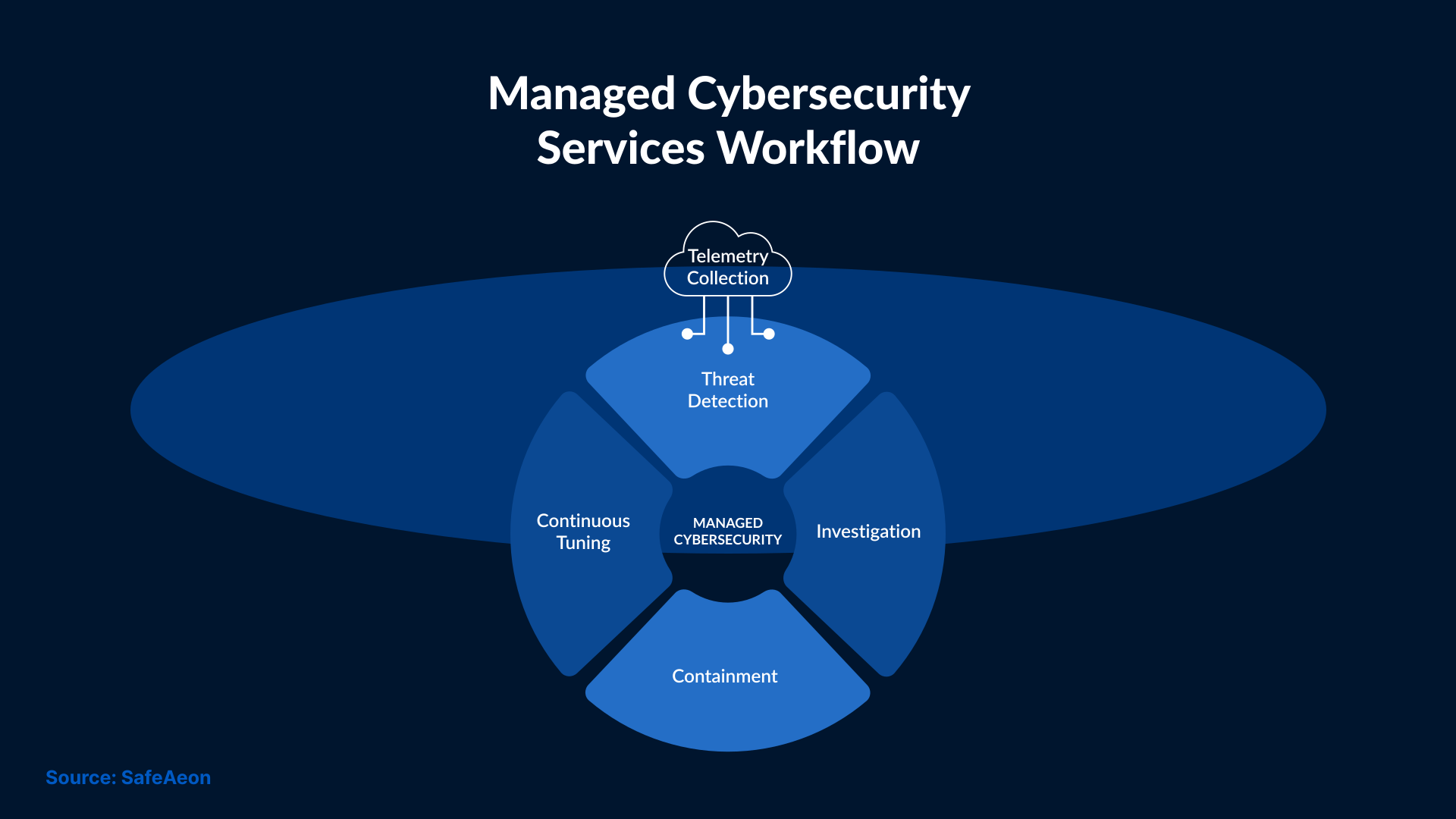
1. Telemetry Collection
The team offering managed cybersecurity services collects data from endpoints, servers, applications, cloud applications, and networks. Data could be in the form of user activity, logs, or authentication attempts, etc. Security telemetry and logs are collected from the sources configured for monitoring.
2. Threat Detection
The data collected is analyzed using threat intelligence and security analytics. These help identify suspicious activity, such as unusual logins, malware behavior, and unexpected data transfers. There are other potential indicators of compromise, which the team flags for further investigation.
3. Investigation
Security analysts review suspicious activity within the environment to determine whether it is a genuine threat or a false positive. If it is a genuine threat, analysts prioritize it while reducing unnecessary alerts for internal teams.
4. Containment
Once a threat is confirmed, security teams begin their response by isolating affected systems, restricting compromised accounts, or blocking malicious activity. The goal is to contain the incident and limit its potential impact.
5. Continuous Tuning
Security teams continuously refine detection rules and security controls based on incident findings, changes in an organization’s environment, and emerging threats. This allows managed cybersecurity services to adapt to new risks and attack techniques.
10 Best Managed Cybersecurity Services for Businesses
Businesses face different security risks, so it is important that they have the right mix of cybersecurity services to protect their environment and resources while meeting compliance needs. The following managed cybersecurity services cover key areas such as threat monitoring, identity and data protection, network security, response, and compliance.
SOC-as-a-Service
What it is: SOC-as-a-Service provides 24x7 monitoring of endpoints, internal assets, and cloud applications. Security logs are collected in a SIEM, which is a centralized location that allows SOC analysts to correlate and review the events.
How it helps: The service provides businesses with continuous visibility into suspicious activity without having to build an internal SOC. Security analysts can investigate alerts, ensuring a structured process for assessing and escalating potential threats.
Best for: Organizations that need continuous security monitoring and analyst support without operating a full in-house security operations center.
Managed Detection and Response
What it is: MDR-as-a-Service provides continuous monitoring, threat detection, investigation, and response support. MDR stands for Managed Detection and Response, and it combines security technology with a team of security experts who monitor endpoints around the clock.
How it helps: MDR helps businesses move beyond basic alerting by adding expert review and response to suspicious activity. Analysts investigate potential threats and act promptly once malicious activity is confirmed.
Best for: Organizations that already use endpoint security. It also works well for organizations that need stronger endpoint detection and response without adding more internal security staff to manage alerts, investigations, and day-to-day threat response.
XDR-as-a-Service
What it is: XDR-as-a-Service provides organizations with centralized visibility across their digital environment. They can view detected and investigated threats, along with analysis and response. When the security information is brought together, the activity can be reviewed with a broader context.
How it helps: XDR connects security signals across the environment, which helps teams reduce fragmented visibility. As a result, suspicious activity can be investigated more efficiently.
Best for: Businesses with security data spread across multiple systems that want a more centralized approach to threat visibility, investigation, and response without managing XDR entirely in-house.
Anti-Ransomware-as-a-Service
What it is: Anti-Ransomware-as-a-Service uses a prevention-first approach where ransomware activity is stopped before execution. The service focuses on runtime memory protection and can work alongside existing EDR tools.
How it helps: The service adds a preventive layer to block certain ransomware techniques that detection-based tools may not block until malicious activity begins. It also helps reduce alert noise along with operational disruption associated with ransomware attempts.
Best for: Organizations that are looking to improve ransomware prevention while keeping their existing endpoint detection and response tools in place instead of replacing their current security stack.
Email Security-as-a-Service
What it is: Email Security-as-a-Service is designed to reduce exposure to phishing, malware, spam, and other email-borne threats. The service enables policy-driven controls that help filter suspicious messages before they reach users.
How it helps: The service provides managed oversight for one of the most common attack channels against businesses. Security analysts review threat activity in context, which provides internal teams with clear direction on when to act on suspicious email activity.
Best for: Businesses that depend heavily on email communication and want managed protection against phishing, malware, and other email-based threats without handling every security control internally.
Managed Next-Generation Firewall
What it is: Next Generation Firewall Management-as-a-Service provides 24x7 firewall management and monitoring. In this, security experts configure and implement firewall policies in accordance with business requirements and applicable security practices.
How it helps: The service reduces the operational burden of managing firewall policies and maintaining internal firewall configurations. This reduces the need for internal teams to continuously monitor network traffic, as security specialists handle ongoing firewall monitoring while businesses retain control of their network security policies.
Best for: Organizations that use next-generation firewalls but do not have the internal time or expertise to monitor and manage firewall configuration. The service takes care of that along with managing policy changes and day-to-day administration.
Vulnerability Assessment-as-a-Service
What it is: Vulnerability Assessment-as-a-Service is designed to identify weaknesses in systems, networks, applications, and other parts of the IT infrastructure. Assessments help identify vulnerabilities and security weaknesses that attackers could exploit.
How it helps: The service allows businesses to clearly view their security weaknesses to prioritize remediation before attackers exploit them. It also provides a more structured way to review technical exposure across the environment.
Best for: Organizations that need regular visibility into the vulnerabilities across their IT environment, along with expert support in identifying security gaps as part of ongoing risk management.
MFA-as-a-Service
What it is: MFA stands for Multi-Factor Authentication. MFA-as-a-Service is a cloud-based service that helps improve user authentication by requiring more than one verification factor. These can include authenticator apps, one-time codes, biometrics, and notifications.
How it helps: The service activates an additional verification step that reduces the risk of unauthorized access when a password is compromised. This is offered as a managed service to avoid putting an administrative burden on internal teams.
Best for: Businesses seeking stronger protection for access to systems, applications, and sensitive data. Also, businesses where password-only authentication can create account takeover risk.
Data Risk Assessment-as-a-Service
What it is: DRA stands for Data Risk Assessment, and DRA-as-a-Service helps organizations assess sensitive data risk across selected cloud and on-premises sources. It identifies regulated or sensitive data that may be overexposed. Additionally, the service reviews issues such as excessive access and public sharing.
How it helps: The assessment provides teams with a clearer view of the exposure of sensitive data and access controls requiring attention. Based on the findings, teams prioritize practical steps to reduce the risk.
Best for: Organizations that need better visibility into sensitive data, access exposure, and sharing risks across cloud or on-premises environments before deciding the starting point of remediation.
Compliance-as-a-Service
What it is: Compliance-as-a-Service helps teams manage compliance across frameworks such as SOC 2, HIPAA, GDPR, ISO 27001, and PCI DSS. The service helps with policy writing and evidence organization. It also supports ongoing compliance readiness activities.
How it helps: It helps businesses keep compliance documents organized as requirements or their environment changes. It can also reduce the back-and-forth involved in preparing for an assessment or audit.
Best for: Organizations that need ongoing compliance support but lack enough internal resources to manage policies, evidence, and readiness activities. It is also useful for organizations managing requirements across multiple compliance frameworks.
Benefits of Managed Cybersecurity Services
Managed cybersecurity services provide businesses with capabilities that otherwise would be difficult for them to build and maintain internally. These services can improve day-to-day security operations while reducing pressure on existing IT teams.
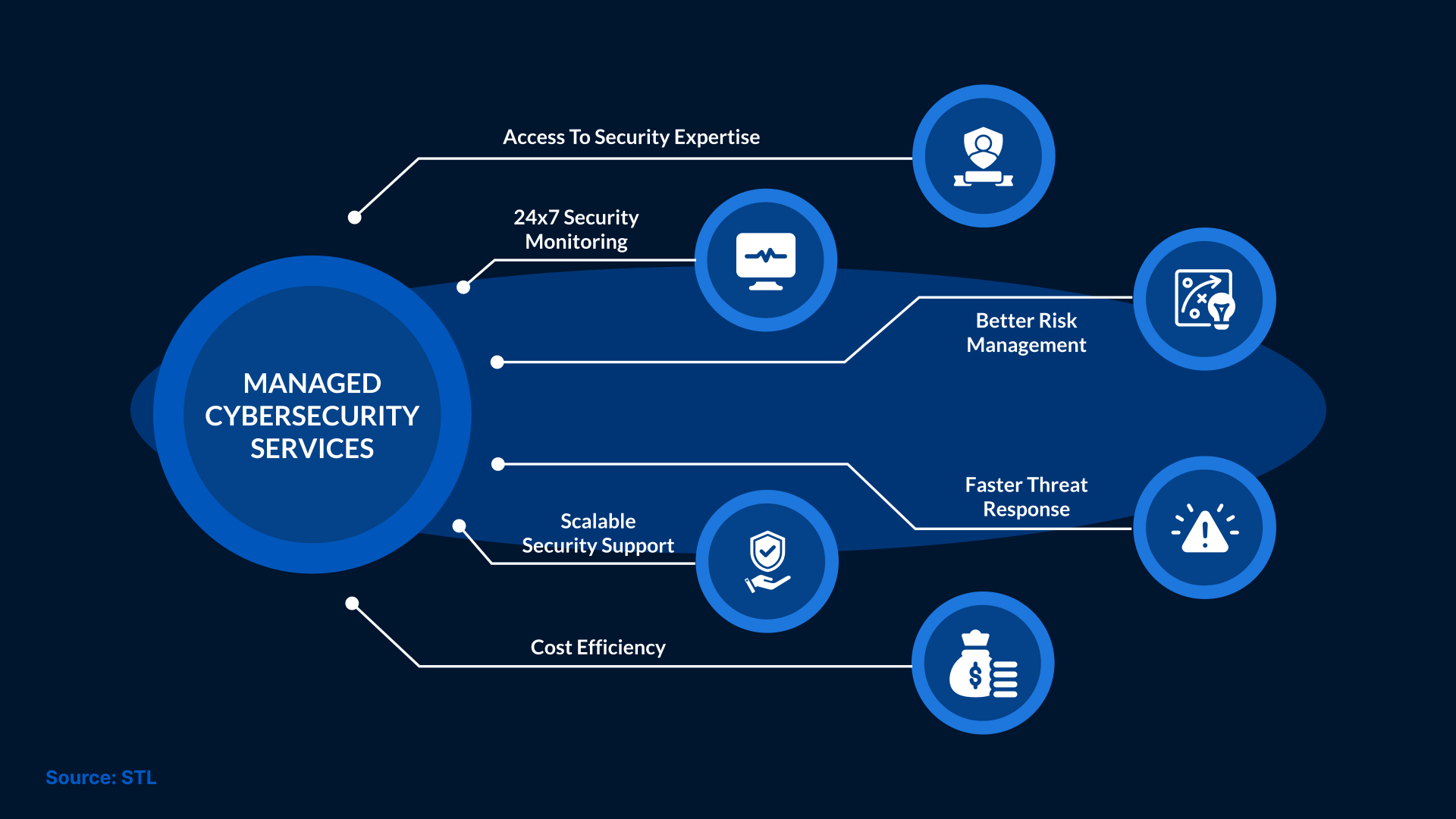
1. Access to Security Expertise and Technology
Building an experienced team can be time-consuming and eat a significant amount of the company’s budget. With managed cybersecurity services, businesses get access to security professionals with specialized skills in areas such as threat detection, incident response, vulnerability management, and compliance. They also benefit from security technologies and processes without having to manage every part on their own.
2. 24x7 Security Monitoring
Security threats don’t occur only during normal business hours. Therefore, it’s important for organizations to ensure continuous monitoring to always maintain visibility across their environment.A managed cybersecurity services provider can review alerts and suspicious activity around the clock, allowing businesses to maintain a more consistent security presence without requiring internal employees to monitor the environment outside business hours, weekends, or holidays.
3. Faster Threat Detection and Response
Threat detection is only useful when a business can act on it on time. Managed cybersecurity services provide dedicated resources to review alerts and investigate suspicious activity. They also determine when to act upon a threat.
This helps reduce the time between identifying a potential threat and initiating a suitable response, especially when internal IT teams are occupied with other operational responsibilities.
4. Better Risk Management
Cybersecurity risks originate from vulnerabilities, misconfigurations, compromised accounts, exposed data, and many other sources. Managed cybersecurity services help businesses identify these risks and prioritize the response.
Having a structured approach to risk management allows teams to focus their resources on issues that can significantly impact the business.
5. Scalable Security Support
Security requirements change as a business grows. New employees, devices, applications, and cloud services can all increase the environment's size and complexity.
Managed cybersecurity services allow businesses to remain flexible in adjusting security support as needs change. This approach is more feasible than continually expanding the internal security team as new requirements arise.
6. Cost Efficiency
Building an in-house cybersecurity operation can be expensive because organizations need to spend on recruitment, salaries, training, security tools, and infrastructure. Managed cybersecurity services can reduce some of the costs associated with building and maintaining these capabilities internally.
This is especially useful for SMBs that require strong cybersecurity support but lack the budget or staffing to maintain a large internal security team.
When Does a Business Need Managed Cybersecurity?
A business needs managed cybersecurity when its security responsibilities start to go beyond the time, expertise, or resources available internally. When existing teams are unable to manage security effectively alongside their regular IT responsibilities, outside security support may be needed.
Security Alerts Are Piling Up
When internal teams are unable to review alerts or take too long to investigate, important threats can be missed. This is a sign that the business needs dedicated security support.
IT Teams Have Too Much to Manage
IT teams are mostly responsible for infrastructure, user support, applications, and security. Managing these simultaneously can be challenging, especially when responsibilities grow.
Security Incidents Are Becoming Harder to Handle
Frequent phishing attempts, compromised accounts, or other incidents can place a greater burden on internal teams. Moreover, they may not be able to handle complex threats.
The IT Environment Is Growing
The addition of new cloud services, endpoints, applications, and remote users can complicate security management. Businesses may need additional support when their security resources cannot keep pace with this growth.
Security Tools Are Becoming Difficult to Manage
Businesses often add new security tools as their security needs change. Over time, this can lead to multiple dashboards, alerts, and configurations for internal teams to manage. In such cases, managed cybersecurity makes more sense because it can manage the security stack more efficiently.
Compliance Responsibilities Are Increasing
Businesses subject to regulatory or industry requirements may need to maintain security controls, documentation, and evidence on an ongoing basis. When these responsibilities become difficult to manage internally, it’s better to seek additional support from managed cybersecurity service providers.
How to Choose a Managed Cybersecurity Services Provider
Choosing the right cybersecurity services provider can be an arduous task, as there are so many points to consider. Businesses should consider factors such as how well the provider can support their environment, respond to threats, and integrate with existing security tools.
1. Check the Level of Security Coverage
Understand what the provider will monitor and what is included in the coverage. Organizations that need continuous monitoring should opt for a provider that offers 24x7 security operations along with the ability to handle alerts outside regular business hours.
2. Review Their Security Expertise
Find out how much experience the provider has in areas such as threat detection, incident response, vulnerability management, identity security, and compliance. The provider must have the necessary skills to handle the specific risks your business faces.
3. Ask About Existing Security Tools
A managed cybersecurity provider should be able to explain how its services will work with your current environment. It may not be practical or necessary to replace every existing security tool, making integration an important consideration.
4. Understand SLAs and Escalation Processes
Before choosing a provider, find out how quickly they can respond to critical alerts. Also, make sure you know how they handle escalations. The SLA must clarify the expected response time and the escalation procedure. Moreover, it should clarify the parties' responsibilities if an incident occurs.
5. Review Reporting and Communication
Understand the reporting process as well. Regular reporting is always better because it helps businesses understand what is happening inside their security environment. Reports should be easy to understand and highlight issues that require attention. The provider should also have a defined process for discussing ongoing security concerns and priorities.
6. Consider Scalability
Your security needs may change as the business grows. There will be new additions, such as devices, users, locations, and cloud services. Choose a provider that can adjust its services as your environment changes without creating unnecessary complexity.
Conclusion
Growing security demands have made it more challenging for businesses to manage cybersecurity with the same internal resources. As companies use more cloud applications, connected systems, and remote access, they have more areas to protect. This can also put additional pressure on security budgets. At the same time, security threats continue to evolve, making it extremely important for teams to monitor security activity closely. For many businesses, it can be challenging to handle all of this internally, as their IT teams already have day-to-day responsibilities.
Managed cybersecurity gives them additional support for monitoring, investigating, and responding to security issues. SafeAeon helps businesses manage these responsibilities without requiring their internal teams to handle every security task themselves. This can make day-to-day security easier to manage. It can also help teams respond more quickly when something needs attention.