


Key Takeaways
- Stolen or legitimate credentials accounted for about 30% of security incidents in 2025. This makes defense evasion harder to spot. (IBM X-Force)
- In over 22,000 security incidents in 2025, more than 12,000 were confirmed breaches in which attacks progress before they are noticed. (Verizon)
Introduction
Defense evasion is one of the main reasons cyberattacks go undetected for days or weeks. Attackers avoid breaking systems now. They prefer to hide inside them. For that, they use defense evasion techniques that allow them to blend into normal activity and avoid alerts. Tools like EDR and SIEM can detect parts of an attack, but cannot provide the complete picture. This creates detection blind spots.
Teams also face alert fatigue, which prevents them from recognizing real threats. Attackers manipulate logs through log evasion, delaying incident response. Defense evasion quietly moves deeper into the environment because there is no context to connect actions and systems into a clear attack pattern.
What Defense Evasion Looks Like During Real Attacks
Defense evasion is not like traditional attacks that start with loud malware or obvious damage. In this technique, attackers steal credentials to log in to an environment. They run trusted system tools and access files n the same way a normal employee does. Each step looks normal on its own.
The key aspect of defense evasion is to blend in, as attackers can then avoid security tools. Apart from that, they may also change the way logs are generated or the location of the activity. This technique is called log evasion. Attackers perform small actions over time to create detection blind spots. These actions will trigger alerts, but their meaning won’t be clear. This increases alert fatigue and slows response time. By the time teams begin to act, defense evasion has already moved deeper into the environment.
How Endpoint, EDR, and SIEM Tools Detect Threats
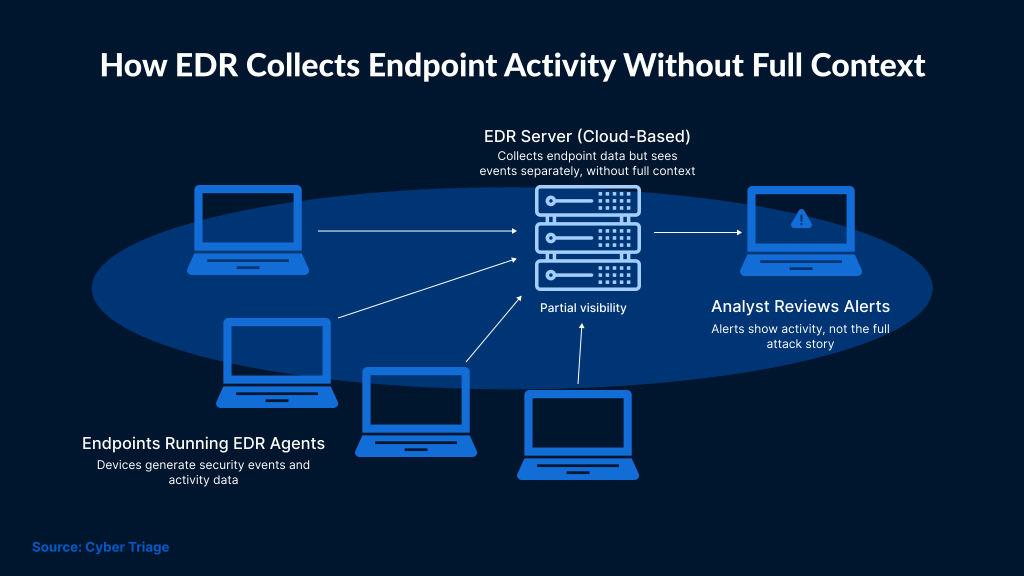
The way security tools understand attacks is completely different from how humans do. Security tools do not see the intent of the attack. They only react to what they are shown.
Endpoint Security - This works at the device level. Endpoint security will monitor files, processes, and system changes. It blocks the activity that clearly appears malicious. This type of security works well against known threats. However, its effectiveness declines when attackers use trusted tools or legitimate access, which is common in defense evasion.
EDR – It offers better security by recording activity happening on a device to identify suspicious behavior. It will raise an alert once an action matches a rule or pattern. But the problem with this tool is that each action is judged on its own. So, when defense evasion techniques are viewed this way, they look normal.
SIEM – This tool collects logs from multiple systems. Then, it uses correlation rules to link events. The process only works when logs are complete and available on time. In log evasion techniques, attackers alter or delay logs, which breaks the picture. As a result, analysts experience noise and alert fatigue. Their ability to make quick decisions is reduced.
Each tool sees the activity in parts. None of them can see the full story on their own, which is a big drawback.

Why Defense Evasion Causes Endpoint, EDR, and SIEM Failures
Defense evasion is successful because each security tool reviews activity individually. These tools are meant to answer simple questions like ‘Is this action bad?’ Attackers are aware of these questions, so the answer to such questions will always be ‘No’.
Actions appear trusted at the endpoint level. Security tools see approved software and valid users. The system behavior appears to be normal as well. No activity crosses a hard rule, so there is no reason to stop anything. Defense evasion works by staying inside what is allowed.
Now comes the EDR tools, which collect more details but evaluate one action at a time. An unusual command may trigger an alert, but in the absence of context, it may appear as low risk. When teams start getting similar alerts, it leads to alert fatigue while the real threats slip away.
SIEM can be effective, but it depends on logs to connect events. When logs are missing or delayed, correlation fails. Sometimes, attackers alter logs, a technique known as log evasion. All these actions create detection blind spots and delay incident response. A unique aspect of defense evasion is that it does not break tools; rather, it works around the environment's existing design.
Detection Blind Spots Caused by Disconnected Security Data
Detection blind spots are common in environments where separate tools are used to review security data, and they are never connected to each other. Each tool only sees its own piece of activity. No tool understands the relation between those pieces.
An endpoint tool may see a process start. EDR may see a command run later. SIEM may detect a login event in the logs. Each event looks normal on its own. It is hard for a single tool to confirm if those actions are part of the same attack. This creates a gap that attackers exploit to spread actions across systems. If there is no link between identity data and endpoint activity, or between devices and logs, it is impossible to detect patterns. There will only be fragments for analysts to check, no concrete evidence.
Missing tools are not the cause of these detection blind spots. But these are caused by missing connections between data.
Common Defense Evasion Techniques Used by Attackers
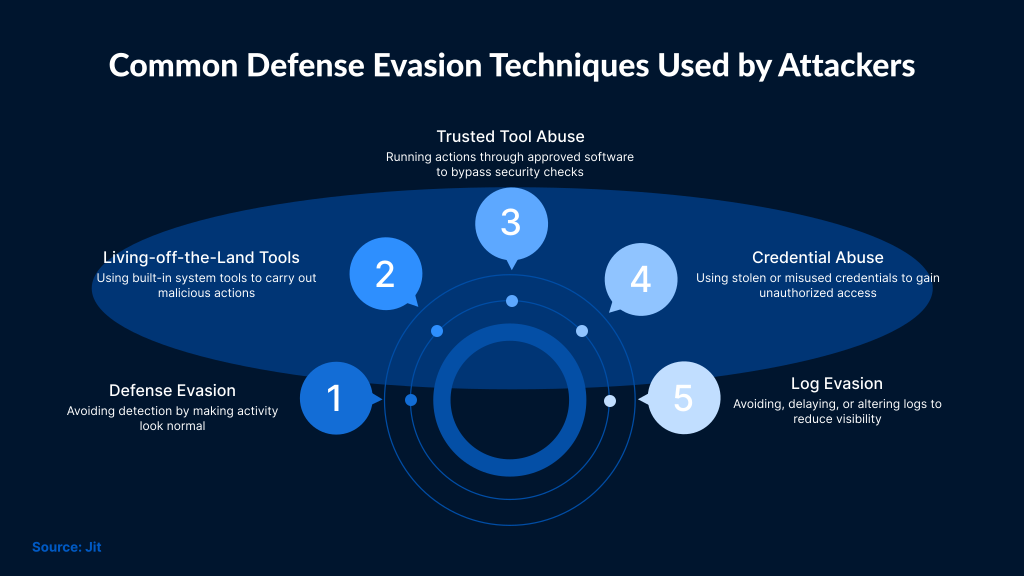
There are various defense evasion techniques attackers use to move deeper into systems undetected.
Method 1 – Attackers use trusted system tools that already exist on the device. Endpoint and EDR systems often do not flag such tools, as they are already set to ‘allowed’.
Method 2 – Another method used by attackers involves taking small steps at intervals of a few hours or days, so they don’t stand out. This helps defense evasion stay hidden.
Method 3 – Attackers also rely on log evasion. Here, they prevent certain actions from being logged or redirect logs to stay undetected. This reduces SIEM visibility and creates detection blind spots. Each method is simple on its own, but when combined, they allow defense evasion to move forward without raising concern.
How Log Evasion Reduces SIEM Visibility
SIEM systems depend on logs to understand the situation across the environment. But incomplete or misleading logs can disrupt the functioning of SIEM. This is where log evasion plays a major role in defense evasion.
Log evasion does not always mean deleting logs. Attackers mostly change the information that gets logged or when it appears. At times, logs are not generated for certain actions. In other cases, they arrive late or without enough detail.
When SIEM receives partial data, it struggles to correlate. Events that should form a clear attack path appear unrelated. Analysts only see isolated alerts, not a pattern. This increases alert fatigue and delays investigation. As a result, defense evasion persists even with an active SIEM, as the SIEM becomes less effective.
How Alert Fatigue Leads to Delayed Incident Response
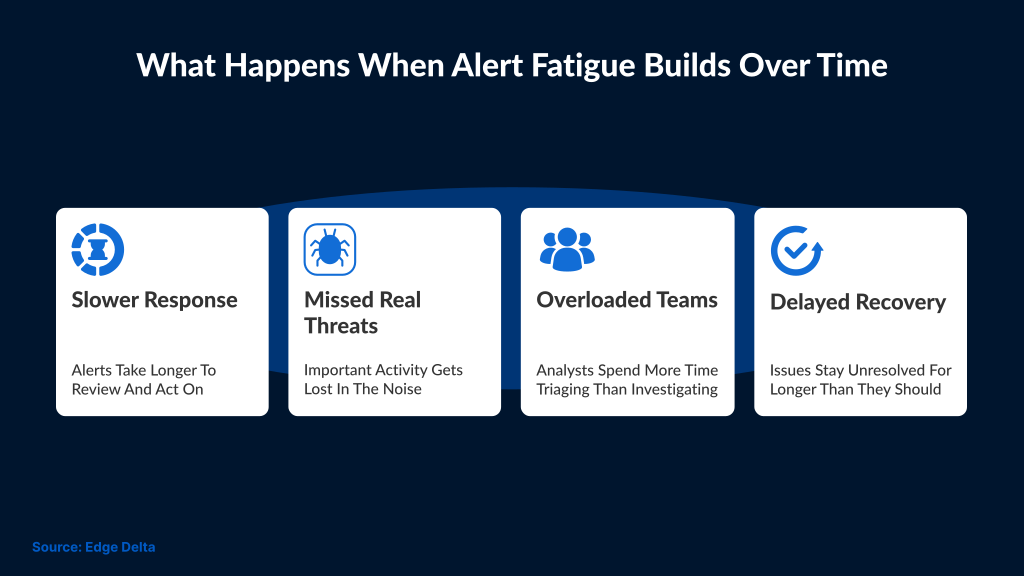
Alert fatigue occurs when security tools generate too many low-quality alerts due to insufficient context. Each alert shows a small action, not a clear threat. Suspicious alerts are reviewed by analysts, but they cannot confirm the risk. Over time, this creates alert fatigue.
Teams experiencing alert fatigue start to deprioritize alerts that appear routine. Defense evasion takes advantage of this. Attackers rely on actions that trigger weak or unclear signals. When teams receive a large number of alerts, they tend to ignore these signals.
It also slows down investigations. There are delays in reviewing important activities. Eventually, it leads to delayed incident response. By the time teams notice a real pattern, defense evasion has already progressed further into the environment.
How Context Improves Defense Evasion Detection
Context about the activity helps teams better understand it. They no longer look at single actions but connect the actions into a clear sequence. This makes it easier to spot defense evasion.
Even a simple action like logging in can be linked to a sequence by monitoring the device used to log in and the user's usual behavior. Teams can also see what happened before and after the activity. A command will not be judged alone but compared to what is normal for that user and system. When actions are connected this way, the real danger of defense evasion techniques becomes visible.
When teams are aware of the context around an activity, they can reduce blind spots. There can be a correlation between endpoint-related activity, identity, and logging data; as a result, alert fatigue can decrease, allowing the team to respond more quickly. With context, defense evasion becomes harder to hide within normal-looking activity.
Conclusion
Successful defense evasion takes place when security tools see activity as separate events rather than connected behavior. One system may record a user action, while another records a system change, without linking the two. Context is important because it adds meaning to the activity.
Without it, data collected by endpoint, EDR, and SIEM systems usually lacks the ability to explain intent. This creates blind spots and contributes to alert fatigue, which slows incident response. Defense evasion becomes easier to spot when related activity is linked across the environment. This is where seasoned security teams, such as SafeAeon, can help by connecting related signals and responding before the impact spreads further.