

Key Takeaways
- It takes an average of 277 days to identify and contain an active breach, irrespective of industry. This shows the importance of outsourcing MSSP to reduce the time to detect and respond to these breaches. (IBM DBIR)
- Organizations receive an average of 2,992 security alerts every day, yet 63% go unaddressed. (Vectra AI)
Introduction
Cybersecurity has moved from isolated tools to continuous operations. Most environments already generate alerts and logs across systems, yet attacks still progress undetected. The problem is not visibility but the speed at which teams can detect, understand, and respond to threats. The gap is not caused by a lack of tools but by limited execution capacity. This is where managed security services providers (MSSPs) come in.
Modern attacks increasingly rely on identity misuse and legitimate system tools. This makes detection harder and response more time-sensitive. Many of these attacks operate without malware, using legitimate credentials and system tools to move undetected.
What is a Managed Security Services Provider (MSSP)?
A Managed Security Services Provider (MSSP) delivers 24/7 cybersecurity operations to organizations that require continuous monitoring, detection, and response beyond internal capacity.
Attackers are continually developing new tactics to exploit existing security practices, which, in most organizations, fall short. At the same time, big companies make the headlines as victims, while small and medium businesses are increasingly targeted due to gaps in visibility, response speed, and identity security controls. According to IBM, a significant percentage of SMBs experienced cyber incidents last year.
Whether it’s phishing, malware, ransomware, identity abuse, or user error, the risk from identity-based attacks, lateral movement, and data compromise is increasing, pushing businesses to take security more seriously.
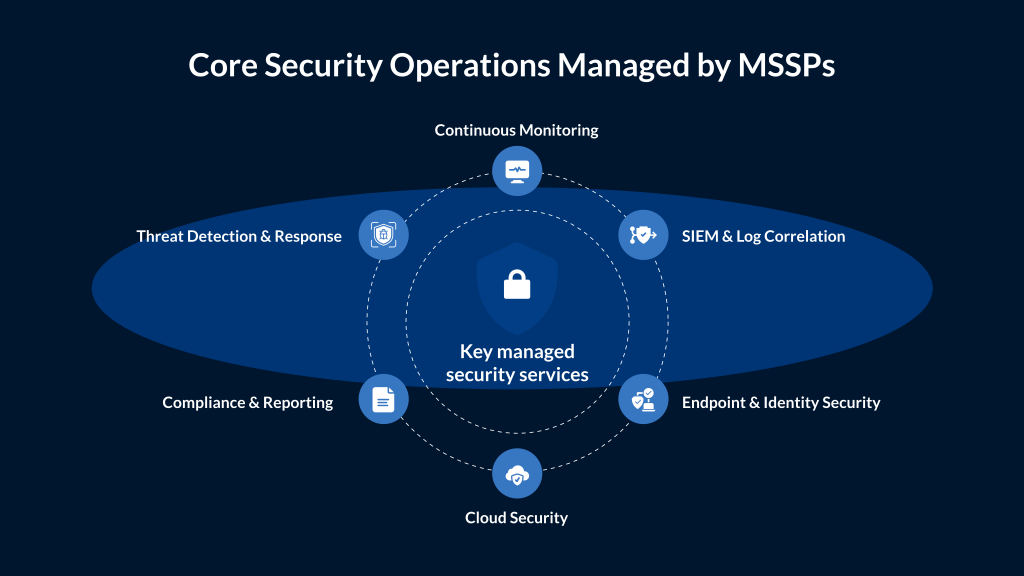
How MSSPs Operate Across Security Environments
Security operations do not rely on a single tool. They depend on how signals are collected, connected, and acted upon in an environment.
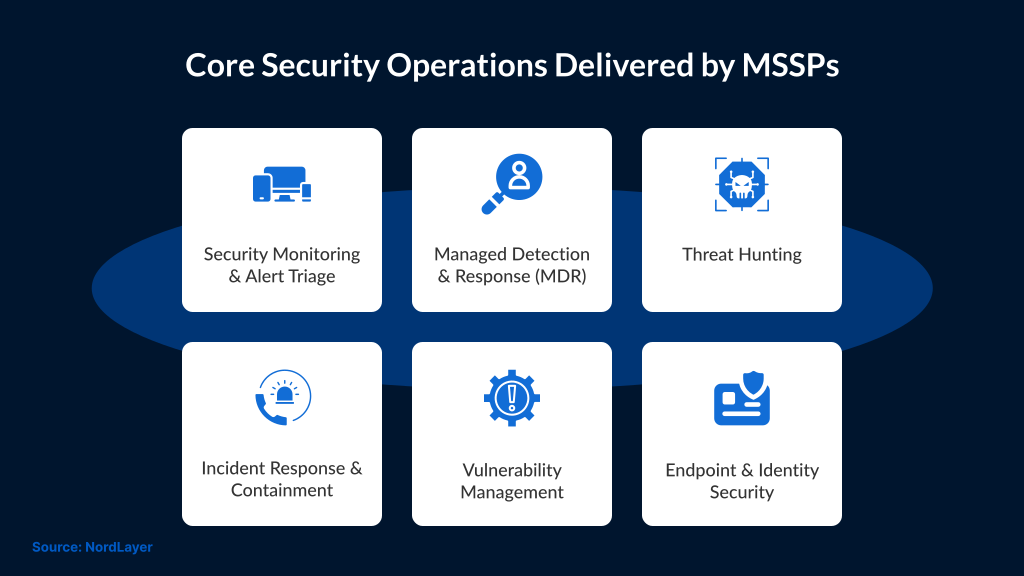
An MSSP operates by collating data from endpoints, networks, cloud platforms, and identity systems into a centralized view. Then, they monitor and correlate that data to identify patterns that do not appear at an individual system level.
When alerts are generated, they are not treated in isolation. They are triaged, enriched with context, and assessed for impact. This is where most internal teams slow down, especially when alerts increase or when ownership is unclear.
Once an incident is identified, the process moves into escalation and response. Actions are taken based on defined workflows, whether that involves isolating endpoints, revoking access, or containing lateral movement.
The difference is not in visibility. It is in how quickly signals move from detection to decision, and finally to action.
4 Key Reasons for Outsourcing Your Cybersecurity to an MSSP
1) Lack of In-House Security Expertise
Security cannot rely solely on antivirus, anti-spam, or other signature-based controls. Mobile devices, remote workers, and expanding cloud usage have significantly increased the attack surface. In-house IT teams are often stretched trying to keep up with rapidly evolving cybersecurity threats, as many lack the expertise and time to correlate signals and implement effective controls. Hiring the right talent has become prohibitively expensive, as security experts are in extremely high demand. Lack of in-house talent and time is the number one reason business leaders look to a Managed Security Services Provider (MSSP) to enhance cyber protection.
2) A Proactive Approach to Cyber Threats
Business operations depend on systems being continuously available and functioning without disruption. That requires continuous monitoring, detection, and response to security incidents that can disrupt operations and impact business continuity.
An MSSP enables continuous monitoring, correlation, and response, reducing detection and response time across distributed environments.
Common gaps in internal teams include:
- Who’s checking to see if the latest software updates have been installed?
- Essential files were accidentally deleted. Are those backups also working?
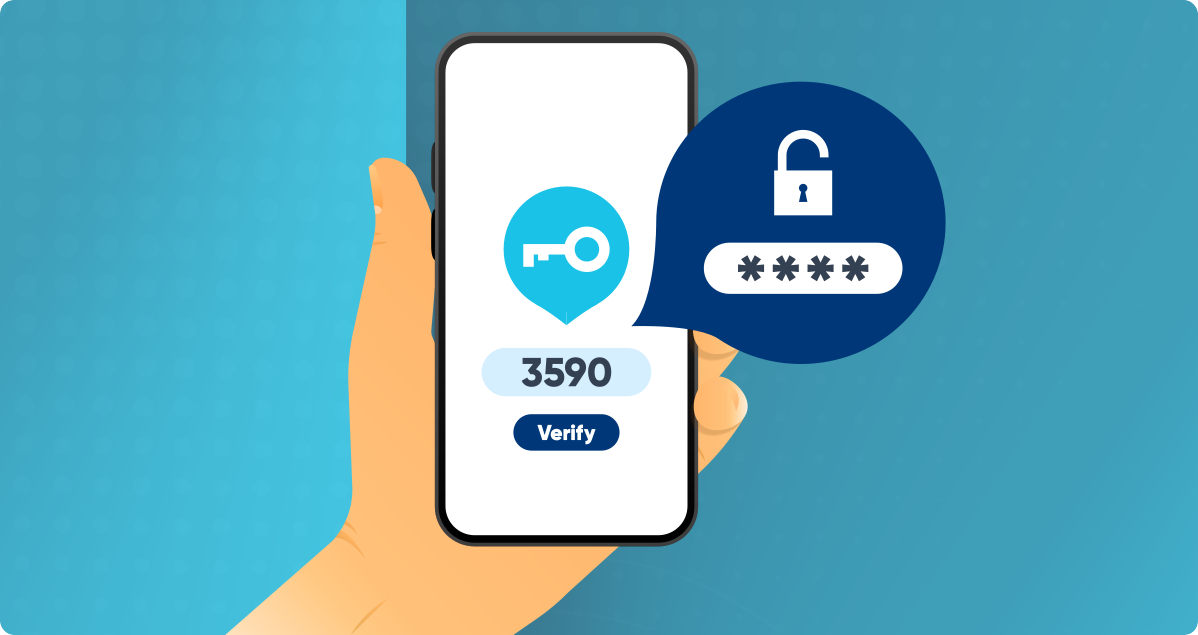
- Has MFA been implemented across all critical systems and applications?
- Who last reviewed or updated your password policy, if one exists?
- How are endpoints protected across distributed and remote environments?
3) Access to Advanced Security Technologies
While hiring in-house security specialists may seem appealing, it remains one of the hardest roles to fill in IT. According to CyberSeek, there are more than 1.3 million people employed in cybersecurity in the US, but over 500,000 positions remain unfilled. These roles command high compensation and are often difficult to retain. Even if you do manage to land the right talent, most sophisticated security solutions are often highly expensive and complicated for small to medium-sized businesses to deploy in-house.
Cybersecurity solutions such as firewalls, IDS/IPS, AV, EDR/XDR, identity security controls, and SIEM platforms require continuous monitoring, correlation, and response workflows to be effective. Businesses may also benefit from a virtual CISO (vCISO), who defines security strategy, governance, risk posture, and incident response frameworks aligned with business objectives.
4) Outsourcing cybersecurity is more cost-effective
One of the most significant business values of Managed Security Services is substantial cost savings, which include predictable monthly costs. Hiring and retaining talent is challenging. Outsourcing to a managed security model transfers operational responsibility for monitoring, detection, and response to specialized security teams, allowing you to focus on the business and the day-to-day operational demands of supporting your IT infrastructure.
When Should You Consider an MSSP?
The need for an MSSP usually becomes clear when security operations start to slow down under pressure. This often shows up when alerts are generated but not reviewed in time. Signals exist across systems, but they are not connected. Incidents take longer to understand, and responses begin after the impact is already visible.
In some environments, monitoring is limited to business hours. In others, responsibilities are unclear, and teams are unsure who acts when an incident occurs.
As environments expand across the cloud, endpoints, and identities, these gaps become harder to manage internally.
An MSSP becomes relevant when the question shifts from whether threats exist to how quickly your team can detect and respond to them.
Conclusion
Outsourcing cybersecurity is not only a cost decision but an operational one. It determines how quickly your organization can detect and respond to threats. As attack methods evolve toward identity abuse and stealth techniques, the ability to connect signals and act in real time becomes critical. This is where an MSSP like SafeAeon helps close that gap. They bring structured operations and continuous monitoring into a single operational model. They also define response ownership to ensure timely and appropriate action during security incidents.