


Key Takeaways
- Organizations facing severe security staffing shortages increased by 26% in 2024 compared to 2023, with an average of $1.76 million higher breach costs than those with low or no staffing issues. (IBM)
- A small percentage of employees often account for a disproportionate share of security incidents, highlighting the importance of targeted interventions such as individual risk profiling and customized security education. (Mimecast)
Introduction
Cybersecurity teams today are not short on tools or alerts. In many organizations, continuous signals are being generated across endpoints, networks, cloud platforms, and identity systems. The challenge is not visibility, but the execution.
The gap seen in cybersecurity skills is not just a hiring problem. It directly affects an organization's ability to detect, investigate, and respond to threats. Security teams may miss reviewing some alerts or struggle to understand certain incidents. At times, they respond only after the impact is already visible.
This gap is harder to manage, especially as attacks shift toward identity misuse and legitimate system tools. The focus is no longer just on building skills, but on ensuring security operations can keep up with real-world threats.
What is the Cybersecurity Skills Gap
When there is a shortage of qualified professionals for managing modern security operations, it is called the cybersecurity skills gap.
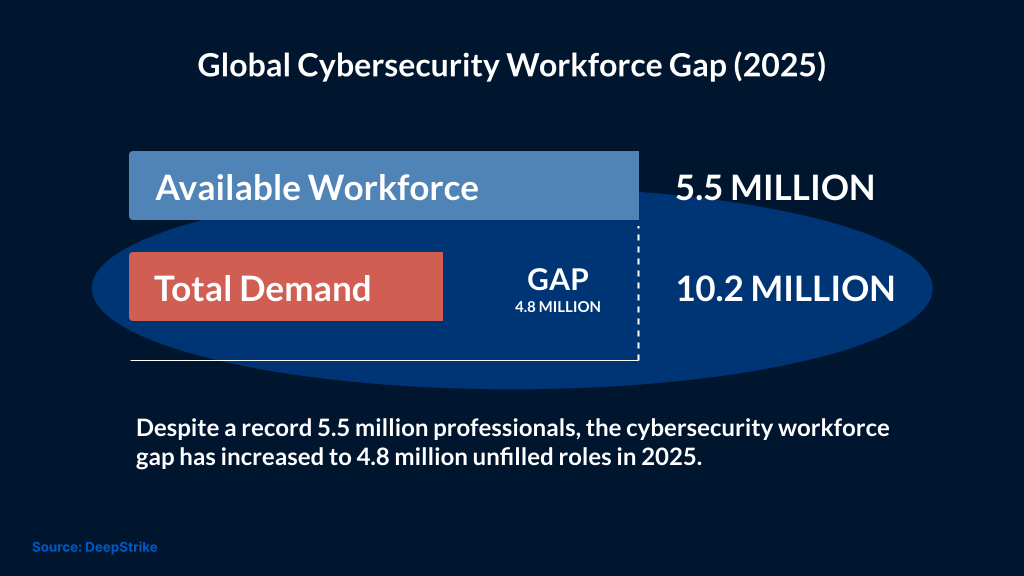
This gap is not limited to hiring. It affects the way security teams monitor environments, investigate alerts, and respond to incidents. As organizations expand their IT environments into the cloud and into identities, the demand for skilled professionals continues to increase.
The result is not vacant roles but delayed detection and slower response, leading to increased exposure to threats.
Approaches to Address the Cybersecurity Skills Gap
Addressing the cybersecurity skills gap requires a combination of workforce development and operational alignment.
Upskill the Existing Workforce
While cybersecurity is an extremely specialized field that requires workers to have advanced knowledge of programming languages, systems, and tools, formal training is relatively new. Many cybersecurity professionals over 30 today don’t hold a degree in cybersecurity, even in computer technology. Many of these experts are earning six-figure salaries due to the highly skilled, in-demand nature of the job.
Organizations can leverage their existing workforce through training and education to address the cybersecurity skills shortage. IT and technology professionals can be upskilled to meet this demand. Upskilling internal teams helps improve how organizations monitor, investigate, and respond to security events. IT and computer science professionals with the appropriate skills may be able to help close the cybersecurity skills gap. There are specific skills cybersecurity professionals need to succeed.
Lifelong Learning
Cybersecurity technologies are always changing. Cyber criminals continue to find new, sophisticated ways to breach security systems and threaten businesses, governments, and individuals. Continuous learning is required to keep pace with evolving threats and attack techniques.
Understanding the Current Threat Landscape
Cybersecurity professionals need a strong understanding of the current cyber threat landscape, including how to identify potential threats and respond to them. Understanding both the types of attacks likely to occur and how to counter them sets cybersecurity professionals apart.
It’s helpful to think like a hacker or ‘black hat’ to anticipate attacks and build contingency plans.
Penetration testing is a useful way of developing skills in business continuity, and disaster recovery planning is also vital. Expertise in malware research may help professionals gain a competitive edge.
Commitment to Developing Technical Skills
Cybersecurity is a highly technical field that requires continuous skill development to succeed. A strong focus on developing technical skills and understanding programming languages such as C, C++, PHP, and Java is essential. Cybersecurity professionals use a wide range of systems and tools daily to perform their tasks. To become an advanced, skilled specialist, you should be curious about developing your technical expertise.
Further Education
With the global shortage of skilled cybersecurity workers, organizations need to enable existing professionals, such as programmers, system administrators, and network engineers, to transition into the field.
Cybersecurity professionals, including those from IT and computer science backgrounds, can upskill through self-directed learning or structured programs. These include certificates, diplomas, or a Master of Cyber Security, enabling them to build highly technical, hands-on skills that are immediately applicable to industry needs.
Impact of the Cybersecurity Skills Gap on Security Operations
The cybersecurity skills gap directly affects the functioning of security operations in real environments.
Most organizations already generate continuous alerts across endpoints, networks, cloud platforms, and identity systems. However, with limited resources, all alerts cannot be reviewed in time. This leads to delays in identifying threats and in detecting incidents as they progress.
The gap also affects investigation and response. Incidents can take longer to analyze, and response actions may be delayed without sufficient expertise and clearly defined ownership. In many cases, the response begins only after the business impact becomes visible.
Today, most attacks exploit identity misuse and legitimate system activity, making detection more complex. How quickly an organization responds depends less on tools and more on the availability of skilled security operations teams.
Alternative Approaches to Address the Cybersecurity Skills Gap
Organizations are increasingly adopting alternative approaches to address the cybersecurity skills gap. Organizations are increasingly adopting approaches beyond traditional hiring and training.
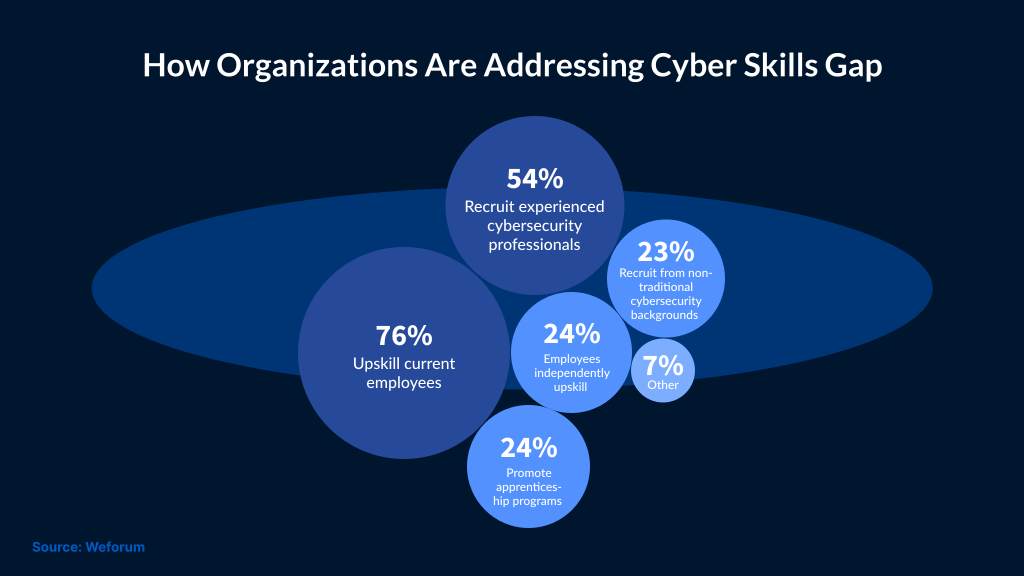
While upskilling internal teams is important, it is not enough to support continuous monitoring, investigation, and response in modern environments. As a result, many organizations are combining internal capabilities with external support.
Managed security services providers (MSSPs) and external security operations teams help extend coverage across environments by supporting alert monitoring, threat detection, and incident response. This reduces the pressure on internal teams while improving response speed and consistency.
This approach allows organizations to maintain operational continuity while addressing gaps in expertise, coverage, and execution capacity without adding internal complexity.

Challenges in Addressing the Cybersecurity Skills Gap
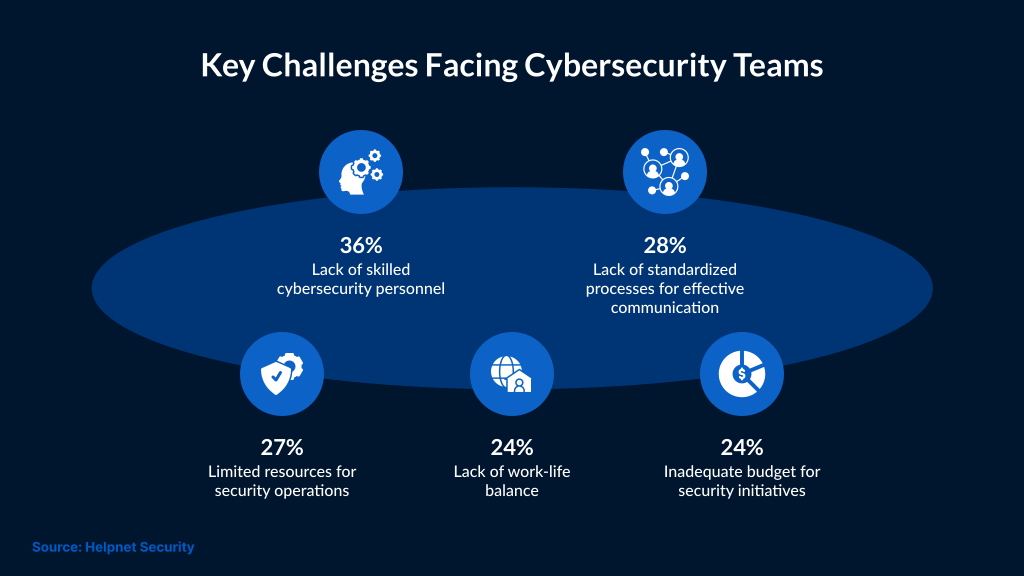
The increasing frequency and sophistication of attacks have forced organizations into reactive security approaches. This situation is exacerbated by a significant gap between the number of open cybersecurity positions and the number of qualified candidates to fill them. Organizations that understand the challenges this skills deficit presents may not be fully aware of the benefits of filling the gap from within, but it is a strategy worth considering.
A 2024 Microsoft report highlights that less than 30% SMBs manage their security in-house. Moreover, the average cost of cyberattacks on SMBs exceeds $250,000. This shows there is an urgent need for these organizations to improve their cybersecurity infrastructure to enable early detection and quick response to cyber threats.
Conclusion
The cybersecurity skills gap is no longer a workforce challenge. It directly affects an organization's ability to detect, investigate, and respond to threats.
As environments grow across endpoints, cloud platforms, and identity systems, the pressure on security teams continues to increase. Delays in reviewing alerts, understanding incidents, and initiating response can lead to greater exposure and business impact.
To address this gap, training alone won’t be enough. Organizations need to balance internal capability building with approaches that support continuous monitoring and faster response. This is where operational models, such as managed security services providers (MSSPs) like SafeAeon, help extend detection and response capabilities without adding internal complexity.
The focus now is not on filling roles, but on ensuring security operations can function effectively in real-world conditions.