

Key Takeaways
- According to Gartner’s 2024 Market Guide for Security Information and Event Management, 70% of organizations report that their current SIEMs lack the scalability to meet modern detection demands. As a result, they are shifting to data lakes for high-volume data.
- Data lakes can handle 80–90% unstructured data, which is typically too expensive for traditional SIEMs to ingest. (Salesforce)
- 75% of leading Chief Data Officers (CDOs) are investing in data lakes, according to the IBM CDO Study.
Introduction
Security teams collect more data today than ever before. Logs are generated from endpoints, cloud services, identities, networks, and applications. Teams are still using traditional SIEM tools to handle this growing volume of data. This puts a lot of pressure on these tools, leading to significant deterioration in their efficiency. The data will continue to grow, resulting in slower searches and limited visibility.
This problem can be addressed with data lakes. A security data lake is a centralized repository for storing large volumes of security data. It separates storage from analysis, which makes scaling easier and more cost-effective. Data lakes are not replacing SIEMs, but they will change how SIEM platforms operate behind the scenes.
This blog looks at how security data lakes change how SIEM systems handle data and support day-to-day security work.
Why Traditional SIEM Is Struggling Today
Traditional SIEMs were designed for smaller, more structured security data sets. That is no longer the case. Now, logs are generated from various platforms, including the cloud, remote endpoints, identities, and third-party services. The volume continues to rise with each passing day.
Most SIEM platforms cannot store all this data for long periods because of high costs. To control costs, teams either reduce log retention or filter data. But this creates blind spots in the system, which can leave gaps during investigations.
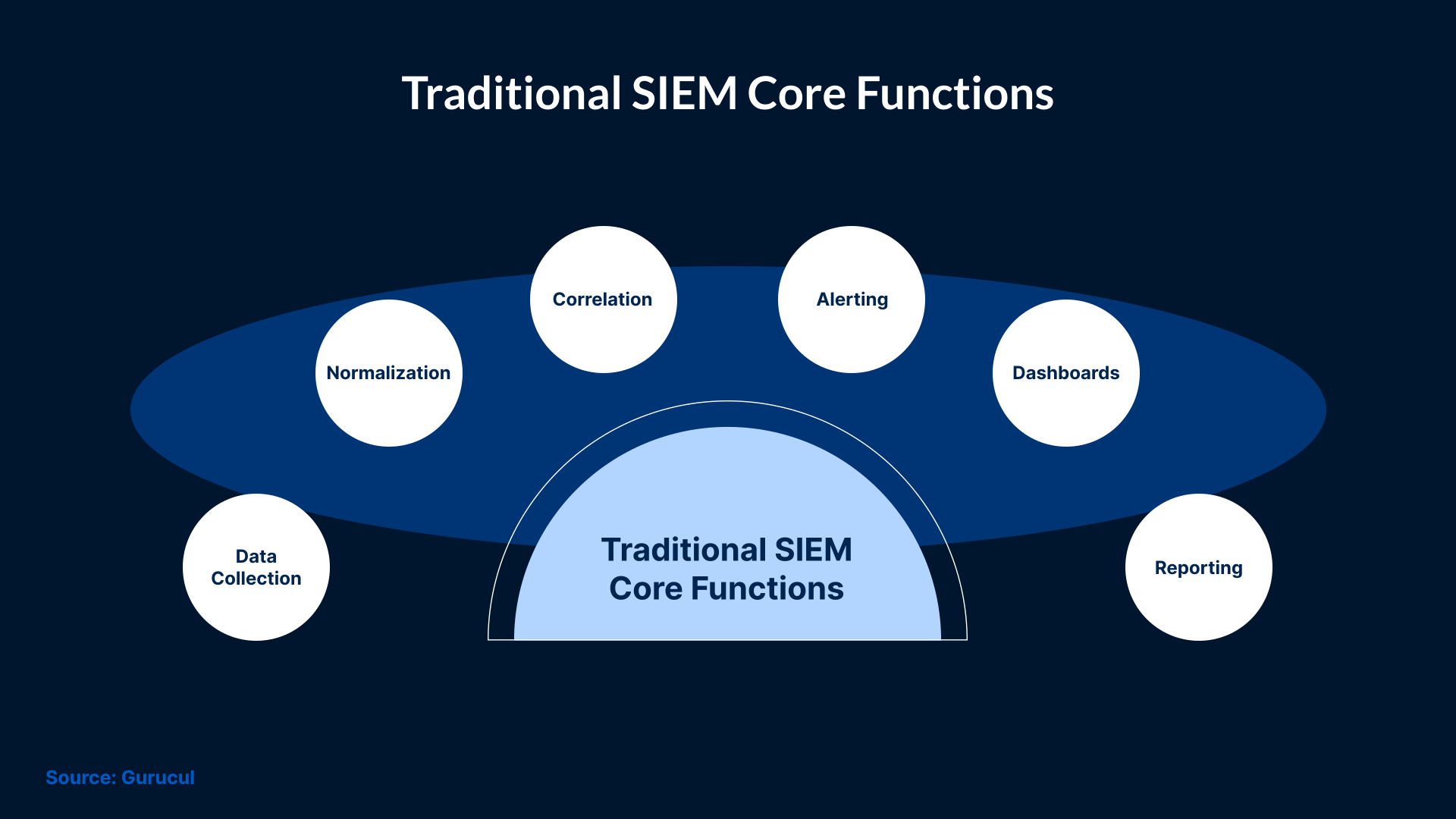
Performance is another issue, as the high volume of data slows searches. Queries that should take seconds often take much longer. This also slows down threat detection and response because analysts spend more time waiting than investigating.
Another shortcoming of SIEM tools is that they depend on fixed rules. These rules work well for known threats but can miss subtle patterns. Traditional SIEMs struggle to detect attackers who move slowly or blend in with normal activity.
Due to these limitations, SIEM alone is no longer enough. It needs support to keep up with modern security demands.
What a Security Data Lake Is and Why It Is Needed
A security data lake is used when an organization needs to store large volumes of security data. It handles raw data from multiple sources without strict limits on size or format.
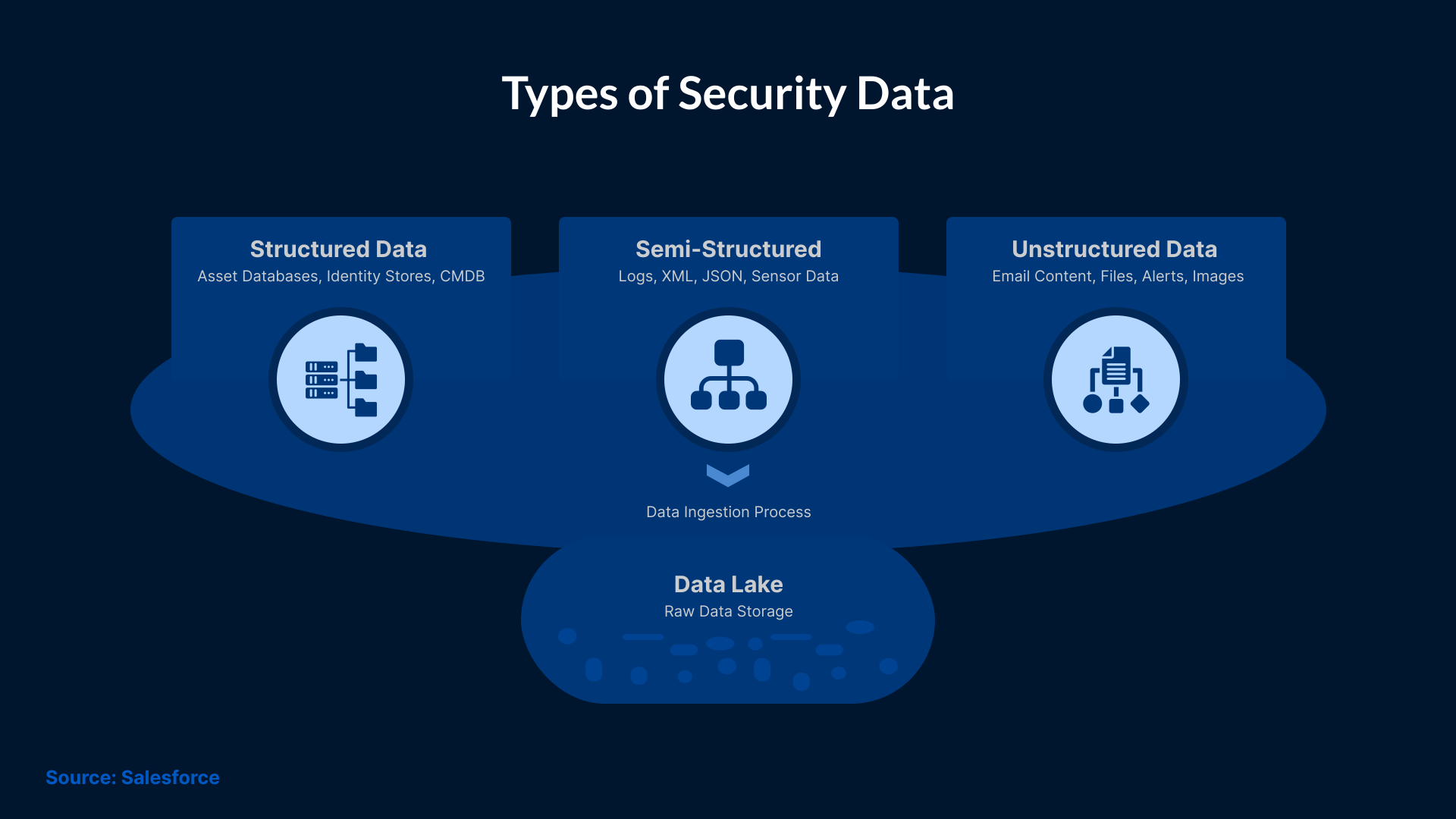
Unlike traditional SIEM storage, a data lake separates storage from analysis. It can store data for longer periods without a sharp increase in cost. Teams don’t have to aggressively delete or filter logs.
A security data lake also keeps data in its original form. This makes it easier for analysts to go back in time during an investigation. They can review past activity without worrying about missing details.
Security data lakes help organizations scale as data volumes increase. Organizations that are looking to grow and expand cannot rely on SIEM tools alone for data storage and processing. They need to use data lakes to solve the storage and scale problem, whereas the SIEM can handle alerts and daily monitoring.
Together, they can lay a stronger foundation for modern security operations.
How Data Lakes Change SIEM Data Collection and Storage
In a traditional SIEM setup, there is a limit to the amount of data that can be collected. Teams filter logs early and drop some data to reduce costs. Storage is strictly controlled, which also means there is less data to work with.
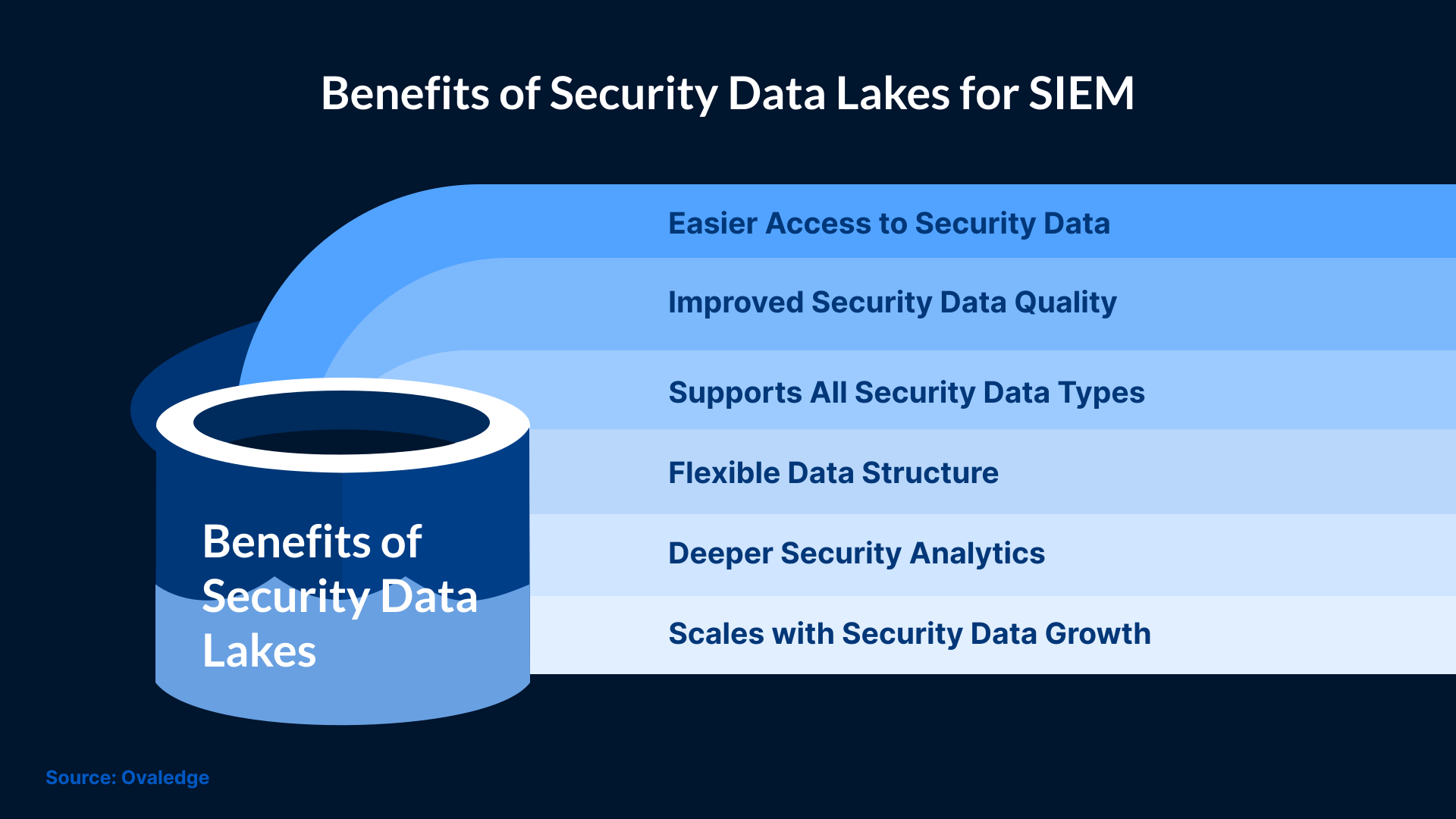
More Data Collection: Data lakes change this approach. They allow teams to collect more data without having to decide its value upfront. Teams can also store the logs in their raw form.
More Affordable Storage: Storage also works differently because data lakes are designed to scale. As data grows, storage can expand without major redesign. Compared to SIEM-only storage models, costs in data lakes grow more gradually over time.
Flexibility: Data lakes are also flexible. It is possible to add data from new tools without complex parsing rules at the start. Teams can decide how to process and analyze the data as needed.
Better SIEM Functionality: SIEM platforms can focus on their core tasks once the burden of heavy storage and long-term retention is shifted to data lakes. The core tasks of SIEM include alerts and active monitoring.
How a Security Data Lake Is Structured
A security data lake has different layers, where each layer has its specific role. Let's find out what those layers are:
Layer 1: The data first comes in from different sources. Logs are stored as they arrive, without heavy filtering at this point.
Layer 2: Storage takes the next layer. Data is kept in a central location. In case the volume grows, the data lake can scale as data volume increases. Older data can be stored at a lower cost, while recent data remains easily accessible.
Layer 3: Processing happens in the next stage, so here the data is cleaned, enriched, or normalized when needed. Processing does not happen immediately. However, it can be done later based on use cases.
Layer 4: The final layer is access. SIEM tools and SOC teams usually access the data. Different tools can access the same data without copying it.
With this structure, it is easier to store data. Security teams can easily use the data as needed.
Managing Large Volumes of Logs Using Data Lakes
Security logs can grow fast. Every device and user action adds more data. Traditional SIEM systems struggle when this volume continues to rise. Storage becomes expensive, and teams are often forced to delete data earlier than planned.
Data lakes handle this differently. They are designed to store large amounts of data over long periods. Teams can keep the logs without the pressure of cleaning or reducing them.
Another benefit is flexibility. Teams don’t have to worry about deciding the usability of each log. They can store the data temporarily and retrieve it for review when an investigation or audit is conducted.
This approach gives teams more control, as they can look back further in time. They can also connect events that were not obvious before. Managing logs becomes less about limits and more about access.
How Security Analytics Improves with Data Lakes
SIEM analytics are built around fixed rules. They are good at handling known threats but less effective against subtle or slow-moving activity.
Data lakes help address this limitation by allowing long-term storage of data. Analysts can search a wider range of information and spot patterns that were previously missed in short time windows.
Data lakes also support different types of analysis. Teams can run deeper searches when needed. They can easily compare current activity with older data, which can prove useful during threat hunting and incident review.
As all the data is stored in one place, correlation becomes easier. Teams can view events from different systems together and get a clearer picture of the incident.
Better Visibility for SOC Teams Using Data Lakes
Good visibility allows SOC teams to operate more efficiently. If the data is limited or missing, investigations slow down, and they might miss important details.
Data lakes fix this problem by keeping more security data available. Analysts can see activity across systems and users over longer periods. They are not restricted to short retention windows.
Clear visibility helps teams understand how events are connected. With this, they can easily trace actions before and after an alert. This reduces guesswork during investigations.
Using Data Lakes to Build a Scalable SIEM Setup
As security data grows, SIEM systems need room to scale. But when SIEM handles everything, scaling becomes difficult and expensive. It will require significant tuning and higher costs to incorporate more security data.
Data lakes change this setup. They can store large volumes of data for the long term, which allows SIEM to focus solely on alerts and active monitoring.
When new data sources are added, they can send logs to the data lake without changing the SIEM right away. Then, it is up to teams to decide how to use that data.
With this approach, SIEM also remains responsive. The overall security setup scales without constant redesign.
Challenges to Consider When Adopting Data Lakes
Data lakes solve several problems, but they also introduce a few. There are several challenges for teams to consider while adopting data lakes:
Poor Data Management: Data lakes can store large amounts of data, but it is difficult to organize that data. If the processes are unclear, using the data will also be difficult for teams.
Poor Query Performance: It can take a long time to search very large datasets if systems are not properly tuned. And, this can impact investigations where teams need quick answers.
Lack of Skills and Tools: Teams may need to learn new tools to work with data lakes. Clear access and retention rules also need to be set by security and compliance teams.
These challenges do not outweigh the benefits. They simply require planning and clear ownership.

Conclusion
SIEM systems are an important part of security operations. They help teams monitor activity and respond to alerts. However, on their own, they can struggle with growing data volumes and long-term storage. For that, teams need data lakes. These repositories allow teams to store more data for longer periods. The data can be easily retrieved when needed. Data lakes also make it easier to connect information from different sources in order to improve investigations. SafeAeon helps organizations strengthen their existing SIEM environments using security data lakes. This allows teams to handle growing data volumes and improve investigations without changing the routine workflow of their SOC teams.