

Key Takeaways
- Attackers used data theft without encryption in 18% of cases compared to 11% involving encryption, indicating a shift toward extortion models that do not rely solely on system disruption. (IBM)
- In 2025, 44% of breaches analyzed involved ransomware, showing its continued presence as a dominant attack pattern. (Verizon)
Introduction
Ransomware has moved beyond simple malware attacks. It is now operating under a structured business model that disrupts operations, not just systems. Attackers are not depending on phishing or malicious files to deploy ransomware. They instead use compromised identities and existing tools present within environments to move undetected. By the time encryption starts, the attack has already progressed across systems. It is important for organizations to understand how ransomware works, spreads, and impacts operations to reduce risk.
How Ransomware Works
Ransomware is a type of malware that locks access to systems or data until a ransom is paid.
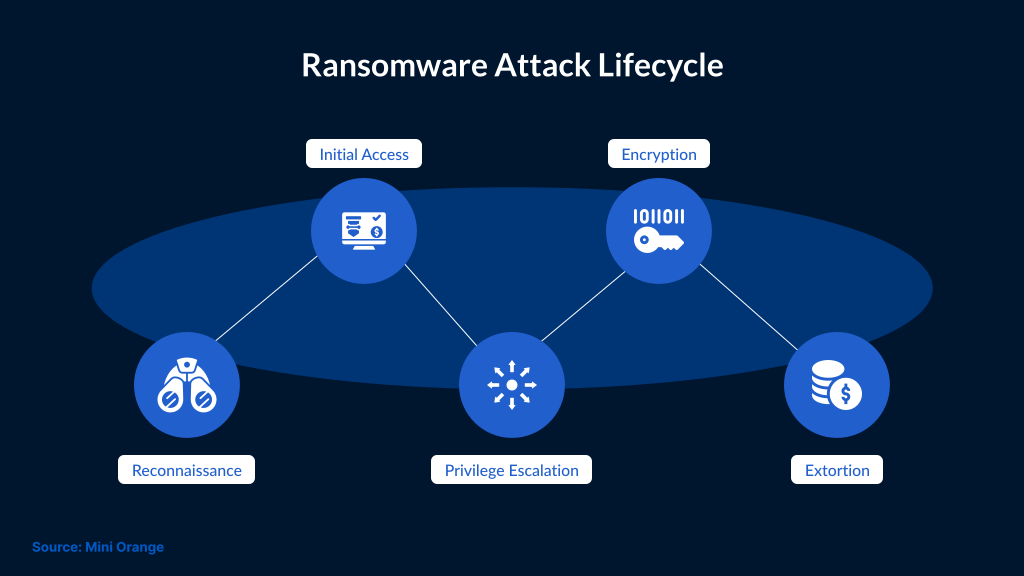
To understand how ransomware works, it is important to look beyond encryption and focus on how a ransomware attack actually unfolds inside an environment.
How Does Ransomware Gain Access to Your Systems
There is no single answer to this. As systems become more connected and distributed, attackers find new ways to deploy ransomware within the victim’s environment.
The attack surface is now larger due to the introduction of cloud services, remote access, and identity-based access. There are multiple entry points that attackers can exploit.
Still, when you review the incidents, you will find certain entry points recurring. These paths are used by attackers to get initial access before anything becomes visible.
Human Error
People remain a common entry point in ransomware attacks. Mostly, their involvement is unintentional, but in some cases, the situation is otherwise.
Attackers gain entry using phishing emails, social engineering, and weak or reused passwords. In many cases, they use valid credentials instead of malware, making the activity appear normal.
Once attackers gain access through a user account, they can easily move across systems without triggering immediate alerts.
Outdated and Unpatched Systems
Unpatched vulnerabilities remain a direct entry point for ransomware attacks. Here, attackers actively scan for exposed systems running outdated software and known vulnerabilities.
They don’t target only small organizations, but also organizations of any size with gaps in patching, delayed updates, or unmanaged assets in the environment. Once attackers identify a vulnerable system, they start exploiting it to gain initial access or escalate privileges.
The WannaCry attack is a well-known example of an attack that exploited unpatched Windows systems at scale. Similar patterns exist today, even with more advanced attack methods.
Security Architecture Gaps
Weaknesses in security architecture also create silent entry points. These can include misconfigured access controls, exposed services, or unnecessary remote access.
These gaps are not always obvious. They exist in systems, identities, and network paths. Attackers usually discover these gaps before they are identified internally.
Once these gaps are exposed, attackers use them to gain access, move across systems, or maintain persistence without immediate visibility.
Ransomware Attack Trends
Ransomware attacks used to be broad and opportunistic campaigns. Now, they have transformed into more targeted and structured operations. Attackers no longer target individual users; they focus on organizations, where disruption can directly impact the business.
Industries such as healthcare, government, education, and service providers are targeted more frequently than others. There is no pattern for which industry is targeted most. Attackers can target any industry that holds critical data or depends on continuous operations.
The method of attack has also changed. Ransomware is no longer the first step. It is usually deployed after establishing access through phishing, credential compromise, or the exploitation of vulnerabilities. Attackers easily move across systems and identify high-value assets to execute encryption.
A significant change in such attacks is caused by Ransomware-as-a-Service (RaaS). Now, established groups provide infrastructure, tools, and support, while affiliates carry out the attacks. This model has lowered the barrier to entry and increased the scale and frequency of incidents.
In many cases today, encryption is only a part of the attack. Attackers mostly exfiltrate data before execution, which adds pressure through the risk of exposure.
Top Ransomware Targets
Healthcare
Healthcare environments are frequently targeted because their operations are dependent on continuous access to systems and data. Any disruption can directly affect patient care, increasing the pressure to restore access quickly.
Small and Medium Businesses
Smaller organizations are also extensively targeted due to limited visibility and security resources. In many cases, attackers establish access and move across systems without being detected.
Government Agencies
Government systems handle a large volume of data and support critical services, making them high-impact targets. Disruption in these environments can affect public services, which increases both visibility and response pressure.
Protection From Ransomware
Blocking malware won't prevent it from entering the environment. It depends on how early the access is identified and how quick the response is.
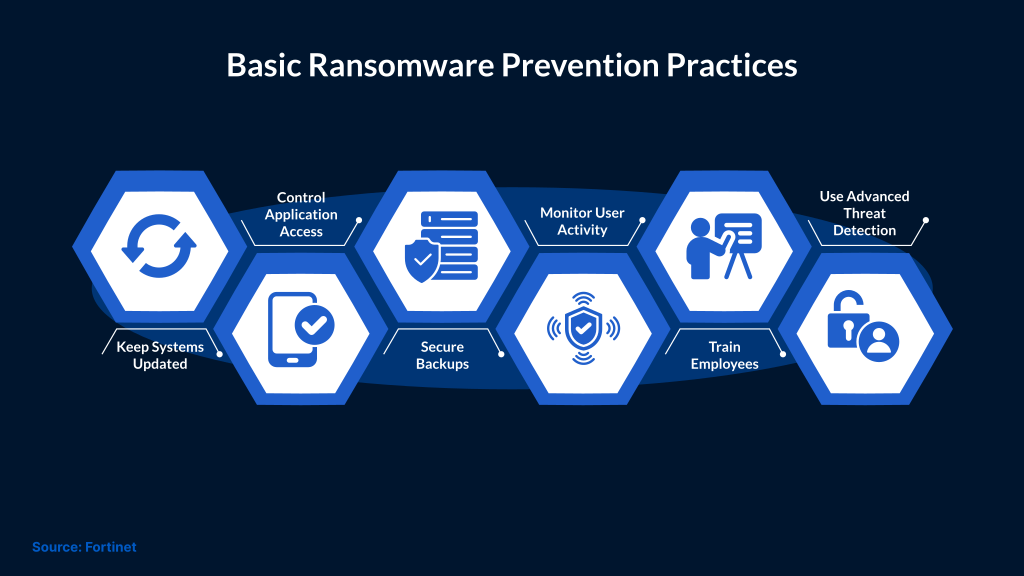
Patching and Exposure Management
Keep systems and applications up to date while tracking exposed systems in the environment. Unpatched vulnerabilities and unmanaged assets later become common entry points.
Backup Strategy
Maintain regular backups that are isolated from production systems. Backups should not be directly accessible from the same environment, or they can be impacted during an attack.
Email and Access Control
Phishing remains a common entry point. Users should be cautious with links and attachments, but more importantly, access should be controlled and monitored.
Endpoint and Detection Capabilities
Traditional antivirus programs are no longer sufficient. Identifying abnormal behavior is also crucial, rather than just addressing known threats. Abnormal behavior can be anything from unusual access patterns, lateral movement, or attempted executions.
User Awareness and Training
Proper training must be provided to employees on how attacks unfold in real scenarios. With awareness, organizations can significantly reduce the risk, but they should require visibility and monitoring to detect activity that appears legitimate.
Conclusion
Ransomware is no longer a single event. It is a sequence of actions that begins with access and builds toward operational disruption. Most failures do not occur at detection, but in the gap between visibility and response.
Reducing ransomware risk depends on closing that gap by improving visibility across environments, speeding decision-making, and assigning clear ownership during incidents.
SafeAeon addresses this through its Anti-Ransomware-as-a-Service, which focuses on identifying and stopping ransomware activity before it reaches execution, reducing the likelihood of encryption and operational impact.