


Key Takeaways
- The global average cost of a data breach in 2021 is $4.24 million, making delayed detection and response a direct business risk. (IBM)
- Nearly 64% of surveyed organizations were already using external service providers to support internal security operations. (Arista Networks)
Introduction
Security operations have changed over the last few years. Most environments no longer operate in a single location. Organizations use endpoints, cloud workloads, and SaaS applications. Access is managed through identities. Multiple tools are used to monitor user and system activity, but they don’t always provide a unified view.
In many cases, nothing appears wrong at first. Logins match expected users, and system behavior aligns with normal activity. Alerts are generated but mostly remain isolated and do not clearly indicate a larger issue. As a result, teams are unable to understand what is really happening inside the environment.
This creates a visibility gap. Teams don’t struggle with collecting data; they struggle with interpreting it between systems. When activity is fragmented, detection becomes slow, and teams can only respond after the issue becomes more visible.
At this stage, organizations begin to evaluate how to structure their security operations. The decision usually comes down to whether to build an in-house SOC or use an outsourced SOC. This is not a question of control or cost, but how quickly activity can be detected, understood, and responded to when it matters.
Why Security Operations Have Changed
Security operations are not centered around a fixed perimeter. Environments now span endpoints, cloud workloads, and SaaS platforms. Also, identities act as the primary access layer. This shift has changed how attacks are carried out.
A majority of modern attacks do not depend on obvious malware. They use valid credentials, trusted tools, and normal system behavior to move within environments. This makes it difficult to differentiate between legitimate usage and suspicious activity.
At the same time, security tools generate large volumes of alerts. Many of these signals remain disconnected, making it harder for teams to identify what requires attention. Data collection is not the challenge; connecting and acting on that data is.
This shift has made detection speed and response execution more important than the tools themselves. Because of this, many organizations are re-evaluating how their outsourced SOC or internal SOC is structured.
What an In-House SOC Involves
An in-house SOC requires more than deploying security tools. It involves setting up a full operational structure to monitor, analyze, and respond to activity between systems and tools. Here’s what it includes:
- Building a centralized logging layer using a SIEM.
- Integrating data from endpoints, network devices, cloud platforms, and identity systems.
- Creating, tuning, and regularly updating detection rules based on new threats and environment changes.
- Establishing processes for monitoring, investigation, escalation, and response.
- Maintaining a team to manage alerts, investigate activity, and handle incidents.
This setup does not remain the same. As the environment changes, detection logic needs regular updates, and response workflows evolve.
Challenges of Building and Running an In-House SOC
It’s hard to set up an in-house SOC, but keeping it operational is even harder. The effort required to maintain consistent monitoring and response usually increases over time. Here are the most common challenges organizations face with an in-house SOC:
- Hiring and retaining experienced analysts for continuous monitoring and incident response.
- Managing high volumes of alerts, where most map to normal activity but still require triage.
- Tuning detection rules to reduce false positives without missing real threats.
- Understanding activity between endpoints, cloud systems, and identities without a unified view.
- Maintaining detection and response consistency as new systems and users are added.
These challenges usually show up in daily operations. Alerts increase, but it takes more time to understand which ones matter. Teams spend more time reviewing activity, and response begins to slow when signals are not clearly connected. This is often the point at which organizations begin evaluating alternative SOC services to reduce operational strain.
What an Outsourced SOC (MSSP) Delivers
An outsourced SOC provides an operational setup that is already in place, without the need to build it internally. With outsourced SOC services, monitoring, detection, and response workflows are already defined. This allows monitoring to begin earlier rather than taking time to establish.
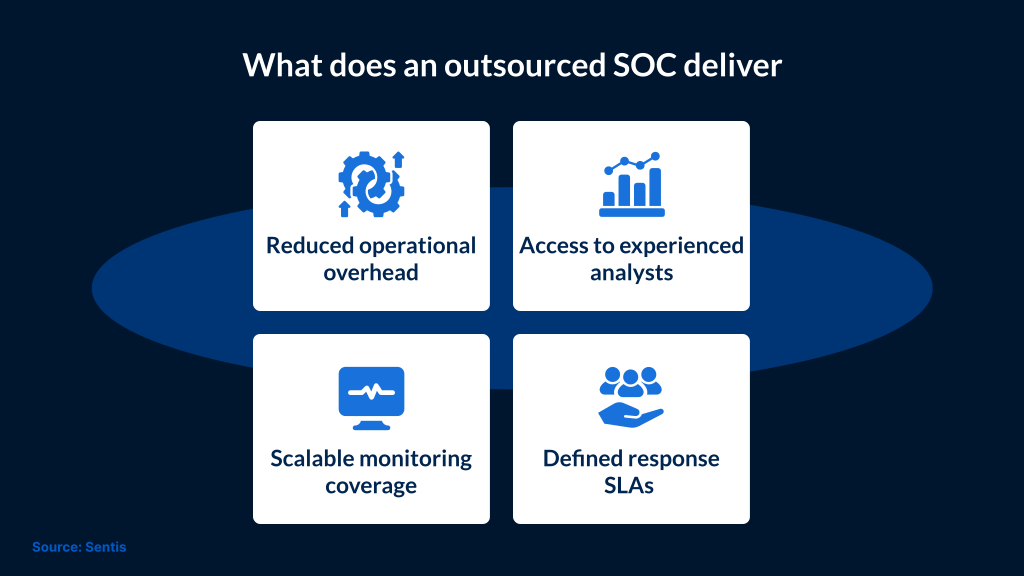
A managed SOC service provider handles alert triage and initial investigation using detection rules tuned to observed attack patterns. Data from existing tools is integrated into the SOC platform or SIEM. This allows activity to be reviewed without rebuilding the logging and monitoring setup.
This approach reduces the time required to begin monitoring. It also shifts day-to-day operational effort, as alert handling and investigation are managed by the outsourced SOC team.
Limitations of an outsourced SOC
An outsourced SOC reduces the effort required to build and run security operations, but it comes with its own limitations.
- External teams rely on the data and access provided to them. If logging is incomplete or certain systems are not properly integrated, visibility remains limited. This can affect the accuracy of the activity review.
- There can be delays in response when responsibilities are not clearly defined. In some cases, the outsourced SOC identifies and escalates an issue, but the internal team is responsible for taking action. This can slow down containment.
- Over time, external teams may not always have the same level of visibility into business workflows or system dependencies compared to the initial onboarding phase. This can affect how alerts are interpreted.
These limitations do not diminish the value of an outsourced SOC, but they highlight the importance of clarity in ownership, access, and response expectations.
In-House SOC Vs MSSP: Key Differences
| Factor | In-house SOC | Managed SOC (MSSP) |
|---|---|---|
| Setup time | Requires time to build infrastructure and processes | Starts with an existing operational setup |
| Control | Full control over tools, data, and response decisions | Shared control based on service scope |
| Operational effort | Managed internally by security teams | Handled by the SOC service provider |
| Detection readiness and data sources are integrated | Improves over time with rule tuning and data integration | Available from the start with pre-built and maintained detection |
| Response ownership | Fully internal | Often shared between provider and internal team |
| Scalability | Requires hiring and process expansion | Scales based on service coverage |
| Environment understanding | Deep internal context | Depends on data access and integration |
The Hybrid SOC Model (Co-Managed SOC)
A hybrid SOC, also known as a co-managed SOC, combines internal teams with external SOC services. Organizations don’t have to choose between full ownership and full outsourcing. Responsibilities can be shared based on what each side handles effectively.
In this model, the SOC service provider usually manages continuous monitoring, alert triage, and initial investigation. Internal teams remain involved in decision-making and response, especially where knowledge of systems and business context is required.
With this approach, organizations can start with operational support while still maintaining control over critical actions. It also reduces the effort required to build everything internally and without full dependency on an external team.
A hybrid SOC works well in environments where internal teams are small but still need visibility and involvement in incident handling.
How to Choose the Right SOC Model
Choosing between an in-house SOC, an outsourced SOC, or a hybrid model depends on the structure of your environment and how response is handled. Here are some key points to consider when choosing the right SOC model:
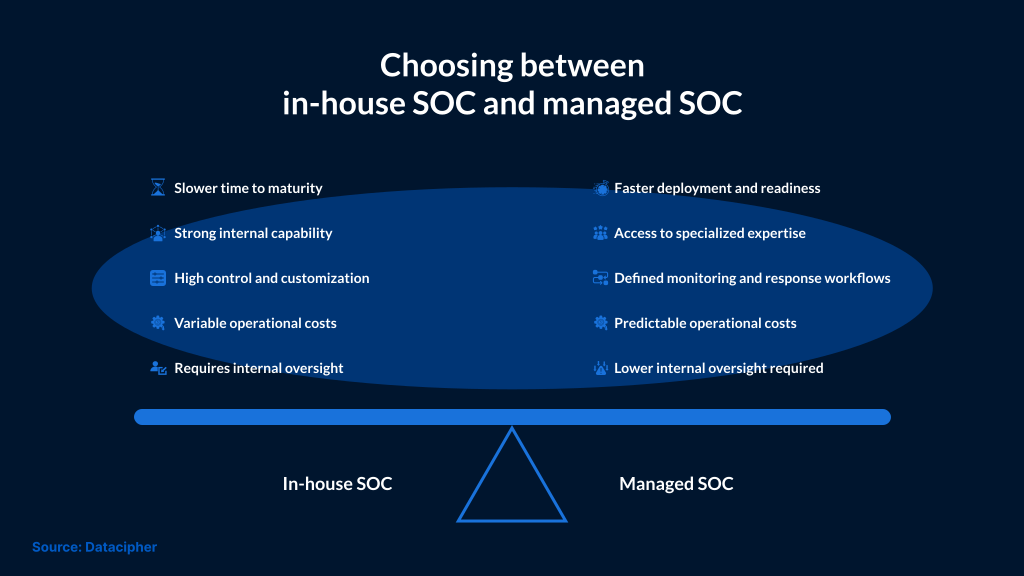
- Visibility: If activity from endpoints, cloud systems, and identities is not clearly connected, it will lead to delayed detection regardless of the model. The ability to collect and interpret signals is more important than whether the SOC is internal or external.
- Response Ownership: In some setups, the SOC identifies and escalates issues, but another team handles the response. This separation can slow down containment. A clear understanding of who investigates and who responds is important before choosing a model.
- Internal Capability: An in-house SOC works only if the internal team can manage monitoring, tuning, and investigation consistently. If not, organizations may consider working with a SOC service provider or adopting an outsourced SOC model to reduce operational load.
The decision is less about tools or cost, and more about how quickly activity is detected and how effectively response actions are executed.
Conclusion
The decision between an in-house SOC and an outsourced SOC is not only about ownership or cost. It is about how security operations function in day-to-day environments.
As systems expand across endpoints, cloud platforms, and identities, it becomes harder to interpret activity. The volume of alerts continues to rise, but clarity does not always follow. Detection slows down when signals remain disconnected, and response begins only after issues become visible.
The right approach depends on how your organization handles visibility, investigation, and response. The focus should remain on reducing detection delays and ensuring that action can be taken when it matters.
SafeAeon works with organizations to support monitoring, investigation, and response across environments, especially where visibility gaps begin to affect detection and response timelines.