

Key Takeaways
- Agentic Systems will handle 60-70% of routine SOC work by 2028. (Security Boulevard)
- Agentic systems reduce breach detection time to an average of 23 days, compared to 207 days for traditional approaches. (IBM)
Introduction
Security operations centers (SOCs) are changing rapidly. Automation is playing a key role in how SOCs make decisions and proceed with investigations. This change has raised an important question: ‘If systems start acting on their own, why would human analysts be used?’ Agentic SOC is not going to remove people from security operations. It is about changing the way work is done and where analysts can apply their judgment. Analysts will also take responsibility when alerts turn into real incidents.
What Agentic SOC Means in Real Security Teams
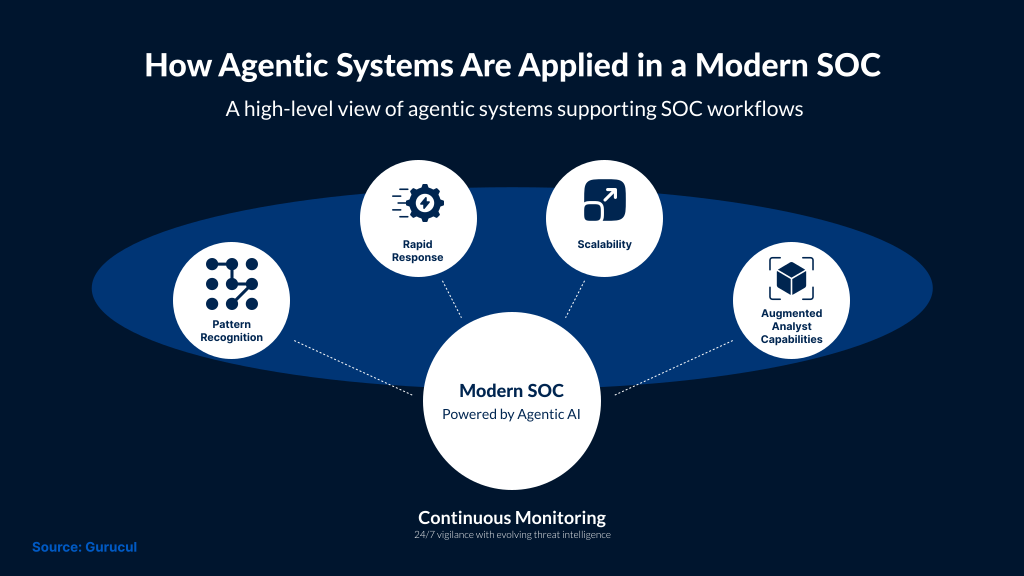
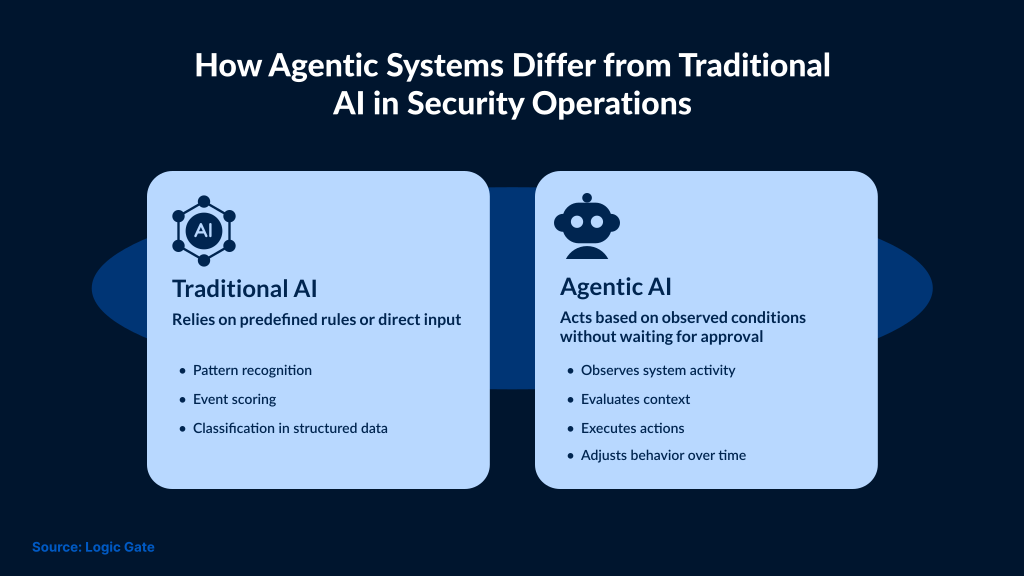
Agentic SOC determines how work moves through the environment. Here, systems can act directly instead of waiting for confirmation. Systems also observe activity and connect related signals to see if there is anything wrong. If malicious activity is confirmed, the system acts immediately. This process can change the daily workflow inside the SOC.
Low-value alerts are reviewed by the system. As a result, analysts can focus on other important tasks instead of spending hours reviewing repeated alerts. Agentic SOC can identify common patterns early and automate repetitive checks. Even straightforward alerts are resolved without escalation. This gives analysts space to focus on important events that require judgment.
Agentic SOC is never meant to replace the team. Its behavior can be adjusted based on the situation. Analysts won't review every single alert. They are required only when there are conflicting signals or an unclear business impact. Agentic SOC is meant to work alongside analysts, not to replace them.
How Agentic SOC Platforms Operate in Practice
An agentic SOC platform is responsible for monitoring activity across systems. It can take action without waiting for any confirmation. The platform does not have to follow a fixed script. It evaluates the current situation and makes a decision accordingly. Then, it continues the investigation on its own.
Agentic SOC platforms collect signals from SOC automation and autonomy tools to review past behavior. When an alert matches known patterns, the system validates it and gathers all relevant evidence. If it's a low-risk alert, the system closes it right away. This process occurs quietly in the background, and analysts do not have to approve each step.
The platform only slows down when conditions are not clear. Then, it starts gathering more information instead of taking quick actions. It can also hand the case to an analyst with a supporting context already prepared. But this handoff is intentional.
In practice, the agentic SOC platform reduces friction inside the SOC. All the work is conducted without constant handoffs. Analysts only step in at the right time, not at the first signal. They are responsible for handling judgment while the system handles motion.
Alert Triage Using an Agentic SOC Platform
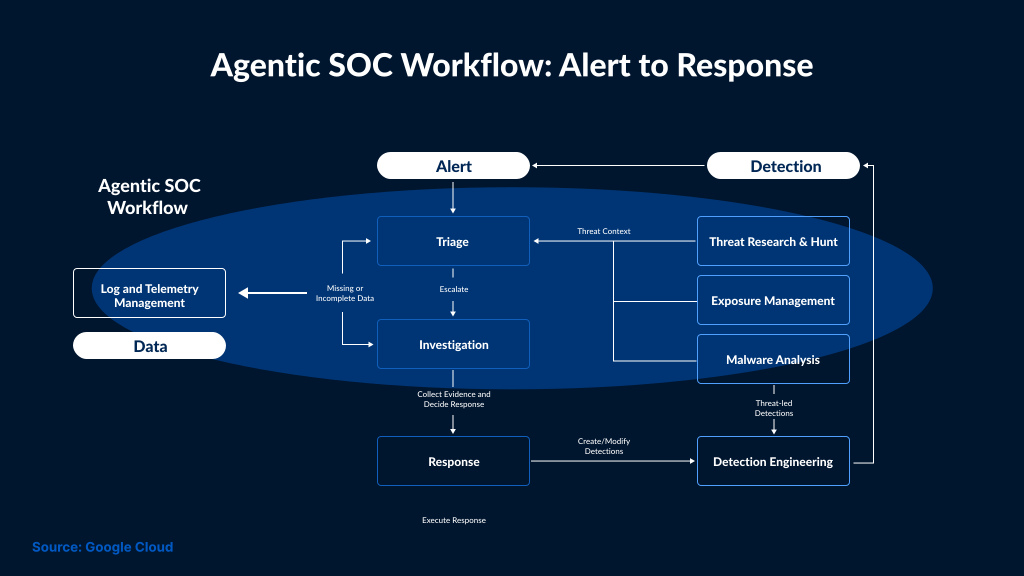
Alert triage is the process in which the most noticeable change occurs. In a traditional SOC, almost everything lands in front of an analyst. They would open and check every alert, including the weak and repetitive ones. Over time, this takes a major chunk of their job.
But, with the rise of the agentic SOC platform as an AI SOC solution for alert triage, many of those alerts are reviewed by the system itself. During triage, the system reviews:
- It looks at how often the same pattern has appeared.
- It checks what happened before and after the alert fired.
- It also compares the activity against what is normal for that environment.
If a low-risk alert matches a known pattern, the system resolves it without escalation. When something appears suspicious, systems gather more details about the alert before passing it along. When the alert reaches an analyst, the basic work is already done.
So, analysts are not removed from triage. Only their role has changed. Now, they don’t react to every signal. They only have to review alerts that already show signs of real risk. As a result, the volume of alerts for review decreases, and the context improves. So, analysts can spend more time on meaningful tasks.
Where SOC Automation Reaches Its Limits
Autonomous SOC technology is effective when the situation looks familiar. But, as soon as the signals are mixed, automation becomes unreliable.
There are occasions when an alert appears suspicious but matches a legitimate business task. For instance, a finance user downloads a large report, or a developer runs a script late at night. Both tasks may appear normal, but the report's size and the time at which the script is being run can raise suspicion. The system collects evidence but cannot determine intent.
Automation also struggles when the data is incomplete. The number of logs drops, and devices can become silent. At times, identity details are missing. In these cases, automation can only guess, and it’s risky to take actions based on guesswork.
Another problem with automation is that it usually stops when different tools disagree. If one source indicates 'normal' and another indicates 'high risk', then automation cannot decide which source to believe. In such cases, human judgment becomes the deciding factor.
Why Human Analysts Still Matter in an Agentic SOC
There are some situations that do not resolve cleanly even with automation. Situations like alerts that appear to be risky but are not malicious. Similarly, there are activities that break normal patterns for valid reasons. In such situations, systems collect data but don't understand the intent or business impact.
This is where analysts play a vital role. They can recognize when something does not align with normal behavior. They can also ask questions, which is not possible with systems. They look at the timing and user behavior. They review recent changes in the environment.
Analysts are held accountable for actions that could disrupt systems or affect users. Automation can support the process, but it cannot take accountability. Analysts will decide whether a situation demands caution, escalation, or restraint.
How Analysts Work Alongside Agentic SOC Systems
In an agentic SOC environment, analysts do not react to activities. Their job is to review work that has already progressed.
The system is responsible for handling motion. It collects signals and runs checks in order to build context. By the time an analyst goes through a case, the basic questions have already been answered.
Analysts decide whether an activity matters in that environment or not. Analysts look at the business timing. They also check whether recent changes explain the behavior. They rely on their familiarity with users, teams, and systems.
Analysts are also responsible for guiding the system. When they correct a decision, that feedback is used to improve future handling. After analysts approve or reject an action, the system adjusts how it handles similar situations in the future. This happens over time.
Responsibility When Automation Takes Action
The system may take action without approval, but the security team will take ownership of those actions.
In an agentic SOC, automated actions are limited. High-impact actions slow down or require review. Riskier decisions are handled by analysts.
Analysts can review the actions the system took and the evidence behind them. This makes it easier to understand and use the system over time.
If something goes wrong, the security team will be responsible for it. Analysts and security leaders decide how the system should behave. They define when a system can act freely and when it needs to pause.
This setup allows the system to act quickly on routine tasks. Analysts will be in control of important decisions. This keeps routine work moving while responsibility stays clear.
Conclusion
Agentic SOC changes how security work moves through the SOC. Routine work no longer slows investigations, and fewer alerts reach analysts. Investigations move forward without constant handoffs.
But it does not remove the need for human analysts. They remain responsible for context, judgment, and accountability.
SafeAeon uses agentic systems to handle repetitive, high-volume work. Their analysts step in when decisions matter. Teams respond faster without losing control.