

Key Takeaways
- As per the IBM Cost of Data Breach Report, 2024, two-thirds of organizations use AI and automation in their security operations center (SOC).
- 57% of organizations report an increase in AI-enabled attacks over the past year. This indicates the urgent need to incorporate AI SOC in MSP security operations. (Knowbe4)
- With AI-assisted SOCs, alert triage time can be reduced from 30-60 minutes to just 5-10 minutes. Some AI solutions can even bring the investigation time to as little as 2 minutes and 21 seconds.
Introduction
Managed service providers (MSPs) manage multiple client environments at the same time. It’s not an easy task, as threats move quickly and alerts never stop. It poses a big challenge for human-only SOC teams to handle such huge volumes of alerts and threats. This is where AI SOC changes how security operations are conducted for MSPs.
An AI SOC uses artificial intelligence to monitor activity and identify threats in real-time. MSPs that use AI SOC can provide consistent protection to all their clients, even with limited staff. As we move into 2026, AI SOC is no longer an advanced option. It is becoming the standard way to run scalable and reliable security operations for MSPs looking to grow without increasing risk.
What AI SOC Means for MSPs
AI SOC allows MSPs to run security operations more smartly. They don’t have to rely only on human analysts and fixed rules. AI SOC can use intelligence to monitor activity, identify unusual patterns, and flag real threats.
MSPs manage multiple users and networks at the same time. This creates a high volume of alerts. An AI SOC will filter the noise and surface only high-priority incidents for review. With this, security teams can focus on action instead of constant review.
AI SOC also supports managed security operations for MSPs by providing more consistent protection. The same level of monitoring is delivered to every client, even during off-hours. When AI is used to handle early analysis, MSPs can scale their services and respond quickly without adding more analysts.
Why Traditional SOC Models No Longer Work for MSPs
Traditional SOC models were designed to handle single organizations. It is not practical for MSPs to manage multiple clients efficiently. These models cannot cope with the growing security demands of organizations. Here are some reasons why traditional SOC models are not good enough for MSPs:
- Heavy dependency on human analysts, which limits speed and scale.
- Addition of more clients and tools leads to increased alert volumes.
- Fixed rules generate too much noise and hide real threats.
- Hiring a 24/7 SOC is costly and difficult to sustain.
- Analyst fatigue causes several missed alerts and slow response times.
- Each new client makes operations more complex instead of improving efficiency.
For MSPs, this approach does not scale for security operations. MSPs need to deliver the same level of protection to every client, every time. Traditional SOCs find it challenging to meet this demand without raising costs or risking quality. Because of these limitations, many MSPs are moving away from manual SOC models that are rule-based to AI-based security operations.

Why 2026 is a Turning Point for MSP Security Operations
In 2026, cyber threats are going to grow at a much faster pace than before. Attackers are increasingly using automation and AI to get into systems in a quiet way. So, there is no reason for MSPs to keep using traditional SOC models. Clients expect MSPs to deliver security without delays or downtime.
MSPs are also facing pressure from rising costs and a shortage of security talent. It is no longer viable to hire more analysts. Then there are regulations and cyber insurance requirements that MSPs have to deal with. These are becoming stricter with each passing year. Manual SOC models cannot keep up with these demands.
By 2026, security operations for MSPs need to be faster and always active. They must be able to handle multiple clients at once. AI SOC can meet these requirements. It allows MSPs to meet growing expectations while maintaining consistent protection. MSPs can continue to grow without increasing operational risk.
How AI SOC Enables SOC Scalability for Service Providers
For service providers, growth means adding more clients, data, and alerts. Traditional SOC models scale by adding more people, which makes the entire growth expensive and slow. This can be changed with AI SOC.
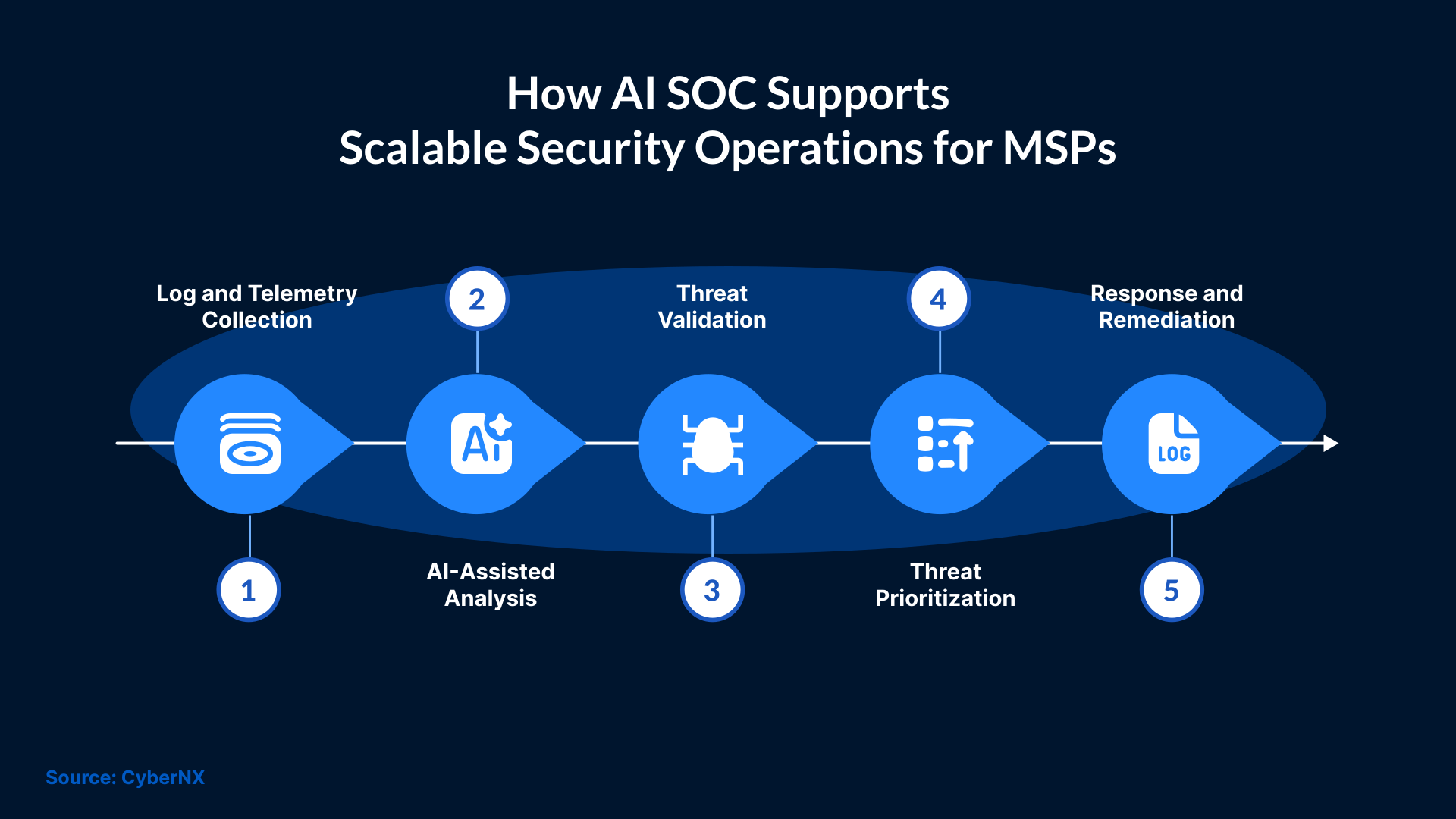
With AI SOC, a single security operations team can support multiple client environments at the same time. AI will be responsible for handling early alert analysis and group-related activity. It will also remove low-risk noise. As a result, there will be less workload on analysts, and they will be able to keep the response times consistent even if the client base grows.
Since AI has started assisting in detection and triage, service providers are able to onboard new clients without rebuilding their SOC each time. Monitoring continues during the day and at night. This level of SOC scalability for service providers makes AI SOC ideal for long-term growth.
AI-Driven Threat Detection vs Rule-Based SOC Detection
There are fixed conditions in rule-based SOC detection. This means an alert will only trigger when an activity matches a known rule. It works smoothly against familiar threats, but when attackers change their behavior, it becomes ineffective.
On the other hand, AI-driven threat detection observes patterns over time. It learns the normal activity of users, systems, and networks. When it detects something unusual, it raises an alert even when no rule is present.
For MSPs, this difference is important. Rule-based detection can generate false alerts and may also miss slow or hidden attacks. In contrast, AI-driven detection reduces noise and highlights only the real security risk. It can also be adjusted according to the client’s environment. This makes AI-based threat detection more reliable for security operations with multiple clients, each using different tools and following distinct usage patterns.
Running 24/7 SOC Monitoring for MSP Clients at Scale
MSP clients expect 24/7 security monitoring because attacks do not follow business hours. With traditional SOC teams, it is difficult to stay active day and night with a limited staff. Adding more staff will increase the MSP's overhead costs.
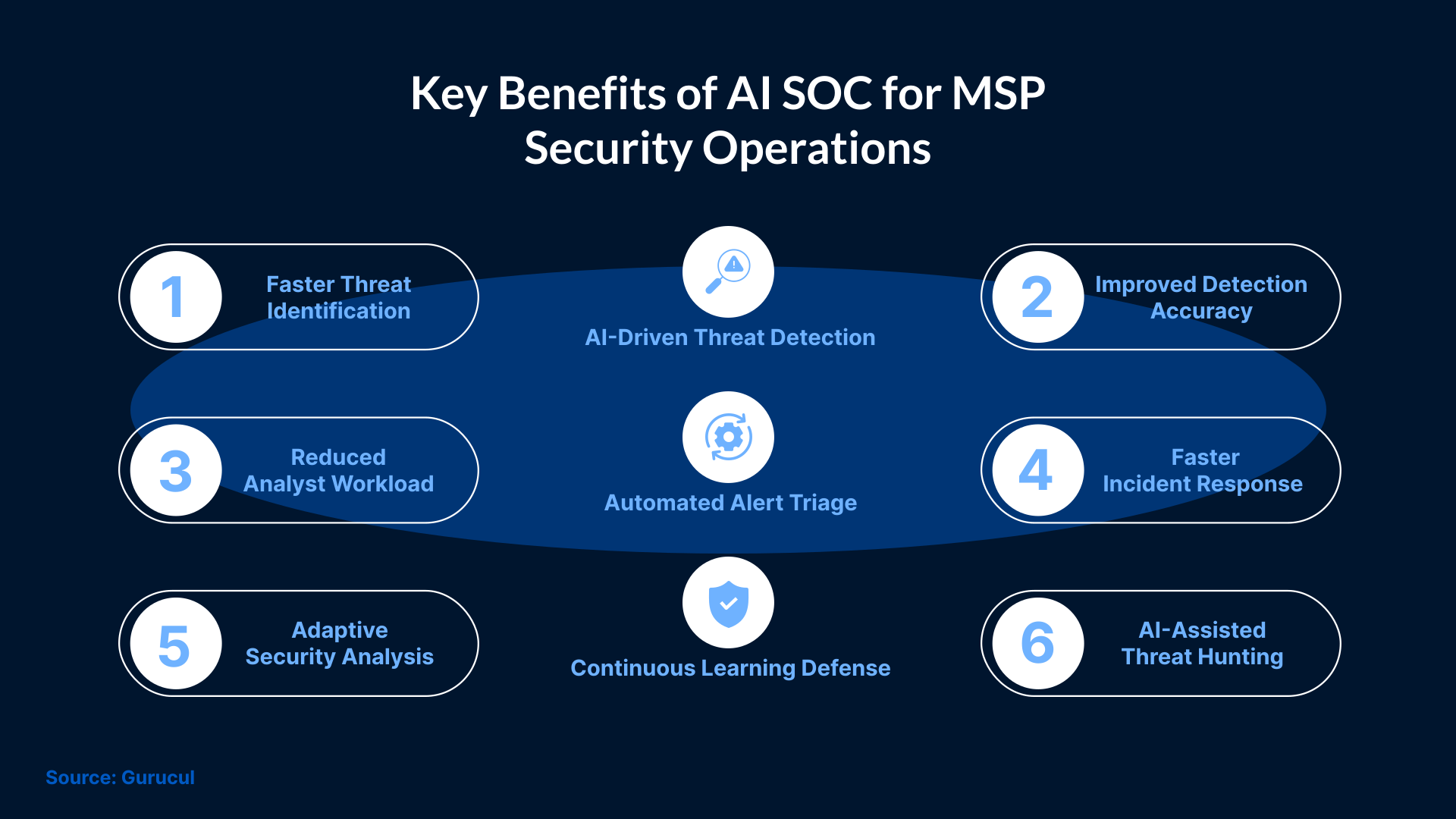
Here, AI SOC is very useful, as it helps MSPs maintain continuous SOC monitoring for MSP clients by handling constant alert flow. AI reviews activity in real-time and flags issues that need attention. This reduces the need for manual checks and staffing during overnight hours.
By leveraging AI for monitoring, MSP teams can respond faster and maintain consistent security operations across all client environments. The level of coverage remains the same during working hours and after hours. With this, MSPs will be able to deliver continuous monitoring even as the number of clients and security tools continues to grow.
How AI SOC Changes Day-to-Day Security Operations for MSPs
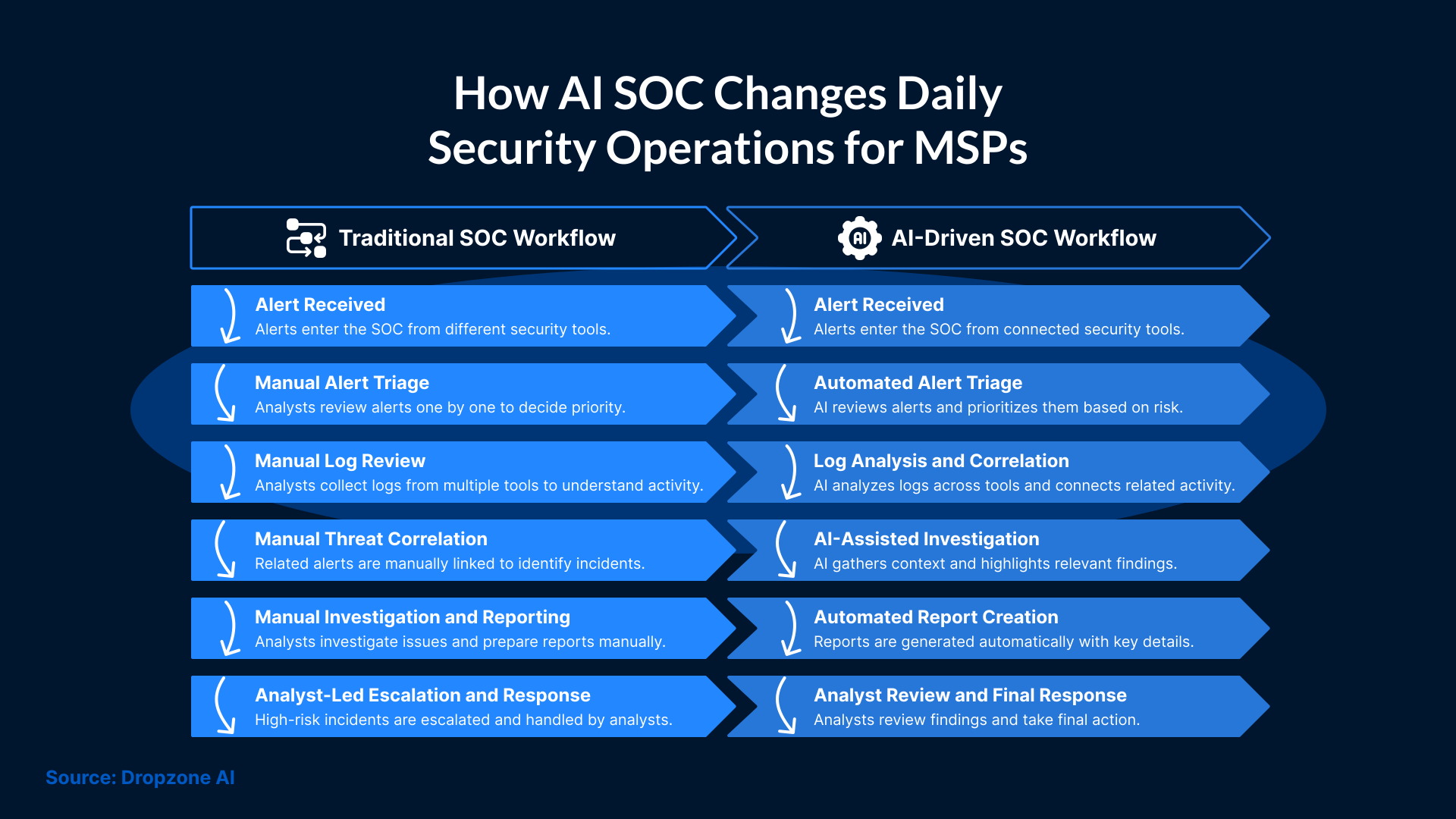
AI SOC will review all alerts so that the team can focus on real security issues. AI will also handle the initial analysis and remove low-risk activities before they reach analysts.
This makes things easier for security teams. AI SOC will also group the alerts and define incidents. This helps teams, as they no longer have to spend time sorting data. They can respond to confirmed threats. The addition of AI SOC can significantly improve the speed and reduce mistakes.
With AI SOC, reporting becomes part of the investigation flow. Incidents are tracked as they happen, and summaries are created from the same data used during response. This reduces manual reporting work. Teams spend less time preparing updates and more time handling security issues. As a result, MSPs can support more clients without stretching their teams.
Why MSPs Are Using AI SOC to Run Security Operations
When MSPs run security operations, they need systems that behave the same way every day across all clients. An AI SOC brings security activity into a single workflow, so incidents are handled consistently. Teams follow the same process even as environments change, which makes daily operations easier to manage as the client base grows.
With AI handling analysis, MSPs can deliver the same level of protection to every client. This will create a stable service model that clients can rely on.
As client environments change, AI SOC adjusts to new activity patterns without forcing MSPs to redesign their processes. Security teams continue working in the same way while detection improves in the background. This helps MSPs maintain consistent services as they grow, without adding new layers of operational effort.
Key Things MSPs Should Consider While Adopting an AI SOC Model
When adopting an AI Security Operations Center (SOC), MSPs should focus on how it fits into daily security work. The goal is to improve threat detection and response without losing visibility or control over security operations.
- The AI SOC should work with existing security tools and client environments
- MSP teams should be able to see why alerts are raised, not just the outcome
- The model must support multiple clients without mixing data
- Analysts should be able to review decisions and step in when needed
- Client reports should remain clear and easy to explain
By addressing these areas, MSPs can bring AI SOC into their operations in a controlled way. This helps teams use AI effectively while keeping transparency and ownership over incident handling.
Conclusion
Rising alert volumes and ongoing operational strain have pushed many MSPs away from fully manual SOC setups. Teams spend too much time reviewing low-value activity. AI SOC helps by handling early alert analysis and filtering false positives before they reach analysts. This allows security teams to focus on real incidents without adding staff or changing existing workflows.
For many MSPs, AI SOC is becoming a practical baseline for delivering security across growing client environments. Manual SOC tools struggle to support constant 24/7 monitoring at scale. SafeAeon helps service providers move to an AI-assisted security operations model that remains clear and manageable. This enables faster incident detection while supporting growth without increasing operational overhead.