

Key Takeaways
- Data breaches cost organizations an average of $4.24 million in 2021. This shows why faster detection and response are important for reducing business impact. (IBM)
- The global median dwell time was 21 days in 2021, meaning attackers could remain inside environments for weeks before being detected. This supports the need for continuous SOC monitoring. (Google Services)
Introduction
Organizations always run multiple systems, and each system generates security activity. These signals are spread across tools and environments. Teams can only see parts of the activity, not the full picture. As a result, delays begin to appear in detection and response, especially when activity initially appears normal.
This gap is addressed by SOC-as-a-Service, which centralizes monitoring, detection, and response into a single operational layer. It helps teams identify activity earlier and enables quick responses to mitigate impact.
Continuous Security Monitoring
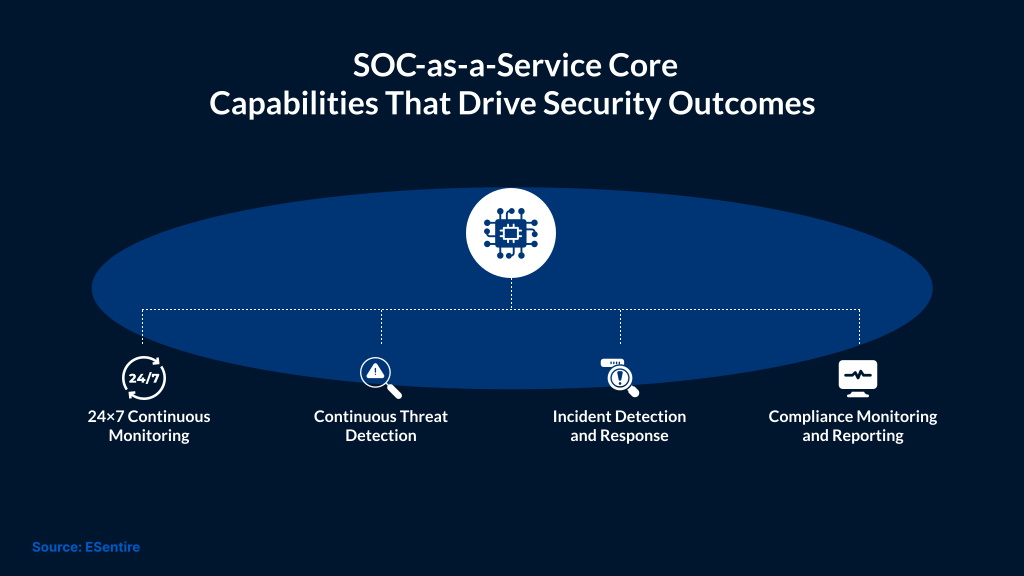
Organizations need a service that can ensure continuous security monitoring. For that, SOC-as-a-Service seems a fitting option, as it can operate around the clock, covering all time zones and even off-hours.
SLA commitments defined in the Statement of Work (SoW) set clear expectations for detection and response timelines. This allows quick identification and response to security events, without delay.
Continuous monitoring improves visibility into ongoing activity and enables earlier detection of threats before they escalate.
Improved Compliance Alignment
While SOC-as-a-Service helps organizations ensure continuous monitoring and quick response, it is also important to meet regulatory requirements such as HIPAA, SOX, and PCI DSS. These requirements define how organizations handle, monitor, and protect data.
A SOC-as-a-Service model provides continuous log monitoring, audit trails, and reporting, which helps meet regulatory requirements. Additionally, the service helps identify gaps in visibility and control. This allows teams to address compliance risks more effectively.
Detection of Advanced and Unknown Threats
Modern attacks are difficult to detect because they blend into normal activity. As a result, no clear alerts are triggered. The most common modern attacks include credential misuse, fileless attacks, and cross-system activity.
In such situations, a SOC-as-a-Service model can be useful as it correlates signals between different systems and activity sources. This helps identify patterns that may not be visible within a single tool.
It prioritizes alerts with context and reduces unnecessary alerts. This allows teams to focus on activities that require investigation and response.
Ransomware Prevention Focus
Ransomware activity may not trigger clear alerts until later stages, such as execution. When that happens, the impact is already building.
In such situations, a SOC-as-a-Service model can be very helpful, as it identifies early-stage activity, such as unusual processes or lateral movement. This helps detect threats before encryption or disruption occurs.
Early detection reduces the risk of operational impact and data loss.
Network and Asset Visibility
Another benefit of SOC-as-a-Service is that it collects logs from connected systems, including cloud environments, providing teams with a unified view of activity.
With activity visible in a centralized view, teams can easily track user actions, system changes, and network behavior in one place. With improved visibility, it is possible to ensure faster investigation when something looks unusual.
Identity and Access Visibility
Many attacks now involve valid credentials. This makes identity activity a key signal for detection.
A SOC-as-a-Service model tracks account activity. It also highlights unusual access, such as logins from new locations or unexpected privilege changes. These steps provide better clarity on how identities are used and help detect misuse early.
Reduced SOC Setup Costs
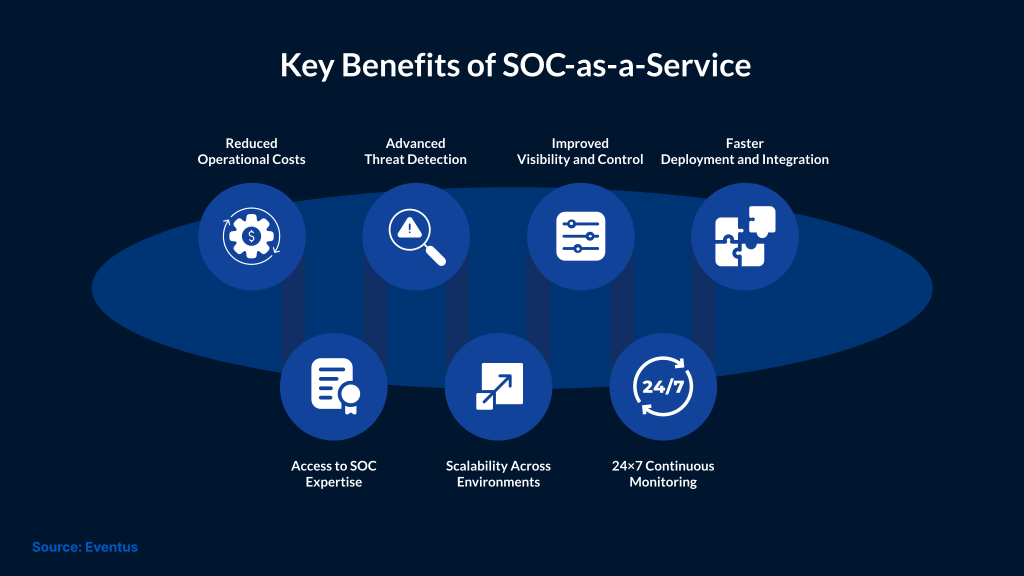
Building an in-house SOC requires significant upfront investment. Organizations must establish proper infrastructure, purchase tools, and hire skilled personnel. It doesn’t end there, as there will be ongoing costs for training and licensing.
SIEM pricing models usually depend on data ingestion or user count, which can increase costs as the environment grows.
A SOC-as-a-Service model reduces this burden by shifting these costs to a managed service. This allows organizations to scale without large capital investment.
Improved Incident Handling Efficiency
A SOC-as-a-Service model improves incident handling by giving teams better visibility into alerts and faster support for response actions.
Alerts are prioritized based on context, which helps reduce unnecessary noise and supports faster triage.
With centralized visibility, it is easier to identify affected systems and understand the progression of an incident. This makes it easier to decide what to act on first and respond faster.
Response steps, such as isolation or containment, can be quickly executed in environments that already have integrated tools.
Automated Response Support
Detecting malicious activity is important, but responding to it is even more important. A SOC-as-a-Service model uses integrations to support faster response actions. It can isolate endpoints and disable accounts where suspicious activity is detected to prevent further damage. Doing this reduces the time between detection and action, which helps limit the spread of an attack.
Rapid Deployment
It can take time to set up an in-house SOC because there are several tools to integrate and configure. Moreover, organizations need to ensure the availability of resources to operate those tools. Managing all this can be a daunting task for organizations, irrespective of size.
A SOC-as-a-Service model shortens this timeline by leveraging pre-built integrations and established processes. This allows organizations to onboard faster and start monitoring without long setup cycles.
Comprehensive Reporting
SOC-as-a-Service provides regular reporting on security activity and posture. Organizations can tailor reports to show trends, incidents, and areas that need attention. This puts teams in a better position to understand what is happening and where they should take action. Building similar reports in-house can be difficult due to limited resources and time.
Conclusion
Security operations cannot be carried out using only tools. Today, activity spreads between systems and often appears normal until the impact builds.
This is why SOC-as-a-Service is critical for organizations: it brings monitoring and response into a single flow. It allows teams to see what’s happening within an environment and respond earlier, reducing the impact of incidents.
SafeAeon brings this to practice through continuous monitoring and direct response support. The focus stays on reducing delays and keeping operations stable when something goes wrong.
This allows organizations to move from reacting to incidents to managing them with better control and visibility.