


Key Takeaways
- XDR is designed to correlate signals from multiple sources in order to help teams understand alerts in context. But it needs to be configured and integrated correctly to avoid overlap and noise. (Gartner)
- The 2025 Verizon DBIR reported more than 22,000 confirmed data breaches. Detection and response still fail in many cases. (Verizon)
Introduction
There are different cybersecurity solutions that security teams can choose from. Some of the popular ones include EDR, NDR, XDR, and MDR. Each security solution offers significant benefits but also has certain limitations. Security teams can add the solution according to their requirements. But these solutions don’t guarantee safety against breaches. This doesn’t mean the tools are ineffective, but it is how security teams decide to use them.
Security teams expect a single solution to provide features such as visibility, clean alerts, and fast response. That is not possible because each tool covers only part of the attack path. When EDR, NDR, XDR, and MDR are deployed without clear roles and response ownership, it results in more alerts but no improvement in outcomes. This confusion causes teams to miss signals and respond too slowly.
Understanding EDR, NDR, XDR, and MDR
They are all security solutions, but they work differently. EDR (Endpoint Detection & Response) is used to monitor the activity on servers and workstations. It looks for suspicious behavior after access has been granted. So, it depends on endpoint visibility and context.
NDR (Network Detection & Response) monitors network traffic to identify unusual patterns. This includes systems communicating in unexpected ways or data leaving the network. The usefulness of this solution depends on where the network traffic can actually be seen.
XDR (Extended Detection & Response) consolidates alerts from multiple security tools into a single view. It does not replace those tools. The tool works fine until teams start expecting XDR to do the job of EDR, NDR, or other controls rather than supporting them.
MDR (Managed Detection & Response) is different. It is not a tool, but a service in which another team uses tools to monitor alerts, investigate issues, and support response. But when the roles of these tools and services are unclear, it creates problems because nobody knows who is responsible for acting when something goes wrong.
Why Security Teams Misapply Detection and Response Tools
On most occasions, security teams buy detection tools before even knowing what problems they need to solve. Attention is given to coverage and alert counts rather than to how alerts are handled during a real incident. Over time, they add more tools, but the way incidents are handled stays the same.
Another issue is the absence of ownership. One team manages the tools while another looks at alerts. Response sits somewhere else. The problem with this setup is that when something serious happens, no one knows who should act first. The delay is not caused by the tools, but by how they are set up and used.
Misapplication also happens when teams expect one solution to do everything. All the cybersecurity solutions in question play different roles. Mixing or misunderstanding those roles can lead to more alerts and delayed responses. Moreover, teams are most likely to miss real threats.
Limits of EDR in Daily Use
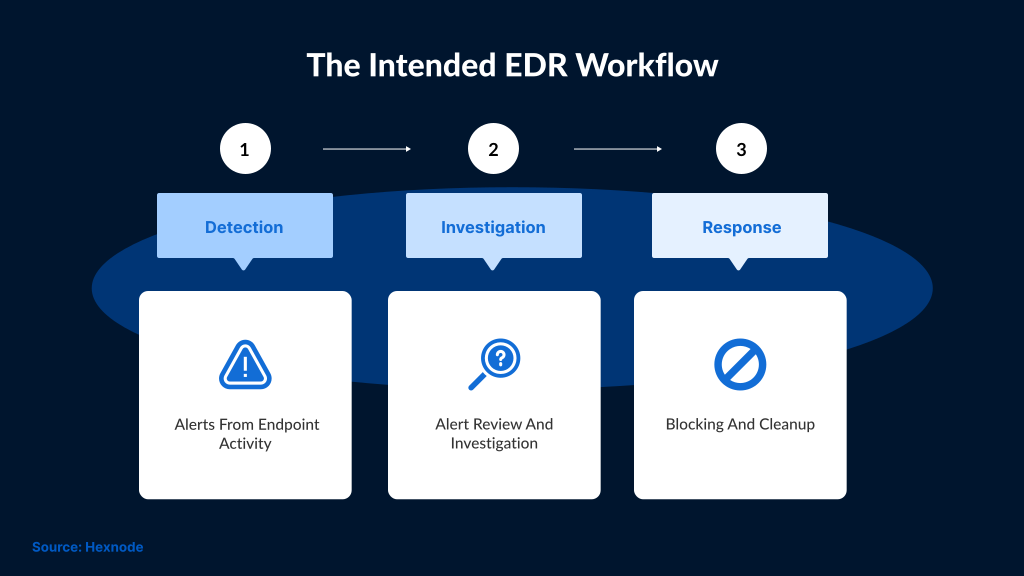
EDR works well until the attacks stay on managed endpoints. As the attack spreads beyond endpoints, that’s where the limitations of EDR begin.
- If a device has not been configured properly or is temporarily offline, EDR won’t see anything. Many organizations still have older systems or third-party assets that EDR does not cover.
- EDR manages activity that happens on the device. It cannot monitor what happens across the network or inside cloud services. This makes it hard to understand how an attack started or where it is moving next. As a result, alerts are generated without context, and analysts must manually investigate them to fill the gaps.
EDR has limitations because teams confuse coverage with protection. Even with EDR coverage, gaps can be created, which teams will see during active incidents rather than during reviews or audits.
NDR Visibility Gaps in Modern Networks
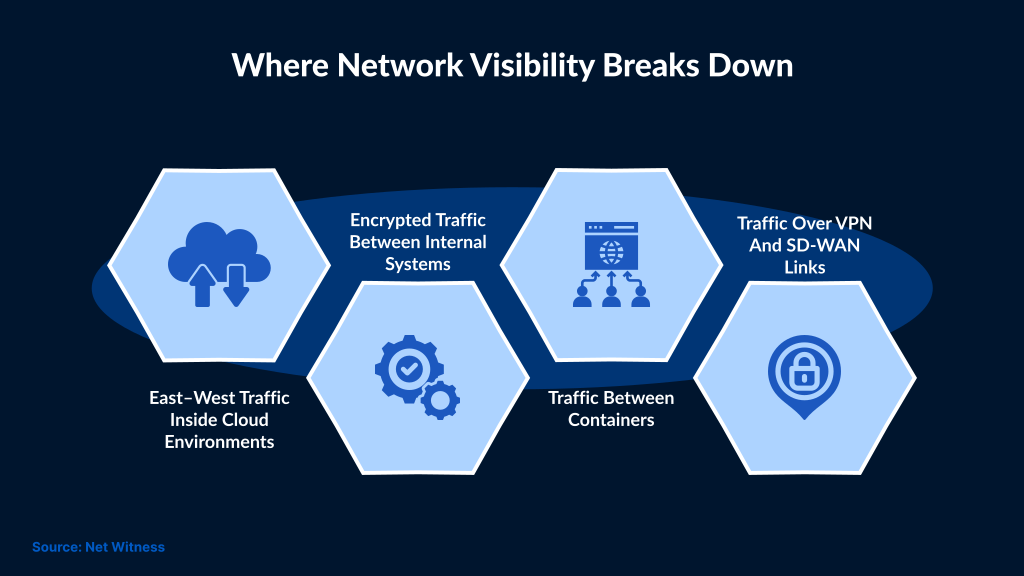
NDR monitors traffic to spot unusual activity. It is efficient in parts of the network where traffic is visible and consistent. This is where the problem lies, because many modern environments no longer look like that.
In modern environments, much work is done in the cloud, and users operate remotely. Moreover, traffic is encrypted too. All these factors reduce NDR's visibility. Some traffic never goes through monitored network points. And other traffic is visible only as metadata, which limits the amount of detail NDR can use during investigation.
These gaps in NDR visibility create a false sense of confidence. Teams start to assume that the network is being monitored end to end, but in reality, only parts of it are. When an incident occurs, questions about the attacker’s movements and data access remain unanswered.
XDR Overlap Confusion Across Security Stacks
XDR consolidates alerts from different security tools into a single location for review. It works best when alerts have context because then, it can help analysts understand what is related and what is not. But when teams start treating XDR as a replacement for the tools that feed into it, problems begin to appear.
Many teams already have EDR, NDR, and other controls in place. So, XDR needs clear boundaries to work properly with those tools. However, when these boundaries are not clear, the same activity can trigger multiple alerts across tools. Instead of reducing noise, it increases overlap. As a result, analysts spend time sorting duplicate alerts rather than responding to real ones.
Unclear design leads to this XDR overlap confusion. It is for teams to decide what XDR should correlate with and what other tools should own. When they don’t make this decision, the stack becomes harder to manage.
Why MDR Is Often Misunderstood
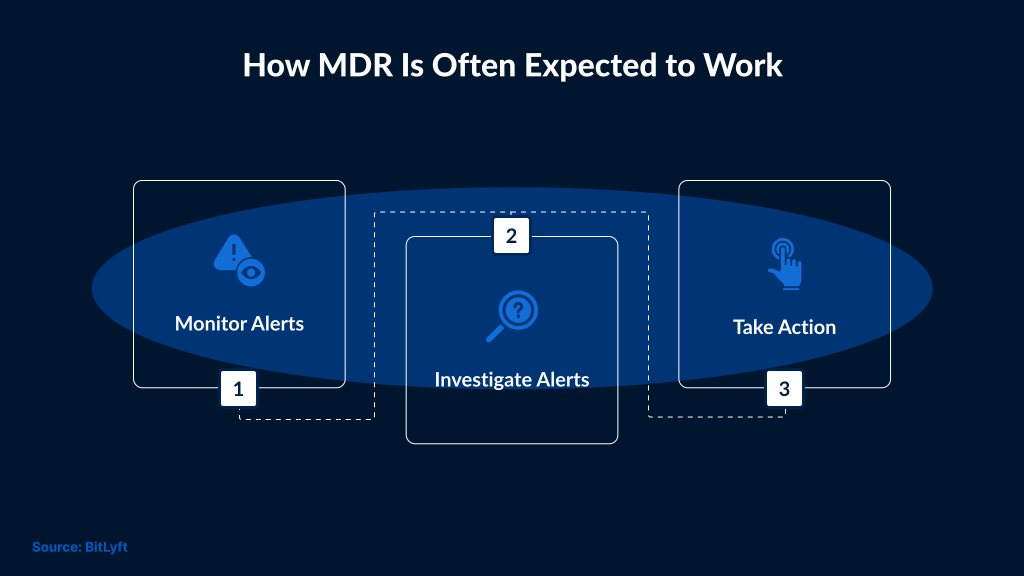
Security teams treat MDR as another security tool, but it is not. MDR is a serve where an external team monitors alerts, investigates activity, and provides a response using your existing tools. The tools do not change, but the way they are operated does.
When expectations are not clear, problems will begin to crop up. For example, some teams will assume that the MDR will perform all activities for them (detect, monitor, and execute a full containment of an event). Other teams expect MDR's services without granting them any access or clearly defined escalation paths. In both cases, this will delay the response.
Roles need to be defined properly for MDR to work. The service can investigate and guide a response, but someone needs to take ownership. When ownership is missing, MDR becomes ineffective, even though the real issue is how it was applied.
Alert Noise vs Response Challenges
There is a common perception among security teams that more alerts mean better protection. But it’s not true because too many alerts slow everything down. Analysts spend time sorting through low-value signals rather than focusing on real threats. Important alerts are mixed with routine or duplicate alerts.
The problem is not with detection, but the response. When alerts are not clear, teams are expected to slow down. By the time they take action, it is already too late.
It is between the alert noise and response where misapplied tools show their impact most clearly. The existence of alerts is not an issue, but the inability of those alerts to lead to fast, confident decisions is. Even good detections lose their value when the response is slow.
How Detection Coverage Gaps are Created by Misapplied Tools
Teams can think they are fully covered and still miss things. This happens when tools are added without knowing what they can actually see. Either security tools are not seeing the right data, or the data they are seeing is not connected in a meaningful way.
In many environments, EDR, NDR, and XDR collect signals separately. As a result, there will be alerts, but they won't tell a complete story. An attack often spans multiple systems, but alerts often show only part of what happened. Missing tools are not responsible for these detection coverage gaps, but it is how tools are applied.
When teams focus on coverage reports and ignore real attack paths, these gaps remain hidden. They only become visible during an incident when teams are under pressure to contain or isolate the attack.
Using EDR, NDR, XDR, and MDR the Right Way
To use these tools effectively, teams need to know what problem they are trying to fix. Alerts need to help teams take action. Each tool must be defined with a role that matches how incidents are handled in real scenarios.
EDR – Needs to focus on endpoint behavior
NDR – Cover parts of the network that it can clearly see
XDR – Used to connect related signals, along with helping analysts understand important alerts
MDR – Needs to support investigation and response rather than replace internal decision-making.
As these roles become clear, tools stop competing against each other. Moreover, alerts become easier to trust, and investigations move faster. Response becomes quick as well. For teams, the goal should not be more visibility, but faster and more confident action.
How EDR, NDR, XDR, and MDR Should Work Together
Making tools work together does not mean adding more tools. It means you need to decide how the tools you already have should work together. An alert should lead somewhere, but if no one can investigate or act on it, then it is not useful.
Response also needs to be owned by someone. If an alert becomes a real issue, there should be someone who owns it. It needs to be clear who checks alerts and who acts upon them once something is confirmed. Without that clarity, tools cannot help.
EDR, NDR, and XDR should all support the same investigation rather than running separately. MDR should also fit into that same process, but with a clear allocation of the tasks.
When tools are set up properly, teams will spend less time sorting alerts. They focus on taking action on important alerts in a timely manner. With the same tools, they can receive a better response.
Conclusion
Security teams often misuse EDR, NDR, XDR, and MDR, leaving it unclear who should act. More tools get added. Alerts go up. Action slows down. The result is slow response and gaps that only show up during real incidents.
Fixing this issue is not about purchasing new tools. Rather, it is about looking at how alerts are handled on a daily basis. Alerts should help teams act, not pause.
SafeAeon works with both end clients and service providers to review existing security configurations and identify gaps. It also defines ownership of the actions during an incident. The goal is to improve the current stack, not make it bigger.