


Key Takeaways
- A SIEM solution allows MSPs to detect and respond to cybersecurity threats in real time.
- The SIEM market is growing at a 12.16% CAGR and is expected to reach $19.13 billion by 2030. (Mordor Intelligence)
- 87% of cybersecurity professionals consider SIEM to be very important to their organization’s security posture.
Introduction
SIEM is a streamlined tool used by managed service providers (MSPs) to monitor activity across their clients’ systems in real time. The tool brings security data into one place. This makes it easier to spot suspicious activity early and respond quickly if something goes wrong.
SIEM provides MSPs with a single, clear view of their environment to improve day-to-day monitoring. It also takes less time to investigate security incidents. However, a single SIEM solution cannot meet the needs of every MSP. This makes it important to understand SIEM requirements for MSPs before deploying the tool as a part of a security service offering.
Core Functional Requirements of a SIEM for MSP Use
MSPs have multiple clients, each with a unique environment. MSPs are responsible for handling large volumes of security data and responding to incidents. Because of this, they require a SIEM that can meet specific functional requirements before it can be used as part of the MSP service offering.
The basic functionality of a SIEM includes collecting security data from a client’s environment. That data is analyzed in order to identify suspicious patterns. The findings are then presented so that the security teams can act quickly.
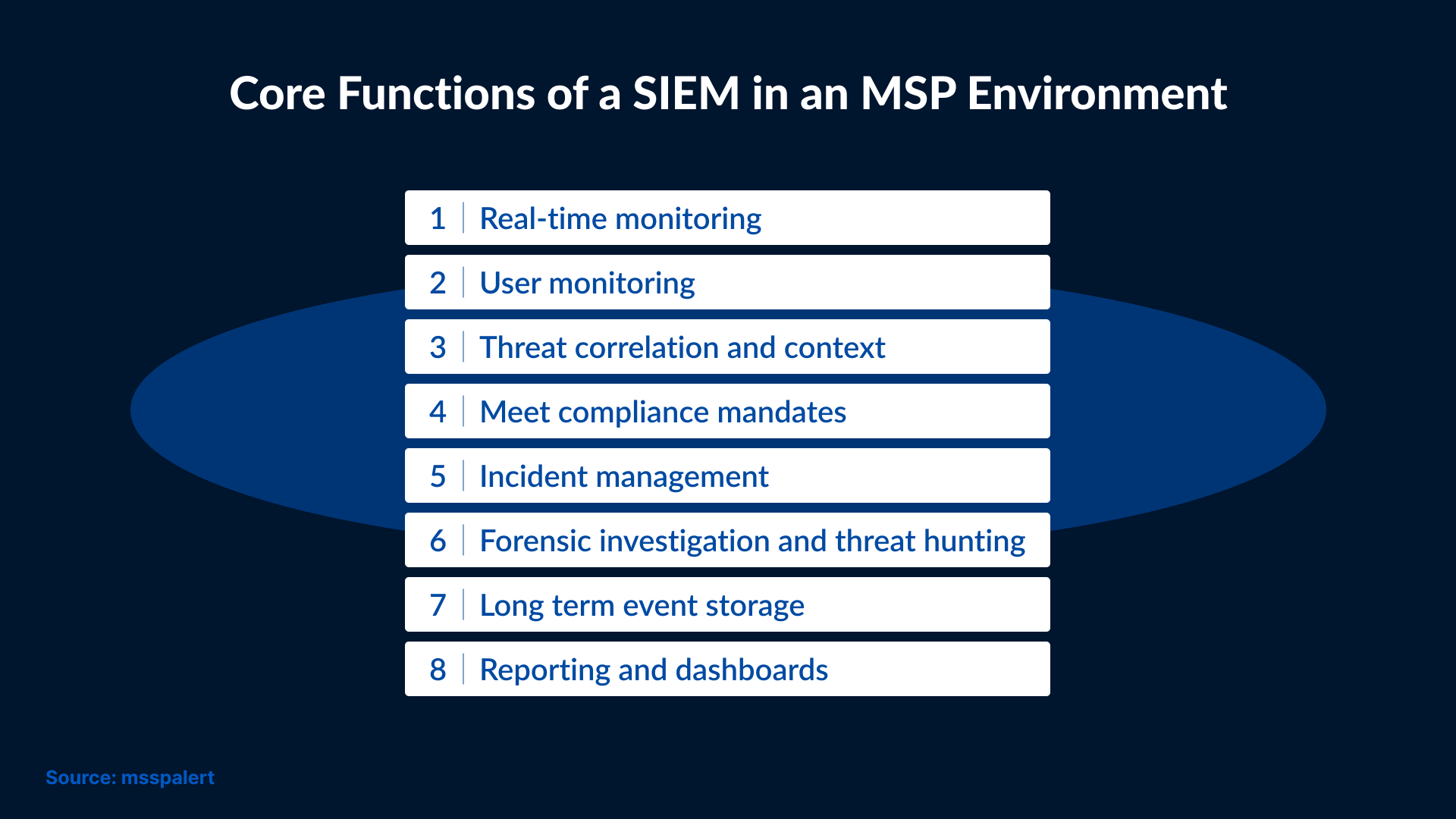
SIEM also supports real-time monitoring and alerting. Real-time alerts are important because they help MSPs detect incidents early and reduce response time. The alert system is fine-tuned to ensure that only relevant and priority alerts are received.
Modern SIEMs rely heavily on automation because manual investigation and response can’t match the speed of a growing MSP model. With automation, SIEM can reduce repetitive work and focus on what’s important.
The design of the platform is also crucial during MSP operations. If the platform is stable and has the ability to scale, it can provide smooth growth to the client base. If the SIEM faces challenges in scaling, it becomes a liability rather than a security enabler.
Log Source Coverage and Data Ingestion Requirements
A SIEM functioning in an MSP environment is only effective when it is able to collect the right data from the right places. If it fails to do so, then it can reduce visibility. Moreover, it increases the risk of missed threats. So, it's important for MSPs to clearly define the log source and data ingestion requirements before deploying a SIEM.
Essential log sources include
A SIEM is expected to collect logs from all main parts of a client's setup, including:
- Endpoints, including computers and servers
- Network devices, which include firewalls, routers, and switches
- Identity systems such as Active Directory and cloud identity providers
- Cloud platforms and SaaS applications
- Email and collaboration tools
- Security tools such as EDR, antivirus, and web gateways
Support for multiple data formats
Logs are generated in different formats. A SIEM must support structured and unstructured data and normalize it into a consistent format for analysis.
Real-time and batch ingestion capability
MSPs require real-time ingestion for active threat detection and batch ingestion for investigation and review.
Handling growth and large volumes of log data
The volume of logs increases as MSPs add new clients or expand their services. A SIEM should be flexible enough to handle this increased data ingestion without any compromise in performance or alert delays.
Keeping log data safe
Log data should be transferred securely from the client’s systems to the SIEM, so that nothing is changed or lost on the way.
Flexible onboarding and log source management
Adding or removing log sources needs to be as easy as possible. It's important for MSPs to add new clients and data sources without impacting their current visibility.
Correlation, Detection, and Alerting Requirements
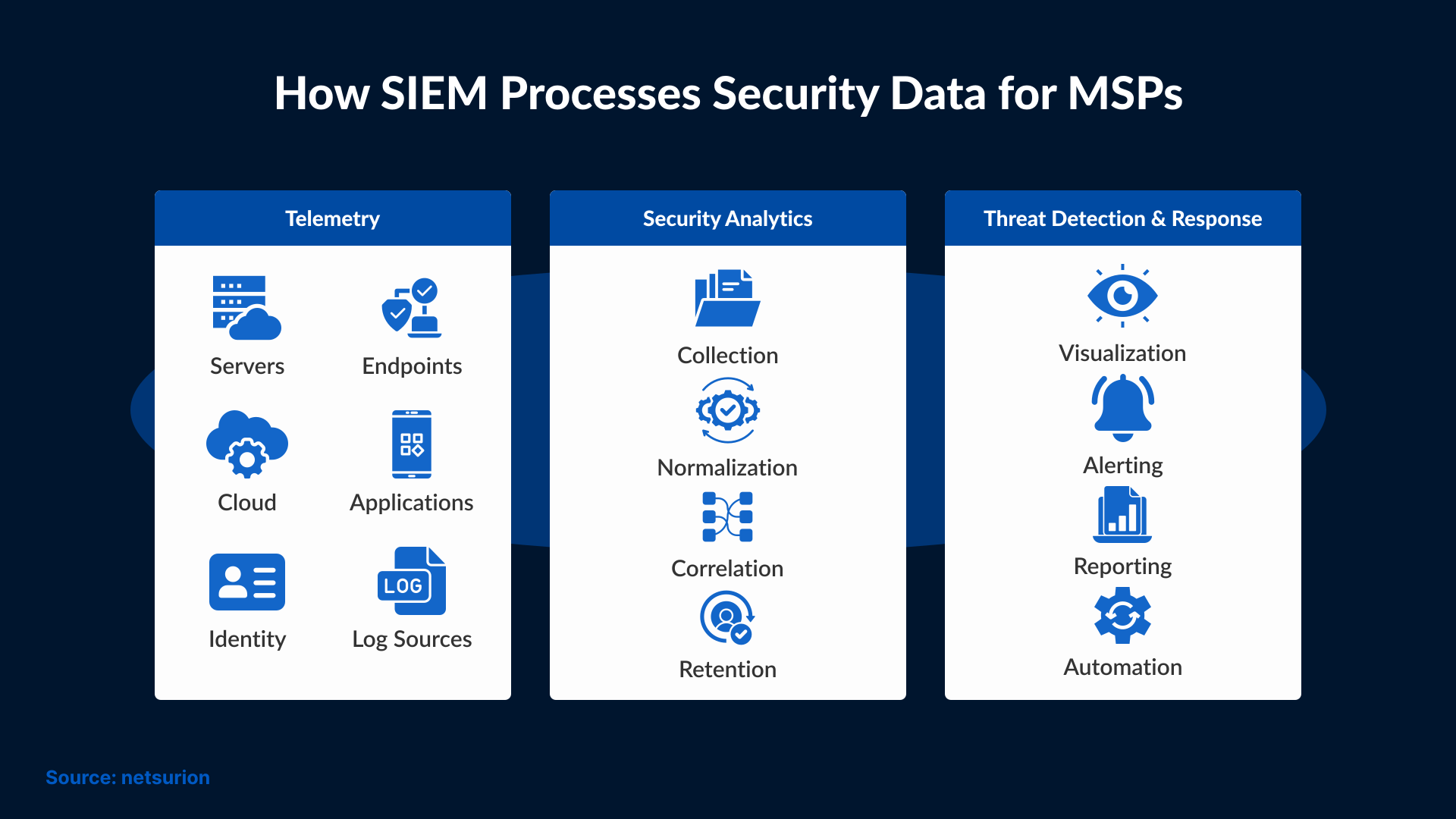
Collecting logs alone does not improve security. It's understanding what the data means that would matter. When different events are connected, it becomes easier to see when something is actually wrong.
When logs are viewed in isolation, important signals can be missed. Bringing related activity together helps MSPs recognize when separate events are connected and point to the same incident.
SIEM detection is not limited to fixed rules alone. It also looks at behavior and surrounding activity. This helps identify unusual patterns that may indicate compromise, even when no known signature exists.
MSPs monitor many clients at once, so they receive a large number of alerts. Not all alerts are equally important. So, the SIEM should highlight the most serious ones first, so that teams can spend time on addressing real threats rather than sorting through noise.
Risk levels vary from client to client. Detection rules and alert thresholds need to be adjustable for each environment without affecting visibility across other client tenants.
Multi-Tenant and Access Control Requirements
MSPs usually handle multiple clients at the same time. It’s important for SIEM to keep one client’s environment separate from another. Data from one client should not be visible to another, even if it is managed through a shared platform.
Access control is also an important factor. Different teams and users need different levels of visibility, based on their role and responsibility. A SIEM should make it clear who can do what, so access is controlled properly, and mistakes or accidental changes are avoided.
Despite handling multiple clients at once, it’s important for MSPs to be able to see the bigger picture. When MSPs look across all environments, they can notice patterns that appear more than once, like the same type of alert showing up for different clients. Better visibility results in improved detection and faster response without exposing one client’s data to another.
Deployment, Scalability, and Architecture Requirements
MSPs are working with clients who have different budgets. Their technical constraints can also differ widely. Therefore, it’s important for a SIEM to remain flexible in how it is deployed. It should fit into the existing environment seamlessly without forcing major changes.
Scalability is as important as deployment. As new clients are added, data volume and alert activity increase. The SIEM should keep working smoothly as this happens. It should not become slower, miss alerts, or require extra effort from the team just to keep it running.
The architecture of a SIEM also matters. It needs to remain available and dependable as the usage grows. If the platform starts to slow down or becomes hard to manage, then it turns into an operational risk instead of being a security asset.
Compliance, Retention, and Reporting Requirements
Many MSP clients have to comply with regulatory obligations. These rules define how security data must be handled and how long it can be kept. The SIEM should meet these expectations without adding more work for MSPs.
Usually, companies have to maintain the log data for a certain period based on the industry and geographical location. The SIEM allows MSPs to control how long data is retained based on the requirements of clients and regulatory bodies.
SIEM will also be responsible for creating reports. MSPs need reports that give a clear picture of the security and compliance status of their clients’ workplaces. The reports must be easy to understand and generate. Complicated reports reduce the value of the SIEM for both the MSP as well as the client.
Integration Requirements Across the MSP Security Stack
A SIEM rarely works in isolation. MSPs use many different tools to keep their clients safe. The SIEM adds more value when it works well with other tools.
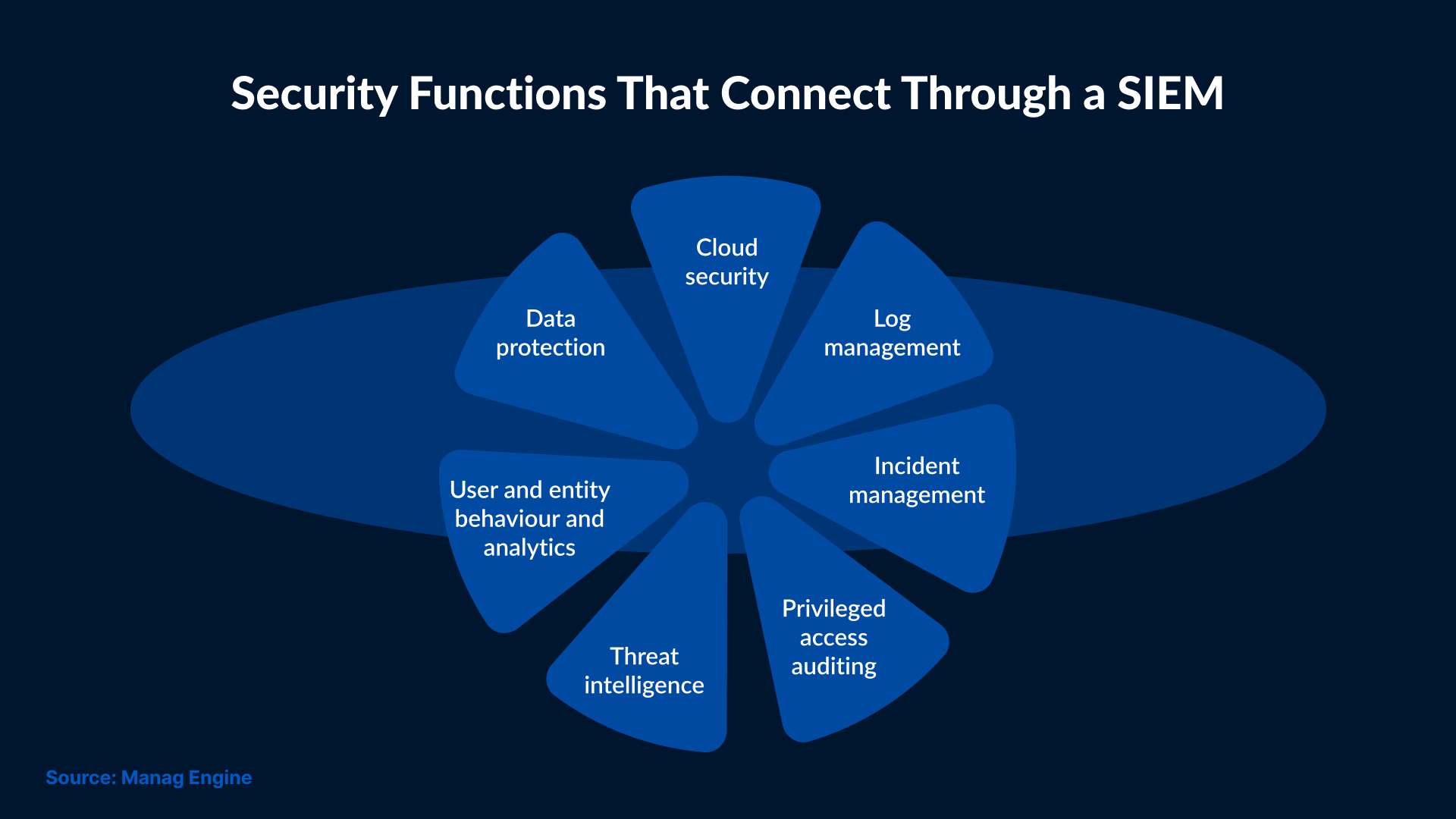
Integration makes work easier. When tools share information, teams do not have to switch between different screens or repeat the same task. It also helps them understand issues more quickly because all the necessary information is present in one place.
The SIEM should be easy to connect with other tools. If those connections frequently break or require regular maintenance, work becomes slower and more challenging for the team. Simple and reliable integration makes the SIEM easier to operate at scale.
Running SIEM as an MSP Service
Running a SIEM is a crucial part of daily MSP operations. Alerts need to be reviewed, and incidents need to be investigated. Clear processes are necessary to ensure that nothing is missed during busy periods.
The SIEM should be easy to work with. Teams should not face any difficulties when tracking an incident or escalating an issue. They should also be able to review alerts easily.
A good SIEM service depends on clear visibility. MSPs want a clear view of their clients’ systems without going through all the complicated information. An easy-to-use SIEM can help teams react faster and do their job better.
How SIEM Pricing Works for MSPs
Why you need to plan SIEM costs early
SIEM pricing is often tied to data volume. As log ingestion grows, costs can rise faster than expected. If this is not planned in advance, margins can shrink, and it will be difficult to control pricing.
What should MSPs look at in licensing models?
SIEM costs vary based on data volume and client size. While some charge per GB of data, others charge per client or per device. The pricing model of a SIEM should match the services sold by MSPs. If it does not, then billing can become confusing and difficult to manage.
How does data retention affect cost?
How long data is kept affects storage size and cost. Keeping data for longer can be useful, but it also costs more. MSPs need the option to set different retention periods for different clients.
Conclusion
Choosing a SIEM for an MSP is not just about having the tool in place. It affects the day-to-day working of teams. It also impacts how services grow over time. Everything should be properly planned from the outset to avoid issues later on.
Reviewing SIEM requirements early helps avoid these issues. It gives clarity to teams regarding the data that matters. It also helps set expectations around alerts. Once the SIEM goes live, daily work becomes easier for teams. SafeAeon works with MSPs to help deploy and run SIEM effectively. The goal is simple: to make security easier to run as services grow, without adding unnecessary complexity.