

Key Takeaways
- In Q3 of 2024, endpoint malware detections increased by 300%. This shows a growing trend of threats exploiting legitimate websites or documents. (Help Net Security)
- A managed EDR that is fully deployed and properly configured can reduce successful endpoint infection rates by 95%. (Vectra AI)
Introduction
Endpoint threats no longer appear with warning signs. They now blend into normal activity, making detection difficult. Once inside, these threats move quietly across systems without being noticed. By the time security teams notice them, damage is already done. This shift has led to the rise of Endpoint Detection and Response. But EDR alone was not sufficient in many cases.
This is when Managed EDR was introduced to fill that gap. Where EDR provided visibility and detection, Managed EDR added a layer of continuous monitoring and threat analysis. It also enabled guided-response actions by security experts rather than pre-set playbooks. All these features changed the way endpoint security actually works in many organizations on a daily basis.
Managed EDR is definitely an upgrade over EDR, but it still misses a few things. In this blog, we are going to discuss how managed EDR works, where it creates the most value, and where it can fall short in real-world environments.
What Is Managed EDR
Managed EDR is an extension of endpoint detection and response that shifts daily security operations away from internal teams. You don’t have to deploy an EDR tool and manage alerts on your own. An external team will monitor and investigate alerts and, when required, respond.
The core of managed EDR is a combination of endpoint telemetry and continuous monitoring. It collects and analyzes activity from laptops and servers around the clock. If there is suspicious behavior, analysts will review it and decide whether it poses a real risk or is just routine system noise.
In traditional EDR, in-house staff track and validate threats, then decide on the appropriate action. Managed EDR reduces that operational burden. Technology is used to detect threats, while human analysts assess and respond to them.
Managed EDR is commonly delivered as an ongoing service. It may include a wide range of features, like
- Alert triage
- Threat hunting
- Containment actions
- Guidance during live incidents
The exact scope may vary from provider to provider, but the goal remains consistent, i.e., to reduce blind spots at the endpoint level and ease operational pressure on internal security teams.
How Managed EDR Works
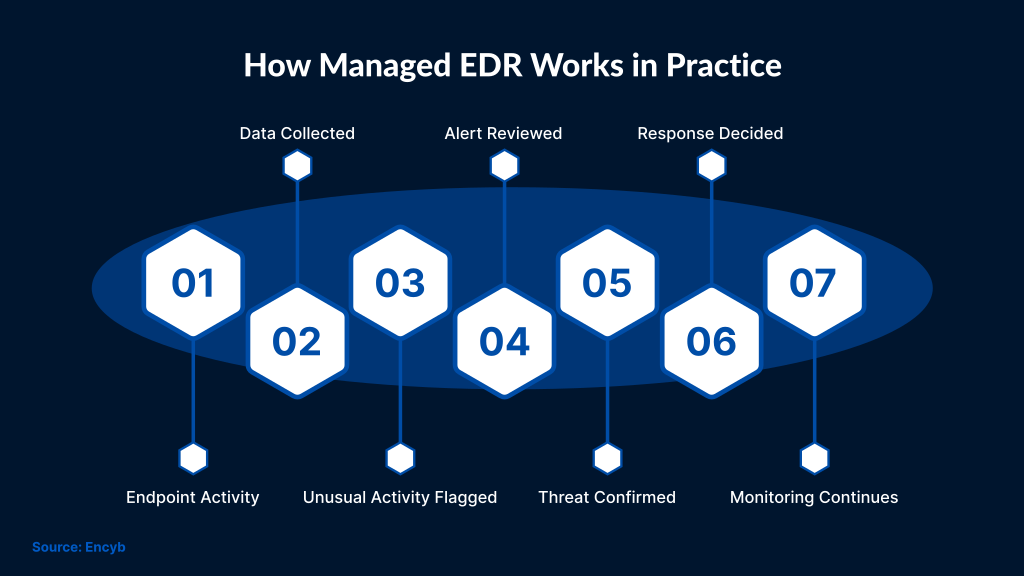
Managed EDR starts with visibility. Endpoint agents collect activity details from all the devices connected in an environment. This can include process behavior, file changes, network connections, and user actions. On its own, this data can be overwhelming. But if handled properly, teams can find valuable information in it.
Teams continuously review the data collected from endpoints. If they find any unusual activity, it is flagged and examined to determine whether it poses a real risk. Most activity is ignored as normal, and the remaining activity is filtered into alerts that suggest possible compromise. Then, analysts review these alerts, considering factors such as context, patterns, and signs of intent rather than technical anomalies.
Response options can vary based on the identified threat. In some cases, the managed EDR service isolates an endpoint or stops a process. In others, it only shares the findings and recommended actions with the internal team.
Monitoring does not stop after closing one incident. It continues on a regular basis. Over time, teams stop reacting to every alert and focus on the ones that actually need attention.
Core Components of a Managed EDR Service
Endpoint Agent: It is software that runs on devices and records activity such as process execution and system changes. It will not make any decisions. It only observes and reports endpoint activity.
Monitoring and Analysis Layer: This is the second component, which is responsible for reviewing and filtering incoming data. It also prioritizes incoming data so that the most important data is reviewed first. This layer is responsible for identifying behavior that deviates from normal patterns and could indicate malicious activity.
Monitoring by Experts: This is another defining component. Here, security analysts review flagged activity and validate threats. After that review, a decision is made on what to do next. Having people involved helps to avoid acting on alerts that turn out to be harmless.
Response Capability: This component isolates endpoints and stops malicious processes. It may also provide clear guidance for internal teams to take action.
These components work together to support the effective operation of the service in real environments.
EDR Monitoring and Response Workflow
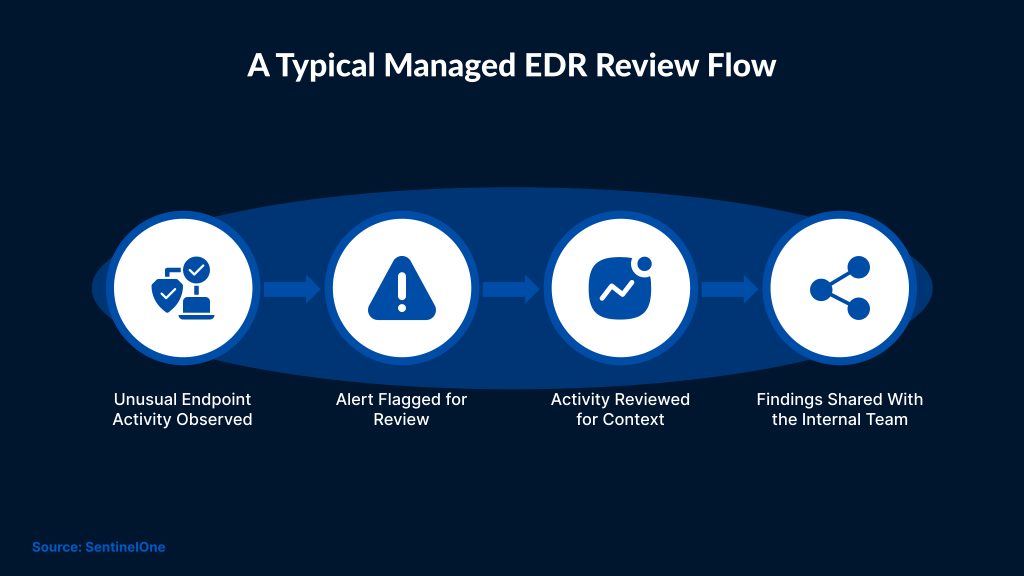
Managed EDR turns monitoring into an ongoing process rather than an event-driven one. It monitors endpoints continuously rather than only when something goes wrong. Apart from that, it reviews activity across devices and filters out background noise early.
When the managed EDR detects unusual behavior, it reviews the process rather than taking immediate action. Then, analysts review the situation that occurred before and after the activity. They also check the activity to see whether it matches known attack techniques or simple user behavior. This reduces the chance of false alarms.
Once a real threat is identified, the decision to respond depends on its severity and scope. Sometimes, it takes actions like containing an affected device or stopping a harmful process. On other occasions, it notifies internal teams with clear findings and next steps.
The workflow is not fixed. Monitoring continues during and after the response. Learnings from each incident are used to better recognize similar activity in the future. This helps keep the focus on real threats rather than repeated noise.
Where Managed EDR Delivers Value
Managed EDR is useful in places where traditional endpoint tools usually struggle. One of the most immediate benefits of managed EDR is continuous coverage. It monitors endpoints at all hours without depending on internal staff to stay on alert.
Another area of value is focus. Teams don’t have to go through large volumes of alerts. Teams receive findings that have already been reviewed. As a result, they don’t spend hours chasing harmless activity and stay focused on confirmed risks.
Managed EDR also helps close skill gaps. Not every organization has specialists to track new developments in endpoint attacks. Having analysts who focus on endpoint threats brings experience that is hard to maintain in-house.
Managed EDR provides support during active incidents. It can take actions directly or offer findings and guidance to internal teams. This avoids confusion during incidents and ensures more consistent handling of endpoint threats over time.
Where Managed EDR Falls Short
Managed EDR works well in many situations, while falling short in others. Here are those areas where it falls short:
Visibility outside the endpoint: If an attack happens in areas that endpoint agents do not cover, then it might go unnoticed.
Relying on the provider: Managed EDR works differently from provider to provider. Some providers respond quickly and explain things better than others.
Response expectations: Managed EDR does not usually handle everything on its own. Internal teams are often still needed when an incident happens.
Cost considerations: The cost of managed EDR services depends on the ongoing subscriptions. The cost may be harder to justify for small environments or low-risk use cases.
Managed EDR does not cover everything. Other tools and internal teams are still needed.
Managed EDR in Real-World Security Operations
Managed EDR is a part of a larger security setup. It will flag anything that looks off, while other tools will handle patching or access control.
On a daily basis, this means most activities go unnoticed. Activities like users logging in, processes starting and stopping, and applications updating. Managed EDR remains quiet during these moments. It becomes active when something unusual breaks that pattern.
During active incidents, managed EDR helps bring structure. Teams see fewer scattered alerts, but a clearer picture of what happened on a device and when it started. This helps teams decide what to do without making things worse.
After a while, managed EDR becomes part of routine security operations. Teams stop guessing which alerts are important and which are not. There won't be as much chaos after incidents are detected, since a response process is already in place.
Conclusion
The way endpoint security is handled has changed with the introduction of Managed EDR. Now, teams can continuously monitor endpoints across the environment. This service allows them to provide a more controlled response rather than chasing alerts. This has greatly reduced the amount of alert noise and investigation effort associated with addressing security incidents.
At the same time, managed EDR has its limitations. Coverage is limited to endpoints, and the response depends on the service scope defined by the provider. As a result, outcomes can differ from one provider to another. Managed EDR will not replace every security function, but it can form a strong foundation when organizations have realistic expectations.
SafeAeon delivers managed EDR that focuses on definitive results and responsive actions, in addition to automated actions performed on behalf of the user. To determine whether managed EDR is right for your environment, you need to understand how it works, what value it adds, and where it falls short.