

Key Takeaways
- Only 3% of organizations were at a mature stage of cybersecurity readiness in 2024, according to the Cisco 2024 report. This highlights a significant gap that security audits can help bridge.
- The average cost of a data breach is $4.45 million, according to IBM. This high cost makes proactive security audits essential for risk mitigation.
- Cyber threats continue to grow at a great speed, making ongoing security assessments through audits crucial for maintaining a solid cybersecurity posture.
Introduction
Today, where the world changes every second, IT security audits might not be just a best practice anymore; they can rather be considered a basic requirement. Every type of organization, from small enterprises to multinational companies, needs to conduct a thorough cybersecurity audit to best protect itself from ever-rising risks such as data breaches, ransomware, and insider threats. All companies, including those included in Fortune 500, invest in professional IT cybersecurity audit services to create secure, compliant, and resilient infrastructures.
As cyber threats become more sophisticated, a thorough IT security audit gives key visibility into the vulnerabilities of your organization and allows timely remediation. This will become more significant in today's cloud-centric, hybrid work environment. Services in the IT cybersecurity audit can help businesses mitigate threats proactively, comply with requirements, and protect their brand equity.
What Is an IT Security Audit?
An IT security audit is a systematic and in-depth investigation of an organization's IT structure, applications, networks, data management, and user access controls. The purpose of this security audit in cybersecurity is to identify security weaknesses, assess current controls, and provide valuable recommendations for corrective actions so that security measures may be enhanced.
Core Components of an IT Security Audit
| Component | What It Checks | Example |
|---|---|---|
| Penetration Testing | Simulates real-world cyberattacks to identify exploitable vulnerabilities. | Ethical hackers attempt phishing or exploit weak web apps. |
| Vulnerability Scanning | Finds missing patches, outdated software, and misconfigurations. | Automated scan flags unpatched Windows servers. |
| Compliance Testing | Validates systems against industry standards and regulations. | Audit checks alignment with ISO 27001, PCI-DSS, HIPAA, GDPR, and CERT-In. |
| Cloud Security Audit | Reviews IAM roles, storage exposure, and cloud configurations. | Identifies a publicly accessible S3 bucket in AWS. |
| Social Engineering Tests | Evaluates employee resilience against manipulation and phishing. | Phishing simulation email sent to staff. |
| Network Security & Endpoint Assessment | Examines firewalls, VPNs, device controls, and endpoint defenses. | Test confirms disk encryption and EDR are active. |
The organization usually relies on specialized cybersecurity audit service providers to conduct these evaluations to maintain objectivity that could otherwise be undermined and technical expertise that would ensure a security posture review for impartiality.
In 2025, cyber threats exploded in scale and sophistication
- The average cost of a data breach surged to $4.88 million in 2024, a 10% jump from 2023
- 32% of cyberattacks exploit unpatched vulnerabilities.
- India reported over 1.16 million cybersecurity incidents in 2023, including phishing, ransomware, DDoS, and breaches
Why Security Audits Are Essential in Cybersecurity?
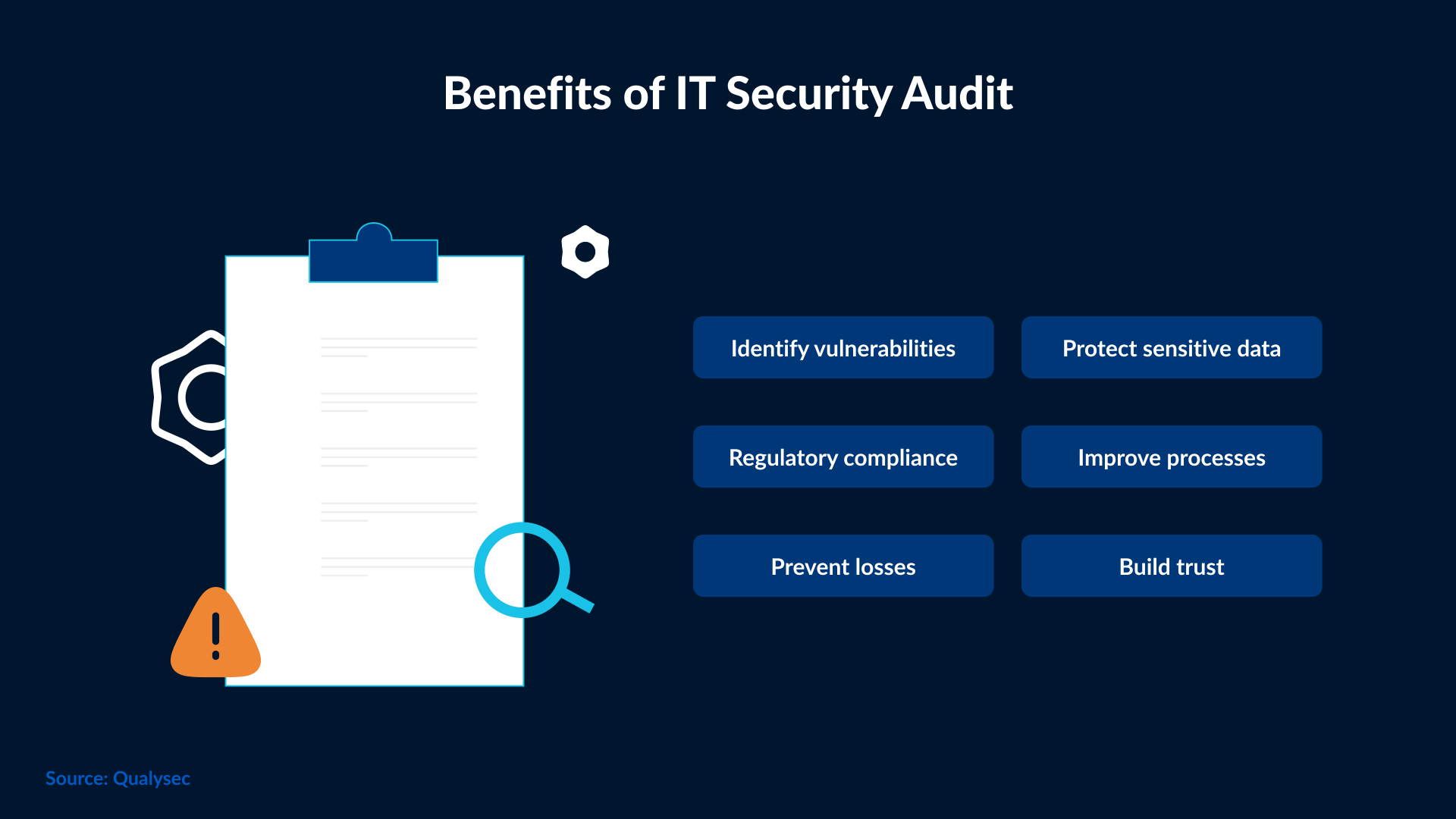
There are many benefits to modern organizations from periodic security audits in cybersecurity:
- Optional Risks Detection: A thorough IT security audit presents the associated risks like non-updated software, weak password protection, or open network ports that went previously unnoticed, thus offering those loopholes to potential attackers.
- Aid in Ensuring Compliance: Documented security audits are a prerequisite to meeting compliance stipulations laid down by regulatory bodies like HIPAA, GDPR, or CERT-In. Professional IT cybersecurity audit services ensure total conformity of your business to these requirements.
- Financial and Legal Risks Minimized: Audits on cybersecurity eliminate weak links early enough and thus stem high-cost breaches from legal fines and operational downtime.
- Increase Cyber Resilience: A well-defined audit strategy in IT security prepares the organization for the various threats of the future, including ransomware and AI fakes.
- Enhanced Human Risk Management: Phishing and social engineering tests during the IT security audit measure and strengthen the security awareness of employees.
- Establish Credibility in Business: Certification and audit report from a vetted cybersecurity audit services provider shows proof of responsible data governance and builds more trust from clients and investors.
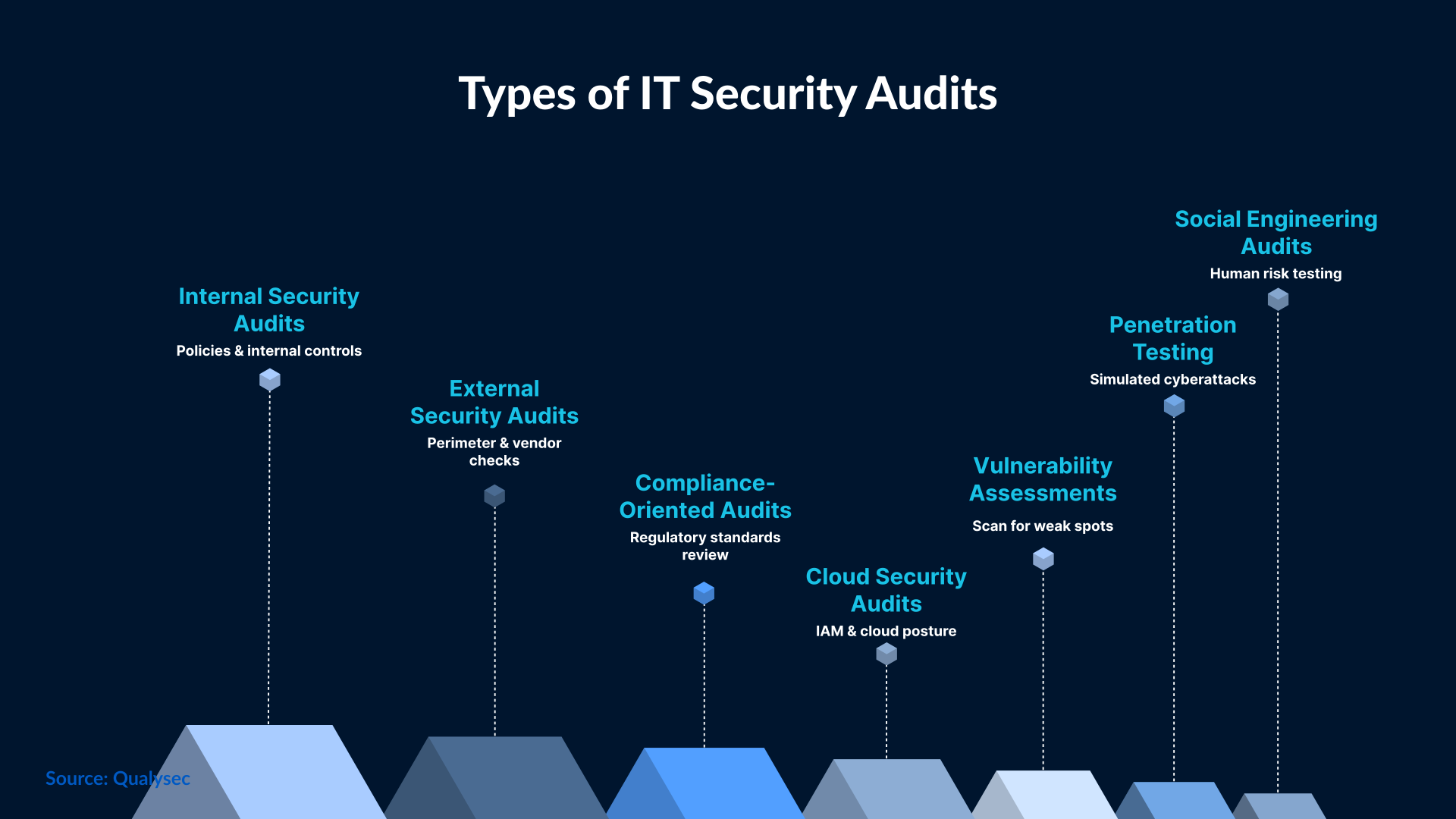
Types of IT Security Audit in Cybersecurity
Appointing relevant cybersecurity audit services according to the size of an organization, its risk profile, industry, and compliance needs. Under usual circumstances, IT security audits may fall into any of the following:
- Internal Security Audits: Internal audits are used to check compliance with the company's internal policies and standards.
- External Security Audits: The evaluations by external third-party specialists provide unbiased reviews and meet the regulatory requirements.
- Compliance-Oriented Audits: Audits targeted to meet credit requirements of ISO 27001, PCI-DSS, HIPAA, GDPR, or CERT-IN.
- Penetration Testing: Simulated cyberattacks aimed at finding exploitable vulnerabilities.
- Vulnerability Assessments: Unattended assessment systems involving automated scanning for missing patches and configuration errors.
- Cloud Security Audits: Focusing on cloud service configurations, IAM policies, and exposure risks across AWS, Azure, or GCP.
- Social Engineering Audits: Tests such as phishing campaigns to measure the human factor in cybersecurity.
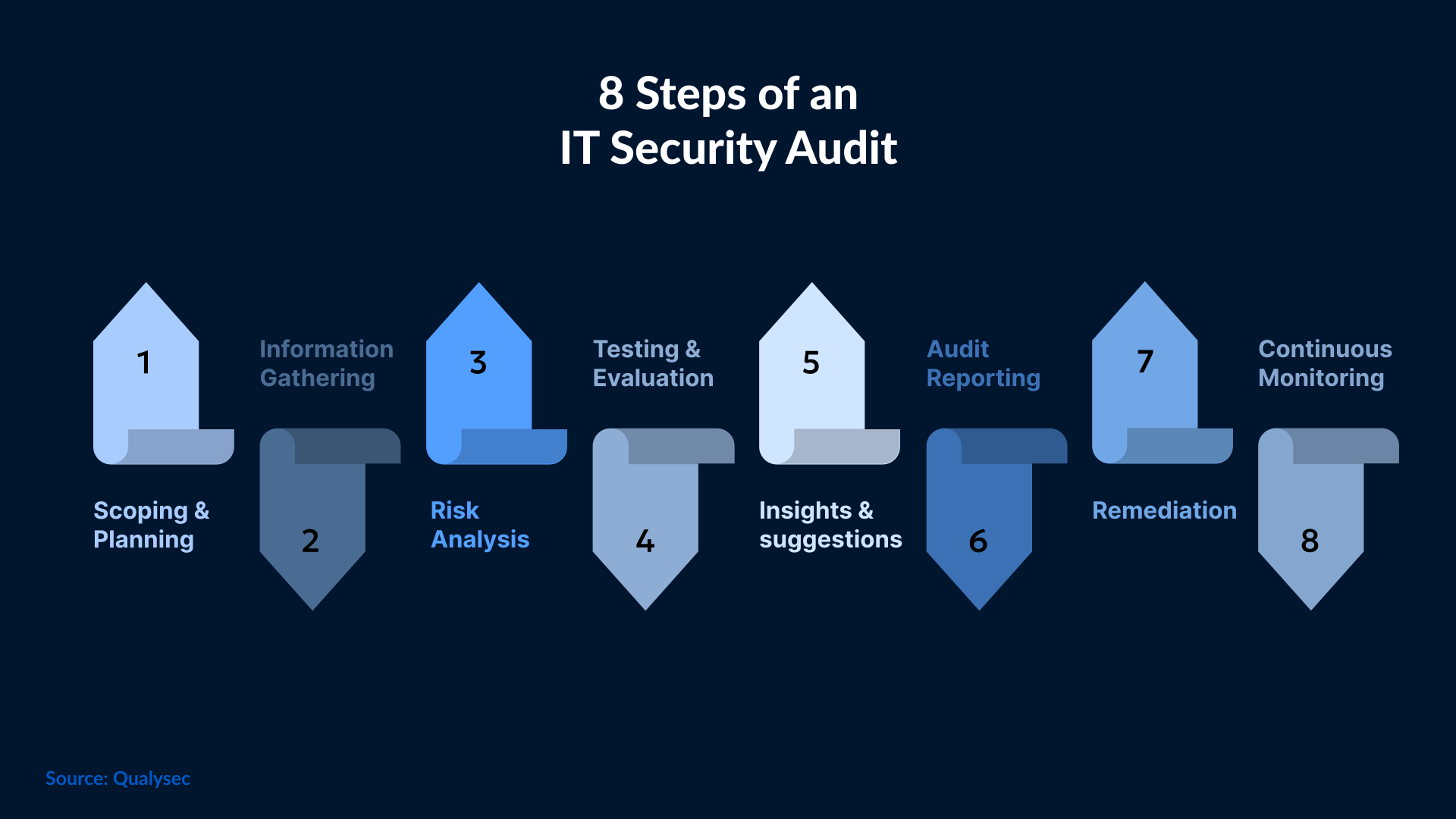
8-Step IT Security Audit in Cybersecurity Process
An in-depth IT security audit, in conjunction with professional cybersecurity audit services, involves the following eight crucial steps:
- Scoping and Planning: Determine audit objectives, scope, critical assets, and compliance mandates to ensure an audit that focuses on actual cybersecurity auditing.
- Information Gathering: Gather details like user populations, devices, servers, cloud environments, and gather key documentation such as network diagrams and other relevant policies.
- Risk Analysis: Evaluation of invaluable assets depending on the risk-prioritized, harmonized format by vulnerability frameworks such as CVSS.
- Testing and Assessment: Automated scanning, pen testing in person, assessments, and investigations of social engineering.
- Findings and Recommendations: Prepare reports of all the vulnerabilities discovered with their severity ratings. Also, provide actionable recommendations for fixing issues and further strengthening the security posture.
- Reporting: Compile all the results into a summary and technical documentation. Highlight key points like compliance status, critical risks, and overall security posture for stakeholders.
- Track and Re-Mediation Plan: Analytical technical reports should be included with risk scores and priorities of recommendations for remediation.
- Continuous Monitoring: Establish ongoing monitoring and follow-up audits. This will help keep vulnerabilities fixed and proactively detect new threats.
When running an IT security audit, here are the main areas that usually come under review
- Network Security: All configurations of firewalls, VPN controls, and disabling unused ports.
- Endpoint Security: Antivirus/EDR status, Disk Encryption, Device Control Policies.
- Identity and Access Management: Multi-factor authentication, privileged access audits, and least privilege enforcement.
- Data Security: Encryption in transit and at rest, backup and recovery testing, data loss prevention tools.
Case Studies
- CERT-In Audit (India): Due to the CERT-In mandate, a major Indian financial house underwent a required cybersecurity audit, which discovered misconfigurations in its cloud architecture and enforced stricter access controls through very competent IT Cybersecurity Audit Services.
- HIPAA Compliance Scenario (USA): Alternatively, another state health provider in the United States carried out such audits on security concerning IT standards that were focused on HIPAA compliance to protect patient data. It results in better encryption of data, stricter access policies, legal compliance, and greater training to avoid phishing.
Tools Used in IT Security Audit in Cybersecurity
Auditors use a wide range of tools to test everything from cloud setups to employee awareness. Here are the essentials you’ll see in most IT security audits:
Tools Used in IT Security Audits
| Category | Examples | Audit Role (1-line) |
|---|---|---|
| SIEM | Splunk, QRadar, LogRhythm | Centralizes logs & flags threats in real time. |
| CSPM | Prisma Cloud, Orca Security | Finds cloud misconfigurations & compliance gaps. |
| EDR | CrowdStrike, SentinelOne | Detects & responds to endpoint threats. |
| Vulnerability Management | Nessus, Qualys, Rapid7 | Scans systems for unpatched flaws. |
| Pen Testing Tools | Metasploit, Burp Suite | Simulate real-world cyberattacks. |
| IAM | Okta, Azure AD | Manages access & enforces MFA. |
| SOAR | Cortex XSOAR, Phantom | Automates incident response workflows. |
| DLP | Symantec, Forcepoint | Prevents unauthorized data leaks. |
| IaC / Config Management | Terraform, Ansible | Ensures secure & consistent deployments. |
| Security Awareness | KnowBe4, Cofense | Tests human resilience with phishing sims. |
1. Security Information and Event Management (SIEM) Tools
Examples: Splunk, IBM QRadar, ArcSight, LogRhythm
Why It Matters: SIEM tools gather and analyze a sufficiently critical mass of log data from all compartments of an organization in real-time.
Audit Role: During an IT security audit, these tools validate that logging is working as intended and that security events will be detected and flagged efficiently. They underpin monitoring and incident response competencies.
2. Cloud Security Posture Management (CSPM) Tools
Examples: Prisma Cloud (Palo Alto), Dome9 (Checkpoint), Orca Security, AWS Security Hub Why It Matters: With businesses moving rapidly to cloud platforms AWS, Azure, and Google Cloud, the threat posed by configuration blunders is real. Audit Role: Automating the detection of misconfigurations and compliance gaps, these tools are essential under IT cybersecurity audit services concentrating on cloud environments.3. Endpoint Detection and Response (EDR) Tools
Examples: CrowdStrike Falcon, SentinelOne, Carbon Black, Microsoft Defender for Endpoint
Why It Matters: Endpoints are prime trouble spots for malware and ransomware.
Audit Role: Auditors use EDR platforms to assess how well an organization is defending from detection to response, all the way through to how quickly it reacts to incidents concerning their devices.
4. Vulnerability Management Platforms
Examples: Tenable Nessus, Qualys, Rapid7 InsightVM, OpenVAS
Why It Matters: Unpatched systems and vulnerable applications are preyed upon by attackers.
Audit Role: These platforms will help organizations do scans across their entire IT environment for weaknesses and massively contribute to IT security audits by calling out areas in need of remediation.
5. Penetration Testing & Automation Tools
Examples: Metasploit, Burp Suite, Cobalt Strike, Core Impact
Why It Matters: Sometimes the best way to determine the integrity of your defenses is to simulate an attack.
Audit Role: Ethical hackers and audit teams use these tools to mimic real-world threats and test how resilient the system is under stress, which is key to uncovering hidden vulnerabilities.
6. Identity and Access Management (IAM) Tools
Examples: Okta, Microsoft Azure AD, SailPoint, Ping Identity
Why It Matters: Who has access to what is one of the most critical questions in any audit. Audit Role: These tools help auditors assess access privileges, enforce multi-factor authentication (MFA), and ensure that the principle of least privilege is being followed.
7. Security Orchestration, Automation, and Response (SOAR) Platforms
Examples: Cortex XSOAR (Palo Alto), Splunk Phantom, IBM Resilient
Why It Matters: Security teams are overwhelmed with alerts, and SOAR platforms help automate responses.
Audit Role: In a security audit in cybersecurity, these tools help confirm that the organization has playbooks and automation in place for effective incident handling.
8. Data Loss Prevention (DLP) Solutions
Examples: Symantec DLP, Forcepoint, McAfee Total Protection for DLP
Why It Matters: Data leakage, intentional or accidental, can be catastrophic.
Audit Role: DLP tools help verify whether sensitive data is protected and if policies are in place to prevent unauthorized data movement.
9. Configuration Management & Infrastructure as Code (IaC) Tools
Examples: Terraform, Ansible, Chef, Puppet
Why It Matters: As infrastructure becomes coded, misconfigurations can spread quickly.
Audit Role: These tools let auditors ensure that infrastructure is deployed securely and consistently, reducing room for human error.
10. Phishing Simulation & Security Awareness Tools
Examples: KnowBe4, Cofense, Proofpoint Security Awareness Training
Why It Matters: Even with strong tech, human error remains a leading cause of breaches.
Audit Role: Simulated phishing campaigns and training modules are used to measure and improve employee awareness, which is often a critical part of IT cybersecurity audit services.
Conclusion
IT security audits play a key role in the cybersecurity strategy of a company. They are responsible for checking systems for weaknesses and providing recommendations to stay compliant and protected against attacks.