

Key Takeaways
- Human element accounts for around 60% of all data breaches that occurred in 2025. (Verizon)
- Phishing was one of the most common initial entry points, accounting for roughly 16% of breaches. This shows that a single email is enough to initiate an attack. (IBM)
- In DeepStrike’s data, stolen or compromised credentials show up in around 22% of breaches, which makes them one of the most common entry points.
Introduction
Malicious actors use different tactics to launch cyberattacks, commonly referred to as attack vectors. They exploit misconfigurations, weak controls, and other poor security practices to gain unauthorized access to victims’ systems.
There is a document co-authored by cybersecurity authorities from various countries, like the US, Canada, the UK, the Netherlands, and New Zealand. It is released by CISA (Cybersecurity and Infrastructure Security Agency). The document outlines all the tactics attackers use to breach networks and the methods that security teams can adopt to reduce the risks of attacks.
Weaknesses do not remain constant. They move around within the system. Therefore, what started at an endpoint can also appear in remote access paths or identity systems. This gives attackers more entry points to exploit.
Understanding the First Stage of a Cyber Attack
The most common exploitation tactics include taking advantage of existing weaknesses in the system. Vulnerabilities in the IT infrastructure of an organization act as initial attack vectors, which allow attackers to gain unauthorized access.
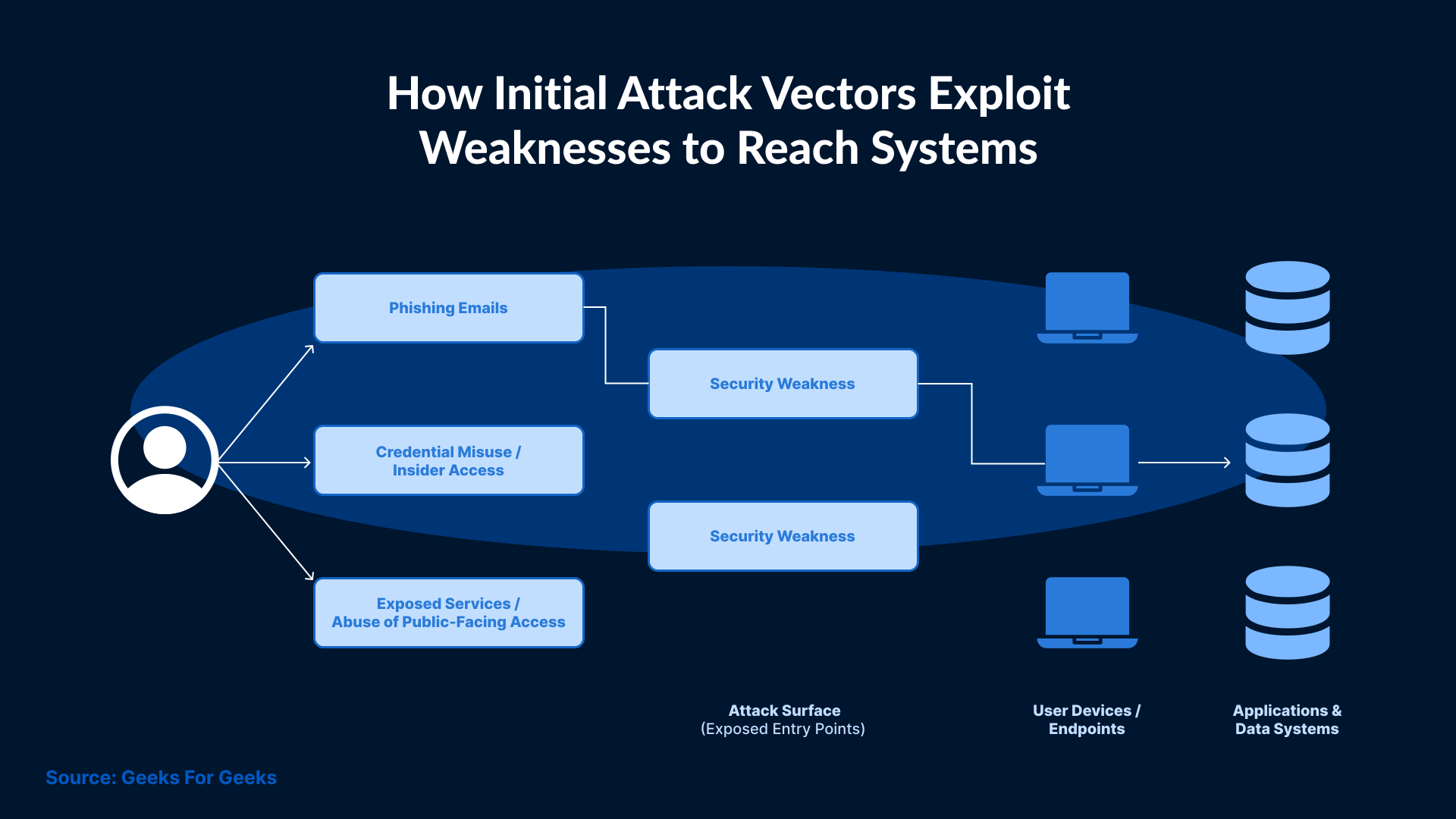
The first stage of the attack is critical. Here, attackers gain access and then move quickly within the system to consolidate their hold and expand laterally. They also attempt to escalate privileges in order to gain deeper access to the organization's infrastructure. It is essential for security teams to detect or prevent activity at this stage to minimize the overall impact of an incident. However, many teams are unable to do so due to limited visibility and delayed detection.
Common Attack Vectors Used for Initial Access
Remote Desktop and Remote Access Abuse
These include systems where multi-factor authentication (MFA) is not enforced, especially for remote desktop access. MFA plays a key role in mitigating the risks of ransomware attacks, where the Remote Desktop Protocol (RDP) is among the most common vectors.
Remote access services are often exposed with fewer controls than expected. VPNs are a common example. When they are not set up properly, they can quietly become an entry point into the network.
Remote access supports remote workers or vendors, but it also creates a gap in the system that attackers can exploit. It's important to monitor all remote connections to ensure that no malicious users sneak in with legitimate ones.
Weak Identity and Access Controls
If the privileges or permissions are applied incorrectly or if there are errors in access control lists, then it can allow unauthorized users or processes to gain access to IT assets.
Weak password policies can also be a reason for attackers to gain unauthorized access to victim systems. Attackers have used these techniques on several occasions, most notably in attacks targeting RDP.
Organizations that continue to operate systems with factory settings or standardized login usernames and passwords are often affected by this attack vector. Many software, hardware, and networking products are available with overly permissive factory settings to facilitate easy installation and reduce the number of support tickets. Leaving them unchanged opens the door for attackers to exploit the network.
Identity-based attack vectors are also highly effective because attackers can blend into normal user activity. This makes early detection a lot more challenging.
Unpatched Systems and Vulnerable Software
Outdated software also paves the way for attackers to exploit an organization’s systems. When software programs are not patched, attackers can exploit the vulnerabilities to access sensitive information, take control of systems, or initiate a denial-of-service (DoS) attack. This is one of the most common attack methods that impacts most organizations.
Patching gaps often appear in organizations with complex IT infrastructures due to asset sprawl or outdated legacy systems. In some cases, a lack of visibility about internet-facing systems creates patching gaps.
Cloud and Internet-Exposed Services
Other common targets for attackers include unprotected and misconfigured cloud services. These are used to steal sensitive data and even mine cryptocurrency.
Cloud services are often left exposed without anyone noticing. Open ports and loose configurations tend to draw attention quickly, and once access is gained, those systems rarely stay untouched for long.
NetBIOS, RDP, Server Message Block (SMB), and Telnet are some of the services with the highest risk.
Setting up cloud services and internet-facing systems is usually easy. This can lead to cloud services being exposed without notice.
Phishing and Email-Based Entry Points
Without effective phishing protection, phishing attacks become easier. Attackers can easily send emails with malicious links or attachments to infect their IT infrastructure.
Phishing can still succeed even when technical controls are in place because it targets human behavior. Phishing acts as a starting point for credential theft or malware delivery.
Endpoint and Script-Based Abuse
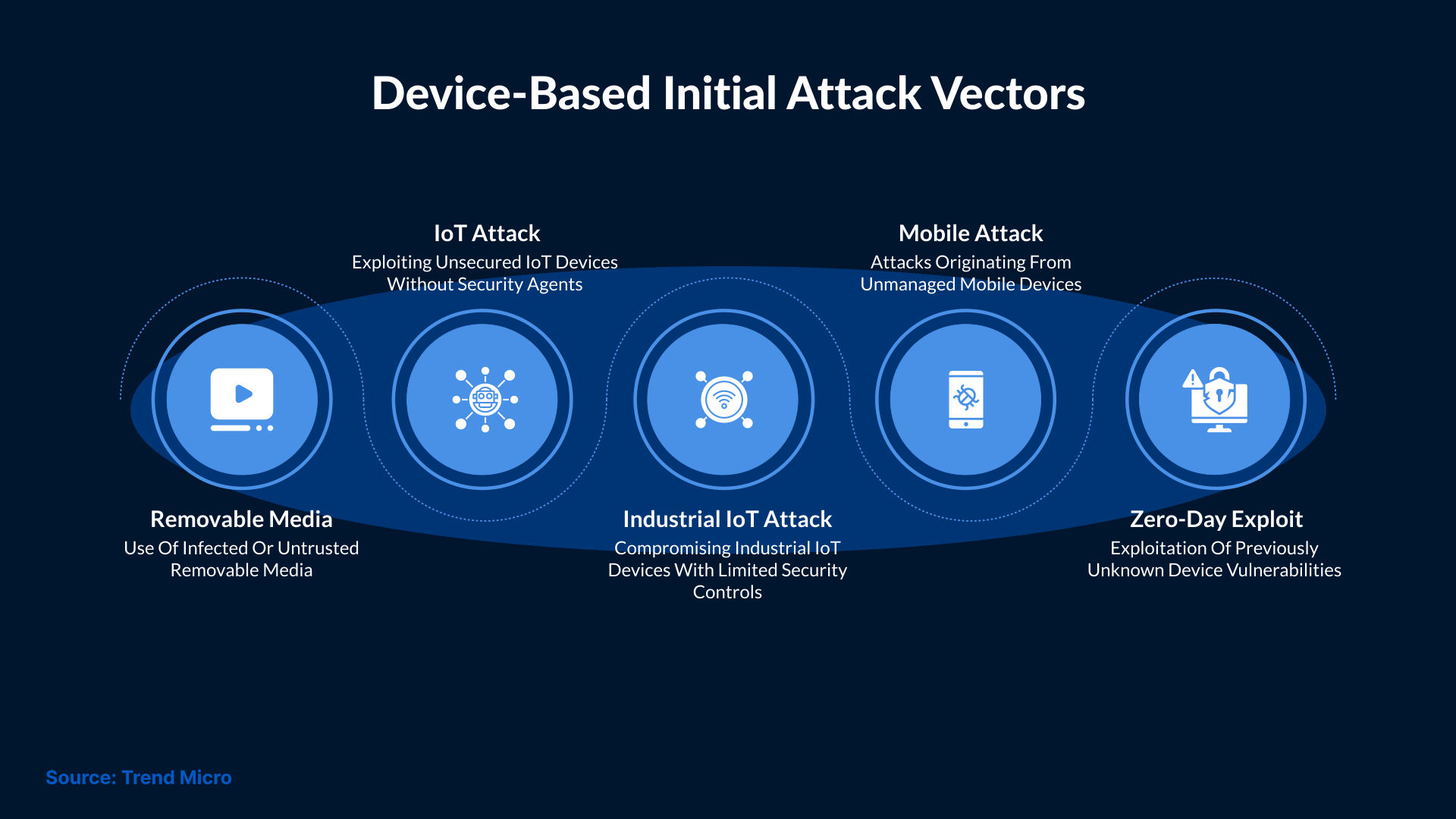
Poor detection and response to endpoints can make it easy for scripts and PowerShell attacks to bypass endpoint security controls and launch attacks on target devices.
Endpoints are a common place for attacker activity to continue when visibility is weak.
Why These Attack Vectors Often Go Undetected
Attackers rarely need anything advanced. Weak monitoring and poor visibility are often enough. Blind spots tend to appear when ownership is spread across different teams and tools. When activity is viewed in isolation, early signs of compromise are easy to miss.
Recommended Practices to Reduce Attack Vector Exposure
Apart from listing these attack vectors, the CISA document also recommends practices that can help improve the security posture against the most exploited weak security controls.
To address these weaknesses, security controls must be reviewed regularly, and any unusual activity must be addressed promptly.
Zero Trust and Access Verification
Adopting a Zero Trust model is a good approach, as it eliminates implicit trust in any user or IT asset. Individuals are required to verify their identity continuously through real-time information from multiple sources to determine their appropriate access privileges.
It’s essential to strengthen conditional access policies because they enable the management of user connections to networks and cloud services.
Securing Remote Access and Privileged Accounts
Allowing administrator accounts to log in remotely increases the risk of unauthorized access. Dedicated administrative workstations can help contain privileged access.
Scan machines with RDP ports, including virtual ones in the cloud. If any systems have an open RDP port, they should be placed behind a firewall, and users must use a VPN to access them.
Implementing MFA is a crucial step, especially across all VPN connections, privileged accounts, and external services. For critical services, teams can use phishing-resistant MFA, such as security keys or PIV cards. In cases where it’s not possible to implement MFA, teams should implement a strong password policy along with other attribute-based information, such as access time, device data, geolocation data, and user history.
Factory-set user identities and passwords should be changed to prevent unauthorized access. Moreover, teams need to ensure continuous monitoring to detect the use of compromised credentials, along with controls that prevent the use of weak or reused passwords.
Logging, Detection, and Endpoint Protection
Teams must collect and retain sufficient log information. Log files play a crucial role in detecting attacks and handling incidents. Maintaining a solid set of logs will ensure that sufficient information is available for investigating incidents and detecting the behavior of attackers.
Use antimalware solutions along with continuous monitoring of the systems using antimalware and antivirus tools to ensure optimal protection. Implement security tools for endpoints and employ intrusion detection and prevention systems to protect devices and networks.
Centralized visibility for all systems makes it easier for teams to identify patterns that indicate early-stage intrusion rather than isolated technical issues.
Configuration, Patching, and Continuous Testing
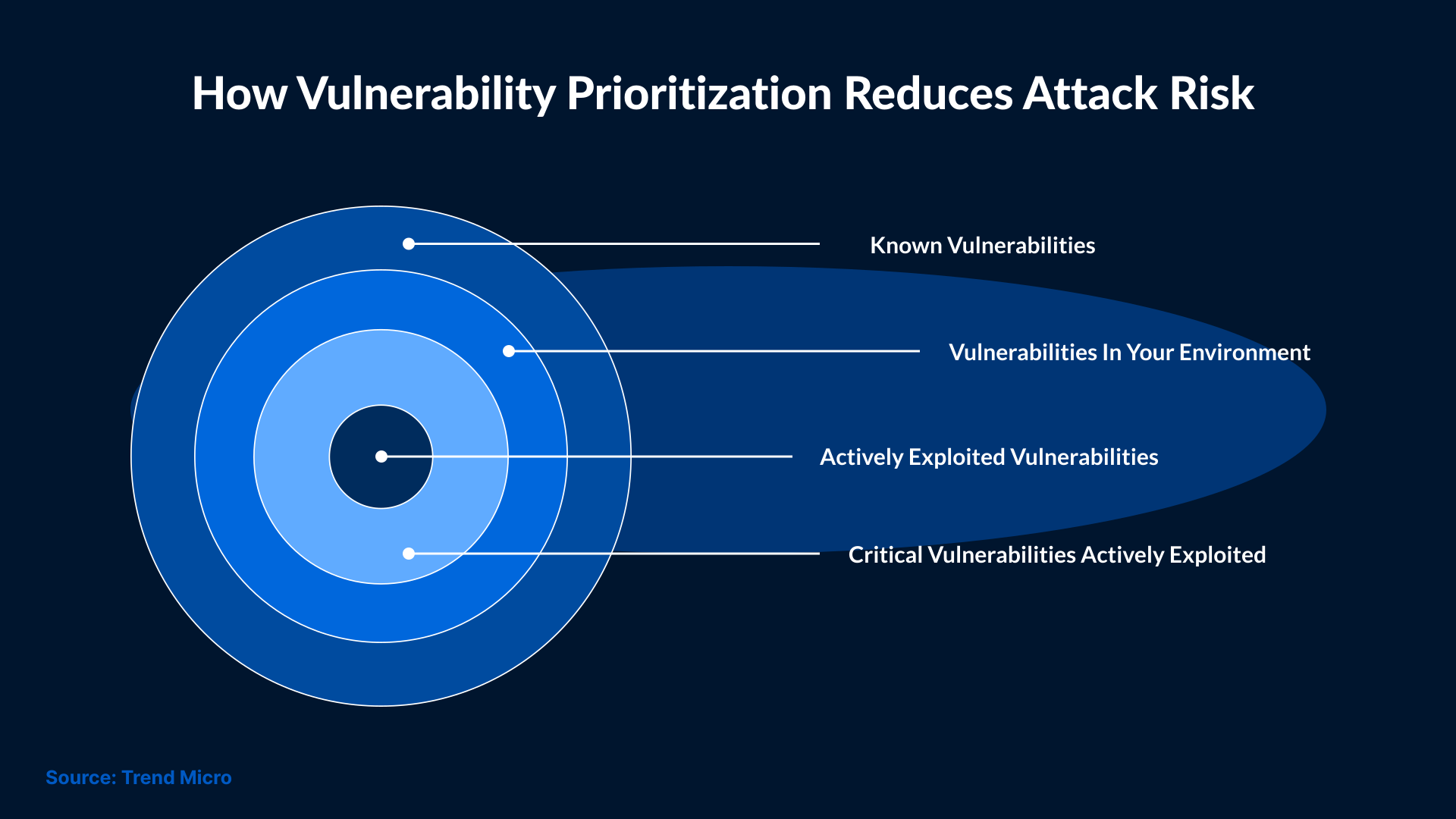
Misconfigurations and unpatched systems rarely occur due to a single mistake. They tend to appear over time as IT infrastructure changes, new services are added, and existing systems are modified. With regular testing and validation, these gaps can be identified early, before they are exploited as attack vectors.
- Conduct tests to identify misconfigurations.
- Regular vulnerability scanning and patching help prevent small gaps from turning into larger problems.
- Use cloud service provider tools to detect shared storage and monitor abnormal access.
- Ensure secure configurations for services on hosts accessible from the Internet.
- As infrastructure grows, security controls only stay effective if they are checked and adjusted over time.
Conclusion
Focusing on attack vectors early makes it harder for attacks to succeed and limits how far an incident can spread. SafeAeon helps identify initial attack vectors using suitable tools and an experienced team that can detect and fix vulnerable devices and apps that attackers can exploit.