

Key Takeaways
- Tor, the most popular browser for accessing the dark web, witnessed around 2 million users daily in early 2025. (Deepstrike)
- The deep web is estimated to be hundreds of times larger than the surface web.
- Law enforcement seized $200 million and 2 tons of drugs in the operation RapTor that happened in May 2025. Over 270 people were arrested during the operation.
Introduction
The internet we use every day is just the tip of the iceberg. It’s called the “Surface Web”. Beneath the surface web lies a vast hidden layer where legal and illegal activities sometimes take place anonymously. This hidden layer includes two key areas: Deep Web and Dark Web.
Both are linked to online anonymity, but they serve different purposes. Understanding deep web vs dark web is important for staying informed and safe online.
The Three Layers of the Internet: Surface, Deep, and Dark
Surface Web:
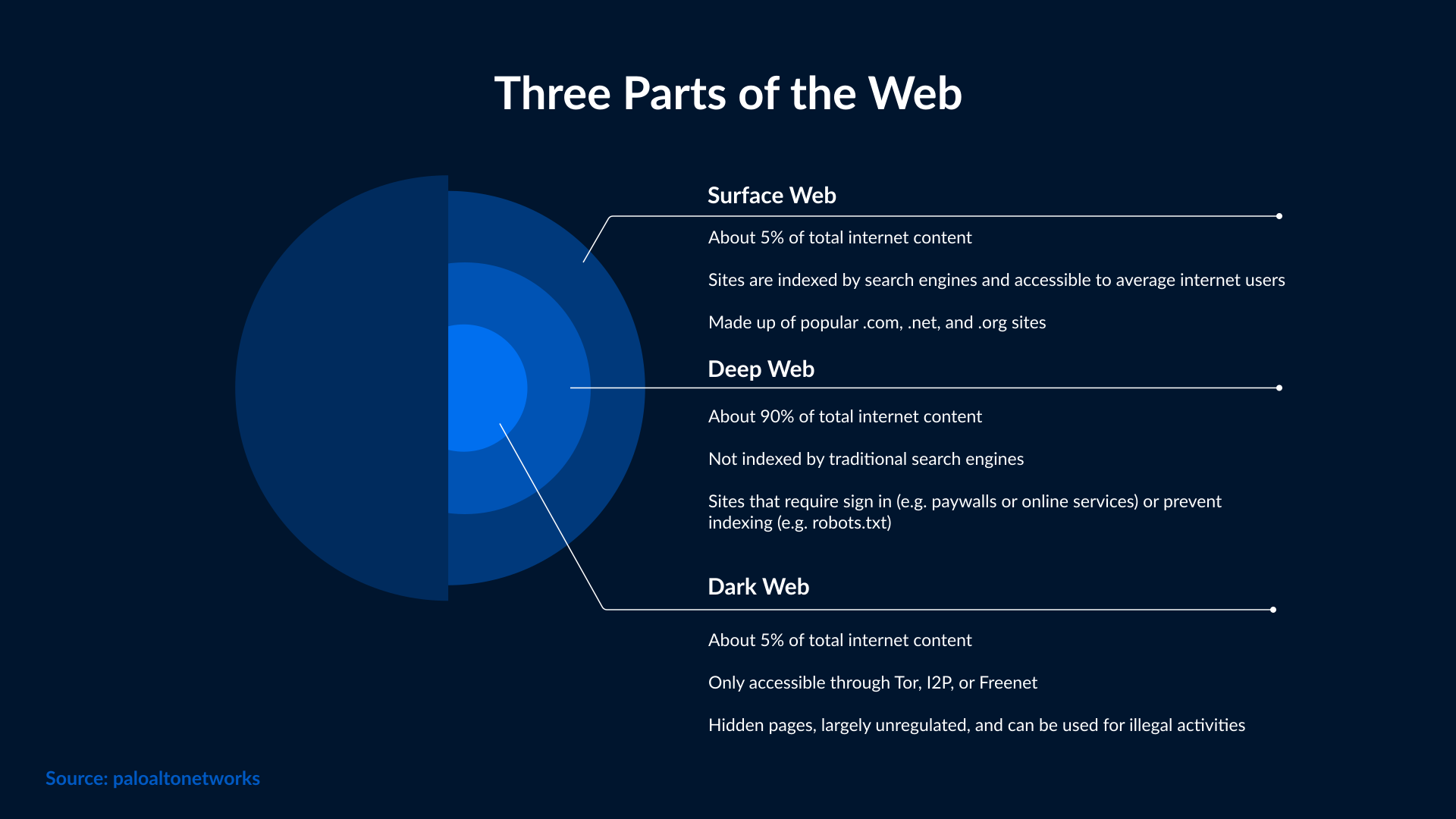
This layer of the web is what we all access in our daily lives. It includes browsing websites, accessing social media platforms, playing online games, and watching online content.
Features of the Surface Web:
- Wide accessibility: Anyone with internet access can explore.
- Indexed content: It is the part of the internet that search engines, such as Google and Bing, can find and list.
- Common examples: Social networks, blogs, news sites, e-commerce, among others.
Although it is the most popular layer, the Surface Web only accounts for around 4% of all content available on the internet. This means that the rest is hidden in the digital depths.
Deep Web
This layer exists just below the Surface Web. It is widely used by organizations and services that focus on security and privacy.
Features of the Deep Web:
- Unindexed content: It does not appear in search results. You will have to access it directly through URLs or credentials.
- Legitimate and essential use: This includes areas such as:
- Personal and corporate emails
- Online banking platforms
- Internal company systems (intranets)
- Protected academic or government documents
- Security: Since it contains sensitive data, it requires additional layers of protection, such as two-factor authentication and encryption.
This layer is crucial for protecting information, which is why government and private organizations depend on it to prevent data from being indexed on search engines.
Dark Web
The Dark Web is the most concealed layer of the Internet. Access to this layer is usually restricted to users via software such as Tor (The Onion Router).
Features of the Dark Web:
- Limited access: The Dark Web is inaccessible through traditional browsers. To hide a user's identity, specific software is used to anonymize and encrypt user connections.
- Positive and negative uses:
- Good uses: Offers anonymity and removes personal identity, thus providing safe opportunities for journalists, political activists, and people living under severe censorship
- Bad uses: On the contrary, it is often utilized to fund illicit activities such as selling stolen data, illegal drug dealings, and forums for skilled hackers.
- Stay cautious: Browsing the Dark Web requires significant technical knowledge and security measures, or else, it will expose them to severe risks.
What Exactly Is the Deep Web?
Deep Web refers to the part of the internet that cannot be detected easily using traditional search engines. This layer accounts for roughly 90% of the websites that are invisible to the naked eye. Consider this layer as the backstage of the internet, with a thick layer of security and privacy.
What is Found on the Deep Web?
Deep Web stores all types of information, from blog posts to organizational data to financial and academic records.
Here are some examples:
- Legal files
- Email accounts, social networks, blogs
- Financial data such as account number, payment information, and retirement details
- Databases of private companies
- Data for network maintenance, etc.
Many hidden layers of the internet often serve a legitimate purpose. These pages don’t pose any security risks to your computer and are kept hidden to protect the private information of organizations and individuals.
What Exactly Is the Dark Web?
The Dark Web is a portion of the Deep Web that is even more obscure and inaccessible. It contains websites and networks that are not indexed. If anyone wants to access such websites or networks, they need to use special browsers. Even then, their access remains highly restricted.
What’s on the Dark Web?
The Dark Web is often linked to cybercrime, illegal information, and purchases of illicit services or products. In this layer, you can find:
- Stolen data and leaked credentials
- Malware and hacking tools
- Illicit trade forums
- Illicit financial services
- Restricted communication boards for criminal groups
The dark web is not only used by cyber criminals. There have been instances where whistleblowers and victims of abuse have used the dark web to express themselves or make complaints, taking advantage of the anonymity of the platform.
Deep Web vs Dark Web: Key Differences Explained
The Deep Web and the Dark Web are part of the same structure and refer to domains not indexed by search engines. However, the Dark Web has more restricted access and is used extensively for online crimes. The Deep Web, on the other hand, contains essential and useful domains that are necessary for the functioning of the computer network.
| Aspect | Deep Web | Dark Web |
|---|---|---|
| Accessibility | Accessible through standard browsers but requires direct links, credentials, or permissions. | Accessible only through specialized software such as Tor, I2P, or Freenet. |
| Indexing | Not indexed by search engines like Google or Bing. | Also unindexed, but deliberately hidden within encrypted networks. |
| Purpose | Protects private, confidential, or paywalled information. | Enables anonymous communication and, in some cases, illegal trade or activities. |
| Examples | Email inboxes, online banking, private company databases, cloud storage, and academic resources. | Encrypted marketplaces, anonymous forums, whistleblower platforms, illicit trade sites. |
| Size | Estimated to be over 90% of the internet. | Accounts for less than 1% of the internet. |
| Risk Level | Generally safe when accessed legitimately. | High risk due to malware, scams, and illegal content. |
| Legality | Entirely legal to access and use. | Accessing is legal, but participating in illegal activities is not. |
The Deep Web can be considered the backbone of secure online communication and data storage, as it ensures privacy and functionality across the digital world. Whereas the Dark Web represents the hidden edge where both legitimate privacy needs and illicit activities exist together.
Is the Deep Web Illegal? What About the Dark Web?
Access to the Deep Web and the Dark Web is not considered illegal, but the user must take responsibility for their activities carried out within these layers. If they are found accessing suspicious websites, authorities can take strict action against them.
You should be very careful while browsing on the Dark Web sites due to the high volume of illegal activities. You may expose yourself to unnecessary risks if you lack advanced knowledge when accessing certain domains.
How the Dark Web Impacts Businesses and Everyday Users
Since the dark web does not have the security protocols that surface website providers follow to protect their visitors, dark web users end up being exposed to frequent malware threats, such as:
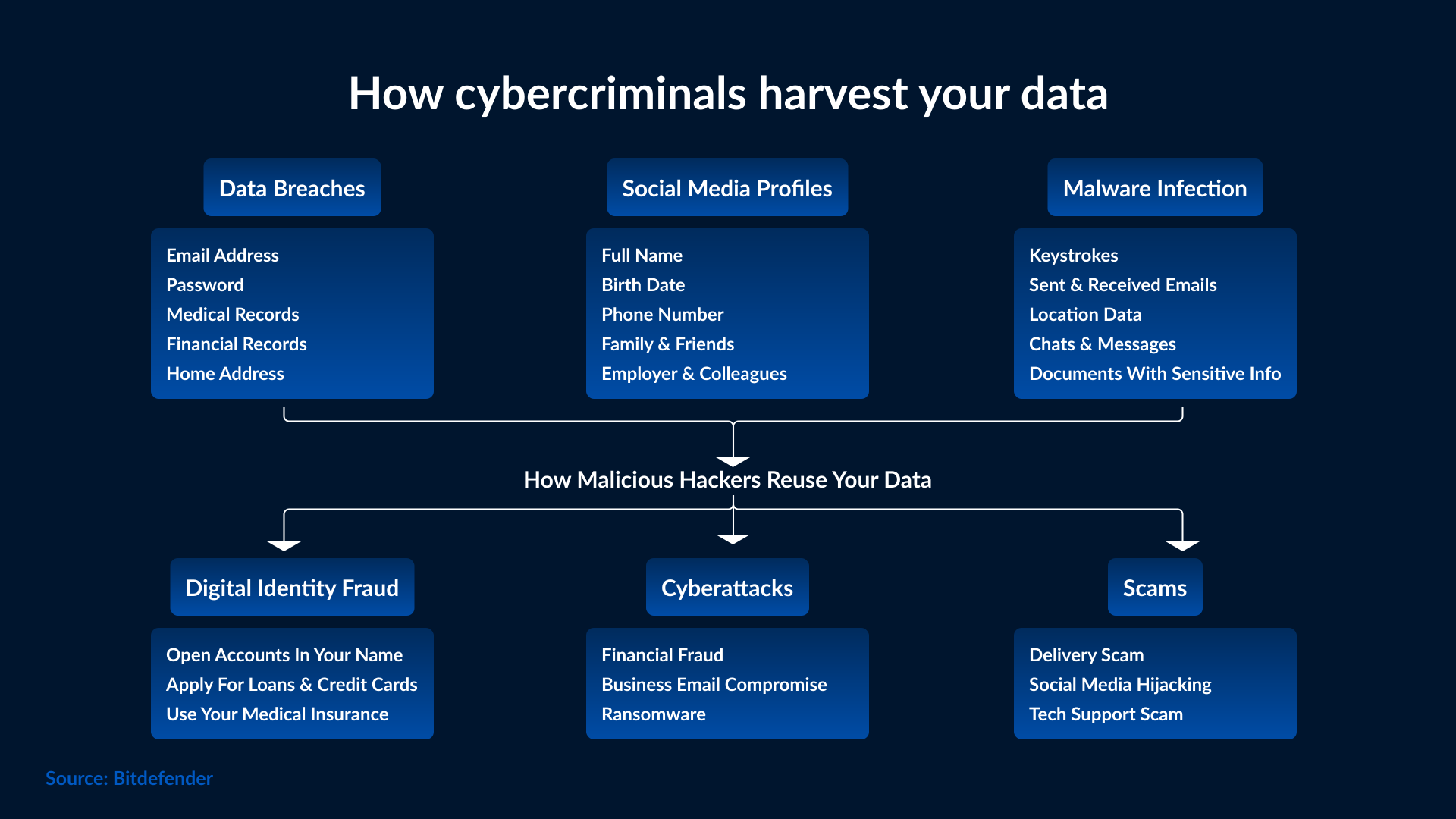
There is a high risk of system compromise when browsing dark web sites without proper precautions. Apart from personal threats, the dark web also poses serious risks to corporate networks.
Every year, the number of dark web links targeting companies continues to rise, exposing businesses to potential data breaches and credential leaks.
How to Stay Safe Online and Protect Your Data
There are a few ways to access the deeper layers of the Internet. The most common method is by using the Tor browser, a software that allows users to access Deep Web and Dark Web sites anonymously.
However, if you really need to access hidden domains, you should do it safely. Even on the Deep Web, it is possible to encounter illicit content that is not visible on the public internet. So, even if these domains are not directly censored, authorities can monitor the TOR browser and trace activity back to your system.
Furthermore, these layers have security holes and malware that can harm your system and steal your data. Before entering the hidden world, consider creating a virtual machine or using a dedicated computer for that purpose.
The Future of the Dark Web
The Dark Web continues to develop in terms of technology, with cryptocurrencies increasing its profitability for cybercriminals. The Dark Web is no longer a hidden channel; rather, it has transformed into a complex digital ecosystem with worldwide ramifications within the cybersecurity space.
1. Rise of cybercrime-as-a-service
Cybercrime is increasingly organized and more accessible than ever. Service providers of Ransomware-as-a-Service (RaaS), phishing kits, and malware shops even enable non-technical personnel to perpetrate heinous attacks with minimal effort.
2. Growing demand for stolen data
Cybercriminals are using the dark web as a venue for selling stolen credentials and corporate data. It is surprising how quickly stolen data makes its way to the dark web. Therefore, dark web monitoring has become essential for any organization that hopes to identify large data leaks in its system early.
3. Vigilant law enforcement
Law enforcement on a global scale is more active than it has ever been on the dark web. Significant actions taken on marketplaces such as Hydra and Genesis show that the Dark Web is not completely anonymous.
4. Innovation in privacy tools
Not every hidden domain or network on the internet is harmful. Developers often create decentralized and encrypted forms of communication that protect user privacy while still complying with their prescribed laws.
5. Artificial intelligence on both sides
Artificial intelligence (AI) has revolutionized the way we operate. It is now being heavily leveraged by cybercriminals to automate scams and develop convincing deepfakes. In addition to cybercriminals, cybersecurity teams are utilizing AI technologies to detect threats and anticipate attacks across dark web spaces.
The dark web will continue to become more advanced. It will be used for both legal and illegal purposes. Organizations must begin to anticipate these emerging trends and invest in tools that protect their data and brand value.
Conclusion
Understanding the deep web vs the dark web is essential for building effective security strategies. Many organizations today are concerned about data breaches and the possibility of their information ending up on the dark web. For them, proactive dark web monitoring becomes critical. SafeAeon provides a dark web monitoring service in which exposed credentials and potential breaches are detected early, allowing security teams to act before they escalate. Organizations can protect sensitive information and remain a step ahead of upcoming cyber threats by staying informed about the deep and dark web.