



Key Takeaways
- Over 60% of breaches involve stolen or compromised login credentials. In many cases, the access appears normal, which allows the activity to blend in. As a result, the activity is less likely to be detected as malware. (Verizon)
- Approximately two-thirds of breaches involve some form of human error. The most common issues include phishing, unauthorized access, or simple mistakes. This often makes it unclear whether an issue is malicious or just an error. (IBM)
- More than 80% of organizations report at least one incident involving insiders. These incidents usually occur due to accidental sharing or improper use of sensitive information.
Introduction
Some attacks are easy to spot. Others aren’t. In many cases, nothing obviously breaks or crashes, and no malware ever shows up. Nothing looks wrong at first. Access appears normal, and systems continue to run as usual.
Modern attacks are challenging to detect because attackers often use the same tools and access paths as legitimate users. In addition, attackers remain low-key and use access that appears normal. Individual actions generally appear harmless; therefore, typical security tools do not generate alerts for activity that does not seem suspicious.
This is where behavioral threat detection matters. Instead of looking for known threats, security teams begin to pay attention to how activity changes over time. Activity that doesn’t quite fit starts to stand out more than any single alert.
What Is Behavioral Threat Detection
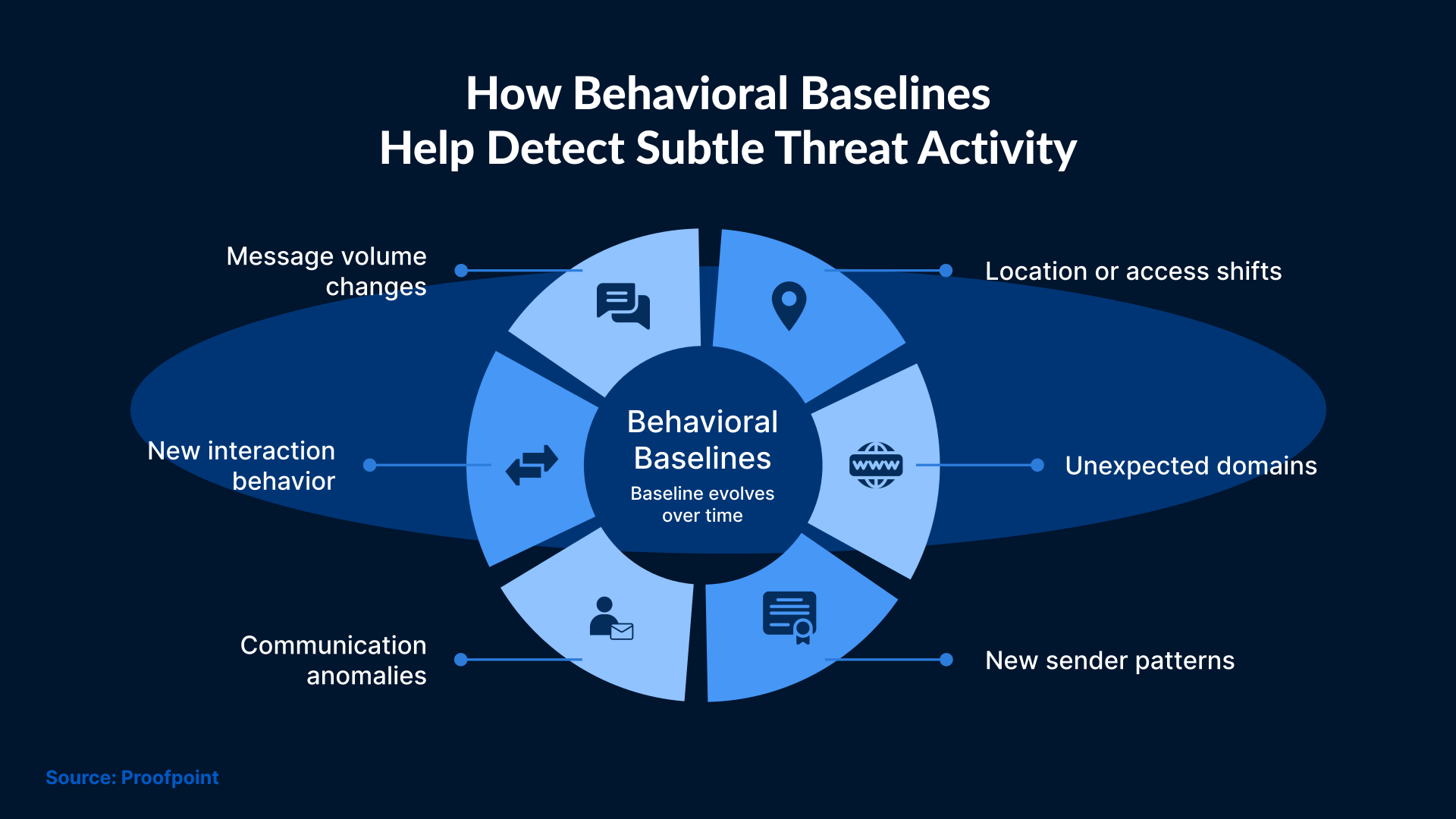
Behavioral threat detection is a method of identifying threats by observing how activity behaves over time. It does not match an activity with a known indicator of compromise but instead evaluates deviations from expected behavior to identify anomalies over time.
Behavioral detection starts by defining what normal activity looks like in different devices and applications. It also learns about the activity happening across users and networks, including login activity and the movement of data. If there is anything unusual in the behavior, it flags it for review.
This approach has been quite effective against modern attacks because they use legitimate tools and valid credentials. When viewed in isolation, these techniques would look normal, which is why traditional methods would frequently miss them. But behavioral threat detection pays attention to the connection between actions and the time of their occurrence. This makes it easier for security teams to notice activity that quietly blends into normal operations.
Another advantage of this approach is that it can be applied throughout endpoints, networks, identities, cloud workloads, and applications. This makes it a foundational capability rather than a standalone tool.
Why Traditional Detection Methods Fail Against Modern Attacks
Traditional methods of detecting threats rely on patterns that are already established by malware signatures and other indicators. This allows them to identify threats that have been seen before. However, they require prior information to identify the specific attack types. Given that the tools and tactics that modern attackers use are constantly evolving, they can often bypass traditional controls.
Another problem with traditional detection methods is their inability to scale with a company's growth. As organizations grow more complex, detection rules increase, leading to large volumes of alerts. These methods often raise thresholds or relax the rules in order to reduce the noise. Doing this will create a gap that attackers will exploit by staying just below the detection limits.
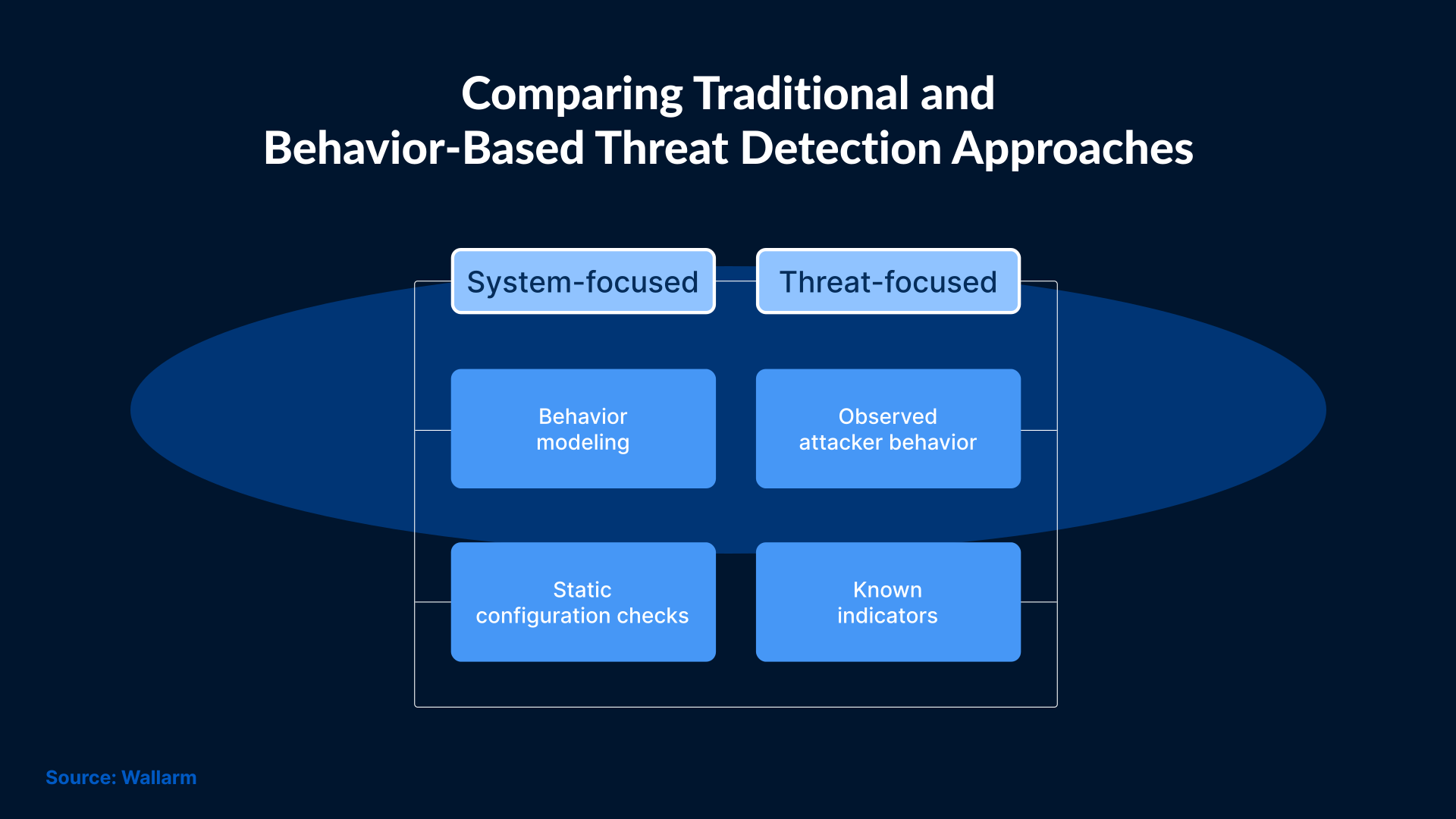
Many traditional tools evaluate events in isolation, which is a significant problem. Many of the actions taken by a single user may seem harmless on their own. However, once those actions are viewed together, they can create a malicious attack that would be difficult to detect.
Without visibility into behavior over time, threats are often detected late. By then, attackers may have already expanded their access or caused damage.
How Attackers Reveal Themselves Through Behavioral Patterns
Attackers don’t expose themselves using a single action. They reveal their presence through multiple, small steps that are interconnected. Each step looks normal, but when viewed together, those steps form behavioral patterns that do not match typical activity.
The first step for attackers is to gain access to the system. Once they do so, they move slowly through the environment, explore systems they don’t usually interact with, and test the level of access they have. This activity usually happens at unusual times and from unfamiliar locations, but attackers ensure that their actions do not trigger alarms.
As they expand their access, security teams begin to experience a change in behavior. Accounts are now used in ways they were not before. Systems communicate with new destinations. Data is accessed more frequently, along with small data movements to avoid attention. These actions may not seem malicious on their own, but the sequence and timing begin to stand out.
These patterns become harder to hide over time. Even when attackers use legitimate tools and avoid malware, their behavior does not match that of the users, applications, or systems.
Key Behavioral Signals Security Teams Monitor
Security teams monitor changes in the behavior of systems and applications over time. These signals don’t mean much in isolation, but they stand out when repeated or appear in unusual combinations.
- Unusual access patterns: An employee from a certain department accessing systems they usually don’t or logging in at odd times.
- Unexpected movement within the environment: This includes systems or even users interacting with other systems they don’t normally communicate with.
- Changes in how credentials are used: Using valid accounts to access multiple systems or using them in a way they haven’t been used in the past.
- Abnormal data activity: Accessing or transferring certain data frequently or in smaller chunks in order to avoid attention.
- New or inconsistent system behavior: Processes or services start to appear where they are not usually seen.
Individually, these actions may look normal. But when these appear together over a period of time, they often signal activity that does not match normal operations.
How Behavioral Threat Detection Works in Real Environments
Behavioral threat detection begins by observing normal activities in an organization’s systems. This normal behavior acts as a reference point for spotting activity that does not quite fit. These activities are monitored for a certain period to form a baseline against which new activities will be compared.
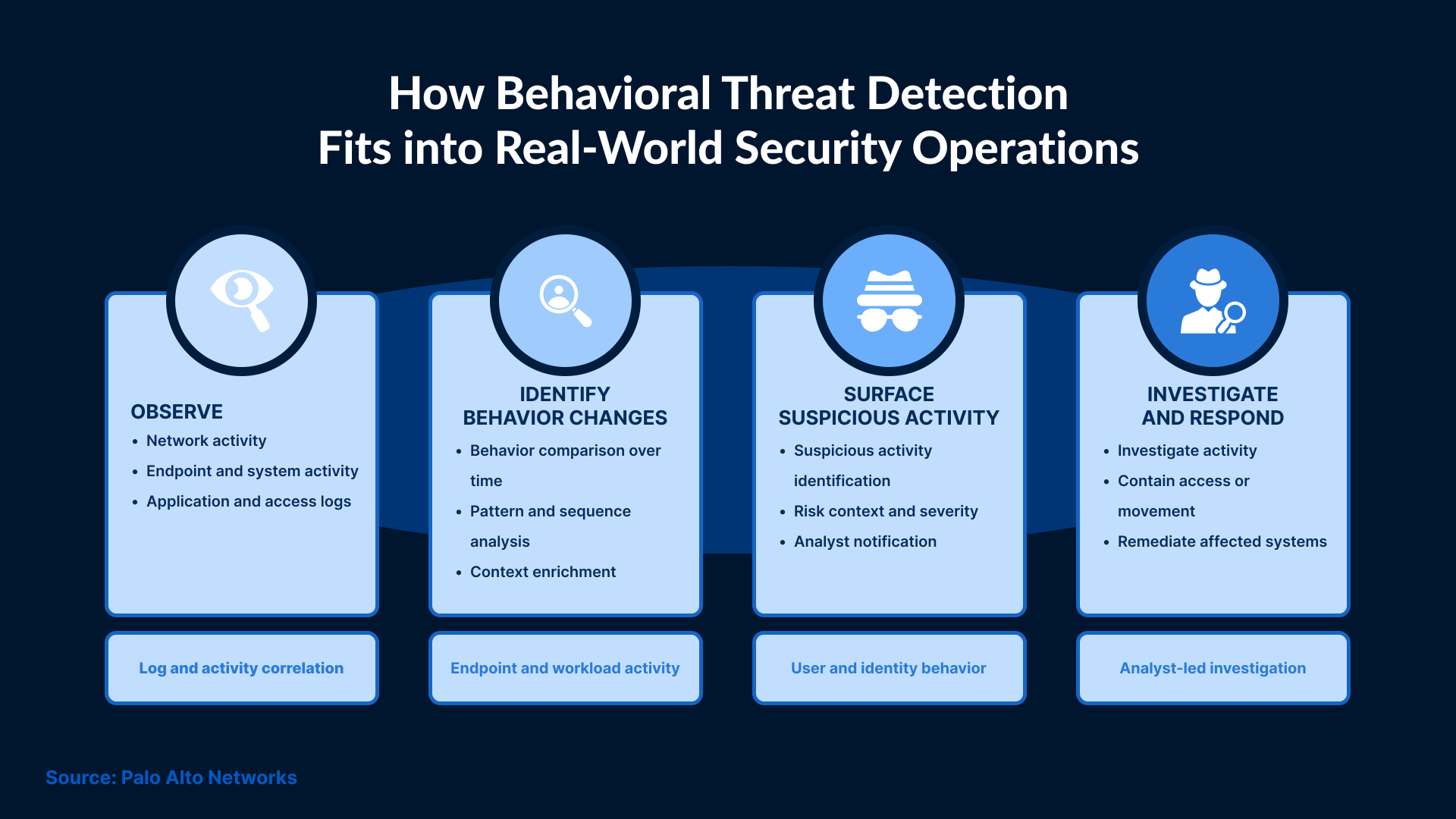
Some changes are expected to occur, such as people working late, systems being updated, and the shifting of workloads. Behavioral detection does not react to these changes alone. Certain patterns repeat or combine in ways that do not match normal behavior.
When unusual behavior escalates, it is reviewed by the security team. This does not happen immediately and usually occurs gradually. It is normal to ignore a single action, but not a sequence of related actions that occurred over a few hours or days. The objective is to understand the progression of these activities, rather than triggering alerts from isolated events.
In real-world situations, this process is ongoing. Baselines are adjusted in response to changes in users and systems. Some level of noise is unavoidable. The priority is gaining early visibility into activity that begins to differ from normal behavior.
Behavioral Detection vs EDR, NDR, XDR, and UEBA
EDR, NDR, XDR, and UEBA are all security tools, whereas behavioral detection is an approach used to understand activities over time.
EDR observes the activity happening on individual endpoints, such as laptops or servers. It collects data about processes and user actions on those devices. The role of behavioral detection is to use this data, but it is not limited to endpoints.
NDR covers the network traffic. It observes the communication between systems and data movement inside a network. This allows teams to look at the behavior, but only from a network perspective.
XDR is responsible for consolidating data from multiple sources, like endpoints and networks. At times, data from cloud systems is also considered. XDR centralizes visibility and control. Behavioral detection can operate within XDR, where it can analyze changes in the activities occurring in those data sources.
UEBA is used for user behavior and identity-based activity. It is a useful tool, but its reach is limited. Behavioral detection not only covers users and identities, but systems and applications as well.
Measuring the Effectiveness of Behavioral Threat Detection
It will be considered effective if it can monitor suspicious behavior early and with clarity.
Identification of unusual behavior is one of the most important indicators of behavioral threat detection. When behavioral detection is functioning properly, threats are identified earlier in the attack timeline. Another signal of its effectiveness is the quality of alerts. Fewer alerts need investigation, but those that do must have a clear logic and less guesswork for analysts.
Consistency is more important than time. Behavioral detection should become more reliable and produce less noise as it learns what normal activity looks like. Detection will be considered successful if it continues to improve without requiring constant changes to rules or tuning. Behavioral detection adds value when teams stop chasing noise and focus more on real threats.
Common Mistakes When Adopting Behavioral Detection
Poor implementation often leads to failure of behavioral detection in real-world situations. Here are some of the common mistakes teams make:
Expecting instant results: Behavioral detection requires time to settle. Teams often expect useful alerts right away. Early results are often rough. When teams don’t know what to trust yet, confidence tends to fade.
Considering only the behavior: Teams sometimes expect behavioral detection to fill every gap. Without other signals to lean on, important context is often missing.
Overreacting to early noise: Early noise is expected. Tightening thresholds too quickly often hides useful behavior instead of improving detection.
Removing human review too early: Detection can improve over time, but it still requires human review. When teams let it run on its own, important patterns often get missed.
Focusing on volume instead of quality: More alerts do not mean better detection. When teams focus on the number of alerts, real issues tend to get lost.
The Future of Behavioral Threat Detection
Behavioral threat detection is no longer an optional feature, but a core part of threat identification. As attackers continue to avoid malware and rely on normal tools, behavior is often the most reliable place left to detect something unusual.
Access behavior over time is becoming more useful than single alerts. Slow, continuous changes that consistently occur matter more than random spikes.
Behavioral detection is expected to blend more deeply into every security operation in the time to come. It’s less about seeing more alerts and more about knowing what the activity actually means. The goal will not be to catch everything, but to notice all crucial changes and reduce the effort needed to understand the current situation.
Conclusion
The real value of behavioral threat detection is achieved when it is treated as a way to understand changes in activity over time rather than seeking instant answers. This approach brings hidden activity into view, even when nothing obvious looks wrong. Teams spend less time sorting through noise and more time dealing with real problems. SafeAeon supports behavioral threat detection by helping teams identify important changes early. Over time, responses become faster and more confident.