

Key Takeaways
- The average cost of a ransomware attack is growing every year and has reached $5.08 million in 2025.
- Top sectors experiencing ransomware attacks in Q2 of 2025 include Services, Healthcare, Technology, Legal, and Finance. (Rapid7)
- Ransomware accounts for 44% of all recorded data breaches in 2025, showing how quickly this threat continues to expand. (Nordlayer)
Introduction
Cyberattacks are becoming more advanced and threatening with every passing day. Even if you have a reliable security system in place, the risk of cyberattacks remains. Of all the cyberattacks, Ransomware is perhaps the most dangerous because it causes both data and financial loss. It started as simple encryption malware, but over the years, it has turned into a full-scale business model known as Ransomware as a Service (RaaS).
Simply put, it’s a service that allows people with malicious intent to rent pre-built ransomware kits from dark web marketplaces or ransomware operators. It’s the same concept as using SaaS tools. With the inception of RaaS, ransomware has become cheaper and more scalable. Anyone can rent ransomware kits to steal data and ask a ransom for it.
How the RaaS Ecosystem Operates
The Ransomware-as-a-Service (RaaS) ecosystem works just like a cybercrime marketplace, where many powerful players are working together to make profits from ransomware operations. Key components of this ecosystem include:
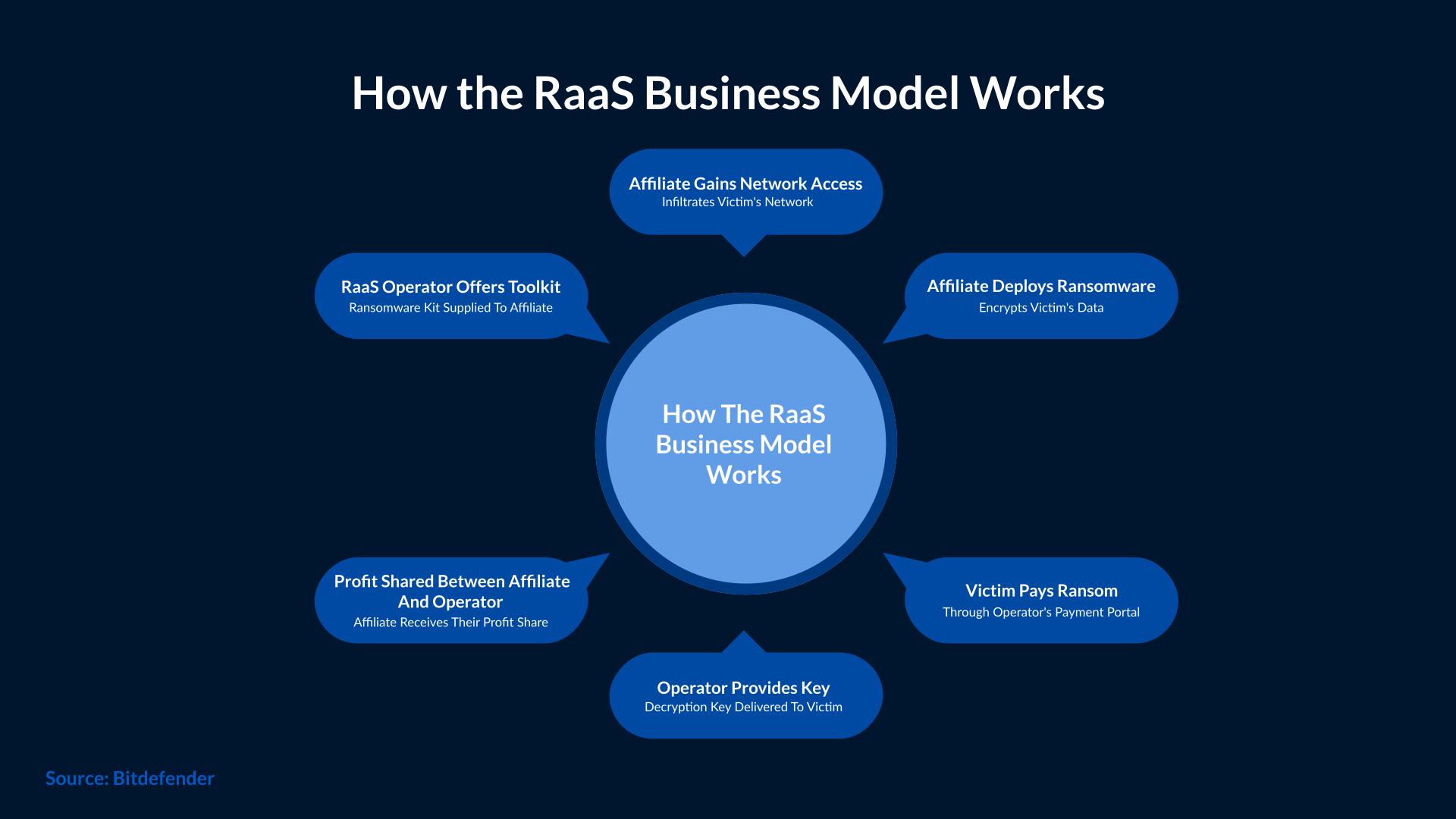
RaaS Developers: They are using their knowledge and skills to make sophisticated ransomware strains. The malware they design can easily bypass detection and encrypt sensitive data.
Affiliates: RaaS platforms are using the subscription-based or profit-sharing model. People can join ransomware affiliate programs to buy or lease access to these tools. In return, they will share the profits from ransom payments with developers.
Dark Web Marketplaces: These are online platforms used by RaaS developers to advertise their products. Dark web marketplaces and forums also offer other crucial services like data theft, initial access brokers, and victim negotiation services.
Initial Access Brokers (IABs): These are cybercriminals who help affiliates gain initial access to a victim’s network in return for money. As a result, affiliates get a ready-made entry point for rapid deployment of ransomware. This role has become highly significant in the RaaS ecosystem.
Money Launderers: Upon receiving the ransom, the money is laundered to avoid detection by law enforcement. Cybercriminals can easily find money laundering services on the dark web, which convert cryptocurrency into fiat currency or move it through multiple accounts to make it difficult for law enforcement bodies to track its origin.
Victims: The unfortunate targets of this whole process, victims can be SMBs, large enterprises, and even government institutions. RaaS tools are readily available these days, which makes it easier and more lucrative for cybercriminals to carry out ransomware attacks.
How a RaaS Attack Happens
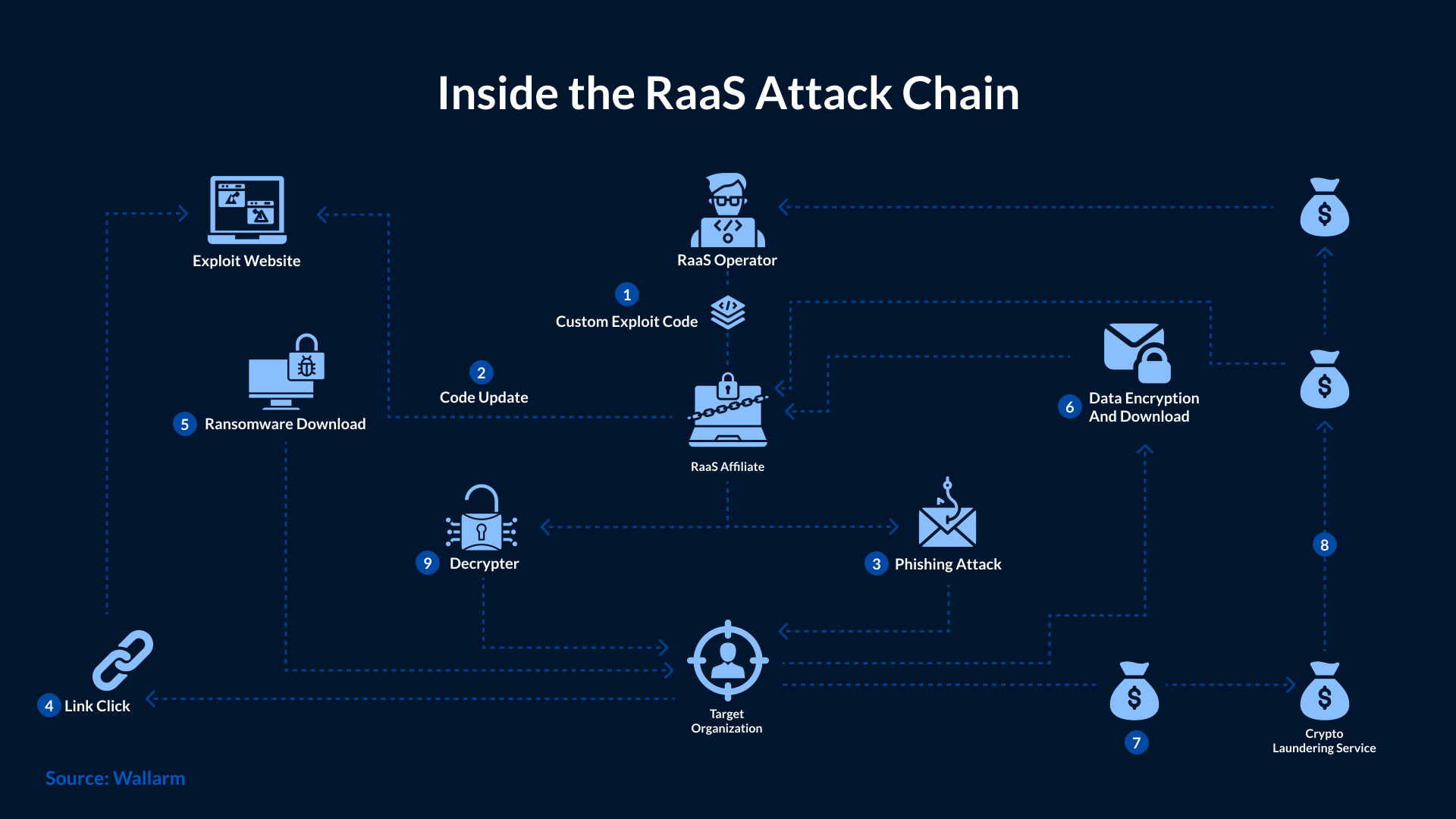
There is a predictable but devastating sequence that cybercriminals follow to carry out ransomware attacks, which involves the following steps:
Initial Access: The process begins with entering the victim’s system. This is usually done through phishing emails, outdated software, or compromised Remote Desktop Protocol (RDP) credentials. The infiltration is done quietly, without triggering alarms.
Post-Exploit: Once they gain access, the cybercriminals deploy remote access tools (RATs) or some other malware to ensure uninterrupted access until they prepare systems for encryption.
Lateral Movement: Now, the attackers plan to extend their access across the network and escalate privileges to identify high-value assets in a system.
Data Exfiltration: They steal sensitive information before the encryption of data begins to provide double or triple extortion threats to victims.
Encryption and Ransom Demand: Once the encryption of data is complete and backups are disabled, they leave a ransom note for the victim, where the demand is usually in cryptocurrency in exchange for a decryption key.
The entire process can take days or even weeks to unfold, causing maximum disruption. Usually, affiliates specialize in a single part of the chain, which makes the process more efficient and harder to stop.
Notorious RaaS Groups and Their Tactics
Many RaaS groups have gained global notoriety for carrying out ransomware attacks with great precision. These include:
Several RaaS operations have gained global notoriety for their sophistication and reach:
DarkSide: They carried out the 2021 Colonial Pipeline attack that disrupted fuel supply across the U.S. East Coast.
REvil (Sodinokibi): These were involved in the JBS and Kaseya breaches, where they demanded multimillion-dollar ransoms and targeted managed service providers.
Conti: They have been linked to an attack on Ireland’s national health service (HSE), which shut down hospital operations and leaked patient data.
Examples like these make it clear that RaaS groups operate similarly to corporations. They operate on a profit-sharing model, offering ransomware affiliate programs and customer support. Affiliates offer ransomware operators a percentage of each ransom in exchange for access to advanced ransomware kits and infrastructure.
Business, Financial, and Compliance Risks of RaaS
Ransomware-as-a-Service impacts not only systems, but the entire business. It all starts with the financial damage, as organizations are forced to pay the ransom. But that is just a part of the overall financial loss. They also suffer due to downtime and repairs. Even customer disruptions cost them significantly.
As if that weren’t enough, they also deal with legal fees and insurance claims, which often cover only a portion of the overall damage. In this way, RaaS continues to drain an organization long after the initial incident. Each attack funds another, and the affiliates behind these attacks push hard because they receive a profit share on every ransom paid.
Compliance places significant pressure on organizations. In cases of breach, regulations such as GDPR or HIPAA require immediate reporting, compliance documentation, and proof that the organization is protecting its data. Organizations that do not respond in a timely or effective manner are subject to severe penalties such as large fines or even loss of certification.
Beyond penalties or loss of certification, an organization's reputation is very likely to be tarnished. The organization's name will begin to appear in leak forums, and the trust the organization has developed over a period will be lost. Customers become reluctant, and partners remove their support and leave the organization isolated.
How to Defend Against RaaS Attacks
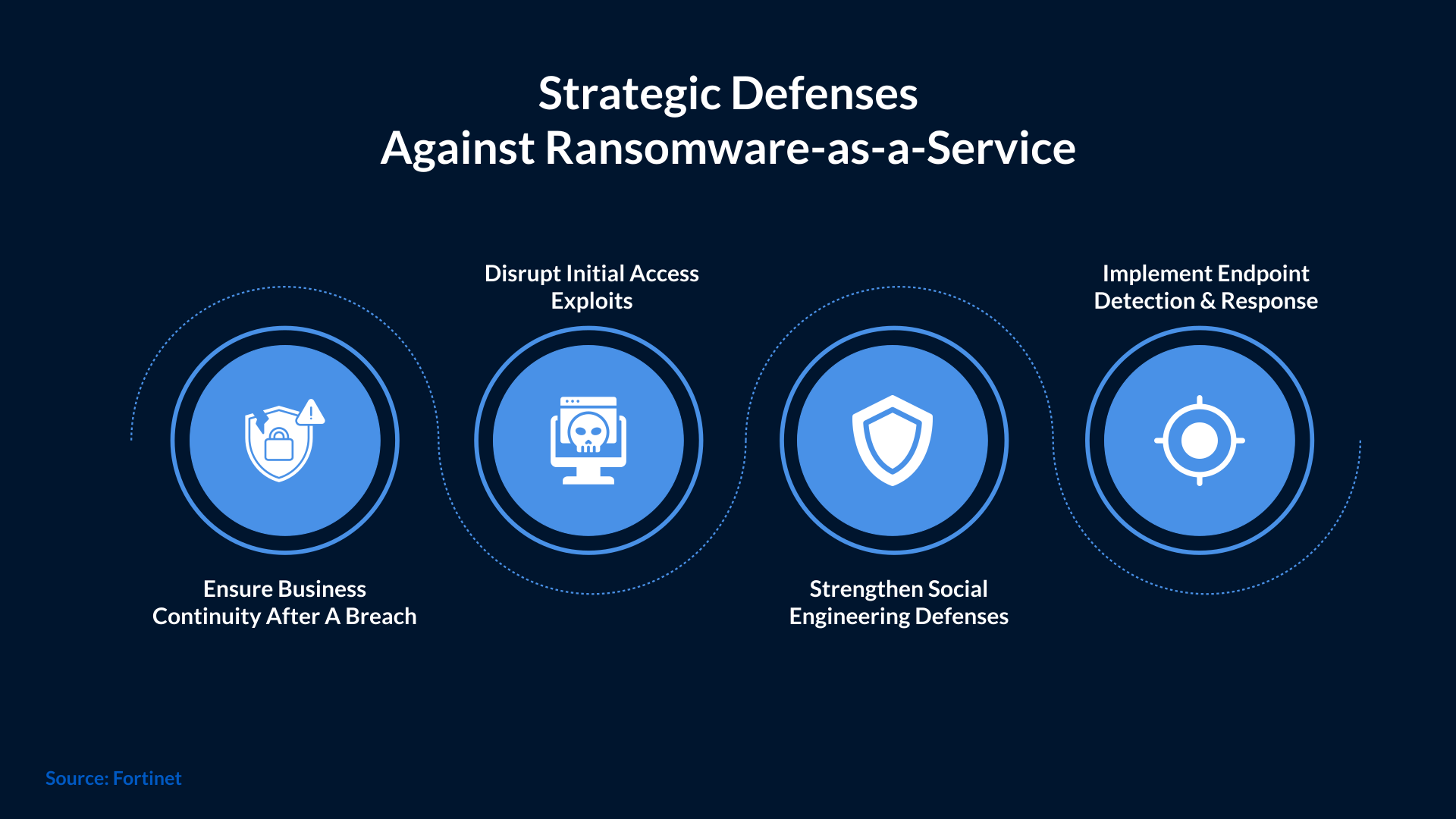
To protect your sensitive information against RaaS attacks, you will have to ensure continuous monitoring of your system and implement advanced technologies to detect the threat in the initial phase. Here’s how you can defend against RaaS attacks efficiently:
Security Awareness and Training: It’s important to educate and train your employees so that they quickly recognize phishing emails and social engineering attempts.
Patch and Update Management: All the systems must be up to date, including the OS and software programs, because attackers exploit these vulnerabilities.
Backups and Recovery Plans: Take regular backups of your systems and store them in an offline environment to ensure quick restoration without paying a ransom.
Endpoint Detection and Response (EDR) and Extended Detection and Response (XDR): Make use of tools that monitor for unusual activity and unauthorized access.
Least-Privilege Access Policies: Limit user access to reduce the blast radius of compromised accounts.
Incident Response Drills: Carry out simulations to test the response and recovery time of your team in case an attack happens.
For enterprises, it’s important to integrate SOC and MDR services as they provide 24/7 threat visibility along with rapid containment.
Double Extortion, AI, and the Future of RaaS
Ransomware-as-a-Service is not like what it used to be a few years ago. It began with basic file encryption, but things have changed. Attackers are now seeking more leverage. The concept of double extortion is on the rise, which includes stealing sensitive data and then encrypting it. The ransom is demanded from the victim, and if the victim refuses to pay, attackers leak the data on the dark web. Some RaaS groups go a step further and threaten to contact the customers or media as a pressure tactic.
AI has made things worse because attackers have learned to use AI-driven automation, which makes ransomware even more threatening. They can easily scan for weak points to build more effective phishing traps. Developers can write cleaner code to achieve a higher success rate. Technology has made RaaS campaigns cheaper and harder to trace.
In the future, RaaS will work like a full criminal service platform. It will offer everything from access to data leaks and negotiation tools under one subscription. It will be sold as packages, which will be ready to launch into the victim’s systems. The future of RaaS looks scalable, and that’s what makes it so dangerous.
Conclusion
Ransomware is more than a cyber attack; it is a global criminal enterprise that runs on RaaS. People do not need to be technically skilled to carry out these attacks, and this has driven an exponential increase in scale over the last few years. Organizations defending themselves against RaaS need much more than backups or antivirus software. SafeAeon has the right tools and expertise to stop RaaS in its tracks. Identifying attacks early is paramount to protecting what truly matters.