

Key Takeaways
- 87% of organizations consider threat hunting a critical part of their security strategy. (Watchguard)
- 65% of organizations struggle with threat hunting due to a lack of security tools and technology.
- The global cost of cybercrime will exceed $10 billion by 2025, which makes threat hunting even more important.
Introduction
Cyberattacks are becoming more frequent and advanced with each passing day. It won’t be enough to rely solely on automated security tools for protection against these attacks. You need to bring threat hunting into your security strategy. This proactive approach will help identify threats before they can cause real damage.
In this blog, you will learn about the cyber threat hunting process, the professionals involved, and why it should be implemented in your company.
What Is Cyber Threat Hunting?
Cyber threat hunting is the process of searching for cyber threats already present within your organization. As mentioned above, cyber threats have become advanced, so even if your organization has security systems in place, some cyber threats may still manage to sneak into the systems and inflict damage.
Moreover, the role of security tools is to react when something happens. The cyber threat hunting process relies on hypotheses and threat intelligence. Its objective is to identify unusual activities or signs of intrusions that have gone unnoticed.
Threat hunting is not only used for detecting malware or known vulnerabilities, but the main objective of using this process is to find signs of sophisticated attacks. Organizations use threat hunting to find lateral movement within the network, privilege escalation, and communication within command-and-control servers.
Why Is Threat Hunting Important?
In most organizations, the security strategy mainly focuses on threat detection, which is a reactive approach. Threat hunting is a proactive approach that complements threat detection. It also enables security teams to accomplish critical goals, such as:
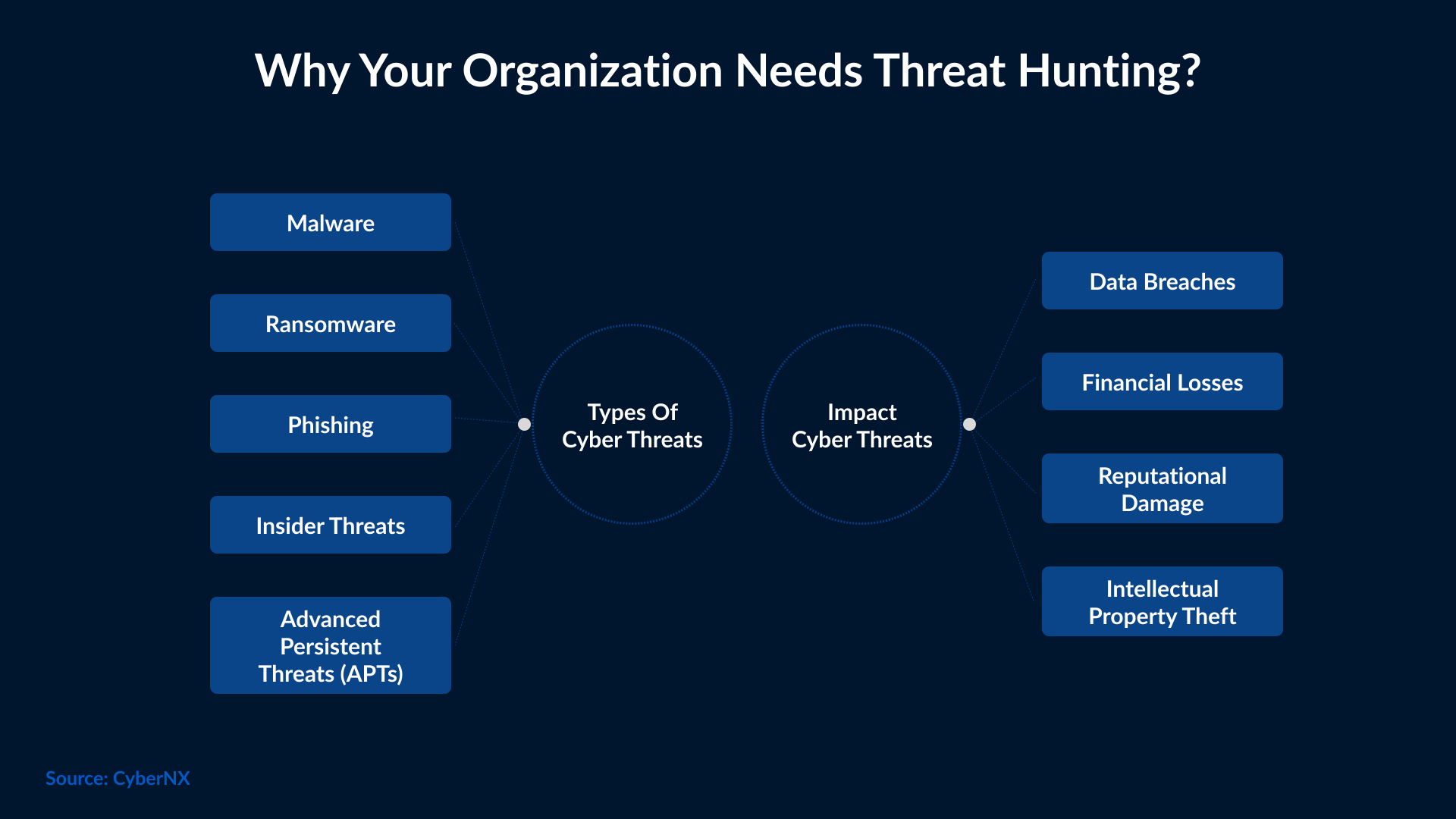
Detecting Intrusions: Proactive threat hunting allows organizations to identify threats that have already happened without being detected by existing security systems. A threat hunter will identify their hidden activity, stop the intrusion, and resolve the problem before it causes severe damage.
Identifying Vulnerabilities: Organizations often struggle to manage vulnerabilities due to the complex IT environments and the vast number of vulnerabilities detected daily. Threat hunting can help detect and resolve unknown vulnerabilities present in an organization’s systems.
Quantify Risks: Risk management is an important part of cybersecurity, which requires good data on the effectiveness of the organization’s security systems. Threat hunting can perform the risk analysis by testing the company’s vulnerabilities to various cyber threats.
Improving Security Measures: No organization has perfect cybersecurity. Improvement is required at every stage because new threats constantly emerge. Threat hunting can help find existing security gaps and develop strategies to build visibility into additional cyber threats.
Streamline Threat Detection: One of the biggest challenges for security teams is managing a large volumes of data, which can slow down threat detection and response. Threat hunters can help identify more efficient ways to collect and analyze data to detect different types of threats. With this, they can streamline threat detection and delete unnecessary data.
The Cyber Threat Hunting Process
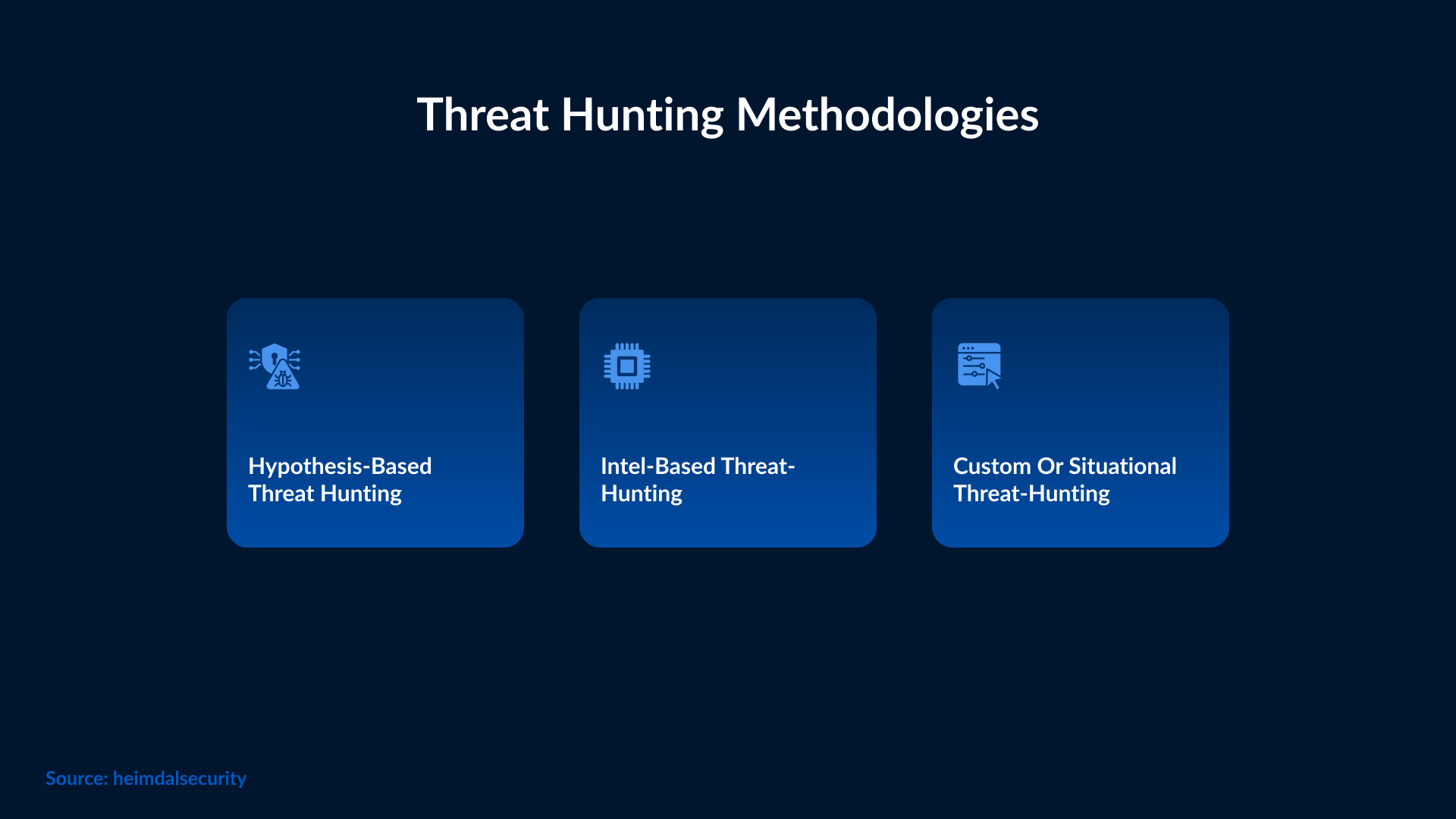
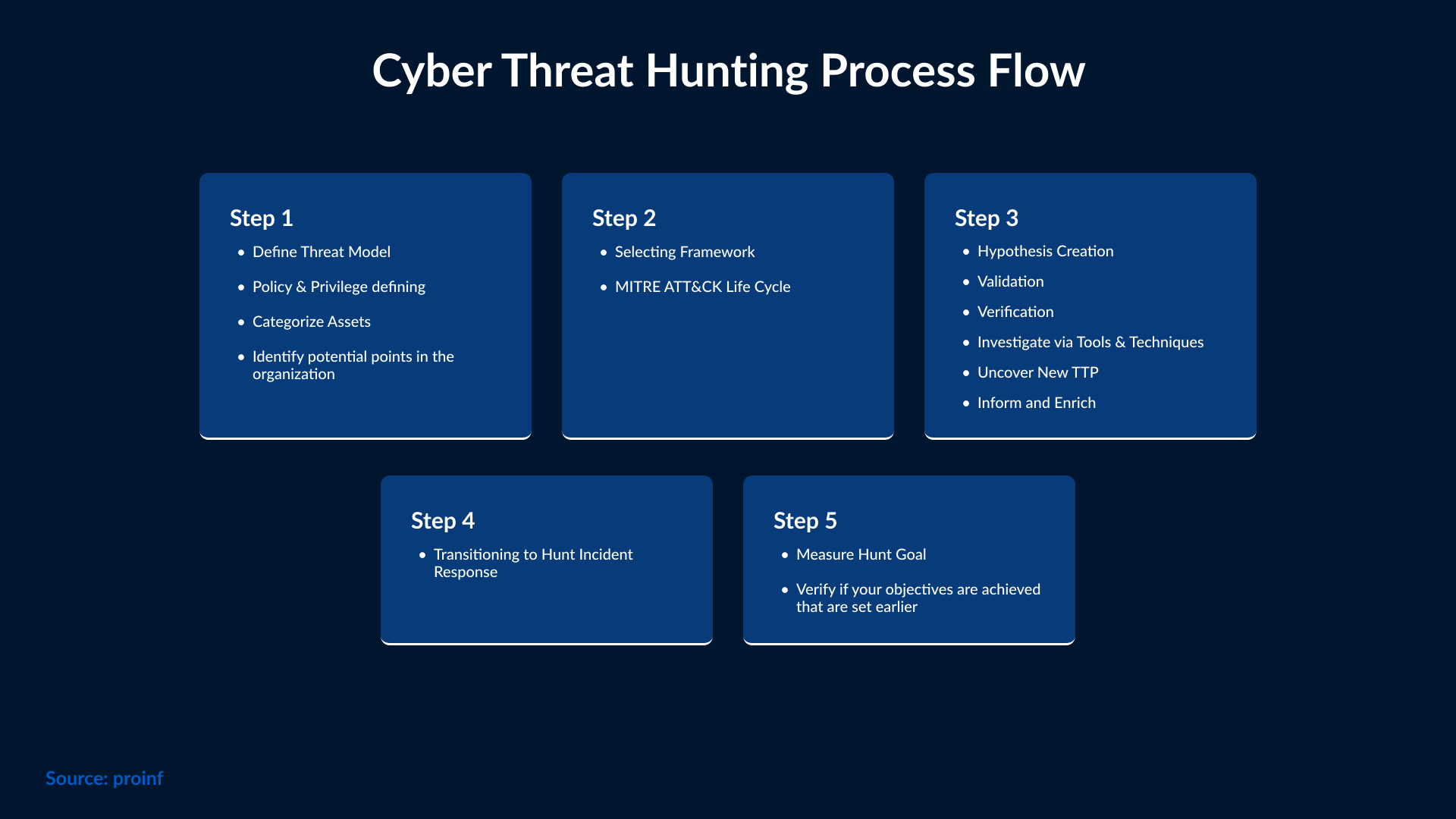
The process of cyber threat hunting involves three key elements: hypothesis, data, and analysis. It all starts by creating a hypothesis. A threat hunter collects all relevant data, including authentication logs, network traffic, and endpoint behavior. Then, the data is thoroughly analyzed to determine patterns or any unusual aspects that would confirm or deny the suspicion. Therefore, this approach follows different models, which include:
Hypothesis-based: Starts with an idea or assumption that comes from threat intelligence or experience.
Indicator-based: Looks for specific warning signs using known indicators of compromise.
Based on behavioral analytics: Looks for unusual patterns using data analysis and machine learning.
Which are the popular Threat Hunting Models?
There are various threat hunting models that organizations can choose from, depending on their security maturity and objectives.
Intelligence-Driven Model: In this, internal and external threat intelligence is used to form hypotheses based on attacker tactics, techniques, and procedures (TTPs). Hunters look for evidence of these behaviors in their environment.
Data-Driven Model: Here, threat hunters review system and network data to detect patterns or behaviors that don’t match normal activity.
Hybrid Model: This model combines features of the above two models. In this, threat hunters begin with intelligence-based hypotheses, which are validated through data analytics and automation. This combination helps improve accuracy and detection speed.
Types of Threat Hunting
here are different types of threat hunting techniques. Organizations can choose the type that aligns with the maturity of their security team and strategic objectives.
Structured Hunting
It follows a methodology based on clear hypotheses, indicators of attack (IoA), and tactics, techniques, and procedures (TTPs) of known threat actors.
Unstructured Hunting
It starts with a trigger, which could be a warning or an indicator of compromise (IoC). The investigation is more open-ended and guided by the expertise of a threat hunter.
Situational or Entity-Based Hunting
This type of threat hunting occurs in response to a specific situation of the organization triggered by an internal risk assessment or analysis of trends and vulnerabilities.
Who Are Threat Hunters?
The professional who performs this work is a threat hunter. Unlike traditional security analysts, they approach their work in an investigative and strategic manner.
Threat hunters are experts in forensic analysis techniques, adversary behavior, threat intelligence, and security tools. They have a deep understanding of the company's environment, along with a mindset to think like an attacker.
Their role is essential in cyber threat hunting operations, as they combine human skills with advanced technology to uncover what systems may not detect.
Key Tools and Technologies in Threat Hunting
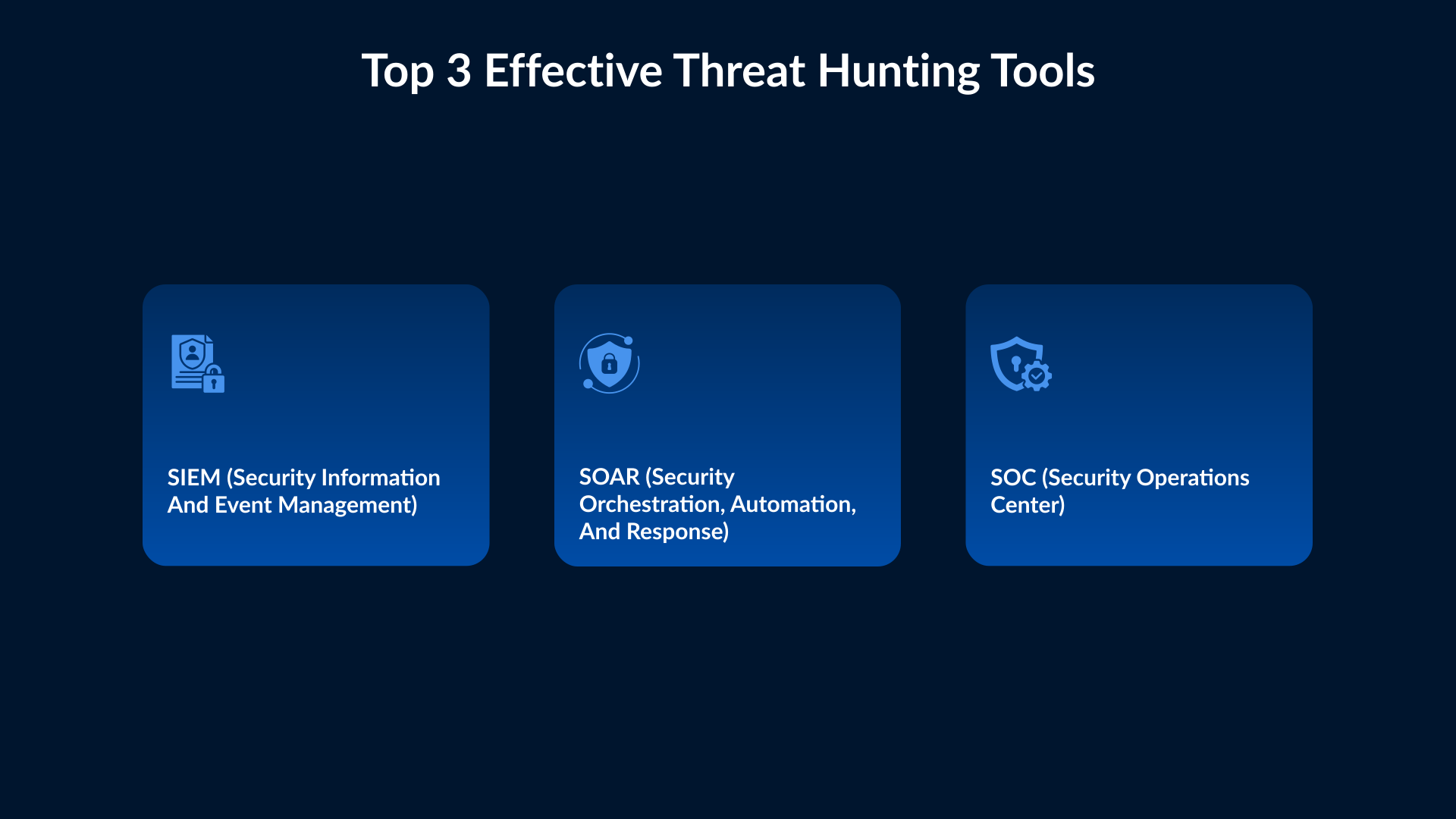
Here are the most popular tools that experts use in threat hunting:
SIEM (Security Information and Event Management): Helps collect and connect data from different systems so analysts can spot unusual activity.
SOAR (Security Orchestration, Automation, and Response): Automates routine security tasks and speeds up handling of incidents.
SOC (Security Operations Center): A dedicated team that monitors and responds to active threats.
Together, these threat hunting tools strengthen an organization’s overall security posture.
Building an Effective Threat Hunting Program
A threat hunting program can only be effective if the organization has clear goals and an understanding of what to protect. The organization should have an experienced team of threat hunters and analysts for sharing information for analysis and reporting. Documentation is an important part because it helps the team improve and share knowledge across the SOC.
Threat intelligence adds another layer of security. Threat hunters can connect their findings to known attack behaviors. Then, by using tools like MITRE ATT&CK, they can fill the detection gaps.
The success of a threat hunting program can be tracked through these parameters:
- How fast the threats are discovered
- How many hunts are completed
- What new detection methods are built

Benefits of Implementing Threat Hunting
Having a proper threat hunting strategy will allow your company to:
- Detect threats that traditional systems often miss.
- Identify early-stage attacks.
- Reduce the mean time to detection and response.
- Improve cybersecurity posture.
- Minimize operational and financial risks.
Attackers are using advanced and stealthy techniques to gain access to the organization’s systems. The real question is whether your company can spot these threats early enough to stop them.
Organizations that invest in threat hunting are better equipped to defend themselves. They can react accurately and protect what really matters, i.e., data, assets, and business continuity.
The Future of Threat Hunting
Continuous Threat Exposure Management (CTEM), a Gartner concept:
While short-term security measures can help reduce the impact of certain security threats, Continuous Threat Exposure Management (CTEM) takes a broader view. It prioritizes threats according to their importance to the business and uses tools that help fix problems in ways that fit the organization’s needs.
Conclusion
Threat hunting is an exciting and challenging component of cybersecurity, and it should not be overlooked. A good threat hunter must pay close attention to details and have a strong understanding of IT and cybersecurity. This will allow them to identify and eliminate threats that slip past traditional security systems. SafeAeon has an expert team that can streamline the cyber threat hunting process and improve your organization’s overall security strategy. With the right approach, your business will be ready to detect and respond quickly while maintaining operations during a cyberattack.