


Key Takeaways
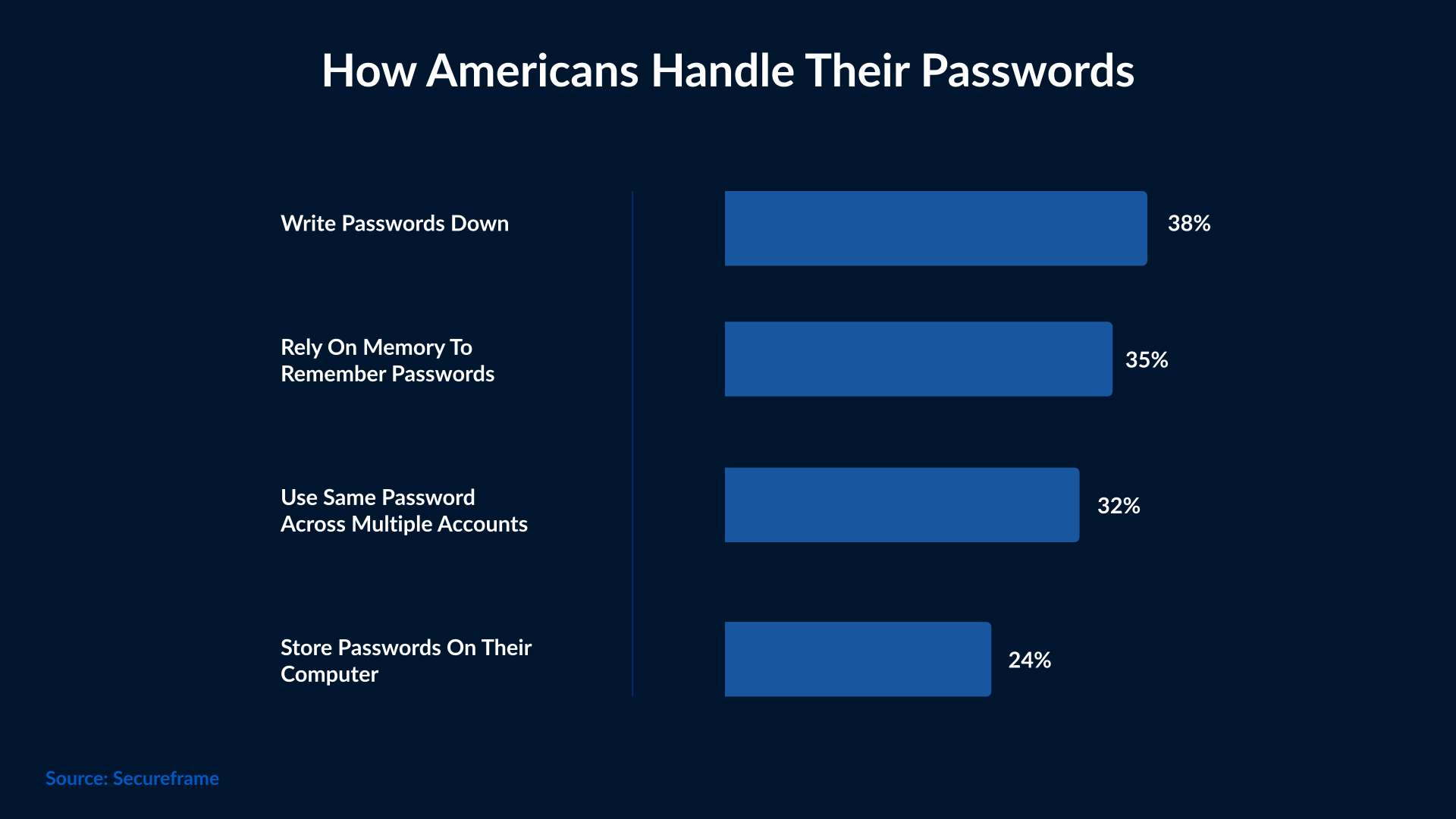
- About half of Americans said that they reuse passwords because it’s easier to remember fewer passwords.
- A Google survey shows that only 24% people are using a password manager.
- A 2025 report mentioned that over 16 billion login credentials were exposed, giving attackers a massive dataset to use for dictionary and other cyber attacks.
What is a Dictionary Attack in Cyber Security?
Most people are aware of ways to ensure their online security, yet they often fail to implement them fully. A common guideline when signing up for an account on any website is to create a strong password; however, 65% of people reuse passwords across websites. Not just that, people use passwords that are easier to guess, like ‘123456’, ‘iloveyou’, ‘welcome’, and personal details. These passwords regularly appear in data breach leaks. When attackers try to guess passwords with the goal of gaining access to their accounts, it’s called a dictionary attack. This type of attack is very common and successful. Let’s discuss this attack in detail.
A dictionary attack is a specific form of brute force attack. Here, attackers attempt to gain access to a user’s account by guessing their password using a list of commonly used words, phrases, and numeral combinations. When successful, hackers gain access to a user's sensitive information, such as their bank accounts, social media profiles, and other personal details.
How does a Dictionary Attack work?
Hackers use a systematic approach to crack users’ passwords. Here are the steps they use to carry out these attacks:

- Attackers create a list of potential passwords, also known as a brute force dictionary. It features combinations of popular words and numbers.
- The list is fed to software, which automates the process of trying passwords to hack into online accounts.
- Once the attacker successfully hacks an account, they steal sensitive data to commit a fraudulent activity or take the account hostage for a ransom.
It’s a hit-and-try method, where attackers have a list of passwords that a certain user has possibly used in the past and is still using. Using automated software, hackers attempt to try all the passwords from the list, hoping that one of them will grant them access to the victim’s account.

Tools Used in Dictionary Attack
Here are the tools used to carry out a dictionary attack:
1. John the Ripper
It’s a password-cracking tool that recovers passwords from hashes. Attackers use this tool to test each word from a wordlist against the hash to identify the correct password.
2. Aircrack-ng
Aircrack-ng is a network security tool used to crack Wi-Fi passwords. It does that by analyzing captured packets. Attackers use this tool to test each word from a wordlist against the captured handshake to recover the Wi-Fi password.
3. Hydra
It’s another password-cracking tool that utilizes a wordlist to test login credentials across various services, including HTTP, FTP, and SSH. It’s used in penetration testing to identify common or weak passwords.
4. Medusa
Medusa is a highly advanced brute-force tool used for testing login credentials against remote systems. This tool also supports various protocols, including HTTP, FTP, SSH, MySQL, and RDP. Penetration testers often use this tool to check for common or weak passwords.
Why Dictionary Attacks Succeed
Complacency is the single-word answer. User complacency often leads to successful dictionary attacks. They pick a simple password combination for several of their accounts, making them vulnerable to hacking. This is the reason why dictionary attacks in cyber security are successful and often repeated. People should start using strong passwords, which include a combination of lowercase and uppercase letters, numbers, and special characters. If possible, use two-factor authentication (2FA) on accounts that contain sensitive information, such as bank details and other confidential data.
Difference Between Dictionary Attack and Brute Force Attack
A dictionary attack is a type of brute-force attack, but there is a difference between the two. In dictionary attacks, hackers use a preset list of words to crack account passwords. Brute force attacks work by running through a random combination of letters, numbers, or symbols that might be used to create a password. Between the two, the dictionary attack is more efficient and has a better success rate because of the fewer combinations to try.
However, the advantage of brute force attacks is that they can crack difficult and unique passwords using the trial-and-error approach. They run through a detailed list of possible passwords, which increases the probability of finding the right combination of characters for any given password.
Types and Variants of Dictionary Attacks
Like other cyberattacks, dictionary attacks have evolved into more sophisticated and dangerous forms. Attackers have included password-cracking techniques and automation tools to improve the success rate of these attacks. Check out different variations of dictionary attacks to develop more effective security strategies.
Simple Dictionary Attack: It’s the most basic form, where attackers use a list of common passwords or phrases and test them against login credentials.
Hybrid Dictionary Attack: It combines a simple dictionary attack with brute-force techniques. Attackers modify dictionary words by changing cases or adding numbers and symbols. Example: ‘summer’ becomes ‘summer2025!’ or ‘$umm3r’.
Reverse Dictionary Attack: In this, attackers apply words from a dictionary, then hash them using the same algorithm. Then, the results are compared until a match is found. It’s an effective technique against systems with weak hashing algorithms.
Rainbow Table Attack: It’s not exactly a dictionary attack. It works using precomputed hash values of possible passwords to speed up the cracking process. They exploit systems where password hashing is weak or predictable to find matches in less time.
Credential Stuffing: This technique involves using previously stolen username-password pairs to log into multiple websites. As many people reuse passwords across websites, it makes it easier for attackers to exploit that habit of password repetition.
Password Spraying: This is different from traditional dictionary attacks. Here, a few common passwords are tested across many accounts. This method helps attackers avoid account lockouts, which are triggered by repeated failed attempts on a single user.
Consequences of a Dictionary Attack
Every cyberattack leaves a significant impact on the victim, both mentally and financially. A dictionary attack is no different. Here are some of the repercussions of a dictionary attack that users might have to face:
Real-World Examples of a Dictionary Attack
Dictionary attacks have inflicted damage to large organizations on several occasions. Here are some of the notable recent incidents:
Credential Abuse at Scale in CitrixBleed Fallout
In August 2023, the CitrixBleed vulnerability (CVE-2023-4966) exposed session token leakage in Citrix Gateway appliances. Attackers took advantage of the opportunity and paired harvested session data with targeted dictionary attacks to compromise additional administrator accounts. As a result, they were able to bypass multi-factor authentication (MFA) and hijack active user sessions. Data of major organizations like Boeing and ICBC was compromised.
ZoomInfo Breach and SaaS Panel Targeting
Also in August 2023, another breach occurred, this time in ZoomInfo by a threat actor named ‘IntelBroker’. It was a credential-based attack against the organization's administrative panel, which was publicly exposed. The attacker gained access through a dictionary attack on the login credentials, using a valid username and different password combinations from previously breached corpora.
The company enforced the MFA, but the attacker was able to extract partial customer datasets. It showed how dictionary attacks can bypass security controls when attackers capture session tokens or exploit reused passwords.
Detecting and Preventing Dictionary Attacks
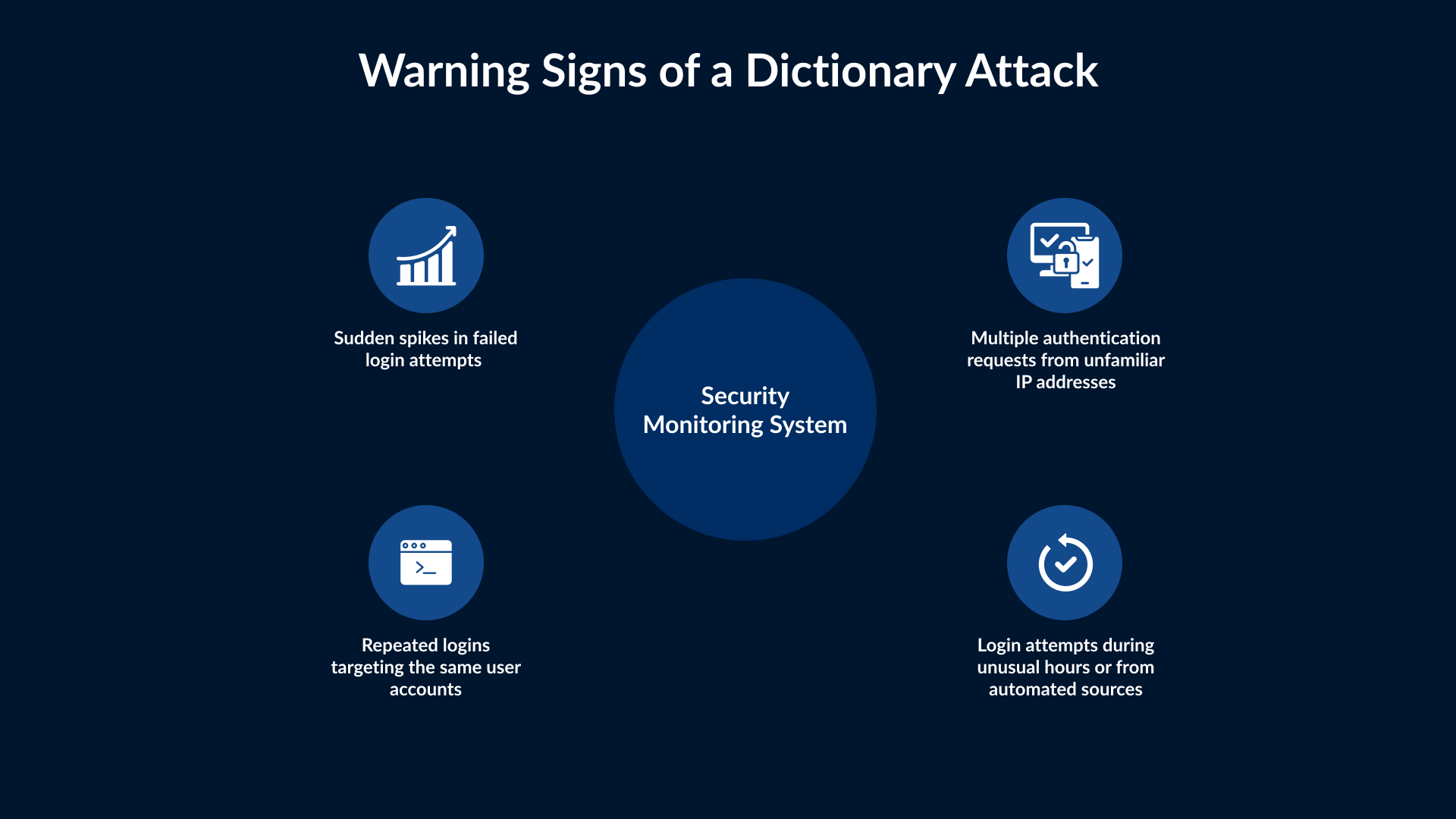
Certain warning signs will confirm dictionary attacks, these are:
- Sudden spikes in failed login attempts
- Multiple authentication requests from unfamiliar IP addresses
- Repeated logins targeting the same user accounts
Security teams also monitor login attempts that occur outside normal business hours or originate from automated traffic patterns. These are indicators that an attacker could be testing password combinations through a script or botnet.
Here is how you can prevent dictionary attacks:
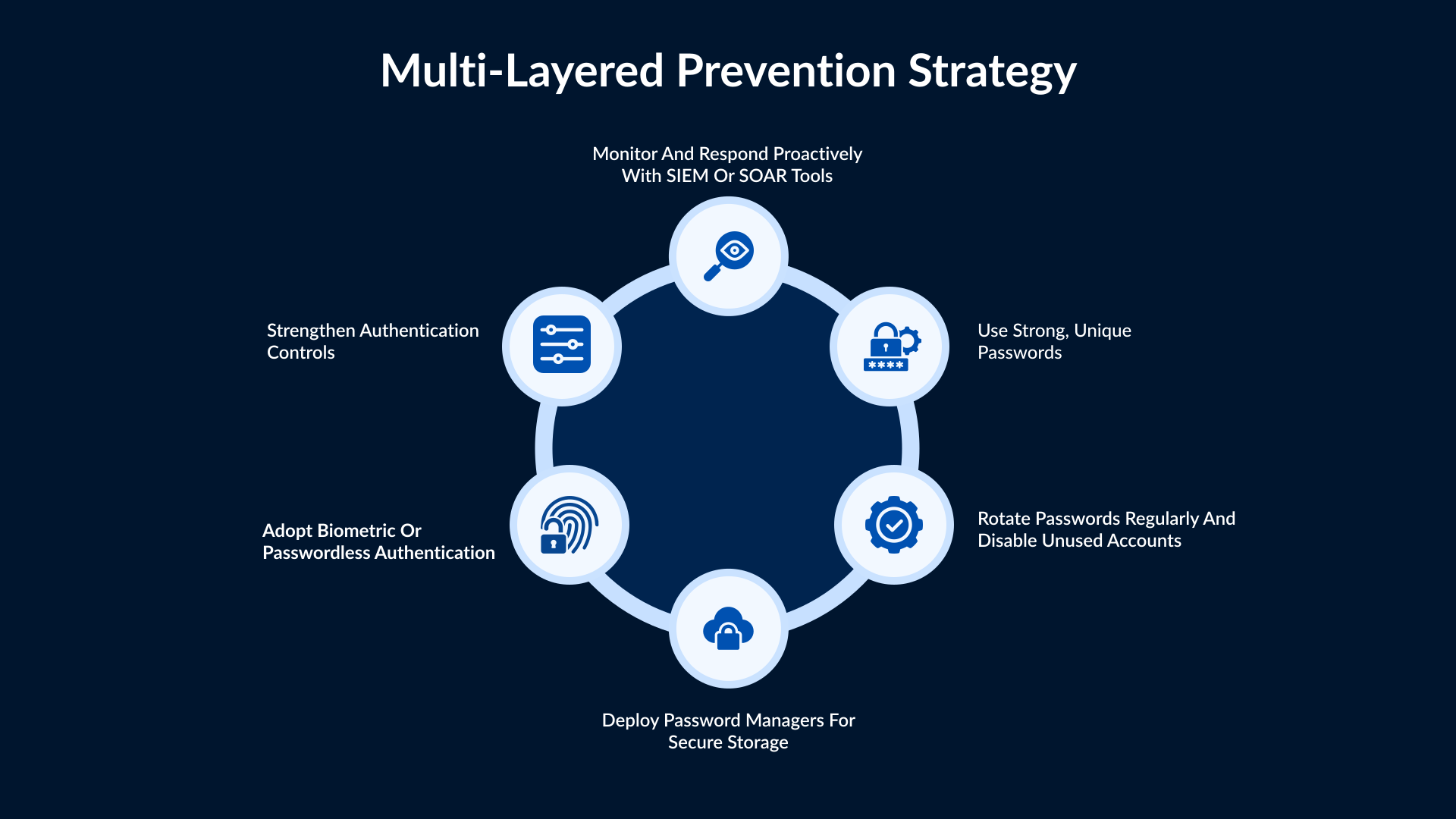
Use Strong, Unique Passwords: You should create strong passwords that include a mix of uppercase and lowercase letters, numbers, and special characters. Avoid using personal information, such as birthdays and anniversaries, as passwords because they are easy to guess.
Rotate Passwords Regularly: Keep changing the passwords quarterly and disable unused accounts to reduce the chances of an attacker guessing your older credentials successfully.
Deploy Password Managers: Use password managers if you can’t think of strong and unique passwords. They will help create strong, unique passwords, which won’t be reused anywhere else.
Adopt Biometric or Passwordless Authentication: Replace passwords with biometric verification (fingerprint, face, or voice recognition) or passkey-based authentication to reduce the chances of dictionary attacks. There won’t be any passwords to steal or guess as these methods rely on physical or device-bound validation.
Strengthen Authentication Controls: Use layered security controls across all login portals and APIs to make attacks difficult to execute. Here are the common authentication controls that you can use:
- CAPTCHA and bot detection
- Multi-factor authentication (MFA)
- Limit login attempts
- Strong password hashing and salting
- Prevent username enumeration
Monitor and Respond Proactively: Make use of monitoring tools like SIEM or SOAR platforms to detect unusual activity during authentication. Continuous visibility allows teams to respond quickly to suspicious login attempts and block malicious IPs before attackers can compromise their credentials
These measures will not just help reduce the success rate of dictionary attacks but also improve the overall credential security posture of organizations.
Conclusion
Dictionary attacks continue to exploit weak and predictable passwords. This chain needs to be broken, or else attackers will find ways to guess passwords and steal the sensitive data of victims. It’s high time that people started using multi-factor authentication and a password manager to make it more difficult for attackers to gain access to their accounts. They should also start monitoring login behavior for any unusual activity. These things will help reduce the chances of dictionary attacks. SafeAeon has a professional team and the necessary tools to prevent unauthorized access to online accounts. You can contact them to determine the necessary tools for protecting your credentials and other important data.