

Key Takeaways
- A state firewall is responsible for monitoring the state of active network connections in a dynamic database known as the state table.
- This firewall can maintain a connection state, which allows it to handle protocols like TCP by tracking the three-way handshake.
- Stateful firewalls are ideal for enterprise networks and data centers that handle complex and high-volume traffic.
Introduction
Today, when online threats are always changing, it's more important than ever to keep your network safe. Keep your computer safe with a stateful firewall. It keeps an eye on all open links and sorts data smartly based on security rules, state, and context. In real time, stateful firewalls can decide how to protect your network because they keep track of all live sessions. Without a state, filters look at each file separately, which is not the same thing.
According to Cybersecurity Ventures, by 2025, hacking is expected to cost the global economy $10.5 trillion annually. This is proof of how important it is to have a strong defense.
When states use stateful, they can find and stop people trying to get in without permission while legal business keeps going. Network Traffic Analysis (NTA) is built into these firewalls to help you find threats faster. Next-Generation Firewalls (NGFWs) need NTA to work well.
How Stateful Firewalls Detect and Block Malicious Traffic
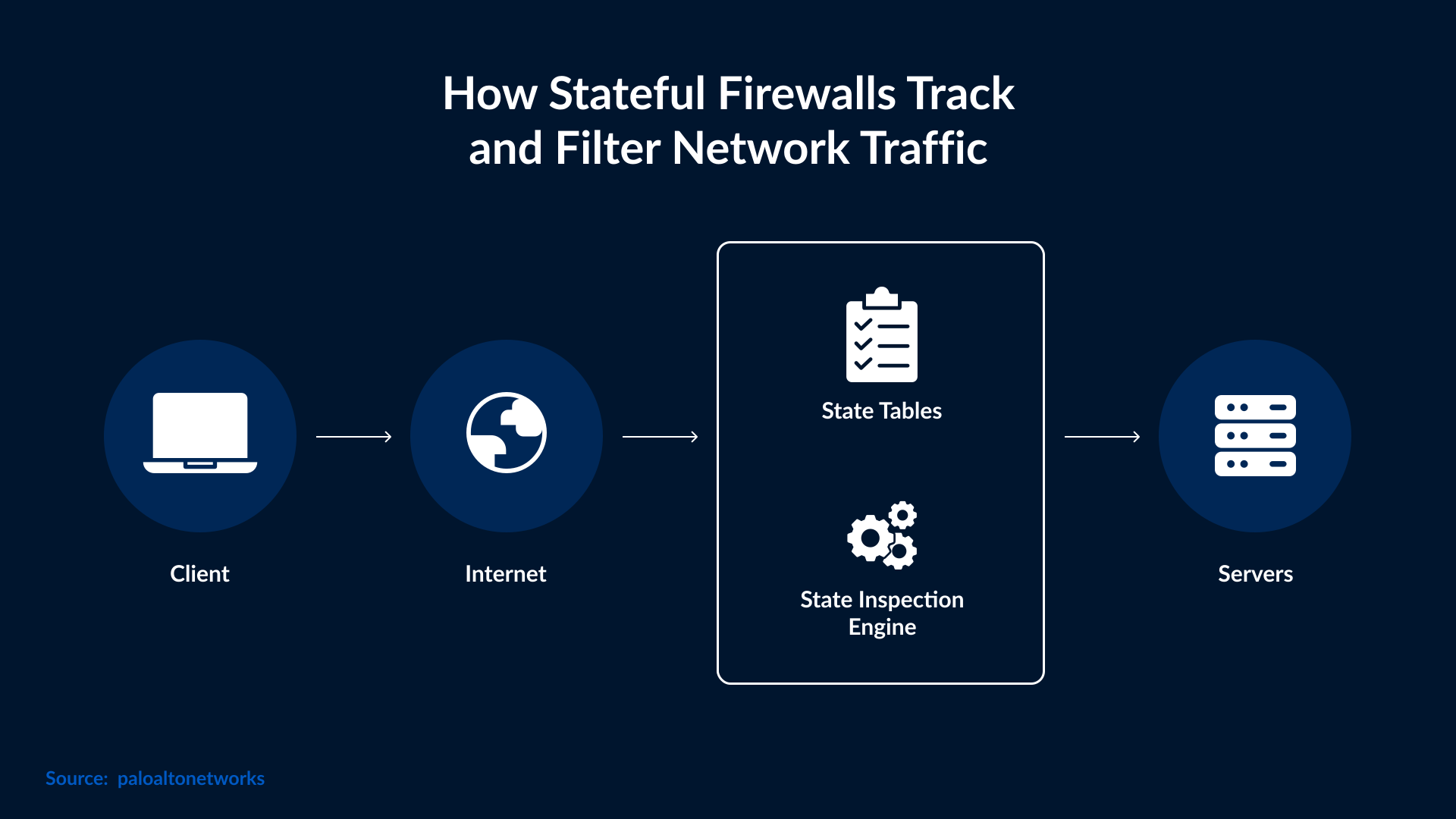
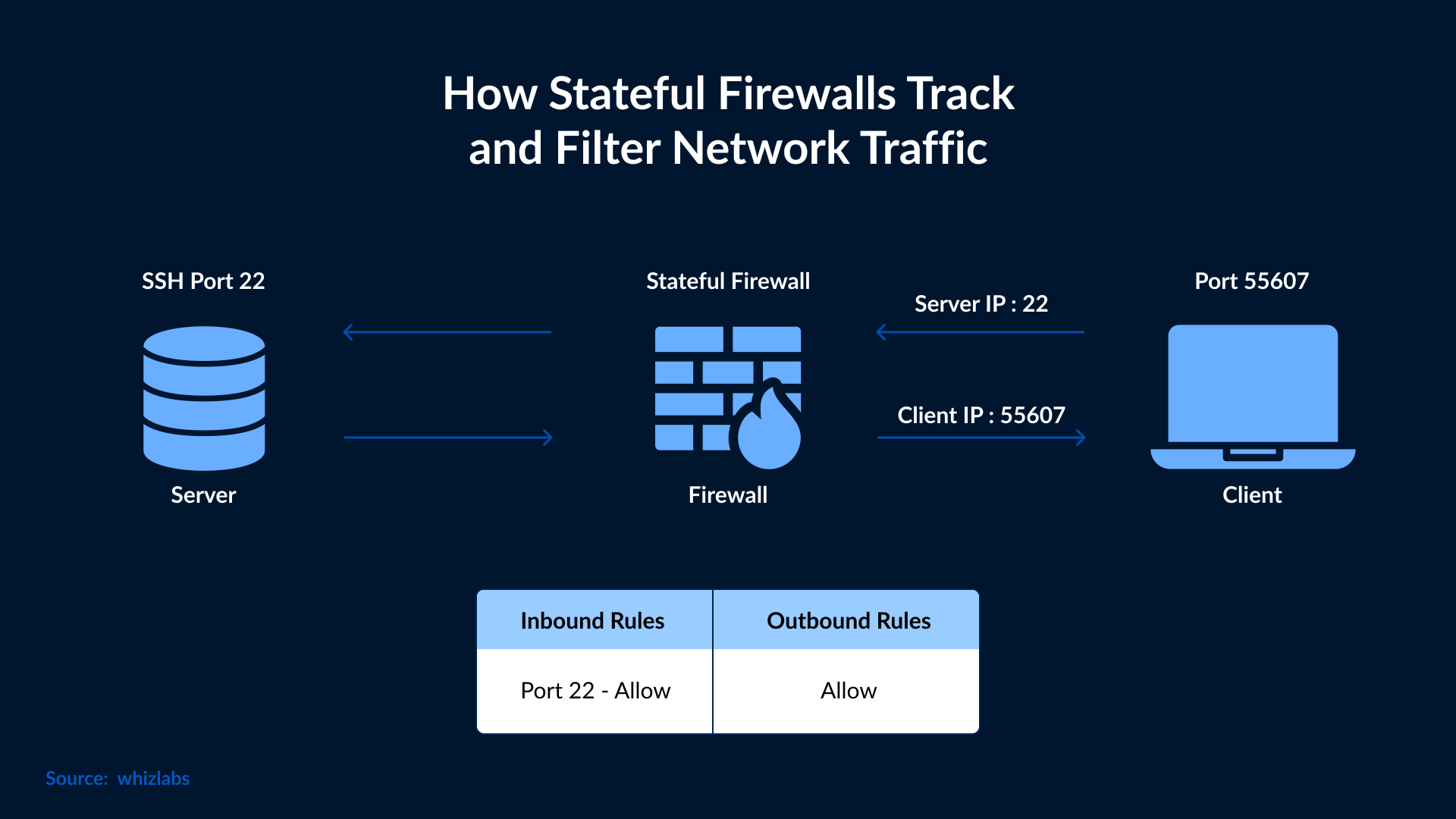
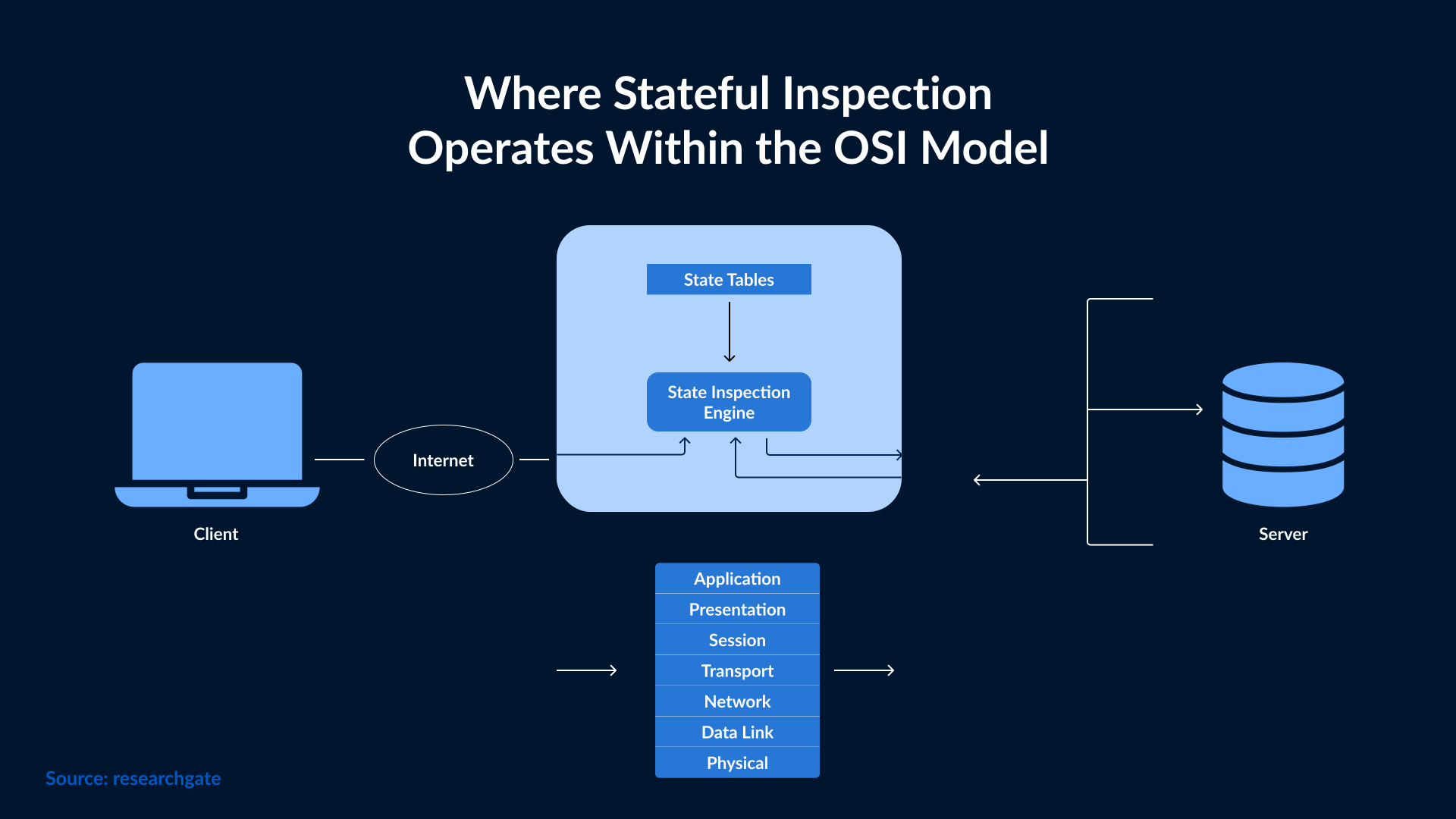
Firewalls keep an eye on the dynamic state table of a current session. This table has information like source and target IP addresses, ports, and protocols. It checks this table when a message comes in to see if it is an unwanted request or part of a process that is already running. The firewall can immediately block any connections that don't look safe or aren't known to it.
These days, stateful use behavioral analysis and deep packet inspection (DPI) to go further than simple packet inspection. This lets them find malware, notice odd behavior, and stop sophisticated hackers before they get to the network.
It has been shown that more than 90% of malware hides itself by using encrypted data. This is why you need more powerful routers that can handle both open and protected data flows.
Businesses need to use both NGFWs and these firewalls to protect their networks, stop illegal data breaches, and make their networks work better as cyber threats get smarter.
How Firewalls with States Work
Because it checks every link all the time, this firewall is very important for network protection. It keeps track of all the links and makes lists of the ones that are "safe" enough to trust. When a link is made again, the firewall checks it against a list of features that are known to be safe. The data bits are thrown away if the new link doesn't match the needs.
Stateful also does packet analysis, which looks inside each packet to make sure it doesn't have any risks. It's very important to do this because looking at the data bits' information stops bad things from happening. Packets hold the information that is being sent.
Tips for Getting the Most Out of Stateful Firewalls
Stateful firewalls offer extra security features, such as encryption or channels, to keep bad people from getting and reading messages. Only real links can get through because of these steps and controls on who can see them. This protects important info.
Keeping an Eye on Packet Activity
Stateful packet analysis is an important part of router security. It helps keep an eye on and control network data better than simple filters, making the network environment safer.
- The process keeps an eye on each packet and checks the accuracy of communication by looking at each data packet and seeing if it matches ones that have already been sent.
- This is better than simple firewalls. In contrast to static packet filtering, it stops illegal access by carefully looking at the content and headers of packets.
- Monitoring network connections makes sure that only authorized data goes through the network, keeping bad people from getting in.
- Stateful firewalls manage links, analyze packets, and keep an eye on risks. They do this by combining several security features into a single layer of defense.
- Automated threat detection can be set up to immediately respond to threats, so people don't have to do as much.
- Next-generation routers protect better against online threats by using stateful firewalls, which makes networks more resilient.
Accurate Traffic Forecasting Improves Security
An advanced firewall that looks at both the title and body of the message is called a stateful firewall. Advanced Persistent Threat Attacks and simple attacks that can't be checked out are stopped and neutralized by this. An NTA-based stateful firewall can stop threats that try to avoid being checked. Flagged packets that match a live session are the only ones that filters let through. All of the network contacts are also automatically tracked by the filters. Not only does this kind of Active Traffic Control help find unknown packets, it also checks security rules to make sure no one can get in without permission. Any business that needs an extra layer of protection, like when they need to keep private info safe, will find this firewall very useful.
Adapting to Changing Network Conditions
The part of the network that can easily adapt to changes in the data going through it is the stateful routers. One way they can keep track of and watch connections is through a state table. This lets them change the filtering methods for connections that are being made, used, and stopped in real time. Automatic firewalls can easily adapt to the needs of changing networks and give users the security they need without them having to do anything extra.
These tips are especially useful for companies that need to stay safe and connected all the time. It helps companies deal with changing standards and a more dangerous threat environment by keeping business stable while keeping up with security efforts.
Fine-Grained Policy Control
Firewalls can handle many types of network data because they use stateful analysis. Supervisors can set different security rules for each program, link, and user ID. With this level of control, security measures can do more than just let someone in or out, and they can be changed to fit the business's needs.
By making personalized, unique policies, businesses can change the rules and procedures to meet the needs of people with different jobs and roles within the company. This way, security rules are still as strict as companies need them to be, but they don't stop people from following the law.
Optimizing Performance and Resource Use
The router makes the most of its resources by taking good care of the links it already has. Stateful inspection doesn't have to check packets as often as other types of routers do when they come from known, trustworthy lines. When you do this, speed goes up, processing costs go down, and security measures don't slow down the network.
When there is a lot of traffic and the need for safe contact, it is especially important to make good use of resources in difficult organizational systems. Firms can get a good balance of strong security and speed with firewalls, which help them stay on top of work and keep services running without losing security.
It gives companies the freedom and security they need to keep their networks safe from new cyberthreats by mixing features of Next-Generation Firewalls, network traffic analysis, and thorough traffic analysis.
Challenges and Limitations of Stateful Firewalls
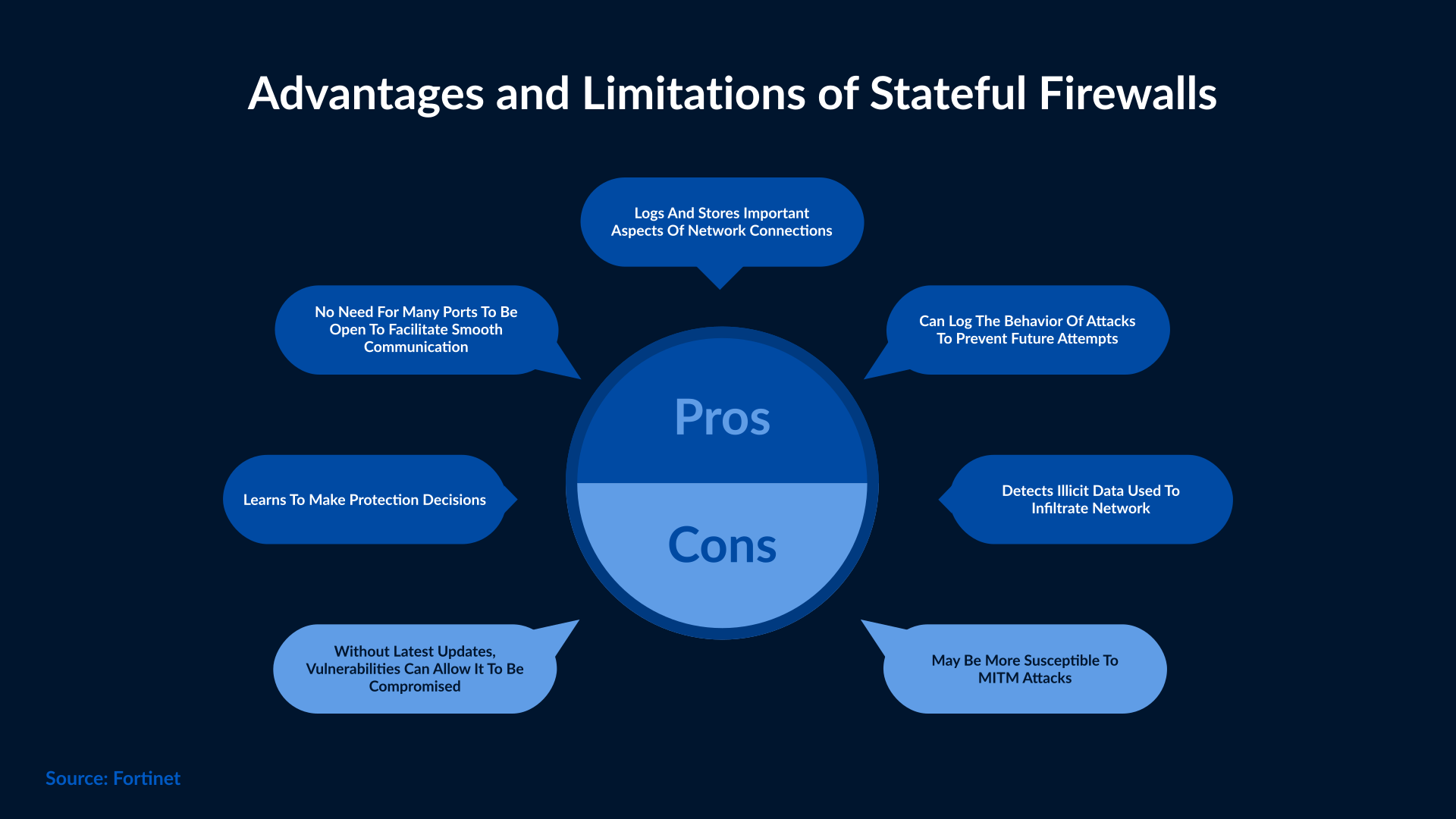
You can use it to protect yourself from many internet risks, but there are some issues that need to be fixed before it can fully protect companies.
Complex Setup and Configuration
Setting up stateful so that it can quickly handle the state table that saves network links must be done just right. People in charge of IT may find this level of complexity hard to handle since they need to know a lot about network standards and security rules. Misconfigurations could make the network not work properly or let hackers in. These setups are also very involved, so they need to be changed and looked over often to keep up with threats that are coming up.
Limited Protection at the Application Layer
While Stateful is active, bad people who want to break into a system at the application layer can watch data at the network and transport layers. However, it's likely that they can't do much at this time. Hackers who have done this before can get through firewalls and into important systems. IDS or next-generation firewalls are extra security measures that many businesses have added to try to fill in these gaps. At the service layer, these are meant to offer, stop, and investigate risks.
Lack of User Identification
One good thing about internet user identity is that it helps with stateful inspection measures, which is one of the main problems with them. For users to make traffic, connectivity details, and protocol states are useful, but it is not possible to check who or what is making the links. There's no way for it to tell the difference between real users and people who might be trying to attack.
Identity and access management (IAM) or even multi-factor authentication (MFA) is often used by businesses to keep people who aren't meant to be there from getting to a network resource.
Insufficient Protection for Web Applications
Many stateful firewalls aren't made to protect web apps, especially ones that use strange protocols and port numbers that change often. For companies that use the internet a lot, this rule might leave large parts of their systems open to theft.
Use web application firewalls (WAFs) to fix this issue. WAFs are made to protect against many types of online threats, including SQL injection, cross-site scripting (XSS), and other complicated attack methods that stateful can miss.
Firewalls are an important part of network security, but they can't completely stop new cyberthreats. We need other options, such as Next-Generation Firewalls and specific application-layer defenses.
Conclusion
An essential protection tool that actively monitors and examines network traffic in order to identify and stop harmful attacks is a stateful firewall. The danger of cyberattacks is decreased by ensuring that only authentic connections are permitted through the use of sophisticated filtering mechanisms and session awareness. Modern implementations offer greater threat protection and richer security insights, particularly when combined with Network Traffic Analysis (NTA) and Next-Generation Firewalls (NGFWs).
A stateful firewall must be implemented by companies looking for strong, real-time network protection. Protect your network from changing threats by enhancing your cybersecurity approach with intelligent firewall solutions. For knowledgeable assistance on properly safeguarding your digital infrastructure, get in touch with SafeAeon right now.