

Key Takeaways
Introduction
Ransomware attacks are on the rise. Their quiet nature is one of the main reasons why many organizations are unable to detect them. Ransomware attacks begin with something small, maybe a login at an unusual hour or a script running where it normally should not. There could be many more instances, which may not appear suspicious at first. By the time encryption begins, attackers have already moved deep into the environment.
While tools are available to detect malware, organizations cannot rely on them for ransomware protection. Instead, organizations must focus on continuous monitoring and quick investigation. These allow them to make informed decisions during the early signs of suspicious activity. Organizations also use a SOC for triage and gathering context, but that’s not enough. Manual analysis is also important because human analysts can recognize patterns that automation alone may miss. Organizations need ransomware protection-as-a-service that can detect and contain these attacks without requiring organizations to build additional tools or internal SOC teams.
Why Ransomware Attacks Still Succeed Despite Security Tools
Most organizations are running several security tools. These include endpoint protection, email filtering, backups, and identity controls. On paper, the environment appears well protected. Yet, ransomware attacks occur in organizations of all sizes.
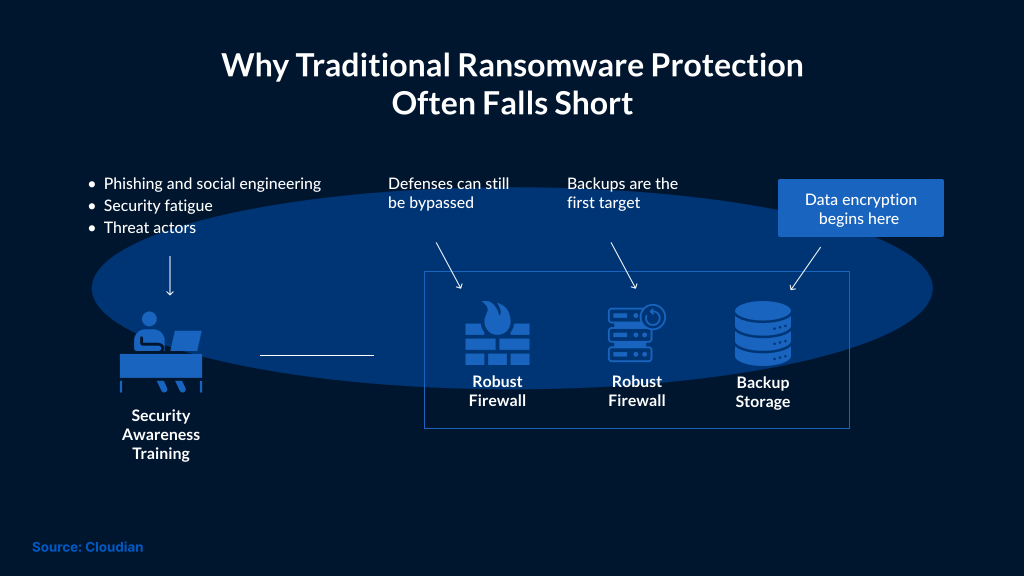
Most attackers are no longer using obvious malware. Today, many campaigns start with stolen credentials or exposed remote access services. After gaining access, attackers use legitimate tools already present in the environment. Their activity blends into normal operations, which makes it hard for security teams to detect the activity.
Security tools can generate alerts, but those alerts do not reveal intent. A login from a new location may seem harmless when viewed in isolation, but when combined with privilege escalation and lateral movement, it may indicate an attacker preparing to deploy ransomware.
Timing is also a key point here. Modern ransomware operators usually move through networks before encryption begins. They look for domain controllers, backup repositories, and systems that provide wide access. If security teams cannot recognize that activity early, then encryption begins at the final stage of a much longer intrusion.
For effective ransomware prevention, it is important to identify these early signals. Activities like a user accessing a system they have not accessed before or systems communicating in ways not seen before are signs that something is not right. Individually, each activity won’t look suspicious, but when teams begin to connect these activities, the problem becomes evident.
Many organizations are also turning to ransomware protection software. It can be effective, but protection also depends on investigating alerts and understanding suspicious activity. Without that operational layer, it is easy for well-equipped environments to miss the signs that appear before a ransomware attack.
What Effective Ransomware Protection Looks Like in Practice
Most organizations have already deployed multiple layers of security. They are using endpoint protection on workstations and servers. To counter phishing attempts, they have employed email filtering. Backups are stored within the infrastructure. At first glance, everything looks good, but the reality is a bit different.
Ransomware attacks do not usually exploit a single visible gap. They target the existing systems within the network. Attackers sign in with a valid account. Once signed in, they explore the infrastructure to see what that account can access.
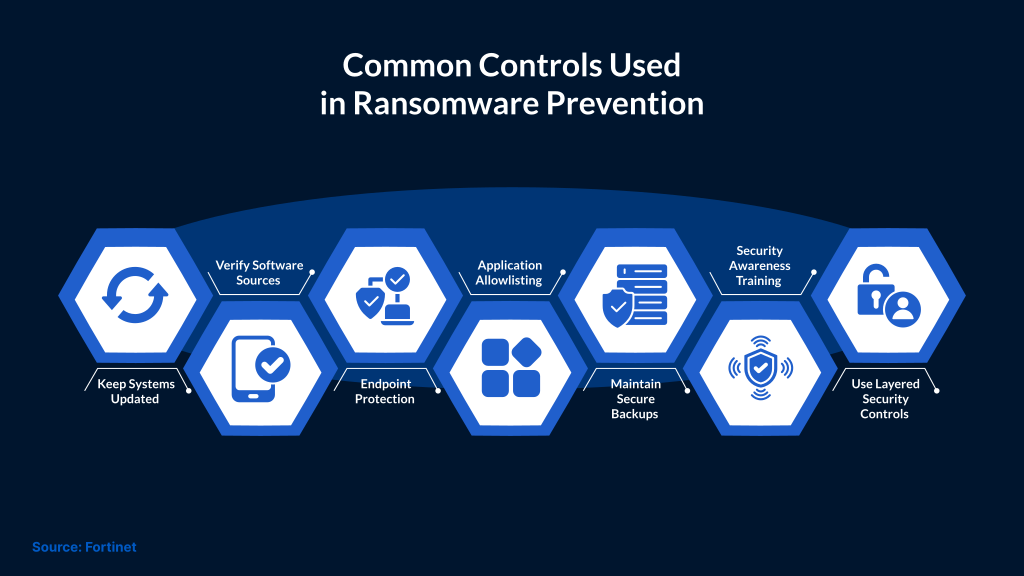
Everything appears normal during this phase, with legitimate tools running commands and files moving between systems as part of routine work. However, in the background, malicious activity is taking place, which is why monitoring everyday activity across the environment is important for ransomware protection.
Security teams usually begin by closely monitoring identity activity. They check for unusual account behavior or unexpected administrative activity. At times, systems tend to communicate with each other in unfamiliar ways, which can raise suspicion. Detecting those shifts early gives security teams a chance to interrupt the attack before attackers deploy ransomware into the infrastructure.
The Shift Toward Agentic SOC Operations
Security teams deal with numerous alerts every day. Many of those alerts come from endpoint tools, identity systems, cloud platforms, and network monitoring solutions. Each alert shows a small part of the activity. It is not possible to get the full picture by looking at each part separately.
This is why SOC teams use agentic workflows to manage a large volume of alerts. These systems allow teams to easily collect related information from different tools and view it on a single dashboard. If an alert appears, the system gathers device details and login history. It can also provide details on recent commands and the network used to connect to that account or machine.
This helps analysts save time. They don’t have to manually search through several systems. They already have sufficient context available to begin the investigation.
However, the system cannot decide what the activity means. It can only bring the information together. It is the job of an analyst to review the evidence and compare it with normal behavior in the environment. Then they can decide whether the activity needs further investigation.
Where Automation Helps in Ransomware Detection and Prevention
Security teams use automation to handle the large number of events in modern environments. Systems generate logs from endpoints, identity platforms, cloud services, and network devices. If every event had to be reviewed manually, it would take too much time.
Automation brings the related activity together. It can group alerts that involve the same account, device, or process. Instead of seeing numerous separate alerts, analysts can view the activity as a single investigation.
It can also collect basic information about the event. Information about when the account signed in, which machine was used, and what happened just before the alert appeared can be seen in the system. This saves analysts from having to search through several tools at the start of every investigation.
Automation can improve ransomware prevention by reducing the time between detection and investigation. Analysts receive alerts with more context, allowing them to focus on understanding the activity rather than gathering information.
Automation speeds up investigations, but it still does not replace the analyst because someone is needed to decide whether the signals organized by the system actually point to a real threat.
The Role of Analysts During a Ransomware Investigation
Automation can gather activity and present it for investigation. It can show which account triggered the alert and what systems were involved. Using that information, an analyst can start the investigation more quickly.
The real challenge begins after that. Someone has to decide whether the activity matches the normal behavior in the environment. A login from another location can be performed by an employee who is traveling or working remotely. But at the same time, it could be someone trying to access the system using stolen credentials.
Analysts pay close attention to how the activity unfolds. They try to understand what the account actually did and whether that activity is spreading across the environment. When the pattern does not match normal activity, the investigation moves deeper. This is usually the point at which ransomware activity is identified before encryption begins.
What to Evaluate When Choosing a Ransomware Protection Provider
Organizations compare several vendors when looking for a ransomware protection provider. The focus is on technology, but it is also important to consider what a provider does after an alert appears. A few things are worth examining before choosing a service:
Alert investigation approach: Some providers only send alerts to the customer. Others look into the activity first and try to understand what actually happened. It helps to know who performs that investigation and how it is handled.
Monitoring coverage: Ransomware activity can begin at any time. Therefore, it is important to continuously monitor endpoints, identity systems, and network activity to detect early signals.
Response capability: Once suspicious activity is confirmed, the provider should be able to act quickly. Actions may include isolating a device, disabling an account, or stopping a process. This will prevent the attack from spreading further.
Visibility across the environment: Ransomware attacks can quickly spread between systems before encryption begins. The provider should be able to follow activity across different accounts and devices to understand how the intrusion is developing.
Investigation depth: Analysts should be able to understand how the attacker entered, which systems were accessed, and whether the activity is ongoing. This information helps analysts stop the attack before it spreads further.
The ability to handle these areas when suspicious activity appears in the environment helps organizations choose a ransomware protection provider.
Conclusion
Ransomware protection now depends on how quickly organizations can detect and act upon suspicious activity. Security tools can surface alerts, but someone has to review the activity and connect the signals to determine whether it is an attack.
Agentic SOC capabilities can help bring information together and speed up the early stages of analysis. They reduce the time analysts spend searching across different systems. Despite that support, the investigation itself depends on human judgment.
Effective ransomware prevention depends on both technology and human investigation. SafeAeon helps security teams monitor activity and review alerts. This allows analysts to act before ransomware reaches the encryption stage.