


Key Takeaways
- The rise of AI-based threats has forced MSSPs to improve their detection speed and identity-security monitoring. (IBM)
- Most breaches in recent times involved stolen credentials, which has made identity monitoring a top MSSP requirement. (Verizon)
- Many companies are using cloud systems, which increases the attack surface. As a result, MSSPs now come with deeper cloud visibility.
Introduction
The role of an MSSP has evolved beyond just providing alert monitoring services. Many businesses today are looking for MSSPs who can respond to cyber incidents quickly and provide excellent support. Business owners understand how quickly cybercriminals can break into their systems. Because of this, they want more than an MSSP that only provides monitoring. They want to ensure that their MSSP's quality of service meets expectations.
In this blog, we will review some key metrics for measuring the quality of MSSP services in 2025, as well as what businesses should look for when comparing MSSPs.
What’s New in MSSP Requirements for 2025
MSSPs in 2025 don’t operate the same way as they did in previous years. Since attackers now use AI to carry out more targeted and faster attacks, the job of MSSPs has become more challenging. They must detect unusual activity almost immediately. Today, many attacks begin with identity misuse, such as stolen sessions, MFA-bypass attempts, or account takeover. Therefore, MSSPs need tools that can quickly spot these early signals.
The attack surface has also grown due to increased use of cloud and hybrid environments. Now, businesses want MSSPs to monitor everything, from servers and remote devices to cloud accounts and identities. They don’t want to leave any blind spots for attackers to exploit. Businesses no longer expect just alerting from MSSPs, but they are looking for outcome-based security where the number of incidents can be reduced, resolutions can be made quickly, and the overall security posture can be improved.
Compliance pressure is also increasing due to audits and regulatory checks. Auditors require clean compliance reports, which high-quality MSSPs are better equipped to provide.
Then there are customers with advanced needs like MDR or XDR. They expect their MSSP to provide deeper visibility across their environment and conduct thorough investigations with automated response capabilities.
Core MSSP Quality Measures for 2025
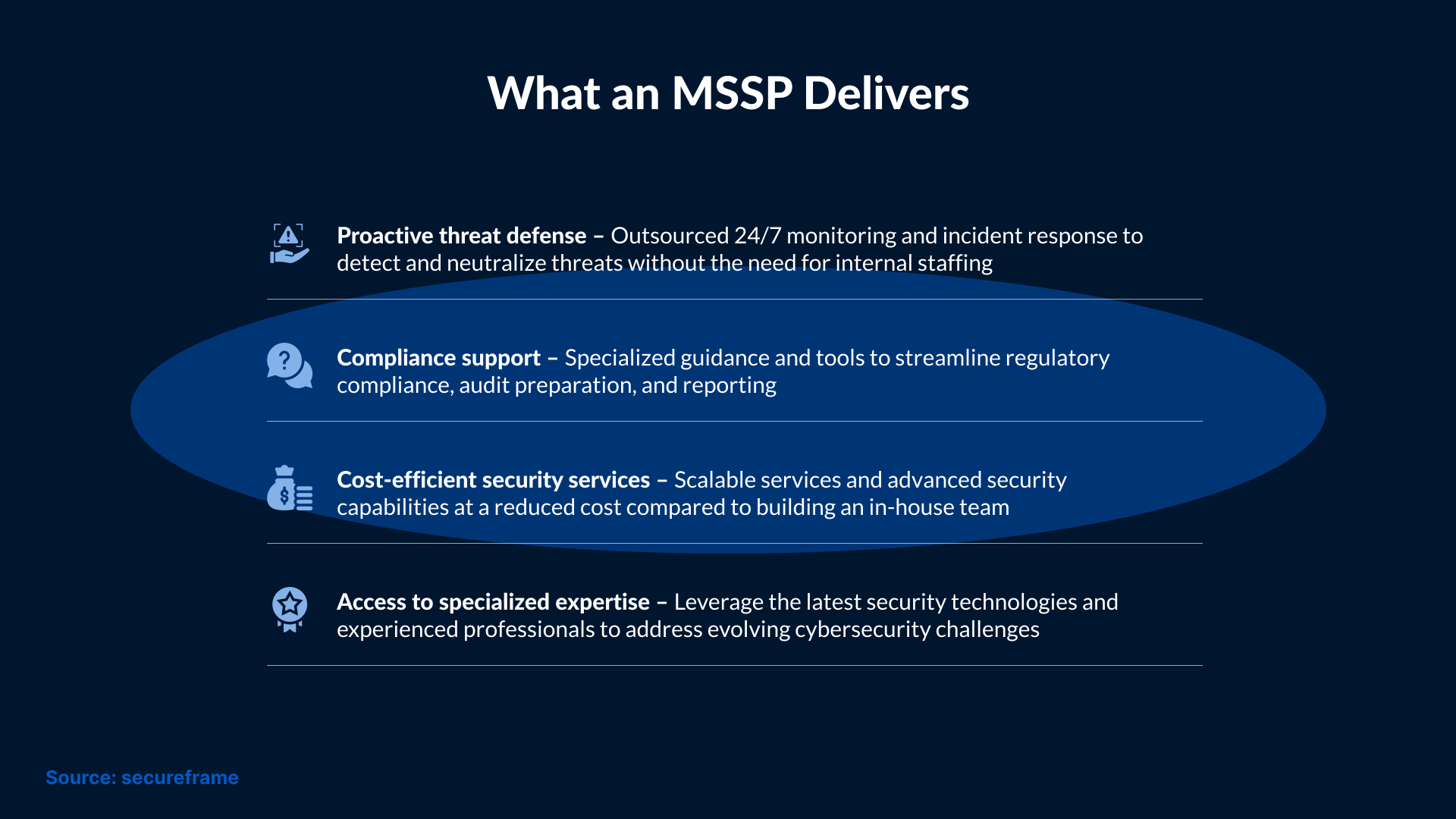
Businesses are looking for high-quality MSSPs, but what’s the definition of ‘Quality’ in this context? Well, in 2025, the quality of an MSSP will be determined by its ability to detect and respond to threats.
- Mean Time to Detect (MTTD): Fast detection will stop attackers before they can move deeper into the network.
- Mean Time to Respond and Remediate (MTTR): This indicates how quickly the MSSP can contain or fix a threat.
- False-positive Reduction: Too many unnecessary alerts can create confusion and slow down investigations. A high-quality MSSP will regularly refine its tools to reduce noise.
- Coverage: This is another key measure because it’s important to know what an MSSP would cover. In today’s time, organizations expect MSSPs to monitor multiple platforms, including servers, endpoints, cloud environments, identity services, and remote users. Additionally, many organizations view MSSP services as opportunities to reduce their attack surface instead of only monitoring it.
- Threat Intelligence: This is also a big factor in 2025. Managed Security Service Providers (MSSPs) rely on real-time and relevant threat intelligence sources to identify emerging attack methods and to mitigate negative impacts caused by malicious behavior.
- Reporting: Quality reporting also matters. MSSPs will need to provide concise summaries of customer security health and offer clear guidance on risks without forcing customers to interpret technical logs.
Best Operational Practices to Follow When Working with MSSP in 2025
The MSSPs of 2025 should have a strong operational foundation to deliver reliable service. They will have to employ both automation and artificial intelligence for alert filtering, large environment management, and pattern recognition that human analysts may miss. This will allow the SOC to operate with less risk of being overwhelmed while enabling a timely response.
MSSPs should also develop standard playbooks to make incident response processes consistent so customers understand what to expect and how Service Level Agreements (SLAs) apply.
Additionally, MSSPs should conduct routine assessments of the customer’s security posture to ensure that customers understand current risks and improvements being made or recommended to strengthen the security posture of their environments.
MSSPs that are aligned with recognized security frameworks such as CIS Controls or ISO 27001 provide structure and trust. Their documentation and processes will also stay uniform.
Reliable MSSPs also handle backup plans, redundancy, and continuous operations, even during outages. These practices are crucial for maintaining stability and ensuring service quality throughout the year.
What Organizations Should Expect from Their MSSP in 2025
Organizations want proof of the real value their MSSP provides. They expect real-time insights into blocked threats, response times, and improvements in security results. MSSPs should communicate clearly about issues that carry the highest level of risk and highlight actionable steps that help reduce potential vulnerabilities.
Customers should expect support across cloud systems, identity security, and remote user protection. Many modern attacks target users as a starting point rather than only machines, so identity protection is an essential part of modern security.
Customers should also expect the MSSP to scale with their business. As they add more cloud apps, devices, or locations, they expect the MSSP to maintain strong performance without delays or quality drops.
Strong communication and ongoing guidance are other crucial elements that customers should expect as part of MSSP quality measures in 2025.
How to Evaluate Your MSSP Using 2025 Quality Benchmarks
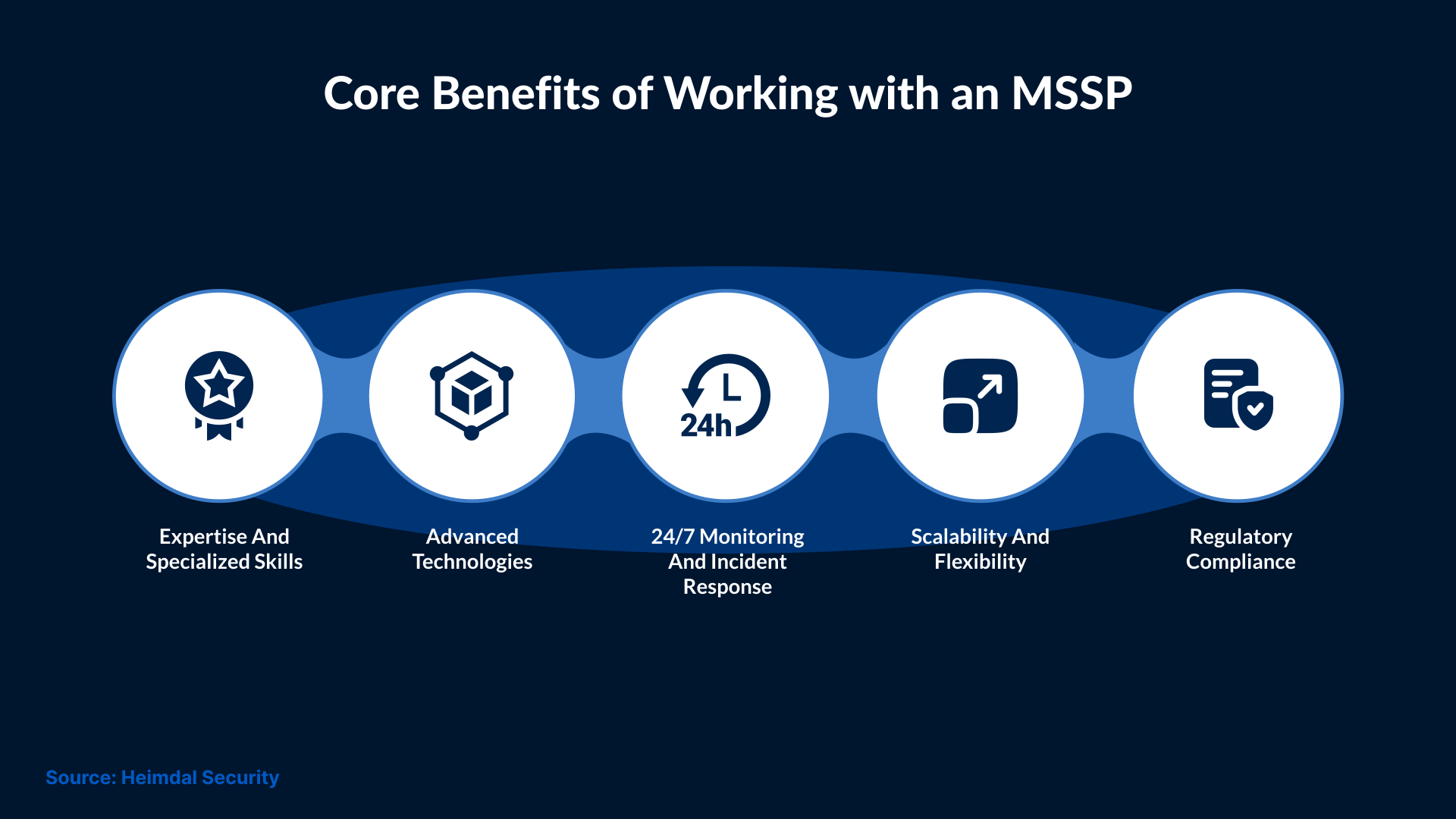
It is important to have a clear evaluation process to assess the quality of an MSSP; however, the best way to evaluate an MSSP is by using established benchmarks. The following are some of the questions that you should ask an MSSP when conducting your evaluation:
- MTTD and MTTR: Ask about their average MTTD and MTTR. Any provider who can’t share these numbers may not be tracking their own performance properly.
- False-Positive Rate: Ask about their false-positive rate and how often they tune alerts. With this, you can determine how much effort they put into accuracy.
- Coverage: Ask about the percentage of your environment they are monitoring. If they offer partial coverage, it can leave blind spots that attackers can use.
- Reporting: Check whether your MSSP provides easy-to-understand reports with explanations, action steps, and risk levels.
- Threat Intelligence: Ask how often they update their threat data and how they use it in monitoring and investigations.
You should also be aware of the following warning signs:
- Slow communication
- Delayed reports
- Repeated incidents
- Unclear recommendations
These red flags help you decide whether to continue with your current MSSP or look for a better option.

Conclusion
Organizations expect a lot more from MSSPs in 2025. They want faster response to threats and comprehensive support across cloud, identity, and hybrid platforms. Businesses need to understand the right quality measures to choose an MSSP that can improve their security. SafeAeon can provide faster response, along with constant support across different environments. Their flexible approach helps customers select the services they need without hassle.