

Key Takeaways
- NDR market size is around $3.89 billion in 2025. It is projected to grow at a 6.62% CAGR to reach $5.36 billion by 2030. (Mordor Intelligence)
- Organizations that used NDR have witnessed up to 70% reduction in time to detect and respond to cyber threats. This shows the effectiveness of this service in improving security operations. (ESG Research)
Introduction
Organizations today depend heavily on connected systems, cloud applications, remote users, and third-party services for their online security. In most cases, attacks do not start with an apparent alert on an endpoint. They often originate in the network in the form of a strange connection or an unusual traffic route. These signs are subtle and easy to overlook until the attacker has infiltrated further.
Most IT teams try to keep an eye on this activity, but monitoring a network 24/7 is not feasible. Small gaps in visibility can give attackers the time they need to move deeper into your network.
Managed network detection and response (MNDR) addresses this by pairing advanced network analytics with a team of security experts to strengthen network threat detection and investigate suspected activity. The service enables security analysts to look for odd communication patterns, lateral movement, command and control activity, and other behavior from the network that may indicate a threat.
Today, we are going to learn how MNDR works and why organizations should use it to improve their visibility and response to network-based attacks.
What is Managed Network Detection and Response (MNDR)?
Managed network detection and response (MNDR) is concerned with the activity happening inside your network, not just the activity occurring at endpoints. Rather than relying solely on logs or alerts from a particular device, MNDR focuses on the traffic occurring between systems, cloud services, and remote users. This improves network threat detection, helping identify activity that often slips past traditional tools, e.g., suspicious connections, lateral movement, unauthorized communication, and command-and-control activity.
At its core, MNDR combines two pieces. The first is the technology that collects and analyzes network data. The second is the team that reviews what the technology finds. The platform highlights patterns that don’t fit normal behavior, and analysts take a closer look to confirm whether the activity is harmless or worth investigating further.
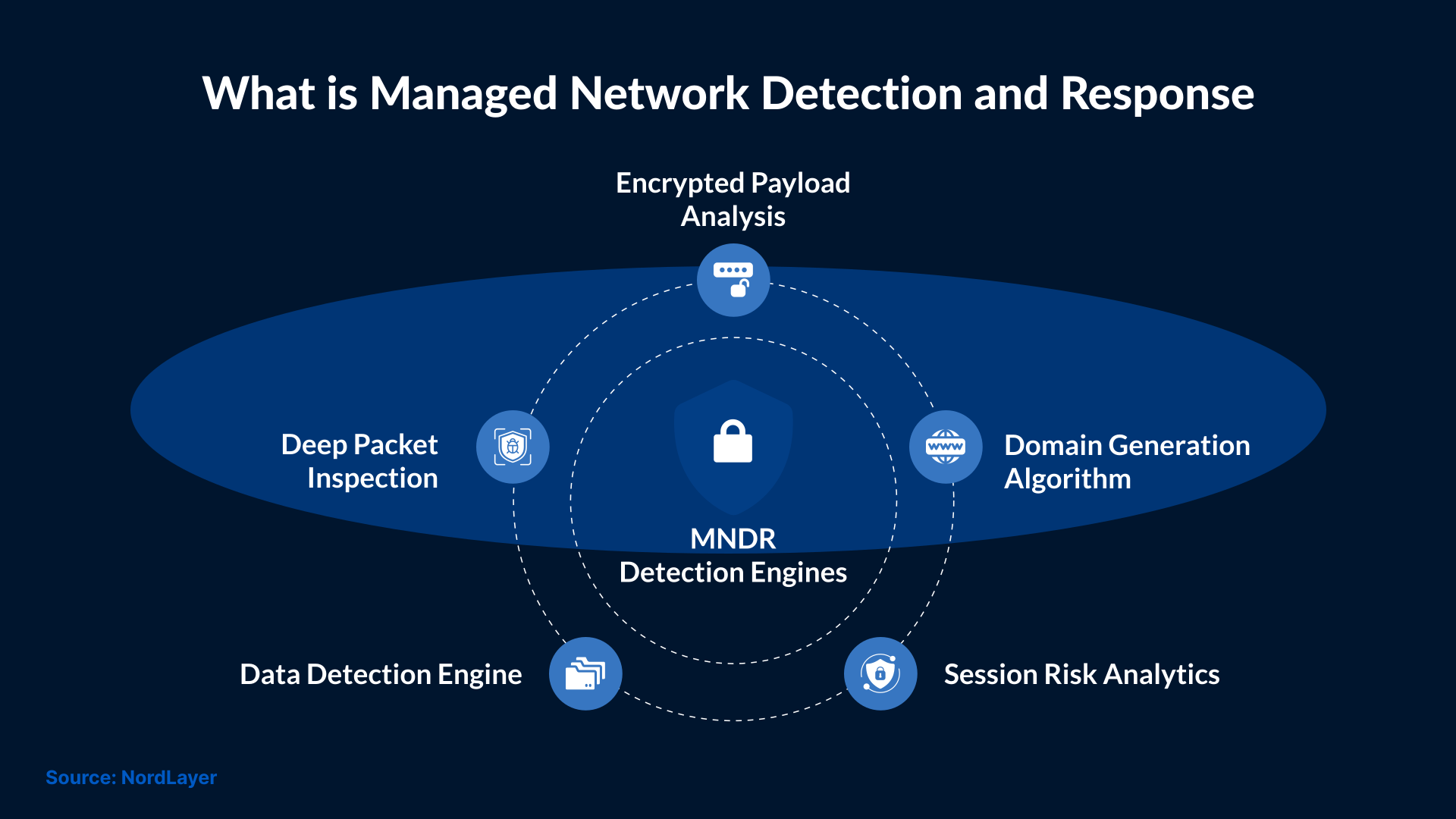
Most organizations don’t have the time or staff to monitor network activity all day. MNDR handles that work. It gives you continuous visibility across your environment and makes sure someone is monitoring the traffic that attackers often use to move quietly from one system to another. When something suspicious shows up, the MNDR team can alert you, explain what they’re seeing, and guide your next steps.
How does Managed Network Detection & Response Work?
Managed network detection and response works by monitoring the traffic inside your environment and making sense of the patterns that appear. Sensors or collectors sit in the network and gather data about how systems communicate. This includes routine traffic, new connections, internal movement, and unusual behavior.
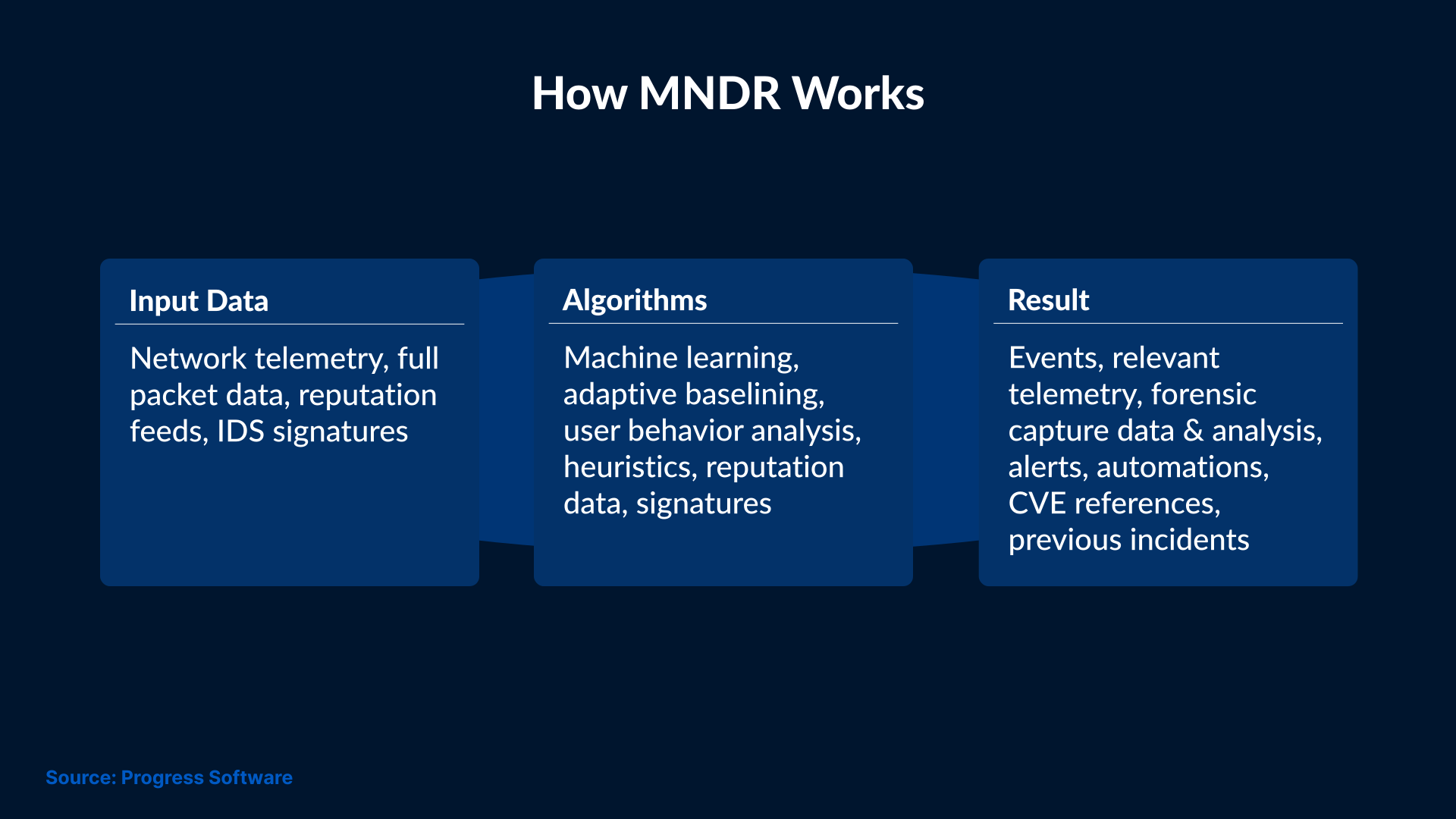
The system starts breaking down the traffic as it comes in, strengthening network threat detection by highlighting traffic that doesn’t match normal patterns. It flags activity that doesn’t match how your network normally behaves, such as a device reaching out to something it never contacted before, a sudden spike in internal traffic, or communication that resembles command-and-control. These signals form the starting point.
Once something gets flagged, the analysts take over. They look at the details, check whether the behavior lines up with anything they have seen in real incidents, and figure out if it’s worth investigating. Some alerts turn out to be benign. Others point to real trouble. The analyst’s judgment is what sorts one from the other.
When a threat is confirmed, MNDR teams help with the response. They let you know what they found, explain how the activity moved through the network, and guide the steps needed to contain it. This support is available around the clock, which is often where internal IT teams struggle the most.
After a while, the service gets a better feel for how your network normally behaves. That makes it easier for the team to notice when something shifts in a way that doesn’t fit the usual pattern. These small differences are often what reveal an attacker trying to stay hidden.
What are the benefits of MNDR?
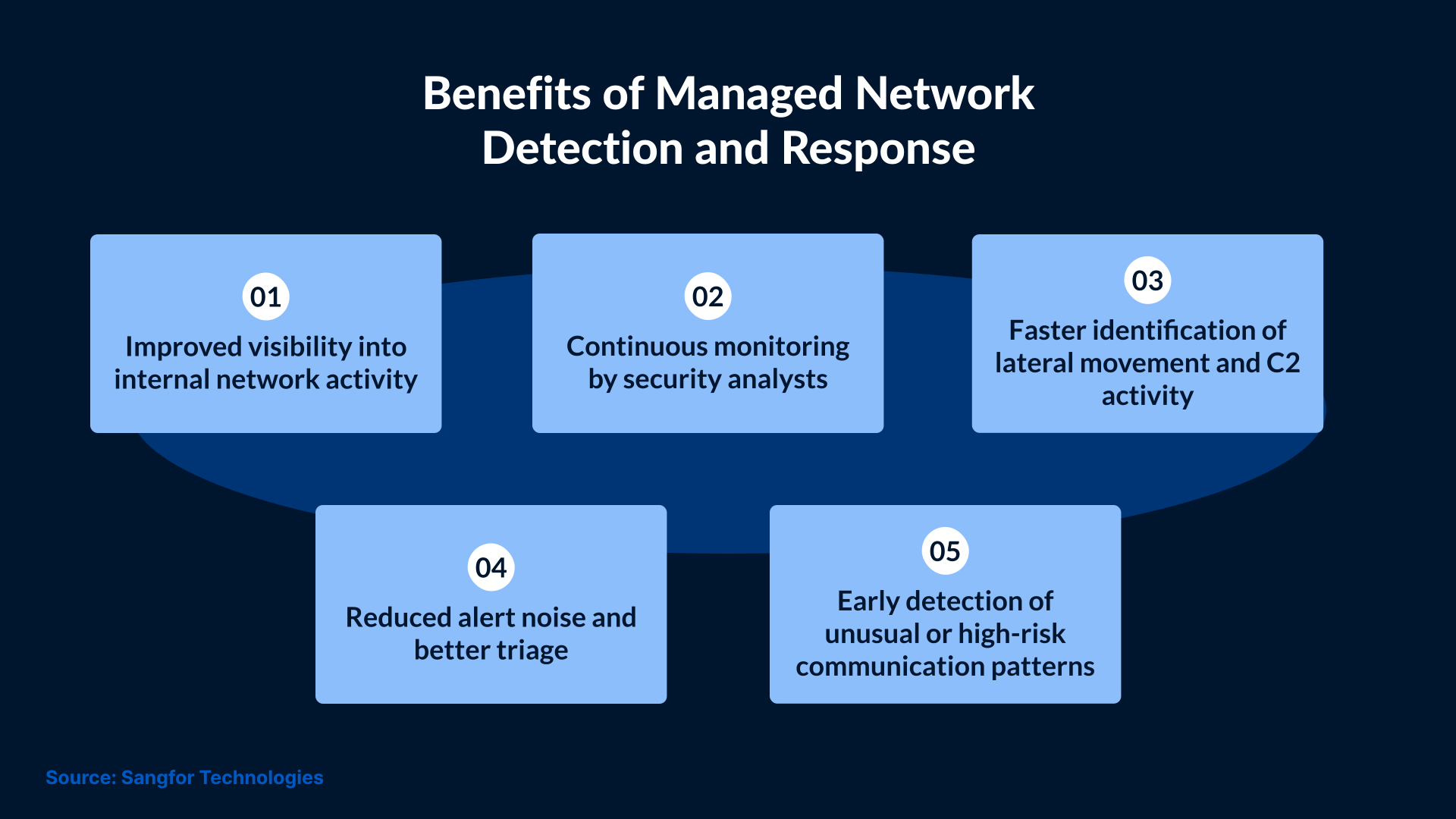
Managed network detection and response provides organizations with better visibility into what’s taking place inside their network. Most security tools are focused on endpoints or logs, whereas MNDR is focused on the activity in between; the very traffic that attackers use, as that is often the most difficult to track. Here are some of the primary advantages.
1. Better visibility across the network
Many threats actually move through the network before they target the endpoint. It is through the traffic that MNDR finds out that there is something unusual happening in the network. There could be unusual connections, unexpected spikes in traffic, or communications that look nothing like normal patterns you have established on your systems. This helps to fill an important blind spot for many teams.
2. Continuous monitoring
Network activity doesn’t slow down after business hours. MNDR keeps an eye on that traffic throughout the day and night. When something unusual appears, it doesn’t sit in a queue until the morning. Someone reviews it and decides whether it needs attention right away.
3. Analysts who understand network behavior
Not all network threats are obvious; sometimes it’s a minor change in how a server communicates, or a device looking to communicate with a weird location on the network. With MNDR, you have access to actual analysts who see this kind of behavior all the time. They have experience with what a normal pattern is and can tell you when a pattern deserves further investigation.
4. Earlier detection of lateral movement
After gaining access, attackers usually attempt to move from system to system. This movement is first visible in the network. MNDR can quickly catch these early indicators of movement, which include a connection that should not exist or traffic between two systems that rarely communicate. Stopping movement in this early detection phase can prevent a much larger incident from taking place.
5. Less noise for internal teams
Network tools can generate a lot of signals, and sorting through them takes time. MNDR handles the first round of review and filters out the activity that doesn’t matter. Your team gets fewer interruptions and can spend more time on work that actually needs their input.
How MNDR Compares to Other Security Solutions
MNDR vs MDR
MDR focuses mostly on endpoints. MNDR focuses on network traffic. Both detect threats, but they look at different signals. MDR checks what happens on devices such as laptops and servers. MNDR looks at how those devices communicate. It pays close attention to east–west traffic, suspicious connections, lateral movement, and command-and-control activity. Many organizations use both because attackers often move between endpoints and the network during an attack.
MNDR vs NDR
NDR is a technology. MNDR is a managed service built on top of that technology. NDR tools collect and analyze network traffic. MNDR adds a team of analysts who review that activity, validate alerts, and help you understand what the network is actually showing. In simple terms, NDR gives you visibility, while MNDR makes sure someone is acting on it at all times.
MNDR vs SIEM
A SIEM (security information and event management) collects logs from various tools and provides alerts, but then you need to have your team review the alerts. An MNDR solution goes a step further and looks directly at real-time traffic and can assist with the task of determining if the activity is safe or suspicious. A SIEM provides you with data; an MNDR provides you with both detection and response to behavior on the network. Many organizations choose to use both: SIEM for centralized visibility and MNDR for the deeper dive into analysis at the network layer.
MNDR vs IDS/IPS
IDS and IPS applications operate based on a set of rules. They are good at detecting known attack signatures, but they struggle with subtle or sophisticated techniques that are new. MNDR detects irregular traffic through behavioral analytics, even when the activity doesn’t match a known signature. IDS/IPS blocks recognized activity. MNDR identifies activity that deviates from normal network behavior.
MNDR vs XDR
XDR integrates signals from endpoints, cloud tools, identity systems, email, and networks. MNDR focuses on the network layer of data. The key distinction is with scope. MNDR helps understand traffic and communication patterns deeply. XDR connects different data sources for a broader view. Some organizations use MNDR as part of an improve detection when network visibility is a priority.
How to Choose an MNDR service?
Choosing an MNDR service requires careful planning because you are allowing another team to monitor the traffic inside your organization’s network. Here are a few key considerations to keep in mind when evaluating MNDR providers.
1. Depth of network visibility
Some providers extract basic flow data, while others can go deeper to analyze patterns revealing early signs of unusual activity. There is a significant difference between the two. You need to ensure that the service providers can see the parts of your network where attackers are most likely to hide.
2. Experience of the analyst team
While technology can be used for initial filtering, you will need experts to review the alerts. Therefore, make sure you are choosing a provider whose analysts work regularly with network-based incidents, as they can spot subtle signals.
3. Clarity in investigation and response
Understand their communication process during an incident, as some teams send only alerts, whereas others provide details of what they are seeing and guide the containment steps. Most organizations would expect the second approach from the service provider.
4. Fit for hybrid and cloud environments
Most organizations have diversified their work environment. Apart from office systems, they are using cloud workloads, remote sites, and SaaS tools on a daily basis. If your organization also operates in a hybrid environment, then you would want the MNDR service to follow traffic across those areas as well. Modern networks aren’t limited to office systems, so make sure there are no blind spots in the environment, as this would defeat the purpose of having MNDR.
5. Noise reduction and alert quality
Most alerts are not worth acting on, so the service should not send you every minor anomaly. A good MNDR service will look at all the alerts, filter out the unimportant ones, and send the important alerts that need your attention. This saves your team a lot of time.
6. Transparency in how detection works
You should always ask the service providers about the signals they usually rely on and how they determine if something is actually suspicious. Their transparency will help you deliver better guidance during actual incidents.
Conclusion
Managed network detection and response is an essential service for organizations wanting to have a clearer view of what’s happening inside their network. This service helps catch threats that traditional tools often miss. Moreover, it takes the pressure off internal teams by reviewing unusual traffic and guiding the response for something that needs immediate attention.
SafeAeon works well in this setup. They have a team of analysts who would spend time looking at network behavior, so when something unusual shows up, they can explain what it means and help you decide what to do next. When you know what the traffic actually means, you can decide what action to take.
As networks grow more complex, it’s important to have this kind of support. It makes things harder for attackers to move unnoticed and easier for teams to stay ahead of problems.