


Key Takeaways
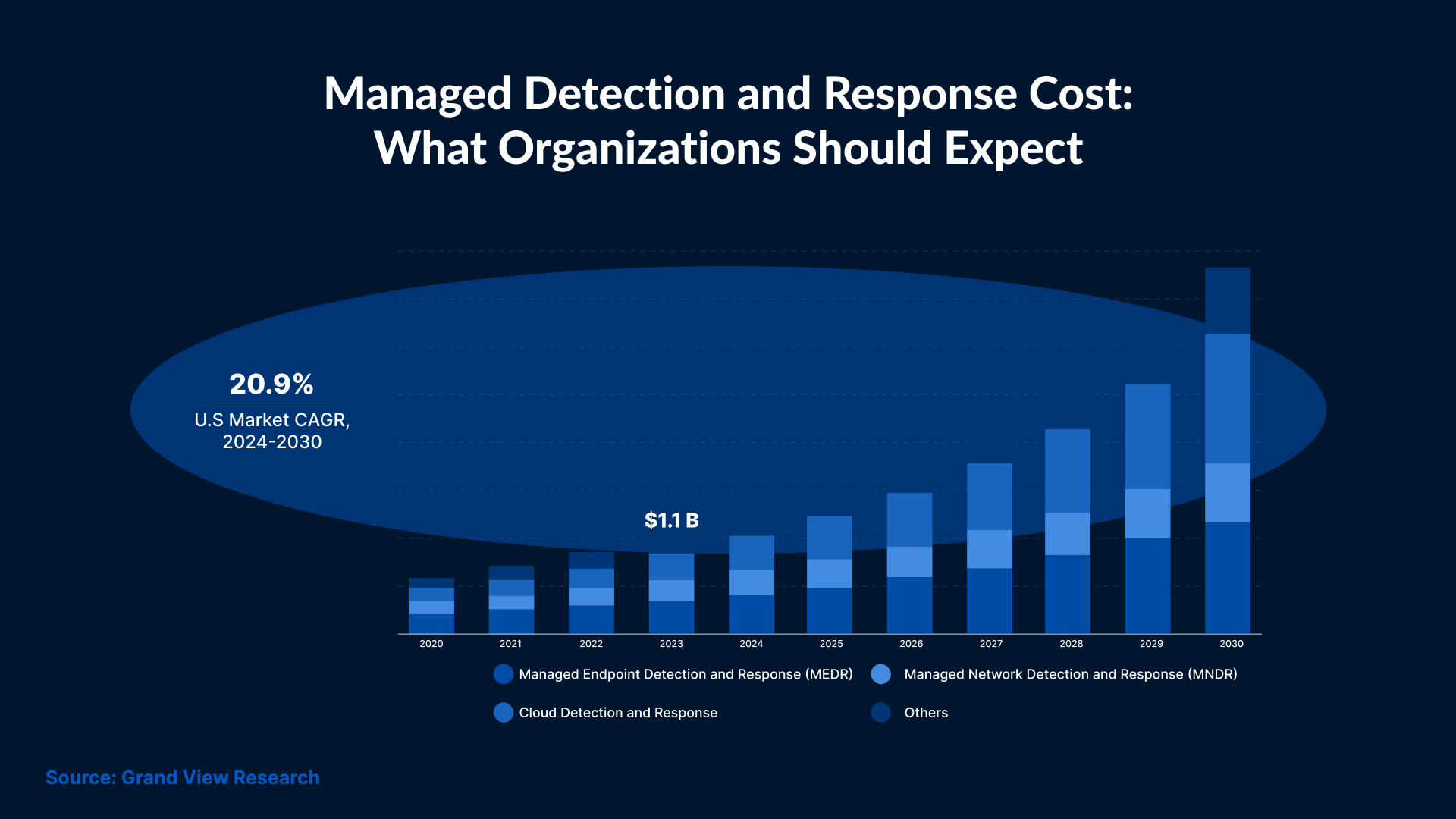
- The market size of Managed Detection and Response will grow at a CAGR of 20.2% and is projected to reach to $8.34 billion by 2032. (Fortune Business Insights)
- As of 2024, around 40% of midsize enterprises had adopted MDR as their sole managed security service.
- The BFSI sector is a primary adopter of MDR, accounting for 29.1% of the market share in 2024. (Mordor Intelligence)
Introduction
For many organizations, managed detection and response has become an essential service. With threats getting more deceptive and spreading at a faster rate, most IT/security teams are unable to investigate every suspicious event due to a lack of time or resources. This is why many organizations explore MDR, but they often don’t know how much managed detection and response would cost.
It's not easy to determine the cost, as every organization has its own requirements. Some are interested in having a small number of endpoints monitored, while others want to include cloud workloads, remote users, and identity systems as well. Most organizations want a comprehensive service at a reasonable cost and without any contract-related surprises. Let’s discuss in detail the process behind the managed detection and response cost and things that influence it to help you make an informed decision.
What Is Managed Detection and Response?
It involves a service designed to monitor your organization’s network and identify, verify, and respond to any potential threats that may arise. MDR vendors collect security events from endpoints, cloud systems, and network devices, in some cases. These events are then sent to analysts for review and assessment to determine if any malicious activity has occurred. The analyst will then take action if something is determined to be malicious.
What sets MDR apart from traditional monitoring tools is its ability to deliver an active response. Here, the provider won’t seek your permission before acting against any serious threat. They take steps to contain the threat or block harmful activity. Alternatively, they will simply guide your team on the next steps to take. The level of involvement is one of the reasons why organizations carefully compare the MDR cost.
How MDR Pricing Models Work
Every vendor presents the managed detection and response cost differently, but most offers fall into a few common models. Let’s discuss these models one by one:
Per-endpoint Pricing: This is one of the most familiar approaches used by the providers. In this case, they charge the same amount for each system that requires monitoring. It is a model for teams that already know their device count and want flat billing.
Per-user Pricing: This model works for organizations that have too many remote workers or devices connected to a single user. In this case, the billing isn't based on the assets, but on the employee count using the environment.
Tiered Service Bundles: Some providers use bundles that include different levels of monitoring, response depth, and data coverage. A basic tier may contain alert triage and response actions, whereas a higher tier may include full actions and investigation support.
Event or Log-Based Pricing: You can also find this type of model, where the charges are based on the amount of data ingested. The model works very well in organizations that are running multiple cloud-based systems that generate logs throughout the day.
Custom Model: Large enterprises often opt for a custom model that suits their environment. These contracts are based on the organization’s environment size, compliance needs, or integration requirements.
Typical MDR Cost Ranges
Managed detection and response costs vary according to factors like coverage, response depth, and environment size. However, most MDR services fall into similar price ranges.
Several vendors provide per-endpoint pricing that generally covers the same range. Typically, small and mid-sized organizations would often fall within that category while tracking average workstation and server numbers. Some may require more coverage for cloud workloads or identity platforms, for example, even though those additional elements may increase the price toward the higher range.
Many large organizations with annual contract values that cover hundreds or thousands of endpoints and various monitoring layers. They will almost always opt for dedicated analysts or additional hunting capabilities because their threat environment is large and complex.
While no definite number exists for each environment, a pattern emerges in which small organizations pay significantly less than large and distributed networks that encompass cloud systems, multiple layers of security, and remote staff. The main point here is that MDR pricing is flexible. Providers can design their offers according to the requirements of organizations.
Key Factors That Influence MDR Cost
The final cost of MDR depends on several variables. Let’s find out what those are:
Endpoints: This is the first factor affecting the MDR pricing. The price increases when an organization chooses to have a larger device count, as it increases the monitoring workload.
Coverage Depth: The type of coverage is another factor. Some teams want basic detection support, while others want active response with in-depth investigations and continuous threat hunting. More involvement from the provider usually increases the cost.
Cloud Coverage: Many organizations are now relying on platforms like AWS, Azure, or Google Cloud, and it takes additional tools or integrations to monitor these systems. This can increase the overall service cost.
Type of Response: The type of response you are expecting from the provider will impact the pricing. If you anticipate more active involvement from them during an incident, then the service becomes more involved, which increases the cost.
Compliance Requirements: These are a significant factor too, as financial or healthcare industries may have a need for stricter reporting, detailed forensic support, or longer log retention notes. Any of these requirements would impact the operational effort of the provider, making the service more expensive.
Other variables include the complexity of onboarding or tool integration and existing security stack maturity. These factors can impact how your provider structures their offering.
What’s Included in Standard MDR Pricing
Most MDR plans would share a common set of features. Here is what you are most likely to find in standard MDR pricing:
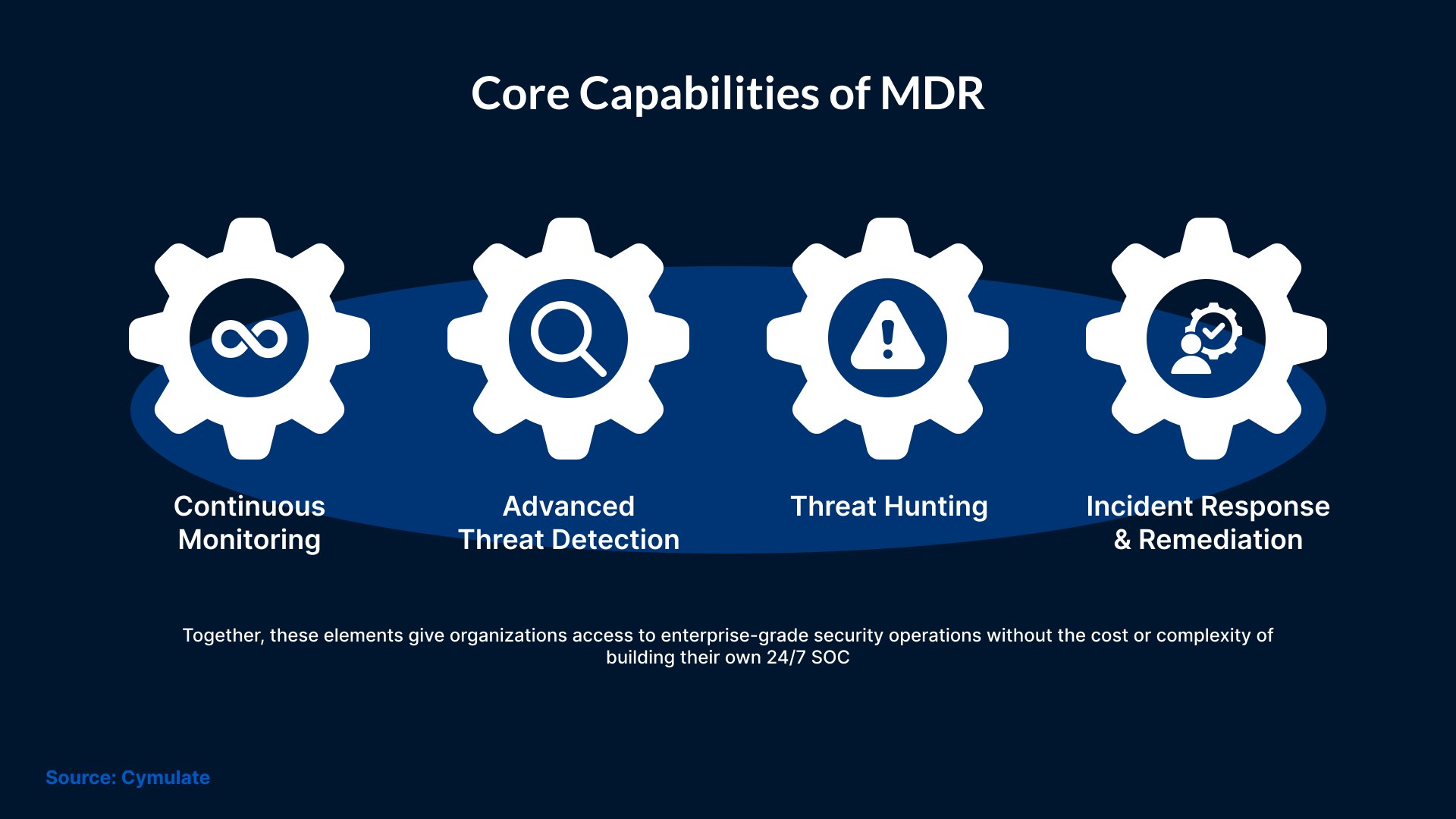
Continuous Monitoring: This is used for monitoring suspicious events and reviewing alerts in real-time.
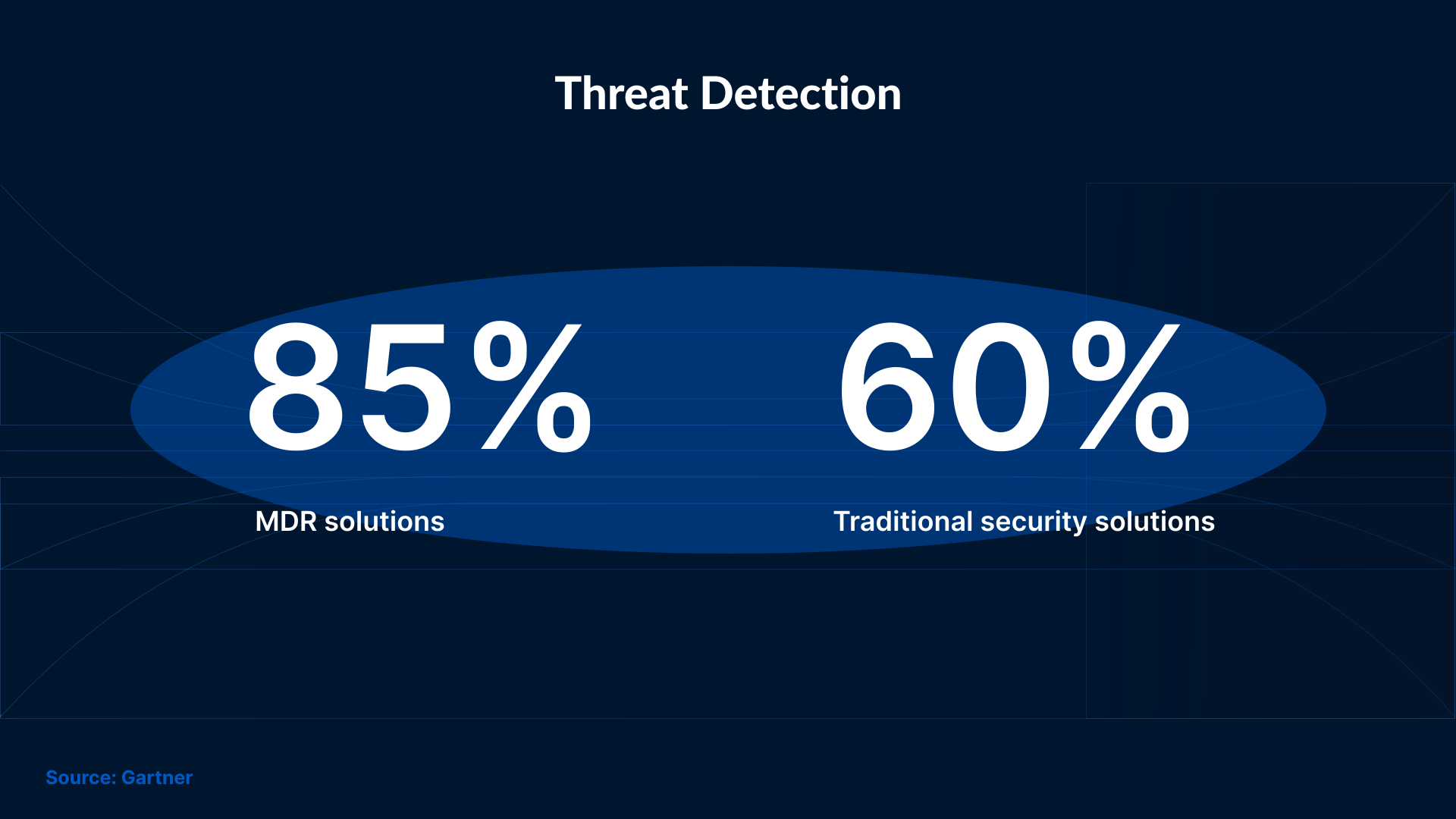
Threat Detection: In this, the analysts look for unusual patterns and then validate whether an alert is legitimate or a false positive.
Investigation Support: This also appears in almost every MDR service. Here, the provider, upon noticing suspicious activity, examines the details of the event to understand its impact.
Response Actions: This feature is also commonly found in standard plans. It allows providers to take action against malicious activity or, conversely, enables your team to walk through the steps of handling the infection to ensure containment.
Threat Hunting: Many providers offer this service as well. It helps find hidden threats that automated tools might miss. It also serves to improve early detection and mitigate risk in the long run.
Reporting and Insights: This is usually part of the package. The reports help organizations put together the timeline as to what occurred, why it was important, and how they can better secure themselves moving forward.
Hidden or Overlooked MDR Costs to Watch For
Not every MDR package lists every cost upfront. Additional costs may arise later. Let’s discuss what these costs might be:
Log Ingestion: If your environment produces a large volume of logs, the provider may charge extra to process and store the data.
Advanced Incident Response: This can also be included as an additional cost. Some MDR plans only provide basic containment, meaning if you would like full forensic analysis provided or additional response hours, you will have to pay for those beyond the standard plan.
Cloud Workload Monitoring: At times, this requires add-on modules. This depends on how many platforms you use and how deeply you want them monitored.
Compliance Monitoring: This is another area that may increase the cost. Teams handling sensitive financial or medical information generally need to keep a more detailed record.
These expenses are generally not hidden intentionally; they appear when the environment has grown, or the organization has expanded the monitoring scope. If you can understand the costs beforehand, you can prevent surprises later.
MDR vs Building an In-House SOC: Cost Perspective
Organizations often compare MDR pricing with the cost of building their own security operations center (SOC). There can be a huge difference between the numbers.
Having an in-house SOC would require significant manpower, specialized tools, and considerable time. You need to hire analysts, train them, and retain them in the long term. Security tools also require configuration, maintenance, and updates.
Whereas in MDR, you will be allotted an external team that has the tools and experience required to monitor your environment. You just need to pay for the service instead of building everything on your own.
Nevertheless, some organizations would still prefer to maintain an internal SOC, perhaps because of their strict data handling requirements. The benefit of an MDR service for another organization with a mid-sized team is that it is easier to budget for and deploy more rapidly. It is certainly better to go with a service that you can forecast your costs with when there are limited resources.
How to Estimate MDR Cost for Your Organization
You can build a clear estimate of the MDR price even if you do not have the exact price from the vendor, based on looking at a few items internally:
- To begin the process, identify your endpoint count. Make a list of servers, workstations, and other devices you want to have monitored.
- Next, you should look at your cloud systems. If you are using multiple platforms, simply note the platforms that hold sensitive data or business functions.
- After that, identify your response expectations. Does your team want the provider to guide them, or does your team want full containment and action assisted by the analysts?
- You can also review any compliance requirements. In case you need extended log retention or more detailed reports, the provider’s team will need extra time to meet those demands.
- Finally, you need to consider existing tools. Some MDR providers can integrate with what you already use; others would require their own platform. If you know this in advance, then it can help you understand the overall cost picture.
Conclusion
The cost of managed detection and response will always vary based on differences in organizations' requirements. Where some organizations would need basic monitoring, other organizations may want deeper response coverage or cloud-focused visibility. With an understanding of the cost models, cost ranges, and factors influencing those costs, you can make better decisions for your security budget. SafeAeon offers custom solutions for MDR that are tailored to the organization's requirements. Their support representative can help assess your organization's requirements to suggest a service built for your current needs and able to scale with you in the future.