

Key Takeaways
- According to a study by the University of Maryland, a cyber attack happens every 39 seconds.
- The cost of cybercrime worldwide will reach $23 trillion by 2027.
- Cyber attacks driven by Artificial Intelligence (AI) are on the rise, such as phishing, vishing, ransomware, and supply chain attacks.
Introduction
Cybercrime is growing at a rapid pace, and ransomware has become one of the most significant threats to businesses today. These attacks spread quickly across networks using strong encryption and target companies of all sizes.
Security leaders, such as CISOs and CIOs, now carry far greater responsibility. They need to protect digital assets, manage crises, and maintain business operations even in the event of an attack.
Ransomware alone is expected to cost businesses over $20 billion this year and could reach $250 billion by 2031. One of the biggest known cases involved CNA Financial, which paid $40 million following a single ransomware attack.
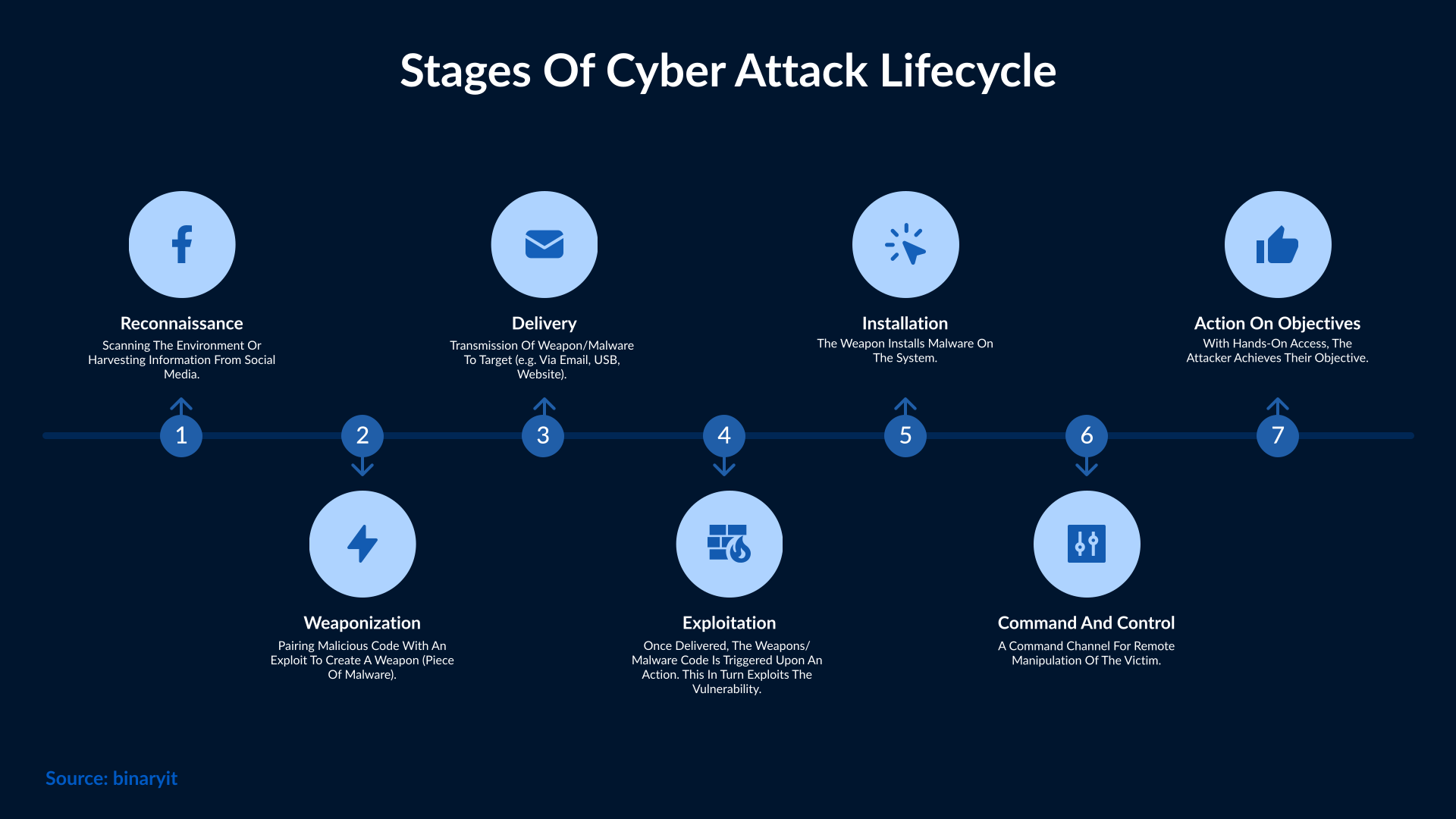
And ransomware is only one threat. Companies also face DDoS attacks, insider threats, social engineering, and advanced persistent threats (APTs), all of which can disrupt operations and damage a reputation within minutes. Today, organizations don’t just want to know how to survive a cyber attack, they want to ensure that their business can continue to run smoothly during and after the attack.
Why You Need to Prepare for Cyber Attacks
Cyberattacks are no longer rare. Every organization, regardless of its size, holds valuable data that criminals are interested in. They use sophisticated methods to attack and steal that data. It’s not just the attack that organizations have to deal with, but also the recovery process, because it can result in huge financial losses.
The impact of an attack can be reduced with proper preparation. Proper preparation helps you detect intrusions early and limit their impact. It also makes system restoration easier and helps avoid costly penalties.
Solid preparation can make the difference between a quick recovery and a complete shutdown.
How to Prepare Before a Cyber Attack
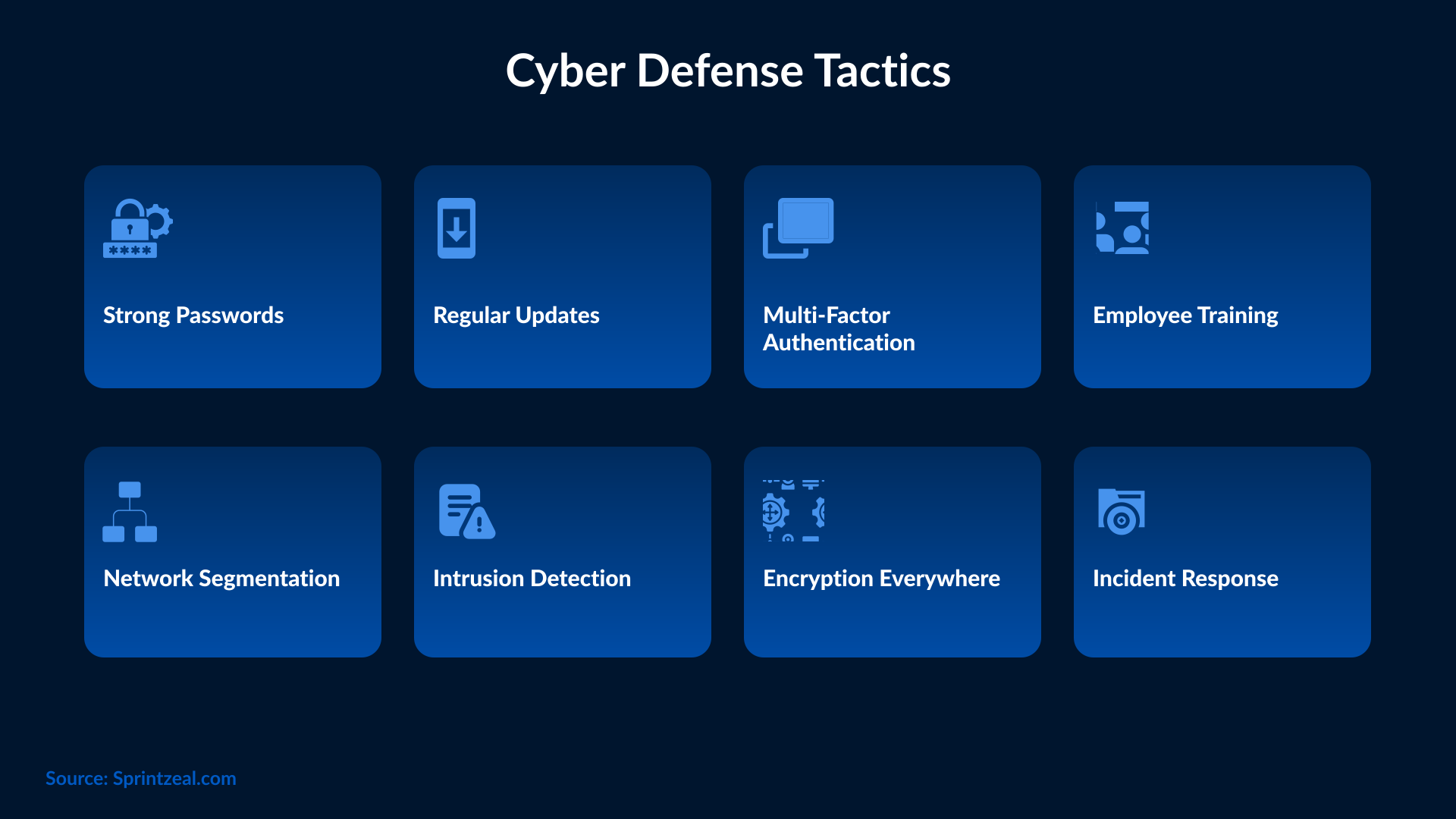
Here are seven strategic actions that can make the organization and work of network security managers safer to face the numerous threats of cybercrime:
1. Create a "Safety First" Culture
It is necessary to create a robust and distributed digital immune system through a radical reengineering of employee behavior and the implementation of effective safety policies that are routinely reevaluated and regularly tested.
Employees pose a significant challenge for the Chief Security Officer (CSO), as most of them possess only a basic understanding of cybersecurity best practices. Without continuous training, knowledge testing, and awareness, staff behavior is one of the biggest security risks facing the company.
According to the 2025 Data Breach Investigations Report by Verizon, the human element remains a major factor, contributing to approximately 60% of data breaches. It happens through errors, social engineering, and misuse.
2. Create a Continuous Safety Education Program to keep personnel up to date
A "security first" culture requires that all its participants understand and value the concept of threats to network security. However, this culture will only achieve the desired result if employees are systematically trained to ensure that their knowledge is updated.
3. Implement a Zero Trust Model Across the Organization
Well-trained staff and a monitored environment are crucial to the success of any company's protection, but without a Zero Trust environment, security will be inherently weak.
The Zero Trust model is a strategy designed to mitigate threats to network security, which, at its core, is based on trusting no one or anything within your network. This means that access to the network is never granted without knowing the exact origin of the entrant.
Additionally, the use of micro-perimeters and monitoring of access at various points in the network ensures that unauthorized users are unable to move laterally through the network. For a Zero Trust model to work, deep inspection and analysis of traffic is required to identify threats to network security and block what is essentially the blind spot in the Zero Trust model.
4. Implement SSL Inspection and Visibility
The key factor in monitoring the implementation of a Zero Trust model is the use of Transport Layer Security (TLS) / Secure Sockets Layer (SSL) inspection solutions that decode and analyze encrypted network traffic to ensure compliance with privacy policies and standards.
TLS/SSL inspection enables the detection and removal of malware payloads and suspicious communications on the network, prevents the exfiltration of controlled data, and enables the Zero Trust model to fulfill its mission, i.e., to provide rigorous protection for networks against internal and external threats.
5. Regularly reassess and test your distributed denial-of-service (DDoS) attack defenses
To detect a distributed denial-of-service (DDoS) attack, it is crucial to conduct routine testing against a checklist of expected performance configurations and standards, as well as random security integrity testing. Additionally, all test scenarios should be reviewed by your solution and logged to verify that your instrumentation and logging are functioning as expected.
Network performance tests should be run at least daily because a DDoS attack is not always at full range, and it can also be low-volume, designed to reduce but not completely remove connectivity.
6. Ensure that all incoming and outgoing network traffic is protected using SSL/TLS encryption
When users' computers connect to network resources over the Internet, SSL/TLS inspection creates a secure channel. There are three components to this: encryption, authentication, and integrity checking. Encryption hides data communications from third parties that attempt to eavesdrop. At the same time, authentication ensures that the parties exchanging information are truthful, and together, ensure that the data has not been compromised.
If unsecured traffic is allowed, then it should be limited to specific secure network segments and closely monitored.
7. Establish Disaster Recovery Plans and Validation Testing
A key part of a disaster recovery plan involves backups. However, it is surprising how often restoring from backup systems in real-world situations does not perform as expected. For example, it is essential to understand which digital assets are included in backups and which are not, as well as the time required to restore the content. Additionally, it is crucial to plan the order in which resources are retrieved and determine the startup window.
Testing backups should also be a routine IT task with specific validation checks to ensure a recovery is possible.
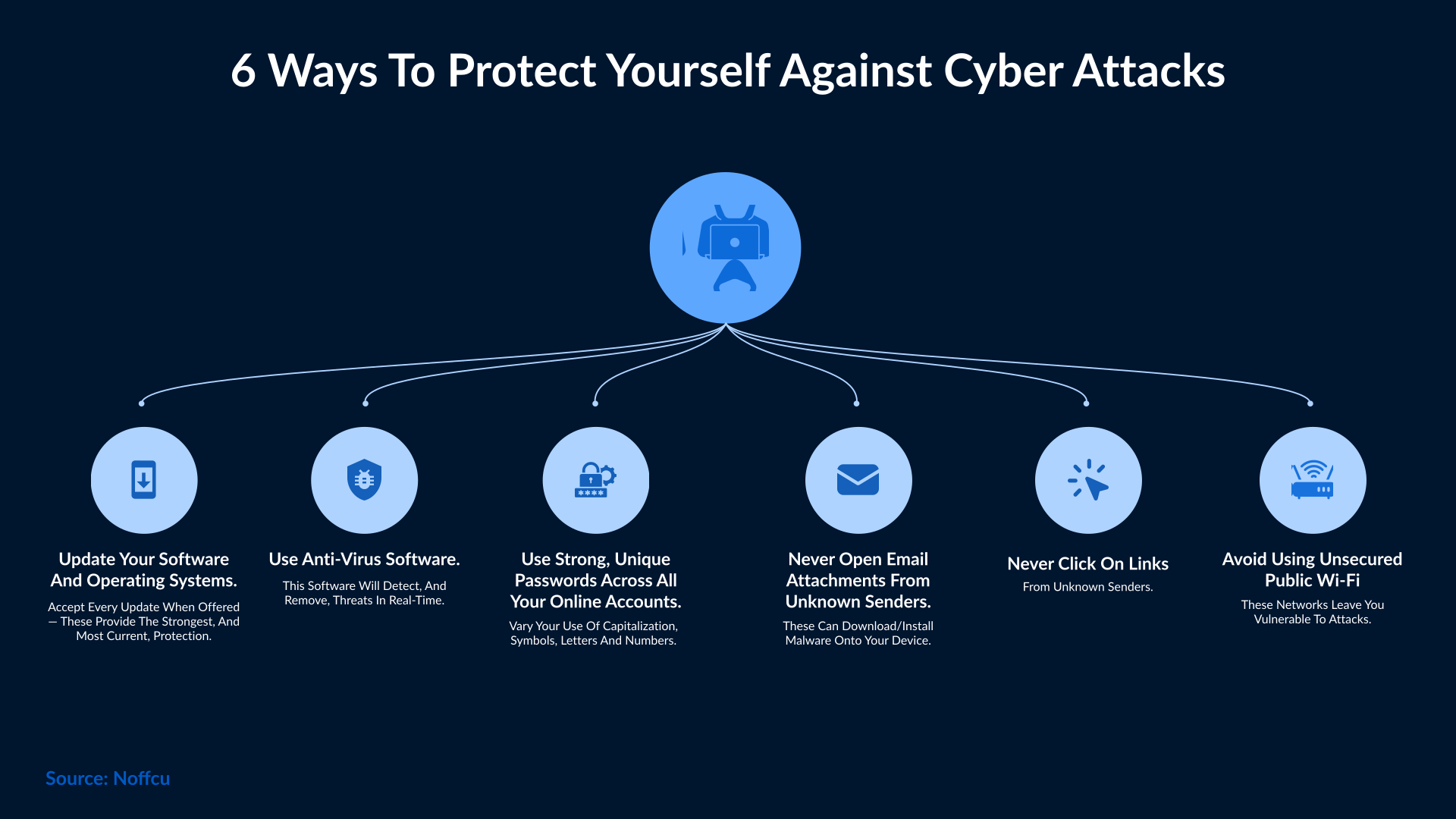
Preparation is not a one-time task; it’s an ongoing process that defines how to survive a cyber attack successfully. Run drills and vulnerability scans regularly to stay ahead of cyber threats.
What to Do in the Middle of an Attack
When your organization experiences a cyberattack, knowing how to respond during a cyber attack becomes critical. First, everybody must stay calm and follow a clear plan to minimize the damage. Here are the steps you and your colleagues must follow:
Detect and Contain: The moment you detect any unusual activity, isolate affected systems. Disconnect all the compromised systems from the network. Don’t reboot or wipe the systems, as that could delete valuable evidence.
Communicate Internally: The first step after confirming the attack is to notify your security team and leadership. Then, inform the employees about the situation so that they don’t panic or spread misinformation.
Engage the Right Experts: Contact your cybersecurity or forensic team to conduct a thorough analysis of the breach. If you have cyber insurance, make sure to notify them within the required timeframe.
Inform Stakeholders: Communicate clearly with customers and regulators about the cyberattack. Provide clear and honest updates, as it will protect your reputation.
Taking quick, organized action is the most effective way to control the situation and improve your chances of surviving a cyberattack.
Bouncing Back After a Cyber Attack
Following the right steps during a cyberattack helps you recover more effectively. The goal is to restore systems safely and rebuild trust in customers and partners. Here’s what you need to do to bounce back after a cyberattack:
Data and System Restoration: Confirm that every endpoint is clear before you reconnect systems to the main network. Use verified backups to restore lost or encrypted files.
Business Continuity: Activate your continuity plan to ensure all vital operations continue running smoothly. This is usually done through alternate servers or cloud backups. Sometimes, it is done manually until the systems are fully restored.
Reputation and Trust: Be honest and transparent with your customers and partners. Explain what happened, what steps you took, and what you will do to prevent future incidents. Companies that communicate with honesty regain customer confidence much faster.
Review Financial Impact: The cyberattack must have created a significant financial impact on your organization, so ensure that you track all associated expenses, including downtime, recovery, and service loss. This data helps plan future budgets and supports the need for better security measures.
Lessons Learned from a Cyber Attack
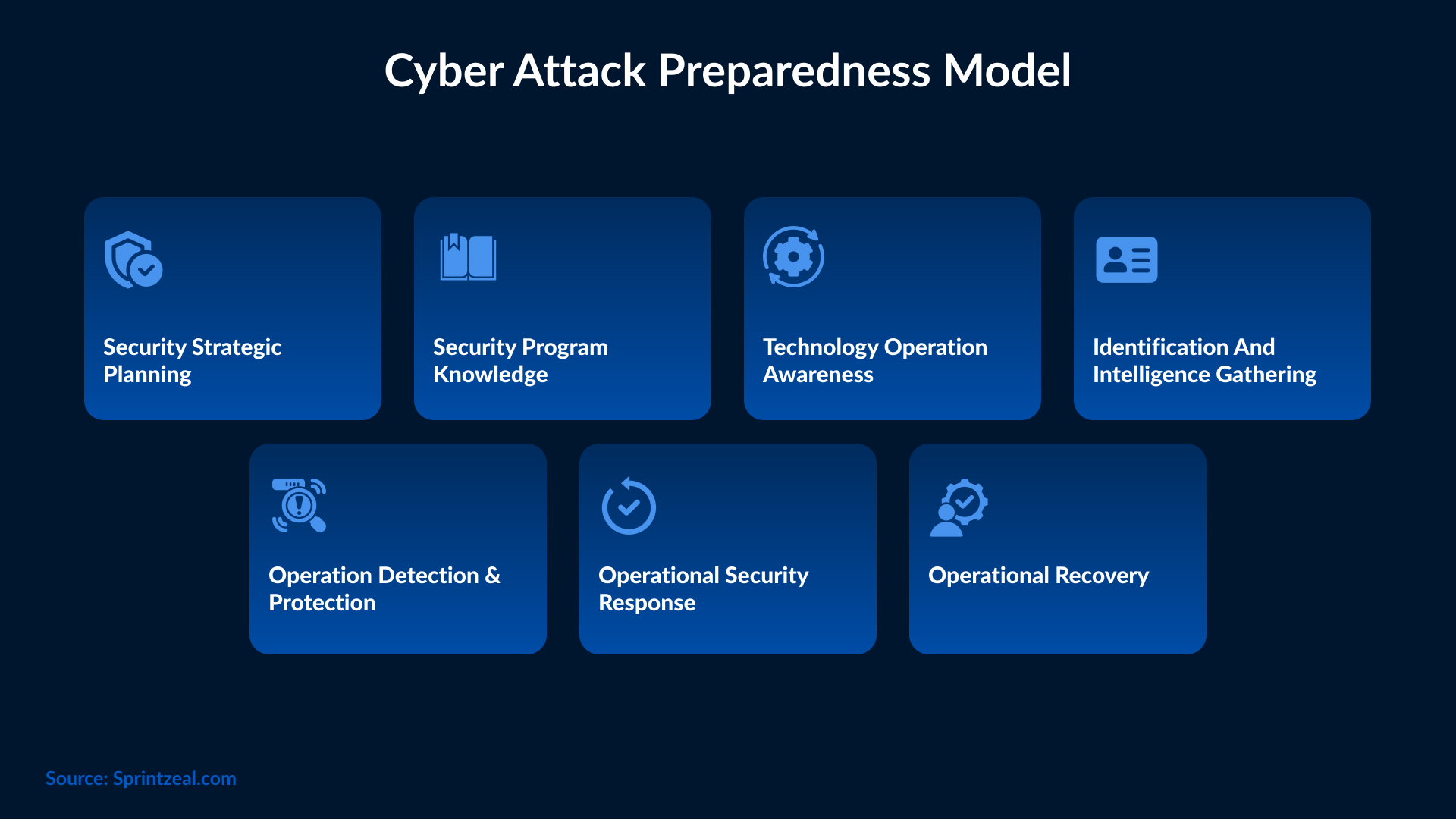
Cyberattacks occur because attackers have found and exposed weaknesses in your organization’s IT environment. It’s important to learn from such incidents to enhance your hardware, software, and cloud environments. Start by adopting a Zero Trust approach combined with TLS/SSL inspection to build a strong security posture and truly understand how to survive a cyber attack long term. These measures, along with continuous improvement, will help your organization face emerging threat actors with greater confidence.
Your Quick Cyber Attack Survival Checklist
Here’s a simple checklist to guide you through what to do before, during, and after a cyberattack.
- Identify your critical systems and keep their updated backups.
- Create and test an incident-response plan.
- Train employees to recognize phishing and protect passwords.
- Apply the Zero-Trust model and enable MFA everywhere.
- Run vulnerability scans and DDoS tests on a regular basis.
- Have the contact details for your legal, SOC, and insurance teams readily available.
- Communicate openly with stakeholders in the event of an incident.
- Review, update, and test your plan after every event.
Conclusion
Cyberattacks are unavoidable, but their damage doesn’t have to be. Your organization needs to invest in layered security and employee training to recover more quickly and effectively.
SafeAeon helps companies enhance their security measures to detect cyberattacks before they occur or minimize damage in case attackers penetrate their systems. The goal is to strengthen organizations so that they not only survive a cyberattack but also continue to grow through it.