


Key Takeaways
- In 2025, reports indicated that over 16 billion credentials were exposed across multiple data leaks on the web. (Cyber News) In 22% of the breaches, compromised credentials were an initial access vector, showing the increasing risk of identity abuse attacks. (Verizon)
Introduction
Login abuse is one of the common types of cyberattacks. It happens quietly, often showing up as a spike in failed sign-ins or customers locked out of their accounts. On the surface, these events look routine. In reality, they are usually early signs of automated attacks targeting login systems.
This pattern is commonly known as credential stuffing. In this method, attackers use automation to test large volumes of stolen usernames and passwords across multiple services. These automated login attempts blend in with daily user activity, which makes them hard to detect.
Blocking these attacks is not the only challenge for most organizations. They have to deal with heavy-handed controls, which disrupt real users. Weak defenses are another issue organizations need to address, as they can lead to account compromises and deal a significant blow to a brand’s reputation.
This blog discusses credential stuffing in detail, along with steps on how to reduce risk without creating friction for legitimate users.
What Is Credential Stuffing and How It Works
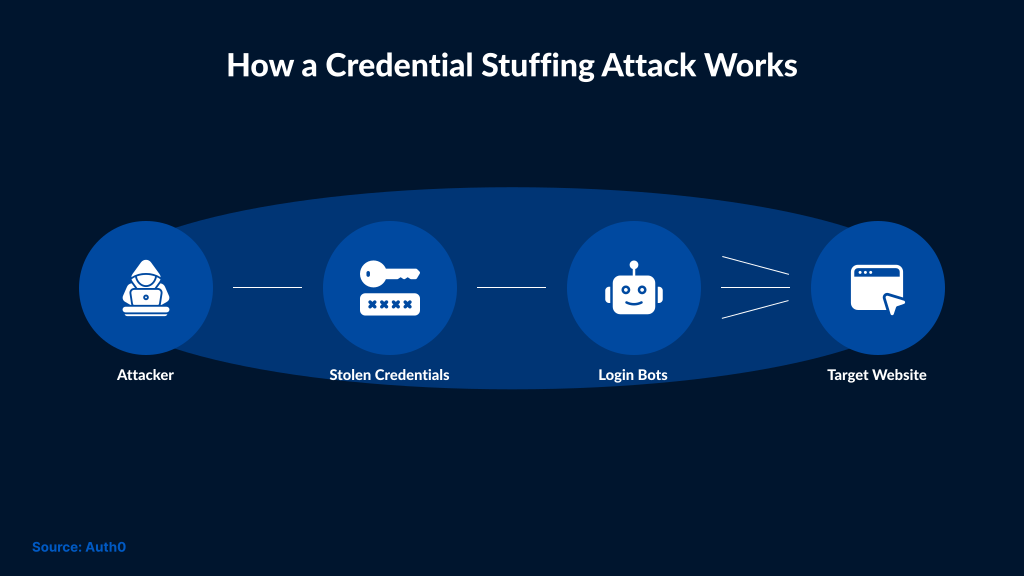
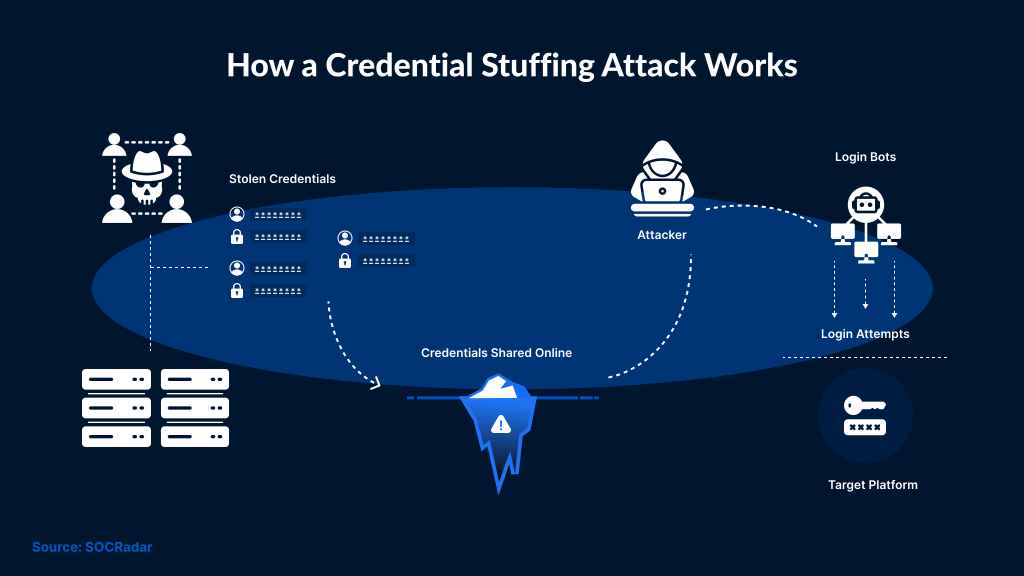
Credential stuffing is a login attack that uses exposed usernames and passwords from data breaches. Attackers assume that people use the same credentials on multiple sites. Based on that assumption, they start using automation. Attackers feed large lists of stolen credentials into tools that attempt to log in to several apps at once. The success rate in this process is very low, yet enough to cause damage.
Credential stuffing looks similar to legitimate user activity, which is why it is hard to spot. Here, the username and password are valid, and the traffic also comes from distributed sources. This helps the attack to blend in with genuine user behavior. The activity often appears as repeated failed logins from different users.
Credential stuffing is effective because it does not depend on breaking security controls. It intends to bypass those controls using valid credentials at scale. Traditional defenses often struggle to stop these attacks.
Why Credential Stuffing Leads to Account Takeover
Credential stuffing becomes dangerous the moment it succeeds even once. Attackers do not need deep access to victims’ accounts. A single valid login is enough to open the door. Attackers are free to access any information and perform actions without immediately raising suspicion.
What happens after a successful login?
Once attackers successfully log in, they start looking for saved payment methods and personal information. They want to gain access to anything valuable, be it loyalty points or access to connected services.
Their activities won’t trigger any alerts. The account can remain compromised for days or weeks without being noticed. By the time any suspicious activity is confirmed, damage has already been done.
Attackers not only affect an organization’s operations and security, but also customers’ trust and brand reputation in the long term.
The Business Impact of Credential Stuffing
Credential stuffing does not remain contained within the login page. Once the attacker has access to an account, its effects begin to show across the business in ways that are hard to ignore. Here are some of the visible impacts of credential stuffing on a business:
- Operational Impact: Support teams start receiving more lockout requests. Fraud teams deal with suspicious activity linked to real accounts. Engineering teams spend time tuning controls that were not meant to handle sustained automated login attempts. All these issues add to the cost, even when there is even without no confirmed breach.
- Financial Impact: When attackers take over an account using credential stuffing, they can abuse promotions or make unauthorized purchases. Businesses can try to recover losses, but the effort required to investigate and reverse them is significant. For subscription services, compromised accounts can result in cancellations that never return.
- Reputational Impact: In the whole scenario, customers don’t usually blame attackers; they blame the service. Issues related to access abuse or compromised accounts undermine user trust. And this affects the brand reputation. Once confidence is lost, it is difficult to restore.
It becomes even worse for MSPs and service providers. If a single client struggles with credential stuffing, then it can quickly turn into multiple incidents across similar environments. The same pattern continues to repeat without clear visibility and control, putting the entire customer base at risk.
Credential stuffing should not be considered a minor authentication issue. It can affect business operations, increase financial risk, and weaken trust over time.
Why Traditional Defenses and MFA Fall Short
Many organizations add more controls at the login layer to avoid credential stuffing. These controls mostly include:
- Rate Limits
- IP Blocking
- CAPTCHAs
- Multi-factor Authentication (MFA)
They are often the first line of defense, which can slow attackers down, but cannot stop them for long.
Another problem with these tools is that they are static. Attackers adjust their tools to avoid obvious limits or rotate IP addresses. They also add deliberate delays between login attempts to stay under thresholds. Overall, these tools look effective on paper, but they don’t work as efficiently in real environments.
MFA is useful, but it is not a complete fix. Users get frustrated when MFA is triggered frequently. In frustration, people usually approve requests without thinking, which leads to MFA fatigue. At that point, attackers no longer need to bypass MFA. They only need users to cooperate once.
Strict security controls are also not fully effective, as they often block legitimate users in normal situations. This increases support work and impacts trust.
The main issue is not the security controls. They are useful only if they operate with context. These tools react to individual events, not patterns, which allows attackers to work around them and pose challenges for real users.
Stopping Credential Stuffing Without Frustrating Real Users
The goal is not to challenge every login, but to understand which ones need attention.
Legitimate users create patterns, as they log in from familiar devices and follow similar timing. They also interact with applications in predictable ways. On the other hand, the behavior of bots seems to be rushed and inconsistent. When security tools detect these differences, they become more accurate without becoming intrusive.
This is where adaptive authentication matters. In this, the system decides whether to approve a login based on risk. A low-risk login can pass through without interruption, while a higher-risk attempt can trigger additional checks.
This helps reduce unnecessary MFA prompts. When authentication is adjusted based on behavior changes, users won’t be overwhelmed by repeated requests.
It is possible to address credential stuffing by analyzing patterns over time rather than reacting to every failed attempt. When defenses adapt to behavior, they can stop bots more effectively and spare real users unnecessary authentication challenges.
How Adaptive Authentication Stops Login Bots
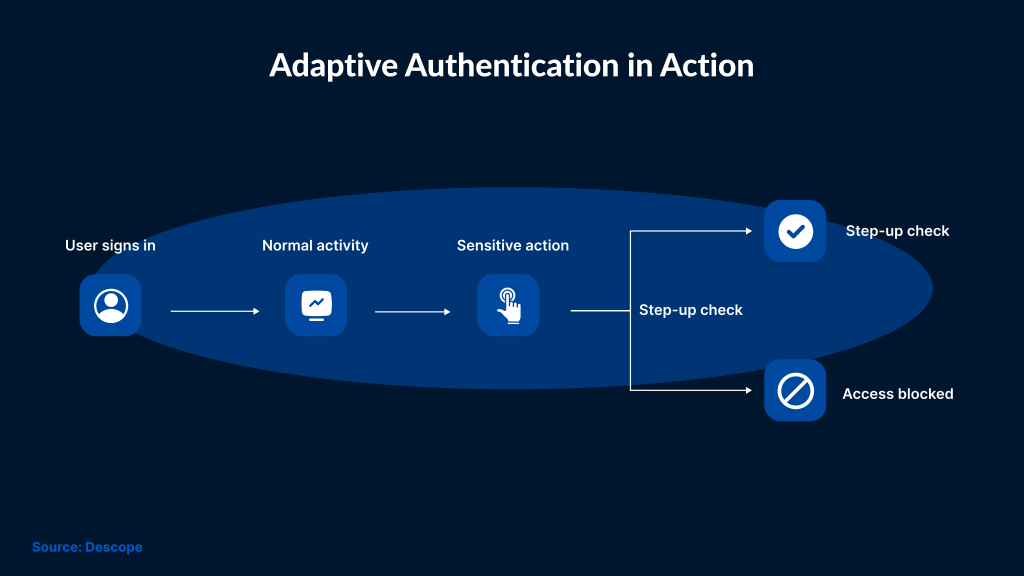
Adaptive authentication does not treat every login the same. It looks at context and behavior to decide whether extra checks are needed.
In a credential stuffing attack, automated login attempts follow patterns that are different from normal users. The speed of requests and the way sessions are created will appear abnormal. Even the lack of natural interaction will stand out if analyzed over a period. Adaptive authentication uses these signals to flag risk early, at times before an account is compromised.
This approach helps real users by avoiding extra steps unless something actually looks wrong. The absence of blanket enforcement will reduce the tendency to approve repeated requests.
Adaptive authentication does not aggressively block traffic. It just understands the behavior and responds when required. This makes it one of the most effective ways to stop credential stuffing without adding friction for legitimate users.
Conclusion
Credential stuffing is a lot more than just a login issue. It can significantly impact operations and users' trust. Adding more controls or implementing additional steps won’t stop this attack. The real solution to this problem lies in understanding behavior and responding only when risk is real.
Organizations can block automated attacks by focusing on context and adaptive authentication. It minimizes disruption for legitimate users. Using this balanced approach reduces account takeover risk while preserving the login experience.
SafeAeon supports teams by monitoring login behavior and helping them respond when something looks wrong.