

Key Takeaways
- The zero trust security market is growing at a 16.7% CAGR and is expected to reach $124.5 billion in the coming years. (Zero Threat)
- A 2024 Gartner survey found that 63% of organizations worldwide have already adopted a zero-trust strategy.
- Only 56% of organizations grant access based on specific roles or needs, while 46% rely on group-based access controls.
Introduction
Traditional security concepts are no longer relevant since data breaches are more complex and destructive than ever. Perimeter protections are no longer sufficient for organizations since attacks can originate from both within and outside the network. Modern cybersecurity problems may be solved with zero trust data protection, which makes sure that no system, person, or device is trusted by default. Sensitive data is protected at every stage by this proactive strategy, which also reduces attack surfaces and stops lateral movement.
Fact: In 2023, the average cost of a data breach was $4.45 million, the highest amount ever recorded, according to IBM.
By putting zero trust principles into practice, companies impose least privilege access, rigorous identity verification, and ongoing monitoring. A crucial component of this method is microsegmentation, which separates networks into discrete sections to reduce possible harm from cyberattacks and stop illegal access. Data-centric security improves this paradigm even more by giving sensitive data protection a first priority, whether it is in transit, on-premises, or in the cloud.
The Importance of Zero Trust in Data Protection
Zero trust is a must, not an option, since cybercriminals take advantage of flaws in conventional security frameworks.
Implicit trust is eliminated via zero-trust data protection, which lowers the possibility of external and internal threats. Businesses may greatly improve data security by combining multi-factor authentication (MFA), encryption, and microsegmentation. Zero trust, in contrast to traditional techniques, constantly checks each access request to make sure that only people with permission may access sensitive data.
In the current digital environment, data protection necessitates a no-compromise strategy. Businesses may protect vital assets, adhere to legal obligations, and remain resilient against cyberattacks by putting in place a zero-trust architecture. Because trust is a weakness that hackers take advantage of, zero-trust security is the way of the future.
How Zero Trust Data Protection Works
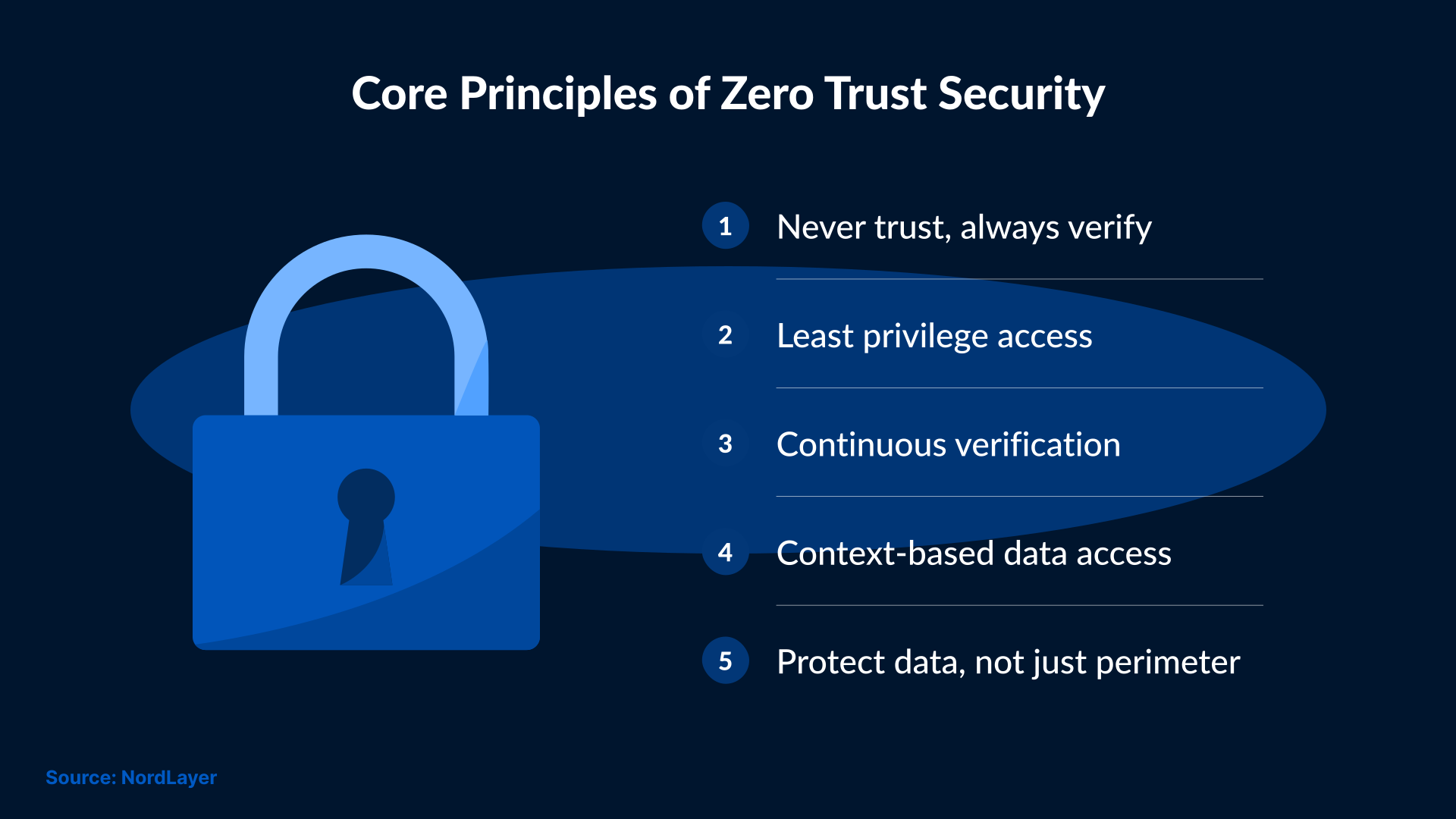
Never trust, always verify is the basic tenet of zero-trust data protection. All-access requests are presumed to be potentially harmful, regardless of whether they are for resources, data, or applications. This kind of thinking makes granular access restrictions, data-centric security, and stringent authentication necessary. Organizations mandate ongoing user, device, and network activity verification rather than depending on implicit trust.
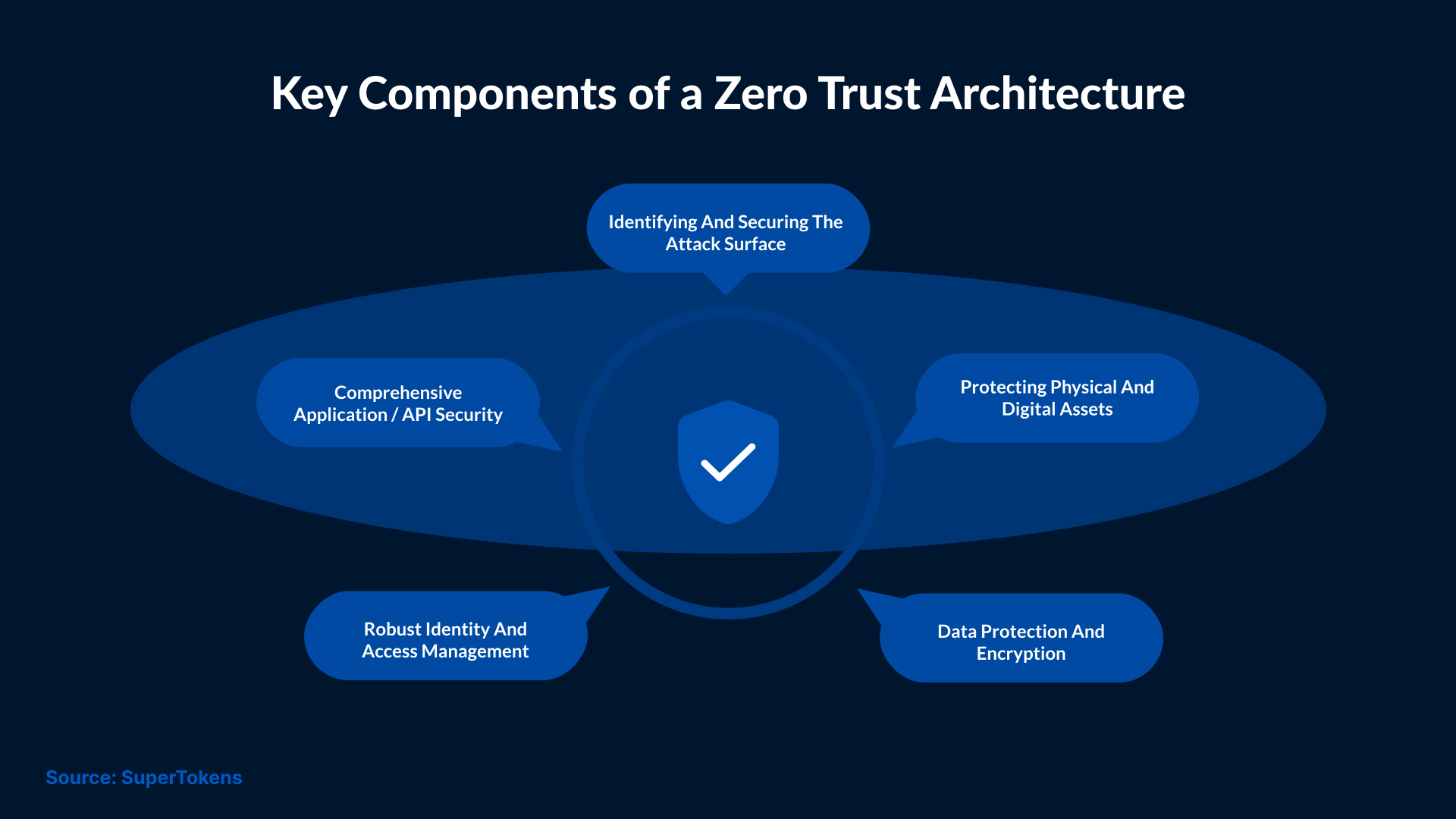
Core Elements of a Zero Trust Framework
The first step in creating a zero-trust security architecture is to identify sensitive information, important applications, authorized users, and safe data flows. It uses automation, AI-driven threat detection, and a policy control plane to manage security at scale, which is far more than what IT people can do by hand. Microsegmentation is essential for preventing lateral movement, which makes it impossible for attackers to roam freely throughout the network, even if they manage to get in.
Based on the NIST Guidelines, the Six Tenets of Zero Trust
Every computing service and data set is a resource: By treating each system, application, and dataset as a resource in need of security policies, security flaws are removed.
Secure Interaction in Any Setting: All data transfers must be encrypted and protected, whether they take place inside or outside the company network. Network location is not a guarantee of trust.
Fine-grained Access Controls for Each Request: To make sure that access is only allowed under very specific circumstances, users and devices must be regularly checked on a per-connection basis.
Policy-Based Determination of Access: Decisions about access are based on pre-established rules that consider behavioral characteristics, device health, user identification, and real-time risk assessments.
Continuous Monitoring and Security of the System: All systems must continue to be secure, according to organizations. Enforcing compliance and conducting ongoing monitoring are crucial.
Authentication that is Continuous and Dynamic: Instead of being a one-time occurrence, authentication is a continuous cycle of threat assessment, verification, and risk adaption.
Microsegmentation, data-centric security, and AI-driven automation are combined in zero-trust data protection to provide a proactive and robust defense against online attacks.
Implementing Zero Trust in Seven Steps
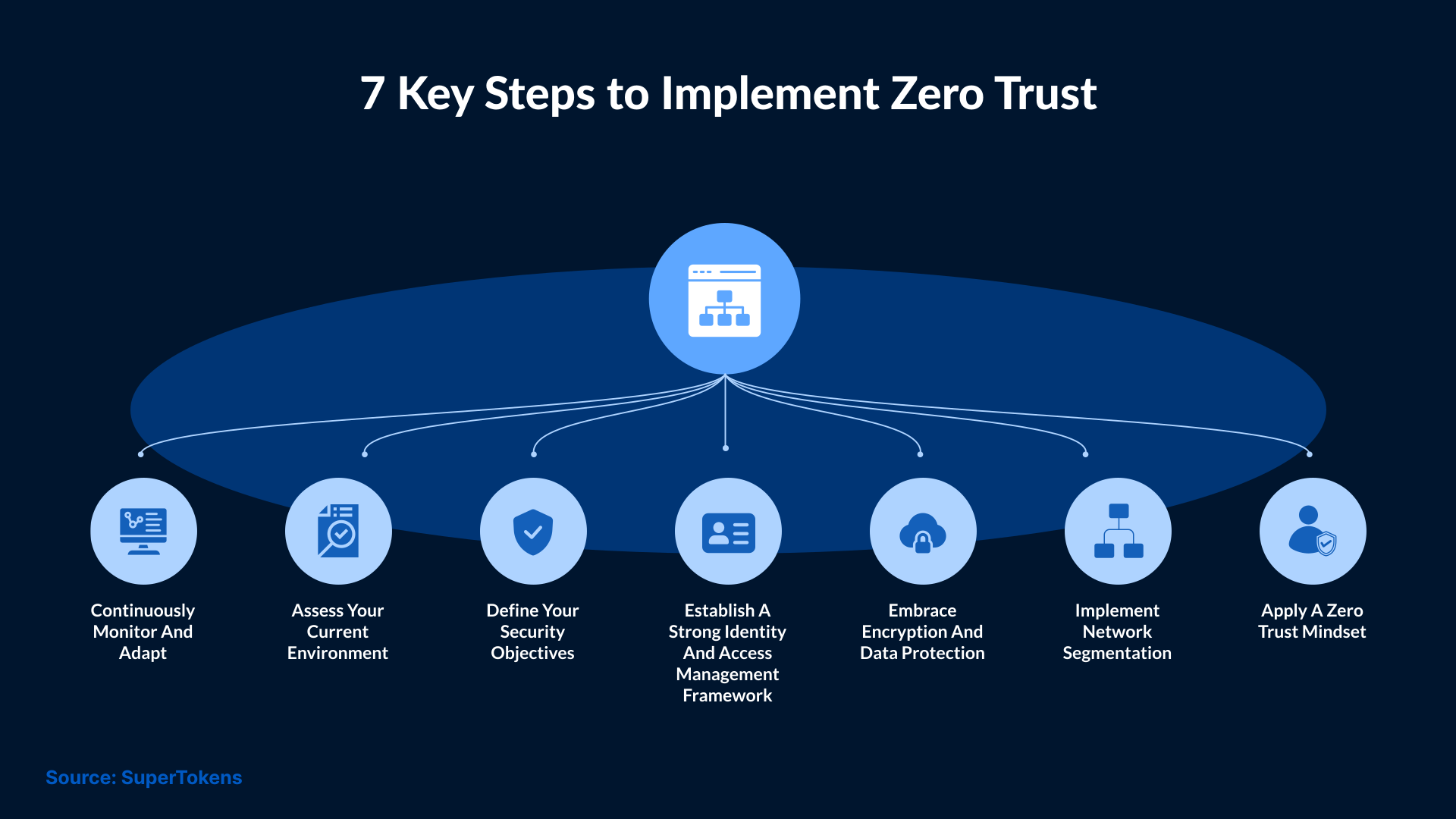
Zero-trust data protection is a continuous process that improves cybersecurity by getting rid of implicit trust rather than being a one-time solution. As a technical guide, businesses can use established frameworks like NIST, CISA, DISA, or NCSC rather than re-inventing the wheel from scratch. Zero trust should be introduced gradually so that partners, staff, and IT teams can adjust and the transition goes smoothly. It is crucial to have open lines of communication with stakeholders in order to address issues and ensure security solutions can develop with the company and changing threats.
Here is the procedure for a Successful Zero Trust Setup
Determine and Set Your Asset Priorities
Protecting sensitive data is the main goal of a zero-trust security method. Begin by outlining important assets, assigning sensitivity ratings, and assessing their degree of risk. This fundamental phase serves as the basis for your entire zero-trust approach.
Determine the Users and Access Needs
Strict access and identity management are required in a zero-trust approach. Organizations ought to record user data, implement least privilege access, and remove superfluous permissions. Only the data required for their responsibilities is accessed by users thanks to microsegmentation.
Create a Zero-Trust Approach
Create a security architecture that will efficiently reduce threats. When implementing zero-trust data protection measures, consider the infrastructure's complexity, budget, and IT capabilities. Adapt your approach to industry best practices and regulatory needs.
Track and Examine Access to Data
Track access trends using data-centric security techniques. Potential breaches may be indicated by suspicious abnormalities, such as illegal data extraction. Threat identification and reaction are improved by utilizing AI-driven analytics.
Diagram Traffic Dependencies and Flows
Find out how systems and users handle sensitive data. Only authorized connections can access certain databases and applications thanks to microsegmentation, which stops unwanted lateral movement.
Automate Procedures for Security
Automate security. To safeguard data while it's in transit and at rest, use encryption, MFA, and IAM to confirm identities. Automated monitoring guarantees ongoing threat detection and compliance.
Determine Success Metrics
Establish precise KPIs to gauge the success of your zero-trust data security plan. Increasing MFA usage, decreasing disproportionate access rights, and securing executive support are a few examples of possible metrics.
An organization's most precious assets are protected, and cyber dangers are kept at bay with a well-planned zero-trust deployment.
11 Best Practices for Zero Trust to Strengthen Data Protection
The zero-trust data protection paradigm tackles the security issues that big businesses confront, such as those posed by legacy systems that depend on implicit trust. In order to lower risks, organizations must adopt a data-centric security strategy that calls for consistent authentication, stringent access restrictions, and microsegmentation. Adherence to best practices, investment in contemporary security technology, and stakeholder support are necessary for successful deployment.
1. Confirm and certify All Access Requests: Continuous user, device, and application authentication is necessary for zero trust before access is granted. Session-based access tokens, behavior analytics, and multi-factor authentication (MFA) are some of the tools used to enforce stringent security regulations and verify user entitlements.
2. Make use of microsegmentation: Because microsegmentation isolates critical assets inside protected zones, it reduces lateral movement. East-west traffic encryption, virtual machines, and software-defined networks (SDN) are some of the methods used to make sure attackers are unable to roam freely around the network.
3. Constant Observation and Identification of Threats: AI-driven security monitoring to identify irregularities and illegal access attempts is a component of zero trust. Automated algorithms examine patterns of activity, highlight questionable conduct, and gradually improve danger detection.
4. Context-Aware Logging to Gain More Knowledge: Access attempts, device information, and user identification are all documented in comprehensive logs. While using AI to provide real-time security insights, data-centric security principles guarantee that logs support compliance, threat detection, and forensic analysis.
5. Widespread Encryption to Protect Data: Data is protected from unwanted access via encryption when it is in use, in transit, and at rest. To ensure that data remains safe even if attackers manage to bypass perimeter defenses, zero-trust security requires strong encryption algorithms.
6. Implement Zero Trust: By allowing users just the access required for their responsibilities, zero trust reduces risk. By doing this, the possible harm from insider attacks, compromised devices, and stolen credentials is decreased.
7. Verify the Credibility of the Device: Before being granted network access, devices must fulfil security posture standards, which include having antivirus software, endpoint monitoring, and updated software. Devices without verification or that don't comply are not allowed in.
8. Reinforce Safe Access Management: Zero trust also applies to cloud apps, guaranteeing that access is rigorously regulated in accordance with real-time security postures and necessitating ongoing verification.
9. Implement Network Access Zero Trust (ZTNA): Each time a resource is accessed, ZTNA assesses credentials, context, and device security to apply more detailed security controls than conventional VPNs. Exposure is decreased since access is limited to sessions.
10. Implement Endpoint Security Observance: Endpoints cannot access company resources unless they have complied with security standards. Automatic denial of access occurs when devices are not patched, software is out of date, or security tools are absent.
11. Provide Users with Zero Trust Security Education: Zero-trust data protection strategies may first encounter resistance from employees. They learn how these safeguards save business assets and avert expensive intrusions through regular security awareness training.
Through the integration of data-centric security, continuous verification, and microsegmentation, enterprises may strengthen their cybersecurity defenses and adjust to changing threats.
Conclusion
In today's changing threat landscape, zero-trust data protection is no longer an option but a major requirement. The danger of breaches may be considerably decreased by businesses by removing implicit trust, imposing stringent access rules, and putting data-centric security measures in place. By limiting unwanted lateral network movement, microsegmentation enhances security even further.
Protecting data, whether on-site or in the cloud, requires a proactive, zero-trust strategy. Organizations that use this paradigm improve cybersecurity, compliance, and resilience. Adopt a strict attitude on data protection now rather than waiting for a breach to happen. In order to protect your most important assets from ever-changing cyber threats, get in touch with SafeAeon to put in place a strong zero-trust framework.