

Key Takeaways
- Exposure to GenAI-enabled cyber threats rose from 48% of organizations in 2024 to 78% in 2025. (HAI Stanford)
- 68% of all the breaches involved a human element in 2025, which highlights the importance of human awareness as one of the main strategies in proactive threat management. (Verizon)
Introduction
Businesses are under increasing pressure to protect their digital assets as cyber threats continually evolve. Threat management is now an important part of modern cybersecurity because it enables companies to detect, mitigate, and respond to threats in real time. Effective advanced threat protection not only reduces risk but also makes businesses more resilient, ensuring operations remain secure and uninterrupted.
According to recent industry reports, the global cost of cybercrime will reach $10.5 trillion per year by 2025. These numbers show how important it is to have strong strategies to prevent and contain attacks.
Cybercriminals use sophisticated methods, like ransomware and phishing attacks, which means that standard security measures are no longer sufficient. Modern technologies, such as AI-driven analytics, real-time monitoring, and automated incident responses, are used in proactive threat management to provide comprehensive protection.
Key Strategies for Managing Threats Today
Organizations need a multi-layered approach to deal with these growing risks. This includes implementing incident response and threat detection systems that enable immediate response during active attacks. A combined Security Information and Event Management (SIEM) system, for instance, can analyze large volumes of data to find possible threats. Endpoint Detection and Response (EDR) tools, on the other hand, monitor and protect endpoint devices.
Predictive analytics also play a significant role in advanced threat defense by helping identify potential exposure patterns and anomalous behavior. Zero Trust enforces continuous verification of users, devices, and access requests. This reduces the likelihood of unauthorized access.
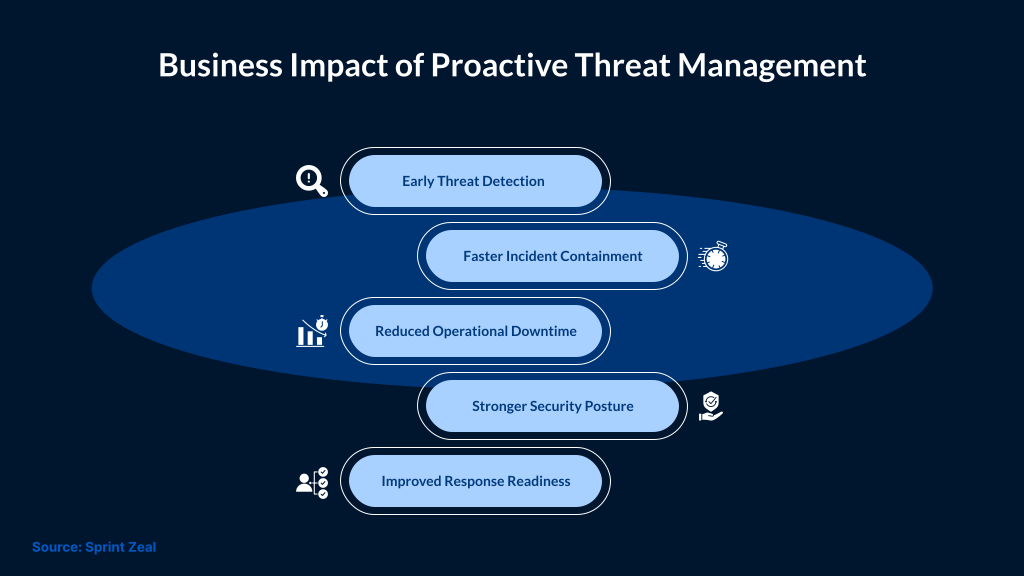
Proactive threat management isn't just about protecting yourself; it's also about helping your business. When companies prioritize security, they gain greater customer trust, follow the rules, and run more efficiently in the long run. In today's digital world, staying ahead of online threats is not only necessary but essential.
Core Threat Management Strategies
1. Implement Multi-Factor Authentication
Moving to multi-factor authentication (MFA) is an important part of threat management, especially for privileged accounts, remote access, or store sensitive data. MFA requires users to prove they are using at least two authentication factors, such as a password, a security token, or biometric data.
This advanced threat protection method adds an extra layer of security, making it more difficult for attackers to steal credentials or gain unauthorized access. Companies can better protect their private data and systems by using multifactor authentication (MFA) as part of a larger incident and threat response solution. This makes it much harder for attackers to gain access to important accounts.
2. Integrate Threat Intelligence Services
Using global data on files, DNS, URLs, IPs, and email addresses, threat reputation services make it easier for businesses to handle threats. These services inform you about the trustworthiness of digital entities, helping you protect yourself from known vulnerabilities and malicious activity.
Organizations can improve their incident and threat response processes by using these options. This makes it easier to find and stop global threats. This proactive method improves overall security while ensuring strong defenses against changing cyber risks.
3. Implement Application-Aware Network Segmentation
One important part of current threat management is the use of application-aware defenses to separate networks. These defenses look at application-level data to stop malicious traffic, apply policy controls, and detect threats within encrypted or obfuscated traffic
This advanced threat protection approach is very important for reducing the risks posed by advanced persistent threats (APTs). By adding these measures to incident and threat response tools, businesses can better separate critical systems, keep sensitive data safe, and ensure their networks remain secure.
4. Leverage Built-In Hardware Security Features
Hardware security features from today, such as UEFI Secure Boot, the Trusted Platform Module (TPM), and hardware virtualization, are important for protecting against new threats. These features protect against low-level threats and make sure that system boot processes are safe.
Integrating hardware security further strengthens defense against advanced cyber threats. As part of incident- and threat-response systems, these features can help businesses protect their most critical data and infrastructure while keeping their operations safe.
5. Always be on the lookout for network intrusions
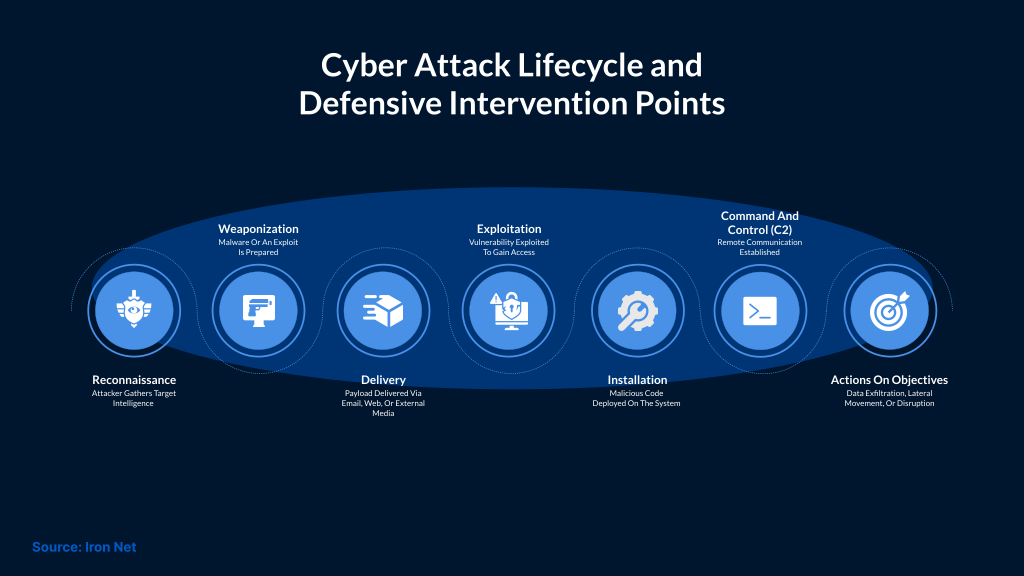
A key part of effective threat management is continuous network monitoring. This approach combines real-time threat detection with periodic penetration testing to assess the effectiveness of security controls. By integrating both practices, organizations can detect active threats while validating their overall defensive posture.
Companies can move from simple detection to real-time threat remediation by adding this to their incident and threat response tools. This proactive approach accelerates the containment of malicious activity and enhances threat protection against new cyber risks.
6. Implement Secure Configuration Management
Actively managing systems and settings is a key part of threat management because it keeps operations under control and reduces vulnerabilities. This includes maintaining an accurate inventory of network assets, removing unnecessary software, and keeping safe baselines.This practice improves defense against advanced threats by making it harder for attackers to get in and by making it easier to handle incidents. When organizations actively handle configurations, they can keep their cybersecurity framework strong even as threats change.
7. Establish a System Recovery and Backup Plan
A strong, well-tested system backup plan is important for managing threats, especially in the face of natural disasters or ransomware attacks. It includes regular testing and off-site, protected backups to ensure that important data and systems can be restored quickly.
By including recovery plans in incident and threat response solutions, businesses can reduce downtime and improve their defenses against advanced threats, making them more resilient in the event of an unexpected incident.
8. Enforce Signed Software Execution Policies
A key part of threat management is signed software execution rules, which ensure that only authorized software can run on systems. Modern operating systems can enforce these rules for scripts, executables, and device drivers. This makes a company's infrastructure even safer.
Organizations can stop malicious code execution by combining this with advanced threat security and secure boot. This preventive step strengthens incident and threat response systems by making it harder for hackers to gain access to systems.
9. Secure Accounts and Privileged Access
Protecting accounts and rights is an important part of threat management because it prevents unauthorized access to networks and unauthorized movement within them. Privileged Access Management (PAM) systems are crucial for this, as they enforce strict access controls and automate credential management.
This method reduces the risk of administrator credentials being stolen when combined with advanced threat security and incident response solutions. Secure credential reset procedures and tiered access models protect critical systems and high-value assets even more.
10. Maintain Timely Patch and Update Management
For advanced threat defense, it's important to keep software up to date. This closes security holes that attackers could use. By automating updates, patches can be applied quickly, reducing the risk of known (N-day) and zero-day vulnerabilities.
By integrating this practice into broader incident response plans, businesses can protect the integrity of their software, reduce operational impact, and enhance their overall threat management strategy.
Conclusion
Proactive threat management is an important part of current cybersecurity because it helps protect against new cyber risks. Companies can detect, mitigate, and contain threats before they escalate by combining advanced threat protection with incident and threat response capabilities.
These methods not only keep important data safe but also ensure the business continues to run. Proactively addressing cyber threats is critical to staying ahead. Organizations can partner with SafeAeon to implement cutting-edge protection tailored to their specific needs, providing a comprehensive cybersecurity solution.