

Key Takeaways
- Around 70% of successful data breaches begin at endpoint devices, showing how critical endpoint protection is to overall security. (IBM)
- In 2025, phishing was the starting point in about 16% of data breaches, underscoring how attackers use common communication channels to reach endpoints. (Varonis)
- Attackers incorporated AI-driven techniques in nearly 1 out of every 6 breaches, using them to craft more convincing phishing messages and deceptive payloads. (Dark Reading)
Introduction
Endpoint protection helps keep everyday devices safe. In an organization, various types of endpoints are used, like desktops, laptops, and servers. These devices are often the first targets that attackers try to use to break into an organization’s infrastructure. In the past, protection meant blocking known viruses. That approach worked when threats were easy to recognize. Now, attacks have become more advanced and harder to detect.
Many attacks can easily blend into normal activity and remain hidden for long periods. This change has pushed endpoint protection to go beyond basic prevention. Modern protection focuses on the visibility into the activity and behavior on endpoint. And when something looks wrong, it provides a quick and appropriate response. As organizations are using more devices to run daily operations, it becomes important to add strong endpoint protection in order to reduce risk and maintain trust.
What Endpoint Protection Meant in the Early Days
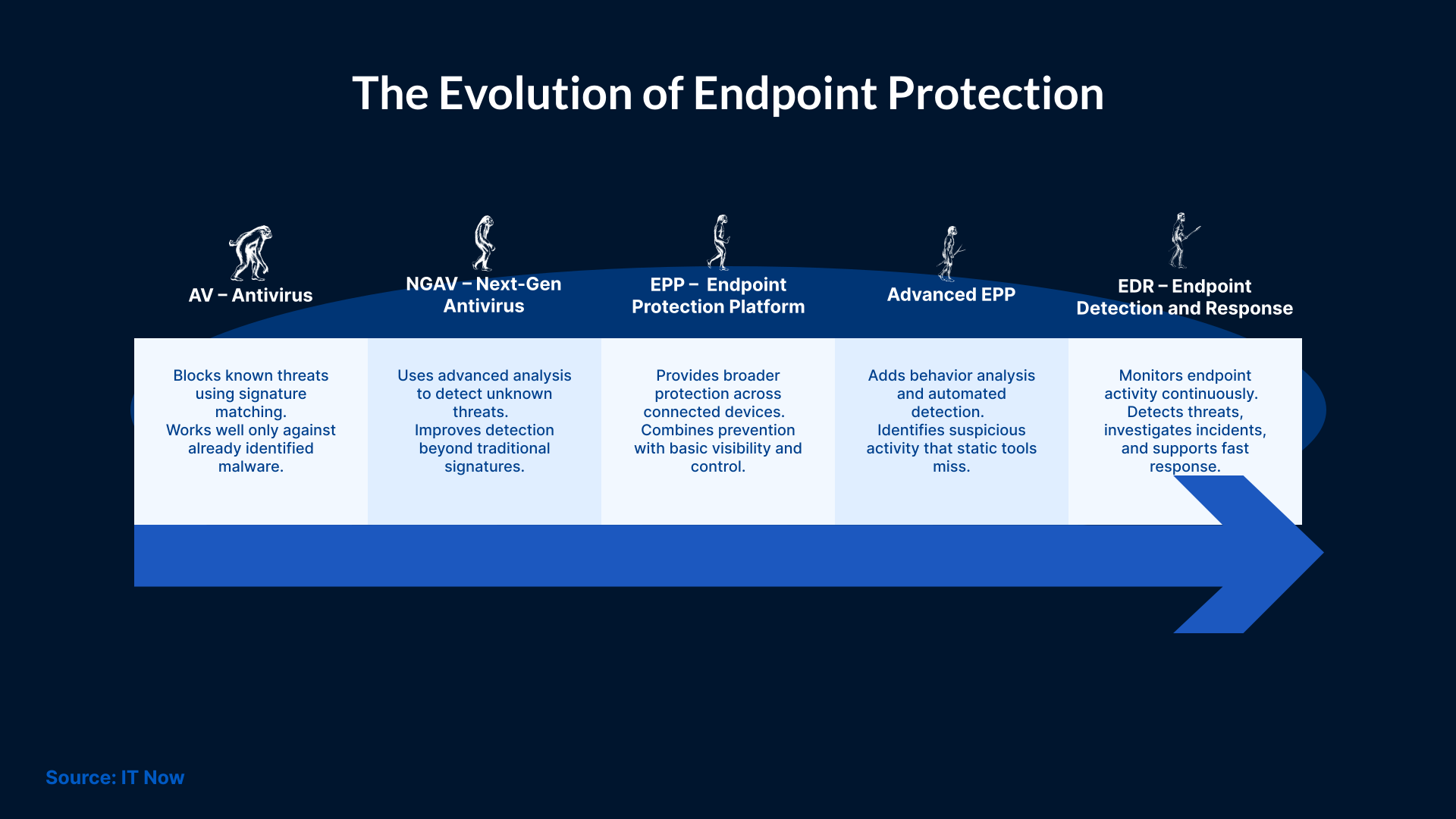
In the early years, the design of endpoint protection was meant for controlled environments. Most devices were fixed within office networks, and software changes used to occur slowly. Security tools were responsible for identifying known threats by comparing files against a fixed list of virus signatures. If the tools found a file matching something on that list, it was blocked or removed.
This approach worked in the past because attacks were predictable and rarely changed. There was little need for continuous monitoring or deeper analysis of activity on a device. If threats followed familiar patterns, then basic endpoint protection was enough to handle them. But this model depended on prior knowledge of attacks. This reduced its ability to handle new or unfamiliar threats as technology became more advanced.
How Traditional Antivirus Fell Behind
Traditional antivirus tools worked well for known problems. They used to scan files and compare them to a database of known malware. When they found a matching file in the database, it was blocked. This method was reliable for a long time.
The problem with this approach started when attacks stopped following familiar patterns.
New threats started to change their code in order to avoid detection. Some attacks no longer depend on files at all. Other attacks used trusted tools that were already present on a device. Traditional antivirus tools were not designed to notice these behaviors. They could only react after a threat was already identified and added to a list.
As a result, teams were unable to detect several attacks. They relied on tools that focused only on known threats, so they couldn’t keep up with modern attacks. This showed that endpoint protection needed to do more than scan files. It should monitor all activities on a device.
The Rise of Advanced Endpoint Threats
As technology got more advanced, attacks became harder to spot and easier to spread. Threats were no longer limited to simple viruses that announced their presence. Instead, many threats started to hide within normal device activity.
Advanced endpoint threats can appear through routine actions, like opening an email attachment or clicking a link. These threats tend to move quietly and gather information until they are ready to attack. Some attacks do not create malicious files, while others change their behavior each time they run. These variations make it hard for teams to recognize these attacks.
These threats rely on patience and stealth instead of speed or noise. This change increased the risk on devices used in organizations for daily operations. It also exposed the limits of older security tools. It became even more important to have a new approach to endpoint protection.
How Modern Endpoint Protection Works Today
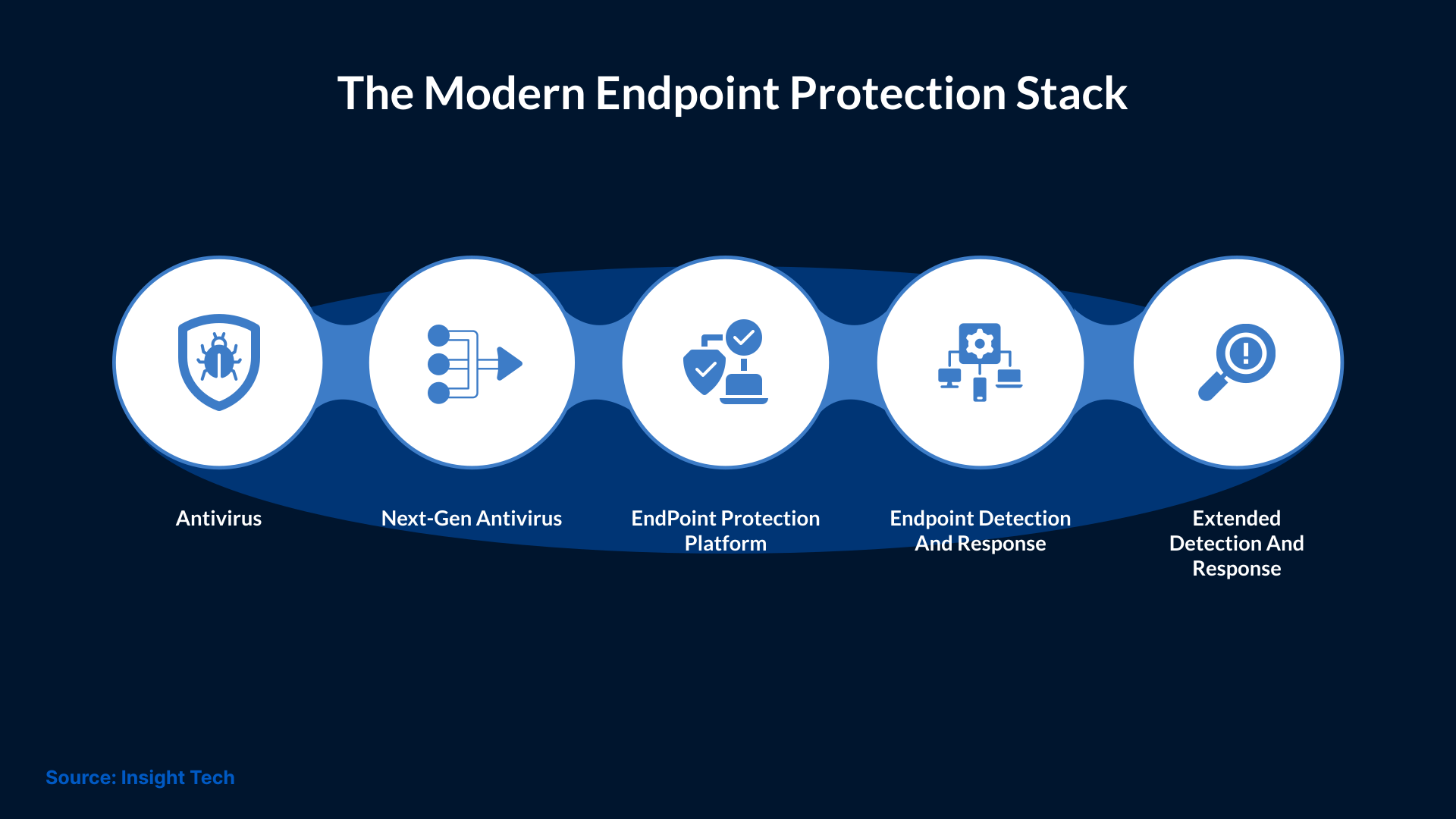
Modern endpoint protection takes a better approach. It not only looks for known threats but monitors activities inside a device in real time.
Continuous visibility
Modern tools keep track of activity across devices throughout the day. They check all the processes running in the background and system changes. They also watch for unusual user actions. The goal is to understand what ‘normal’ looks like.
Focus on behavior, not just files
Modern endpoint detection not only relies on file scans, but it also monitors unusual behavior. This helps identify threats that try to hide or change their appearance.
Built-in response capabilities
When modern endpoint protection detects something suspicious, it takes quick action. Actions could be anything from isolating a device to stopping a process, or even alerting security teams before the issue spreads.
Together, these changes allow endpoint protection to react faster and provide better control in infrastructures where threats continue to grow and become dangerous.
Endpoint Detection and Response Explained in Simple Terms
Endpoint detection and response is responsible for things that happen after a device is already in use.
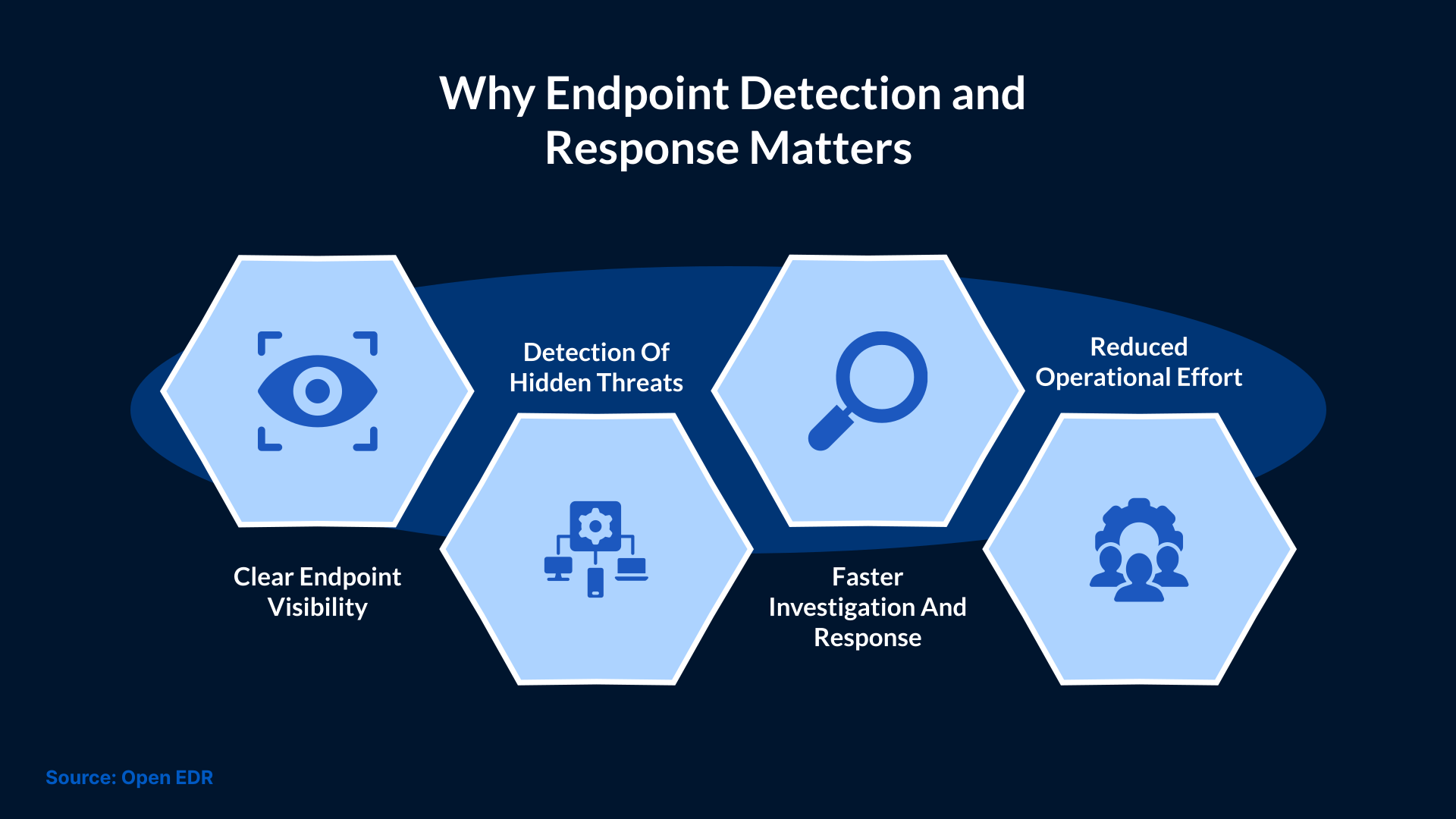
This approach does more than just block threats. It keeps an eye on what happens on a device. When something does not look normal, it sends an alert.
Endpoint detection and response helps teams see what is happening on a device. It shows when something goes wrong and helps stop the problem before it spreads. This makes it useful against threats that are easy to miss.
The Role of Behavior-Based Threat Detection
Behavior-based threat detection not just checks the files contained in a device but also monitors the device’s activity. This approach helps identify threats that do not look suspicious at first glance.
This approach does not rely only on known threats. It looks at the behavior of activity over time. It also focuses on actions that seem unusual when compared to normal device use.
Behavior-based threat detection watches patterns over time, which allows it to catch attacks that try to hide or disguise themselves. This is especially useful against advanced threats, as they change their form or avoid leaving clear signs behind. It adds an extra layer of awareness that was unavailable in older methods.
Why Endpoint Monitoring and Visibility Are Critical
Endpoint monitoring and visibility provide teams with continuous updates on device activities. Without this information, problems can grow quietly in the background.
But clear visibility can allow teams to spot unusual actions. Common examples of this would be a device connected to unknown locations or a process running at odd hours. It’s easy to miss these signs without proper monitoring.
Visibility also helps teams understand what happened in the environment, so that they can respond with confidence rather than just speculating.
In modern environments, devices always remain active and connected. Therefore, security in endpoint monitoring and visibility shifts from a reactive task to an ongoing process.


Conclusion
Endpoint protection has completely changed from what it used to be. Earlier approaches were effective against simple threats, but not against modern attacks that can remain unnoticed during normal use. Modern environments need protection that can quickly monitor and respond to an activity in case something goes wrong.
Endpoint protection is no longer a one-time setup. It needs regular monitoring and the ability to adapt to the changing risks. At SafeAeon, endpoint protection is handled with this understanding. The focus stays on clear visibility and timely action, so issues can be addressed early before they grow into larger problems.