



Key Takeaways
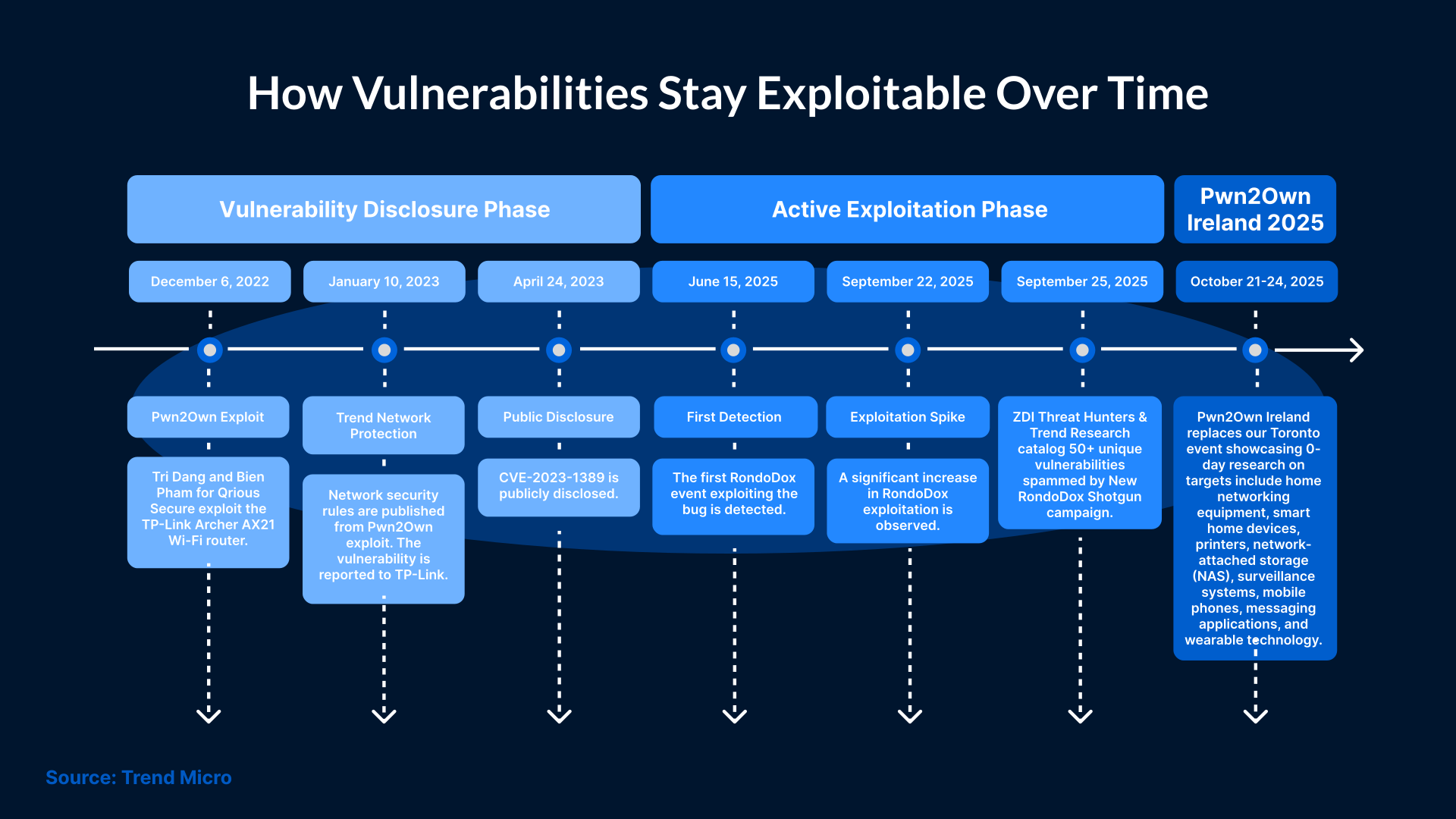
- More than 90,000 active web application instances have been identified as of January 2026 that are vulnerable to the React2Shell flaw. This is the same flaw used by Rondodox Botnet to gain access. (The Hacker News)
- There is a reported 650% increase in silent attacks after the botnet transitioned from its original version (v1) to a more sophisticated version (v2) in 2025. (IT Next)
Introduction
Rondodox is a botnet that operates quietly and causes damage over time. It does not flood networks with traffic or trigger obvious alerts. It continues to run in the background for extended periods without being detected.
In most cases, botnets are found when something breaks, but Rondodox is different. It blends into normal activity and relies on low-noise communication. This is why detecting this botnet is difficult, even in environments with mature security tools.
This quiet behavior results in greater risk in the long run. Systems remain compromised, and outbound traffic patterns change slowly. Security teams may see the activity but cannot recognize it as a threat.
This blog explains how the Rondodox botnet operates and why it is hard to detect. Besides, it discusses the possibilities security teams have to spot this botnet earlier.
What Is the Rondodox Botnet
The Rondodox botnet is a network that is made up of compromised systems. These systems are controlled remotely without showing any signs of infection. Once a system is infected, it becomes part of a larger group that follows commands from an external server.
A key feature of Rondodox is the ability to perform actions without raising alerts. As a result, traffic spikes or aggressive scanning are uncommon. The botnet focuses on maintaining access and staying operational for as long as possible.
In many cases, systems that are affected by this botnet continue to function normally. The botnet continues to grow slowly while remaining undetected within the infrastructure.
How Rondodox Gets into Systems and Avoids Attention
Rondodox enters systems through exposed services. Weak credentials are also used. Some infections originate on systems that have not been patched. These entry points do not stand out during normal network activity.
Once inside, the malware remains within the system for as long as possible. While it is present, it uses scheduled tasks or lightweight scripts during normal system checks. These changes are subtle, and teams most likely overlook them.
Rondodox avoids heavy system activity. It does not consume many resources, and there is no interference with normal operations. This allows it to remain hidden while maintaining access.
It has minimal communication with the command servers. Even the volume of traffic remains low to avoid detection. The malware sends small amounts of outbound traffic. The volume appears similar to normal system activity.
Why Rondodox Often Goes Undetected
Rondodox is not like a typical botnet. Its activity does not match patterns that security tools usually flag. It can blend into everyday system and network activity without triggering alerts.
Low-Noise Behavior
Rondodox keeps its activity minimal. CPU and memory usage will remain stable. Network traffic will also stay within normal ranges. There won’t be any aggressive scanning or propagation. These traits make detection during routine monitoring difficult.
Outbound Traffic That Looks Legitimate
Most security controls focus on inbound threats, but Rondodox focuses on outbound connections that appear normal. It uses common ports and protocols. It also uses traffic patterns that are similar to legitimate services. This allows command-and-control communication to pass without raising suspicion.
Alert Fatigue in SOC Environments
Despite the presence of signals that indicate Rondodox activity, they are not recognized as a threat. There are small, unusual activities that are often buried under high alert volumes. Teams don’t prioritize low-severity alerts. Slow changes over time are difficult to correlate. As a result, Rondodox activity can remain active for long periods without investigation.
Rondodox remains active because its behavior does not stand out during daily monitoring.
Abnormal Outbound Traffic Is Usually the First Sign
Alerts rarely detect Rondodox activity early. The first sign of its presence would be a slow change in outbound traffic that does not match normal behavior.
Security teams usually focus on what is coming into the network. Rondodox does the exact opposite; it focuses on what is leaving the network.
What Abnormal Outbound Traffic Looks Like
The changes are not loud, but here is what they look like:
- Connecting to the same external host repeatedly
- Traffic occurring at regular time intervals
- Small data transfers that do not align with business use
- Connections using common ports that appear harmless
When these signals are observed individually, they seem normal. Together, they form a pattern.
Why This Traffic Is Easy to Ignore
Most infrastructures generate large amounts of outbound traffic every day. Various applications and cloud services are connected to external systems as part of normal operation. This activity is expected, so security teams don’t pay attention to investigate low-volume outbound connections.
Rondodox takes advantage of this, as it keeps its communication short and consistent. The communication looks normal on its own. A single event doesn’t appear suspicious, so the activity is ignored by security teams. This allows the botnet to remain active for long periods.
Why Outbound Monitoring Matters
Certain small patterns become consistent over time. The same systems have been communicating externally for weeks or months. There has been no change in the destinations, and the communication is happening at the same time every day. These patterns are often the clearest indicators that an undetected botnet is operating inside the network. When teams do not review outbound traffic over longer periods, Rondodox activity can continue uninterrupted.
Where SOC Teams Usually Miss Rondodox Activity
Rondodox does not depend on just one weakness. It exploits several small gaps that are present in most SOC environments. These are common gaps, which often go unnoticed.
Focus on High-Severity Alerts
SOC teams prioritize alerts that appear urgent. Low-severity alerts are usually delayed, and they rarely investigate small anomalies. Rondodox activity often falls into the low-severity category, which allows it to stay in the system for longer periods.
Limited Correlation Over Time
Many tools evaluate events in isolation. Most tools struggle to track slow patterns and analyze long-term behavior. Since Rondodox operates slowly, its activity does not stand out in short time windows.
Gaps Between Tools
There are different tools for monitoring different resources, and these tools don’t communicate well with each other. This fragments the visibility, and since there is no complete view of the infrastructure, signs of Rondodox activity remain disconnected.
Assumptions About “Normal” Behavior
Teams trust a system that appears stable and reliable. They are less likely to scrutinize known hosts. Behavior that repeats over time is also accepted. Teams typically don’t revisit baselines once they are created. Rondodox takes advantage of these assumptions and continues to operate quietly.
Why Long-Running Rondodox Infections Are Risky
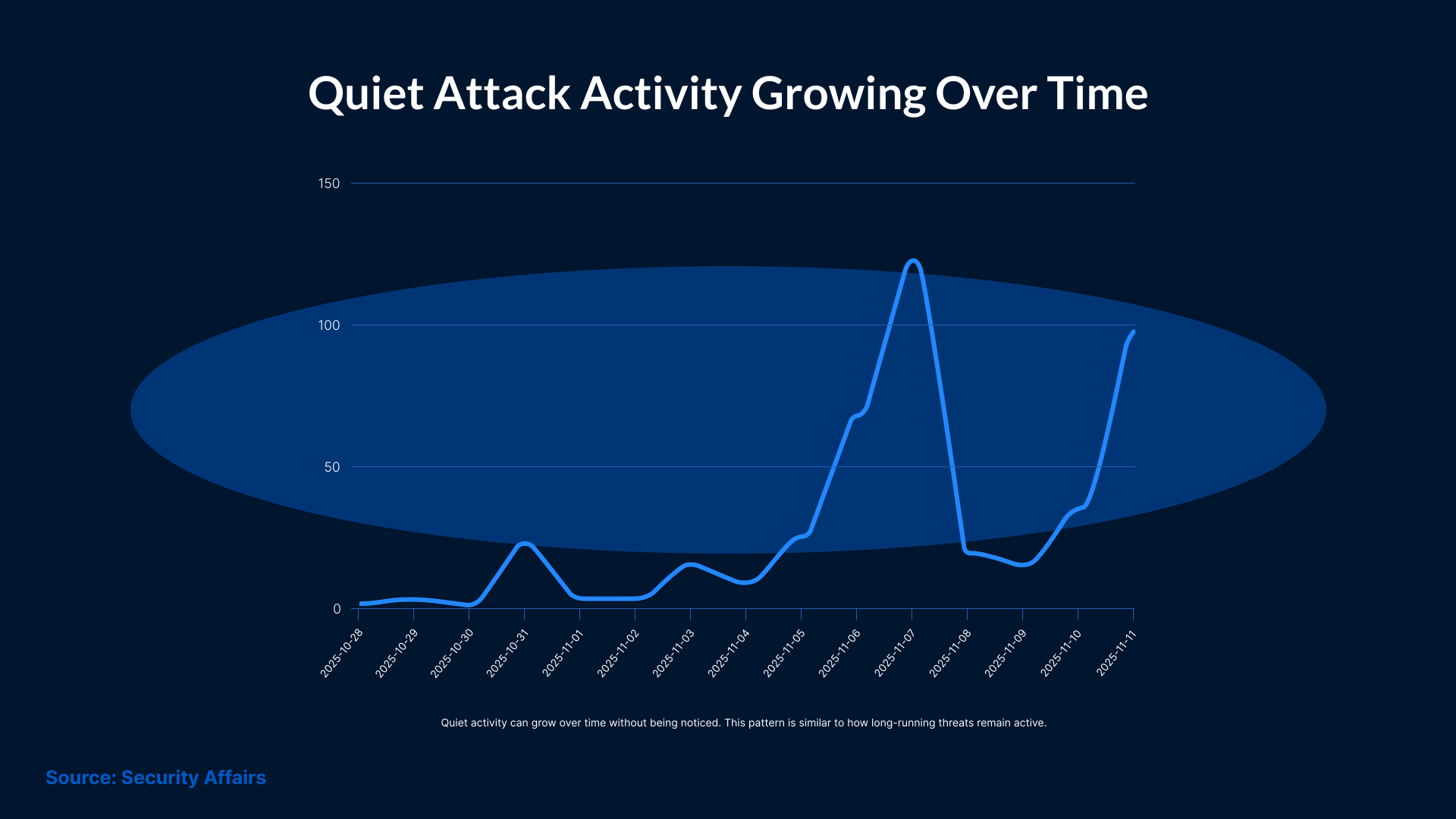
Rondodox becomes more dangerous when it remains active for an extended period. It gradually gains more control over the systems over time. Infected systems continue to communicate externally. These connections become routine and less likely to be questioned. What started as an unusual activity slowly blends into normal traffic patterns.
Long-running infections can also expose the systems to attacks. It is easier to steal credentials or reuse systems in an exposed environment. In some cases, the same access can be used to deploy more malware. As the activity is carried out over weeks or months, there won’t be an immediate impact. This delay creates a false sense of safety, even though the underlying risk continues to grow. When teams finally detect the presence of Rondodox, the infection has already spread to multiple systems and has been active for long enough to require deeper investigation and broader remediation.
Why Traditional Security Tools Don’t Catch Rondodox
Most security tools are good at detecting known threats or obvious malicious behavior. But, Rondodox avoids both. It makes small changes in its behavior to avoid signature-based detection, which most security tools rely on.
Then come alert-based systems, which look for spikes or clear violations. Rondodox prevents alerts by maintaining a low and steady activity level. It does not cross the thresholds; hence, no investigation is triggered.
There are several tools that treat events as isolated signals. A single outbound connection or a minor behavior change never gets under suspicion. Unless teams link the events together, it is difficult to detect the large pattern.
That's the reason why Rondodox is active even in infrastructures having decent security controls.
How Security Teams Can Detect Rondodox Earlier
In order to detect Rondodox at an early stage, teams will need to look beyond individual alerts and focus on behavior over time.
One effective approach is to baseline outbound traffic. When they understand normal traffic patterns, they can easily spot small and consistent deviations. If there are repeated external connections from the same systems, especially to unfamiliar destinations, they should be reviewed closely.
Behavioral monitoring also plays an important role. Monitoring known indicators won’t be as useful for teams as watching systems that behave differently from their peers. Small changes that exist for a long time are more meaningful than sudden spikes.
Teams can use threat hunting to connect these signals. They can review low-severity events together and look for consistency in order to identify activity that would otherwise be dismissed. Doing this will change the approach from reacting to alerts to actively searching for quiet threats.
Initially, the detection depends less on new tools and more on reviewing and correlating existing data over longer periods.
How to Contain and Reduce the Impact
Once teams confirm Rondodox activity, they isolate the affected systems first. This cuts off outbound communication and blocks access to command servers. Teams usually isolate systems selectively, since taking critical assets offline can cause disruption.
Teams then block outbound connections tied to the activity. They restrict known domains and IPs while they assess how far the infection has spread.
Systems are also checked for anything that allows the malware to restart. Scheduled tasks, services, and startup items are common places where it stays active. Credentials used by affected systems are often rotated, since long-running infections tend to involve credential exposure.
Once cleanup is complete, monitoring baselines are reviewed. The focus shifts to making sure the same low-noise behavior does not get overlooked again.

Conclusion
Rondodox is dangerous because it stays quiet for long periods. It won’t cause the obvious problems. Most of the time, it will look like normal system activity. Systems send endless data out every day as a routine activity. Rondodox sends small amounts of data too. As the activity looks normal, it is often ignored.
Over time, the botnet expands its reach within the infrastructure, creating additional gaps for further attacks. Many threats like this exist on the web. This makes long-term observation more important than reacting to alerts alone to identify such threats. SafeAeon has tools and manpower to support continuous monitoring and behavior analysis over time. Organizations can seek help from experts to identify threats that operate quietly to cause more severe damage.