

Key Takeaways
- Juice jacking is a real but preventable cyber threat. Users need to avoid using public charging ports, and their personal data shall remain safe.
- The FCC has no publicly documented record of juice jacking attacks despite making millions of users its victims.
- Awareness and safe habits are the best defense against juice jacking attacks.
Introduction
Recharging the battery of phones, tablets, or laptops in public places such as airports, stations, hotels, or cafés is quite normal and convenient. Everybody does it while traveling or working on the go. Most of these charging points rely on USB ports, which not only deliver power but also support data transfer.
In recent years, cybersecurity authorities such as the FBI and the Federal Communications Commission (FCC) have warned users about a rising cyber threat known as juice jacking. In this technique, cybercriminals exploit public USB charging ports to steal sensitive data or install malware on connected devices. What looks like a harmless act of recharging could quietly compromise your device’s data and privacy.
What Is Juice Jacking and How Does It Work?
The term “juice jacking” was first introduced in 2011 when the cybersecurity firm Aires Security showcased a charging station demo at the DEF CON hacker conference in Las Vegas. The concept refers to a form of hardware-based cyberattack in which hackers exploit the dual functionality of USB technology, power delivery, and data transfer to gain unauthorized access to a connected device.
When a user plugs a device into a compromised USB port or cable, the attacker can intercept data or inject malicious software. A USB cable has both power and data lines, where the former charges your device while the latter enables file transfer or device communication. Attackers can exploit those data lines when you plug into a compromised port.
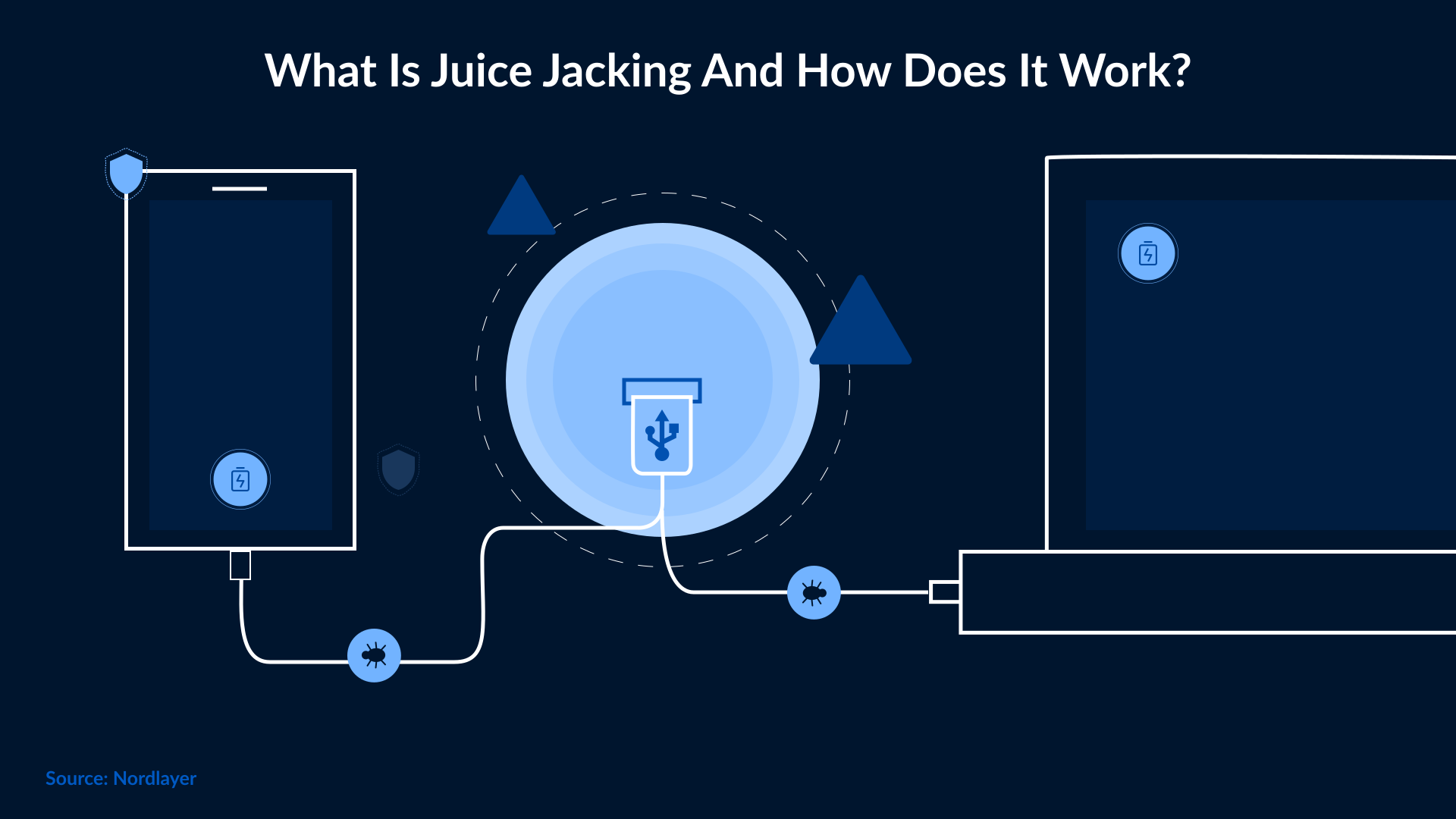
Although both Android and iOS devices include various built-in protections, no operating system is entirely immune. Modern attackers often modify USB ports in public stations or leave infected charging cables that appear completely normal, making it very difficult to detect at a glance.
Common Places Where Juice Jacking Happens
Juice jacking usually happens in high-traffic public areas where people urgently need to charge their devices. Common locations include:
- Airports and train stations
- Hotel lobbies and conference halls
- Cafés, restaurants, and shopping malls
- Public charging kiosks or shared USB charging hubs
Attackers exploit these environments because people often connect without caution, assuming the ports are safe. In some cases, hackers install compromised charging towers or replace a single cable in an existing hub to target hundreds of unsuspecting users.
In countries like India, public charging kiosks have become increasingly common in airports, metro stations, and coworking spaces, making awareness even more critical for daily commuters and travelers.
What Actually Happens If You’re a Victim
The moment you establish a compromised connection, several malicious activities begin simultaneously, depending on the attacker’s objective and the type of malware deployed.
Common Attack Outcomes:
- Data Theft: Personal files, photos, contacts, login credentials, or banking details can be silently copied to another device. The longer you remain connected, the more data can be extracted.
- Malware Installation: The hacker can install spyware, trojans, or ransomware that manipulates or locks your device, potentially demanding a ransom to restore access.
- Crypto mining: In less common scenarios, malicious software could use your device’s resources (e.g., CPU) for crypto mining, adding a huge amount of load and battery drain to the risk profile.
- Mass Infection: A single compromised cable can spread malware to other cables or ports in the same charging station, expanding the infection chain.
In addition to personal risks, employees charging corporate devices in public places may expose confidential business data, making this a growing concern for enterprises adopting Bring-Your-Own-Device (BYOD) practices.
How to Prevent Juice Jacking
A little awareness can help you protect your precious data from getting into the hands of cyber criminals. Here are some steps that you can take to prevent juice jacking attacks:
1. Avoid public USB charging ports: It’s better to use your personal charger that plugs directly into a wall outlet. While traveling, make sure to carry your own power bank or portable charger.
2. Use a USB data blocker: You can purchase a small adapter that fits on your USB device to disconnect data lines. Only the power lines remain enabled for charging.
3. Enable ‘Charge-Only Mode’: Turning on this mode on your smartphone will prompt you every time your device connects to a new device or port.
4. Avoid using unknown or free cables: If you find a cable attached to the wall outlet at a café, airport, or mall, don’t use it. Attackers left that for a reason, i.e., to steal personal data from innocent people like you.
5. Keep your operating system and security software updated: This is extremely important because updates carry patches for vulnerabilities in the existing system, which attackers might exploit. An updated system is harder to breach than an outdated one.
6. For organizations: Implement travel security policies advising employees to use only approved chargers. Or companies can issue power banks for business devices.
These steps can effectively prevent most juice jacking attempts and ensure the safety of your devices.
What To Do If You Suspect a Juice Jacking Attack
It is not possible to fully confirm the incidents of juice jacking. But you can follow these steps to limit the damage and check if anything is unusual.
- Unplug your device right away and turn it off.
- Run a security scan or virus scan to detect the presence of malware or suspicious activity.
- Check recent data usage and installed applications. If you find anything unusual, it could be a juice jacking attack.
- Check passwords of your accounts, especially your emails, banking, and cloud storage.
- If you detect any unusual activity or the presence of any malicious app or files in your device, restore your device to its factory settings.
- If you are using a corporate device, then report the incident to your IT or cybersecurity team.
It’s important to take quick action because that’s the only way to avoid data exposure and malware spread.
The Real Risk Level: Myth vs Reality
Juice jacking is not a new concept, but it has been around for more than a decade. Yet, the Federal Communications Commission states that it is not aware of any publicly documented real-world instances related to juice jacking. The technique is relevant even today, and people fall victim to it occasionally.
Juice jacking is a viable and profitable attack method because the cost of tampering with a cable is quite cheap. Whereas the value of stolen personal data is very high on the black market.
Cybersecurity agencies such as the FBI and the FCC continue to issue public alerts not because the threat is widespread, but because it’s easy to execute and hard to detect. The detection takes place once the damage has already been done. So, people need to stay aware and avoid using public charging ports.
Conclusion
Juice jacking reminds us how convenience often comes with hidden risks. So, the next time you think of charging your phone or laptop in a public place, be very careful. Treat every USB port as a potential data connection and not a power source. It’s better to carry your own charger or power bank to be safe. Avoid plugging into unknown USB ports or cables. If you receive a security prompt on your device, act upon it right away instead of ignoring it. If you become a victim of juice jacking, connect with experts at SafeAeon for quick and reliable solutions.