

Key Takeaways
Introduction
Artificial Intelligence (AI) has been a revelation. It has changed the way things are done. AI is being used in almost every industry because it speeds up the ability to perform tasks and reduces the chance of errors. But there is a dark side to this highly advanced technology. Scammers are using AI to create sophisticated attacks and are achieving success with them.
Deepfake cyber fraud attacks are one such type where malicious actors use deep learning techniques and AI to manipulate existing media. In deepfakes, a legitimate person is swapped with an unmistakable fake one to create an illusion. Deepfakes are being used extensively to manipulate public opinion, inflict heavy financial losses on companies, influence elections, and more.
It’s important to understand how deepfake attacks work, the motive behind them, and how to prevent such attacks.
What are Deepfake Cyber Fraud Attacks
Deepfake attacks have existed for the last few years. Initially, deepfakes were created using open-source face-swapping technology. Over time, deepfakes have been used in various malicious forms.
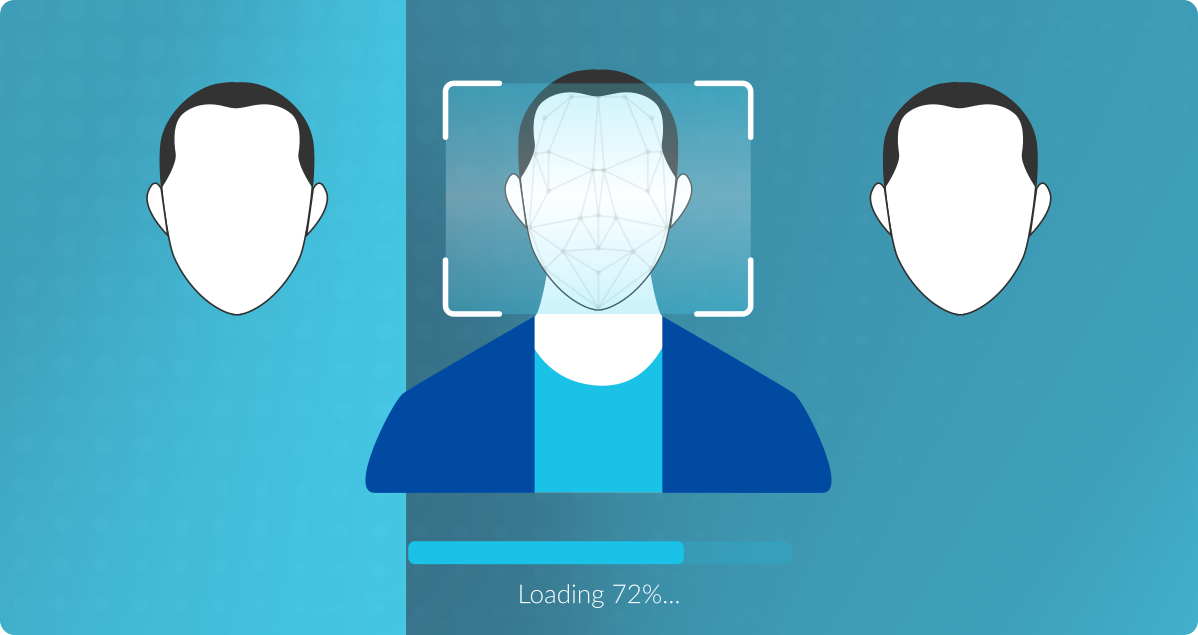
A deepfake is created by manipulating a piece of legitimate media, such as a video, to suit the editor’s needs. Deepfake uses a type of AI known as deep learning, a form of machine learning that makes use of a neural network. Attackers use sophisticated algorithms to create highly realistic fake media. The manipulative power of deepfakes compels people to perform an act that benefits cybercriminals. Deepfakes may be the ultimate tool in social engineering-enabled cyberattacks.
How Deepfakes are Created and Misused
Deepfakes are created using machine learning and a system known as Generative Adversarial Networks (GANs). GANs consist of two components, the Generator and the Discriminator. The role of the Generator is to create fake media by learning from real images, audio, or videos. The motive is to create unmistakably refined fakes of real media.
The Discriminator acts as the fact checker, as it analyses the media and determines if it is real or fake. If flaws are detected, the generator improves the output.
This is a continuous process that refines the deepfake until it becomes almost undetectable.
Misuse of Deepfakes
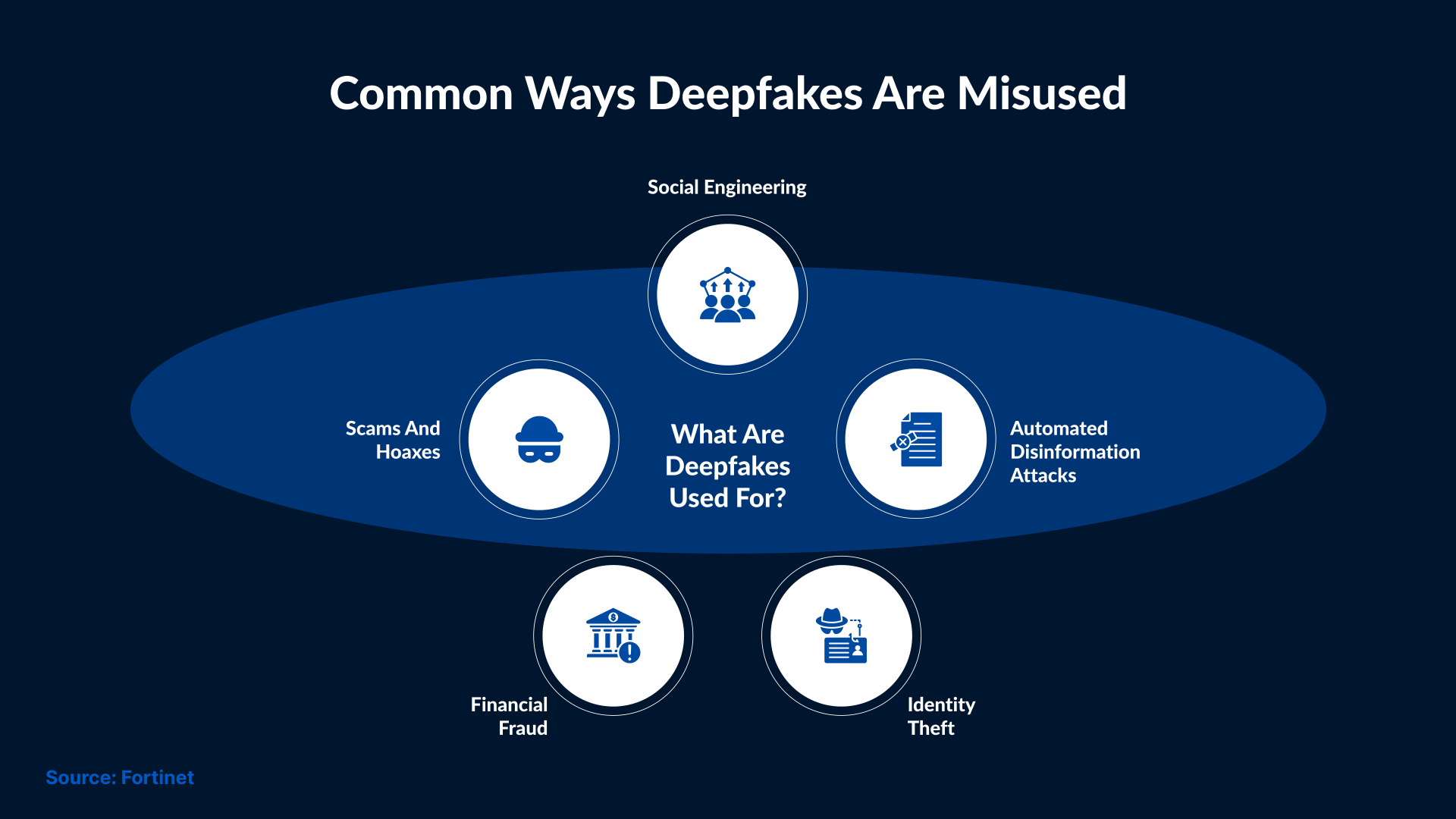
- Fake news & Political Misinformation: Deepfake cyber fraud is being used to create false narratives, influence elections, and manipulate public opinion.
- Cybercrime & Fraud: Deepfake is also used to impersonate CEOs or top management executives to authorize fraudulent financial transactions.
- Reputation Damage: Attackers create fabricated videos to ruin the reputation of high-profile individuals with the aim of harassment or blackmail.
- Phishing & Social Engineering: In this, attackers use realistic videos to trick employees into revealing the company’s secrets or confidential data.
Why Deepfake Fraud is Increasing
The reason deepfake fraud is growing is that the tools needed to create fake videos and voices are easily available on the open market. At one point, it required advanced skills to access AI models, but now, anyone can access any AI model using open-source tools and low-cost platforms. As a result, creating a plan and executing it successfully has become a lot easier for cybercriminals.
Another reason for the rise of deepfake fraud is people’s trust in visual and voice cues while making decisions. Seeing a familiar face on a video call or hearing a trusted voice on the phone is often enough to convince them to bypass verification steps. Attackers take advantage of that trust, especially in high-pressure situations where they make urgent requests for payments or account verification.
The rise of remote jobs has also increased deepfake scams. Fewer in-person checks and more digital approvals create a gap, which is exploited by deepfake fraud.
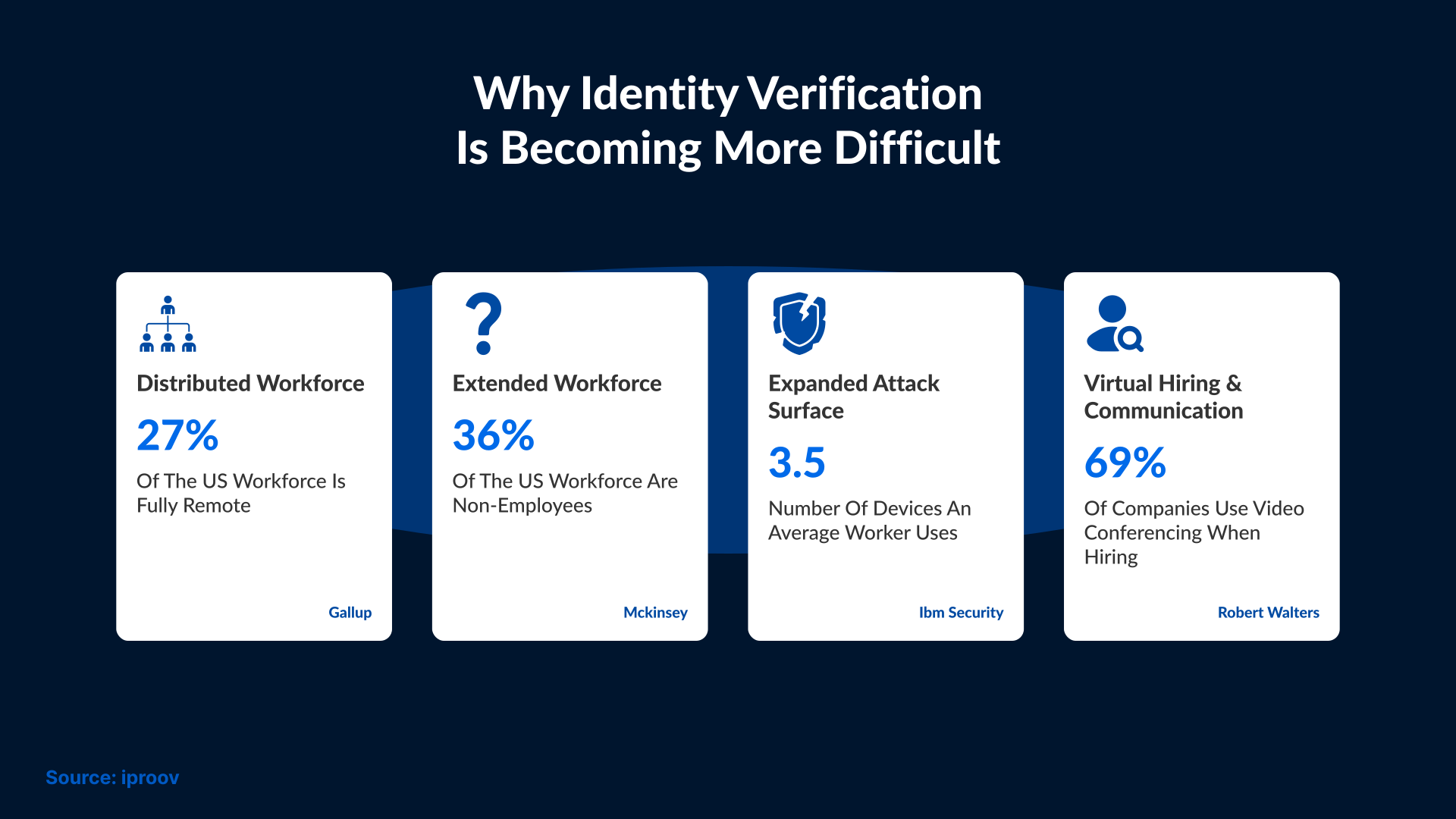
Meanwhile, traditional security controls prioritize emails and endpoints. As a result, voice and video interactions remain less protected.
Deepfake attacks are also effective because they consistently lead to financial gain with low effort and risk. As long as detection remains difficult and awareness stays limited, deepfake fraud will continue to rise.
Types of Deepfake Fraud Attacks
Attackers use different types of deepfakes to commit fraud. Here are the most common types of deepfake fraud attacks you should be aware of:
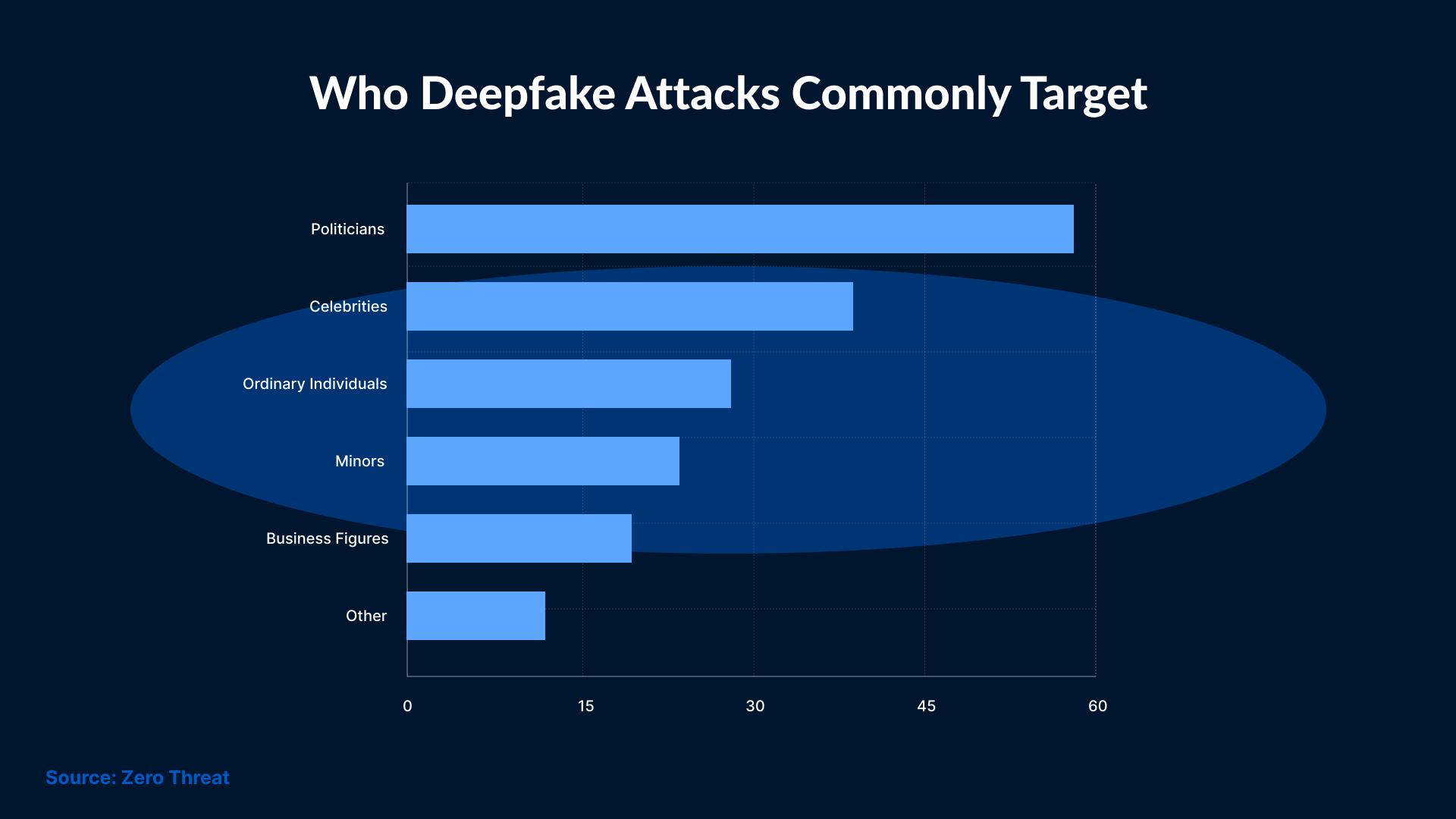
Executive Impersonation Scams: In this, attackers create a fake audio or video of a company executive, usually a CEO or CFO. They send the message during busy hours and ask for urgent action, like approving a payment. Employees see the message and believe it comes from leadership, so they skip normal checks and approve the request.
Voice Cloning Payment Fraud: Here, criminals clone the voice of a trusted person using short audio samples. They then make a fake call to instruct finance teams to transfer a certain amount or update banking details. Employees hear the voice, which sounds familiar to them. The request seems legitimate, which is why they skip visual confirmation and approve the request.
Deepfake-Enabled Phishing Attacks: Instead of simply sending an email, attackers send fake video conference invitations and calls along with their request. This makes the request feel more trustworthy..
Identity Verification Bypass Attacks: Deepfake videos or images are also used to trick identity checks at the time of onboarding or account recovery. Attackers submit fake facial movements or recorded responses to pass verification steps. This allows them to gain unauthorized access without relying on stolen credentials.
Real-World Deepfake Fraud Examples
Here are three popular cases where deepfake technology was used to carry out cyber fraud.
Hong Kong Finance Deepfake Scam (2024)
In early 2024, a multinational company in Hong Kong lost approximately $25 million in a deepfake video call scam. One of the company's employees joined a video call with what appeared to be senior executives. However, every participant on the call was a deepfake recreation, including the CFO. The attackers requested a payment disbursement, which the employee approved, believing the meeting was legitimate.
Deepfake CEO Voice Scam in the UK (2023–2024 cases)
Several UK-based companies reported fraud attempts. Staff members from the finance departments of many companies received phone calls that sounded exactly like those from their CEOs. The attackers used short public audio clips to clone voices and requested urgent transfers. In several cases, money was sent before the scam was discovered.
Voice Cloning Banking Fraud in the UAE (2023)
A bank manager in the UAE was tricked when he received a call from an attacker posing as a known client. The voice was generated using AI-based cloning, and to make things more realistic, the attacker had already sent genuine-looking email messages. The attack resulted in unauthorized transfers worth millions before the fraud was even detected.
Why Deepfake Attacks are Difficult to Detect
Deepfake attacks are difficult to detect because they look and sound real enough to pass a quick check. People often do not suspect anything after seeing someone on a video call or hearing a familiar voice on the phone.
Timing is another challenge. Deepfake fraud often occurs in real-time, so it does not give people much time to verify details.
Many security tools can scan files and links, but not live voices or video conversations. This can leave gaps through which deepfake attacks can sneak in undetected.
Finally, deepfake technology continues to improve, so you can expect better audio and video quality, which makes it even harder to differentiate between real and fabricated voice or video.
How Organizations can Prevent Deepfake Fraud
Organizations cannot rely on technology alone to prevent deepfake fraud. For requests involving payments, account changes, or access approvals, there needs to be more than one step to verify that the request is genuine. Even when a request appears to come from someone trusted, the same process should apply. Simple checks, such as call-backs or an additional confirmation, can make it much harder for fraud to succeed.
Employees also need to understand that deepfake fraud goes beyond email. Voices and videos can be faked just as easily. Training works best when it reflects real situations, such as urgent payment requests or unexpected video calls, rather than generic fraud warnings.
From a technical perspective, security should not stop at email systems. Voice and video communication tools must be monitored and validated, especially the ones used by finance teams and senior leadership. Organizations can use AI-based detection tools, but they work as support for people who make decisions, not to replace their judgment.
Response planning is also important. Teams need to know when to stop a transaction and who to get in touch with when something goes wrong. With clear response paths, it becomes easier to act early and prevent damage.

Next Phase of Deepfake Cyber Fraud
Fraudulent deepfake technology has evolved into targeted attacks. Earlier, attackers created broad scams to reach as many people as possible. Today, attackers target individuals and companies by understanding their specific processes. As voice and video tools become part of daily workflows across organizations, it is becoming harder to distinguish between genuine communications and those created for fraud. Organizations need to focus on building awareness and strengthening verification practices early, as existing protection methods may not be enough to prevent advanced deepfake attacks.
Conclusion
Deepfake cyber fraud attacks are no longer rare or experimental. They are used extensively by attackers to exploit trust and bypass checks. With the high convincing power of these attacks, organizations will have to rely less on appearances and more on clear verification processes. SafeAeon can help establish the right process to identify deepfake attacks and prevent any damage to your organization. Technology alone won’t be enough to prevent damage; awareness is a must, and that’s where a professional team can be of great help.