

Key Takeaways
- More than 80% of phishing emails involved AI in some form.
- Nearly 9 out of 10 businesses experienced AI-based cyberattacks in the last year. (SoSafe)
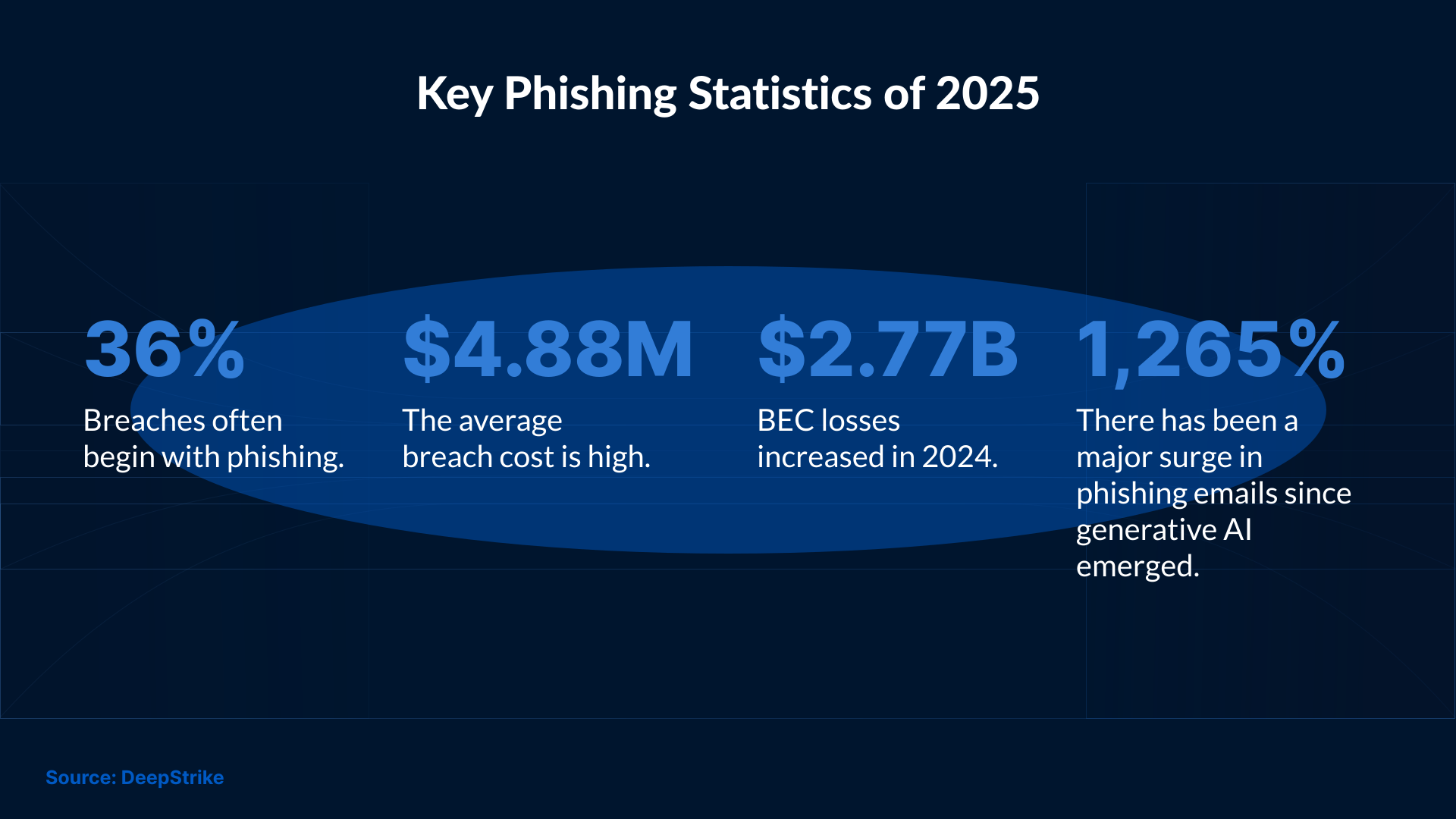
- According to IBM DBIR 2024, phishing attacks inflicted huge damage on organizations, with the average cost of a data breach reaching $4.88 million in 2024.
Introduction
Phishing is the most common type of cyberattack, occurring when an attacker impersonates a trustworthy entity with the intention of carrying out fraudulent activity. Phishing is done with the motive of stealing sensitive information such as passwords, credit card numbers, and other personal data. Phishing was already quite threatening, but with the inception of Artificial Intelligence (AI), it became even more dangerous. It’s important for businesses all around the world to know how can AI be used in phishing attacks to better prepare against the sophisticated attacks.
What Is AI-Enabled Phishing?
Artificial Intelligence has changed the way everything runs on the web. It paved the way for immense innovation, but at the same time, it has also given cybercriminals new tools to create highly sophisticated methods for carrying out cybercrime. With the help of AI, they are now creating highly realistic content in the form of text, voices, images, and videos, which can be used in phishing attacks.
In recent years, AI-based cyber fraud has grown rapidly. According to McAfee, an average person encounters around 2.6 deepfake videos per day, and this number rises to 3.5 for people aged between 18 and 24. This shows that digital manipulation has become part of everyday online life. It’s a matter of huge concern for individuals and businesses that malicious AI is growing at such a rapid rate. They should come up with better plans to detect and respond to phishing threats.
Difference Between Traditional and AI-Enabled Phishing
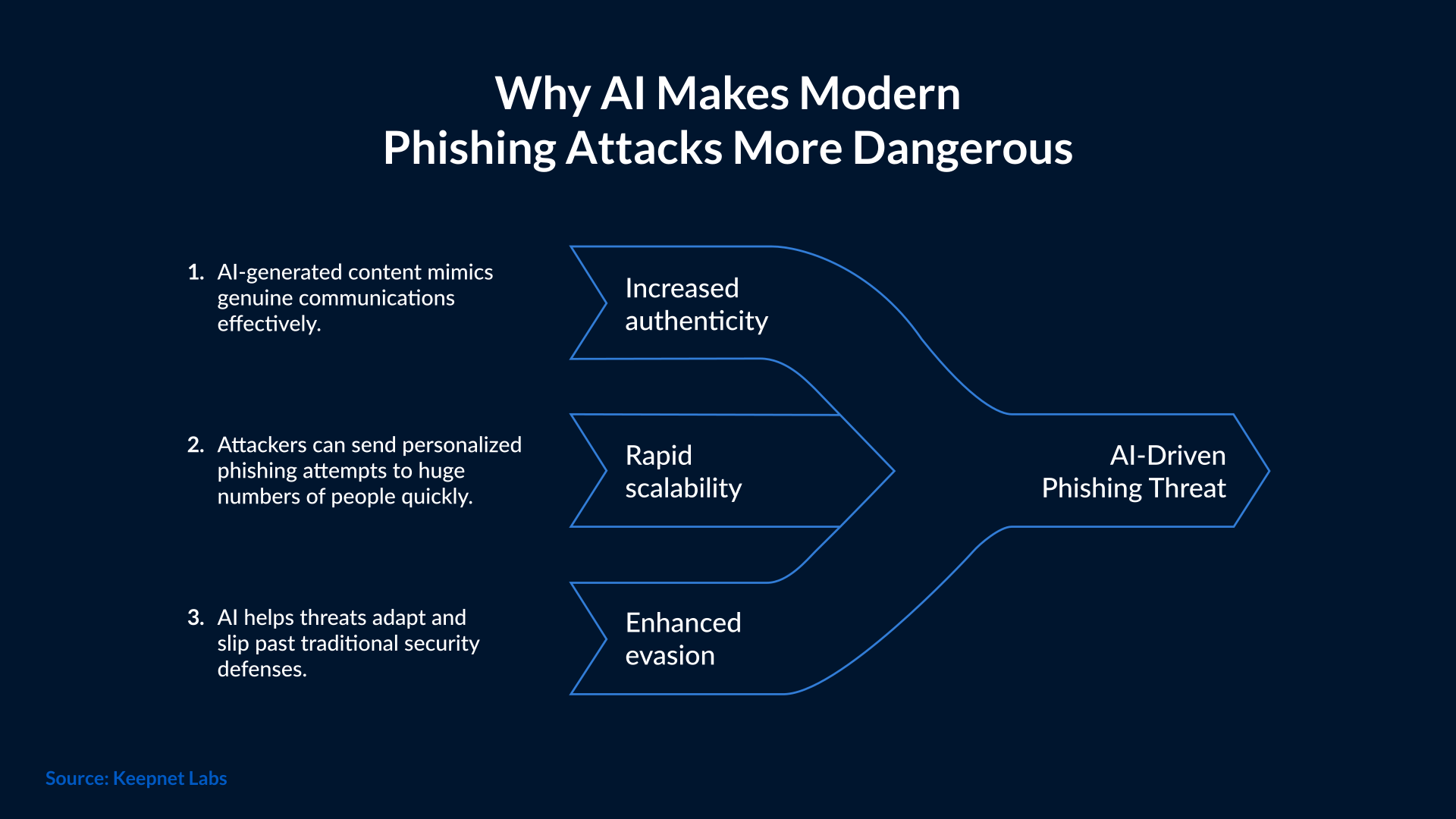
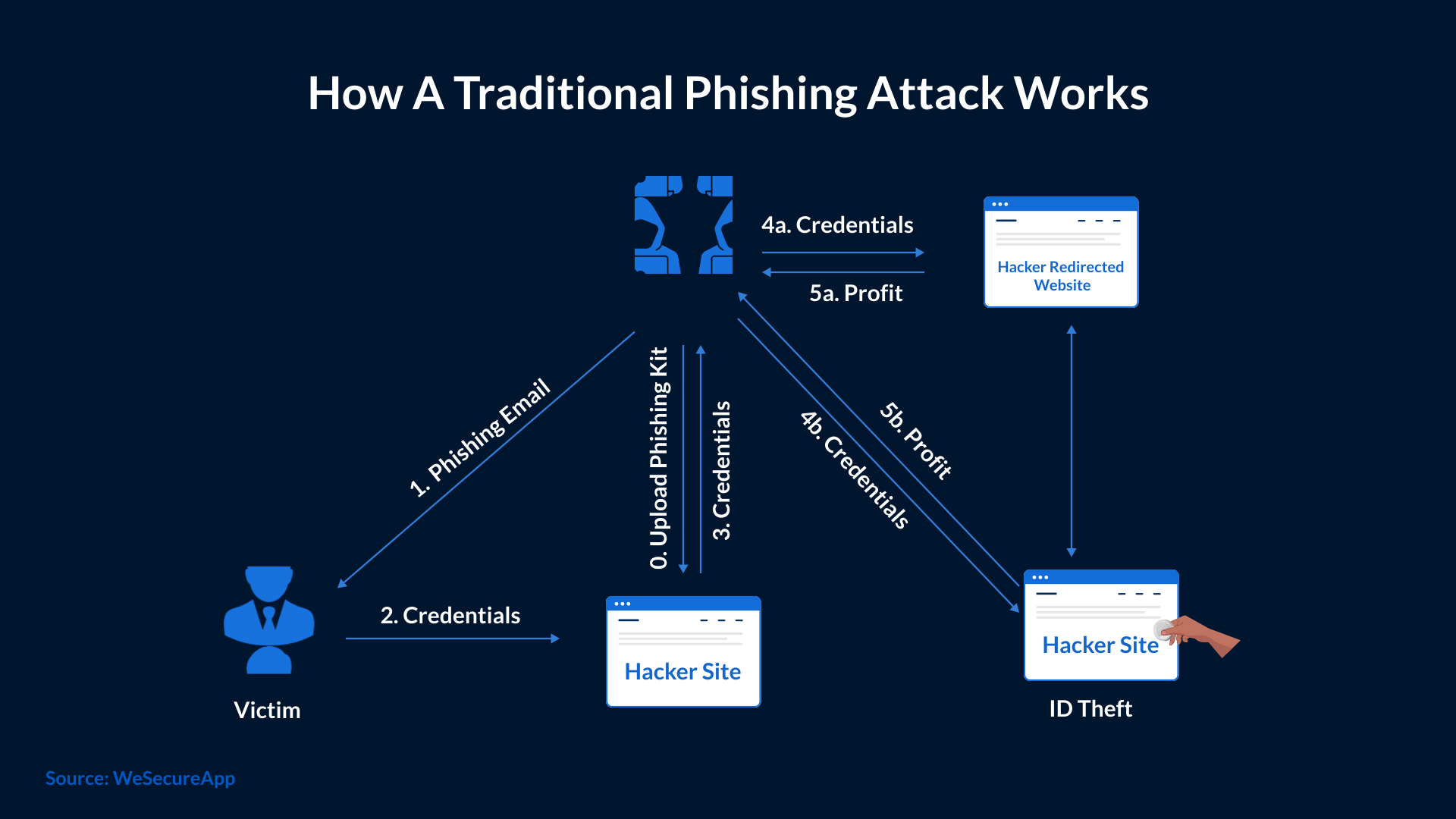
Phishing tactics used to involve big batches of emails with obvious warning signs, such as typos and uneven formatting. However, with AI-enabled phishing, these warning signs have been eliminated. Now, the attackers are creating well-composed emails and messages that coordinate with the victim's tone and behavior. That is why AI-driven phishing is far more believable and challenging to distinguish from authentic communications.
Why AI Makes Phishing Harder to Detect
As AI can produce a different message on every occasion, detection becomes more difficult. This complicates security filters that are looking for fixed patterns like known malicious phrases or repeating signatures, which are much harder to find in AI-generated content. The attacker will have the ability to modify the same email hundreds of times, capture the writing style, twist URLs, or practically impersonate someone's voice. Each of these steps renders many traditional email security tools less reliable or human verification more complicated.
Why AI Makes Phishing Attacks More Effective
Generative AI uses models like GANs (Generative Adversarial Networks) and LLMs (Large Language Models) to create new, realistic content generated from large datasets. This can be cloned voices, deepfake videos, convincing emails, and realistic images.
This ability to almost perfectly imitate humans gives an attacker the capability to create fraudulent scenarios where detection is almost impossible using old security techniques.
These attacks are particularly targeting employees, executives, and even government leaders, which is a big cause of concern.
Cybercriminals have tactical advantages as they use AI to assist them in scamming. They can create phishing messages on a much larger scale than before, translate them into any language, and even tailor them in a manner personal to the victim’s job or sequence of communication between the victim and the attacker. Everything about the message incites very little suspicion and likely leads the victim to trust them, as they do not see anything wrong or must act quickly before the opportunity is gone, and the Attacker obtains the result they were looking for. According to Malwarebytes, AI-supported spear phishing fooled over half of the tested users, and showed how quickly these attacks bypass human awareness and automated filters.
AI makes phishing more dangerous because it can:
- Compose personalized messages as per the victim's job role, writing style, or online behavior.
- Automatically create endless variations of the same phishing email to bypass security defenses.
- Generate realistic audio calls or video messages impersonating real people.
These capabilities have turned traditional phishing into a targeted and sophisticated threat that organizations cannot ignore.
How Attackers Use AI in a Phishing Campaign
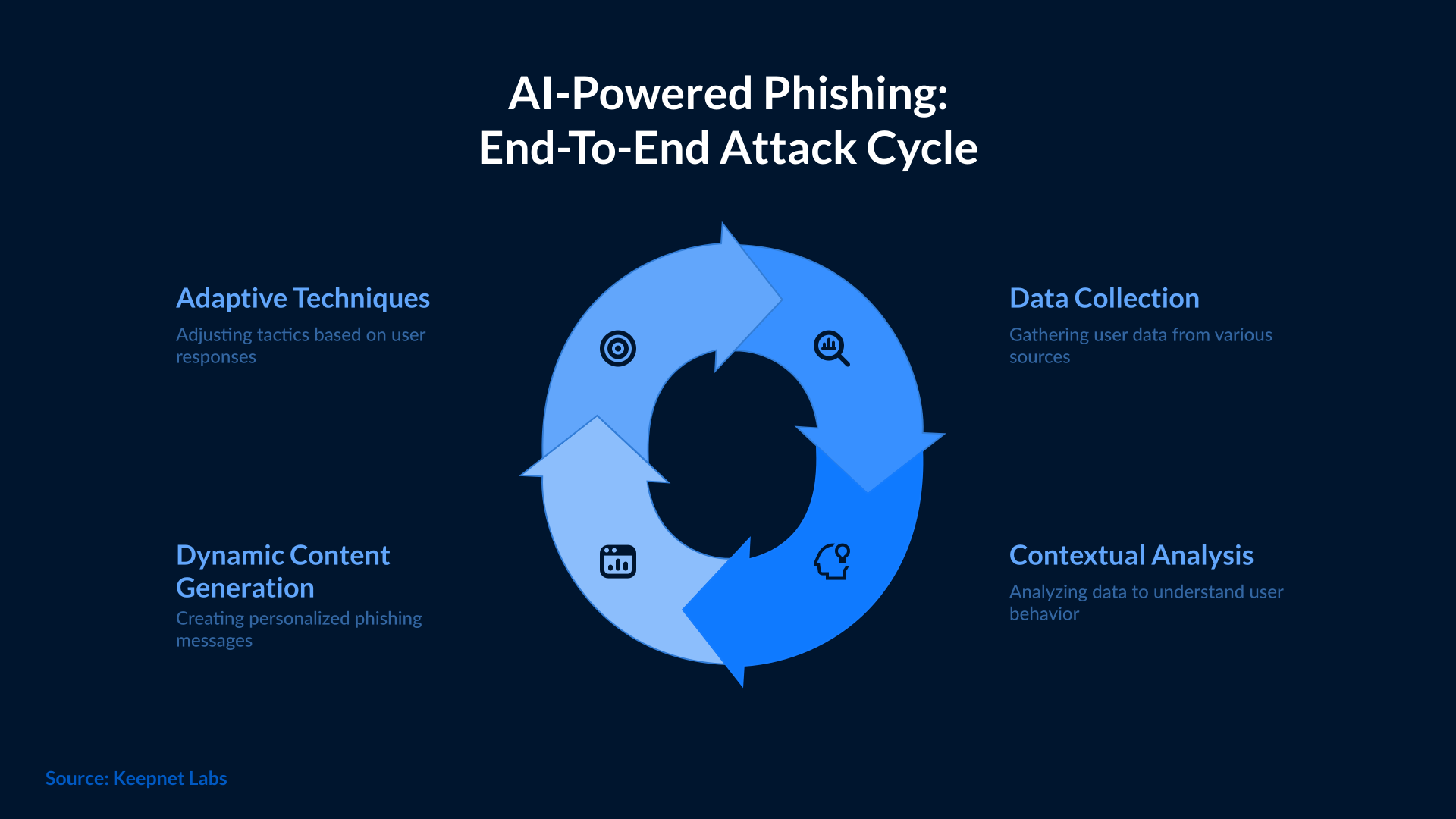
AI has changed how phishing campaigns are planned and executed. Phishing doesn’t rely on manual effort, but attackers use automated systems for gathering information and generating content to launch the attacks at a much greater speed and scale. An AI-powered phishing campaign usually follows a structured workflow that includes reconnaissance, content creation, distribution, exploitation, and post-compromise activity.
1. Reconnaissance
The phishing attack begins with collecting information. Attackers use AI tools to scrape social media profiles, company websites, leaked databases, public documents, and email metadata. From this data, attackers try to understand the victim’s job role, communication style, contacts, and routines. Machine learning systems help sort useful information and identify potential high-value targets. Some even predict the individuals who are most likely to respond to a phishing message.
2. Crafting the Phishing Content
Once attackers have enough information, they move on to creating personalized phishing content. With AI, they can:
- Create the email in a tone and style that the victim would consider as coming from a trusted colleague.
- Generate realistic scripts for voice calls or chatbot conversations.
- Produce deepfake audio or video messages that appear to come from executives.
- Create malicious attachments or forms with genuine-looking branding.
AI chatbots can also be used in social engineering. They can interact with victims and answer their questions in real time to maintain the illusion of legitimacy.
3. Automated Distribution
Once the content is created, attackers would use AI-driven automation to distribute the phishing messages.
AI assists in:
- Scheduling emails at times when the victim is most likely to be checking email
- Sending thousands of unique messages to avoid detection systems
- Automating domain spoofing for the purpose of generating look-alike websites
- Creating phishing links that change dynamically to avoid being blacklisted
With automated systems, attackers can conduct larger-scale campaigns with less effort.
4. Exploitation
AI supports attackers in discovering ways to exploit victims when they interact with phishing emails. At that stage, they would download the malware, steal credentials, or eventually gain access to their internal systems.
There has also been an increase in the use of voice phishing to exploit victims. Technologies like deepfake can accurately clone voices to an astonishing degree. Many organizations and attackers are increasingly using voice phishing techniques, especially using cloud-based systems to call victims or send audio messages.
In the study “Warning: Humans Cannot Reliably Detect Speech Deepfakes,” researchers found humans could only correctly identify fake recordings at a 73% accuracy rate, meaning even highly engaged and alert humans could still be fooled when voice phishing.
AI also enables real-time evasion by rewriting content, rotating URLs, and producing new phishing pages if the security tools flag the original pages.
5. Post-Compromise Actions
When attackers steal credentials or compromise the victim’s system, they leverage AI tools to:
- Laterally move in the network
- Locate high-value assets
- Look for financial information, credentials, or other sensitive documents
- Persist through automated scripts
AI can also quickly analyze stolen data, allowing attackers to filter useful and useless data, which is then used to help in further exploits.
This means that AI has evolved phishing from a simple rogue email to a multi-step campaign that leverages technology and human behavior. This workflow demonstrates that attackers will have the upper hand until organizations are willing to improve their detection and remediation capabilities.
Common AI-Powered Phishing Techniques
The ability of AI to simulate voices and faces makes it especially dangerous. Attackers are using voice cloning and facial manipulation to create fake videos of executives to request urgent payments or privileged access.
An incident took place earlier this year in which an employee in the UK fell victim to a scheme with a transfer of $25 million after taking part in a video conferencing incident where every user was a deepfake generated by AI.
The Guardian reported an attempted scam in which the fake videos and audio clips were very convincing and mimicked the physical likeness and the voice of a CEO at a multinational advertising firm.
AI-Written Phishing Emails and Messages
Cyber attackers now use AI tools to write phishing emails that read like genuine emails from colleagues or managers. The email text reads well, imitates the way the target usually writes, and looks professional. All the typical red flags people look for are missing. The emails read easily, feel similar, and seem legitimate, making them much easier to trust.
Other AI-Abused Techniques
Attackers are also using AI to improve a variety of other phishing methods, like:
- Smishing: Attackers create AI-generated SMS messages that mimic internal company alerts, banking alerts, or delivery alerts.
- Chatbot Phishing: Harmful chatbots are actively used to have real-time conversations with victims and interact with them on how to give up sensitive information.
- AI-Generated Attachments: Attackers create fake invoices, HR forms, and reports that are realistic and embed malware.
- QR phishing (Quishing): AI is used to create branded QR codes that redirect users to fake portals.
- AI-assisted Malware Delivery: In this type of attack, AI is used to write or modify malicious code that easily bypasses endpoint detection software.
Why Organizations Are at Higher Risk Today
AI phishing attacks not only cause financial loss to organizations but also pose reputational and operational risks. Fake emails, video calls, and voice notes hamper the trust within an organization. Attackers impersonating executives or managers make decision-making vulnerable and increase the risk of exposing sensitive information. It also paves the way for corporate espionage and unauthorized access, causing strategic damage in the long run.
Apart from that, modern work environments also make companies easier targets. Companies offer remote and hybrid options to their employees. They rely on digital communication, which provides attackers with additional channels to exploit. They can target cloud services and other collaborative platforms to analyze communication patterns, scrape public data, and generate convincing traps.
Millions of employee profiles, job positions, and organizational information are available publicly via social networking sites and professional networking sites. AI could scrape and process this information within minutes to assist attackers in building even more targeted phishing campaigns. The rise of easily accessible AI-enabled phishing like WormGPT and FraudGPT has also reduced barriers to entry, enabling inexperienced attackers to run complex campaigns that require minimal effort.
When these factors act together, they create an environment where organizations are more exposed than ever before.
How to Detect and Prevent AI-Based Phishing
Training and Human Awareness
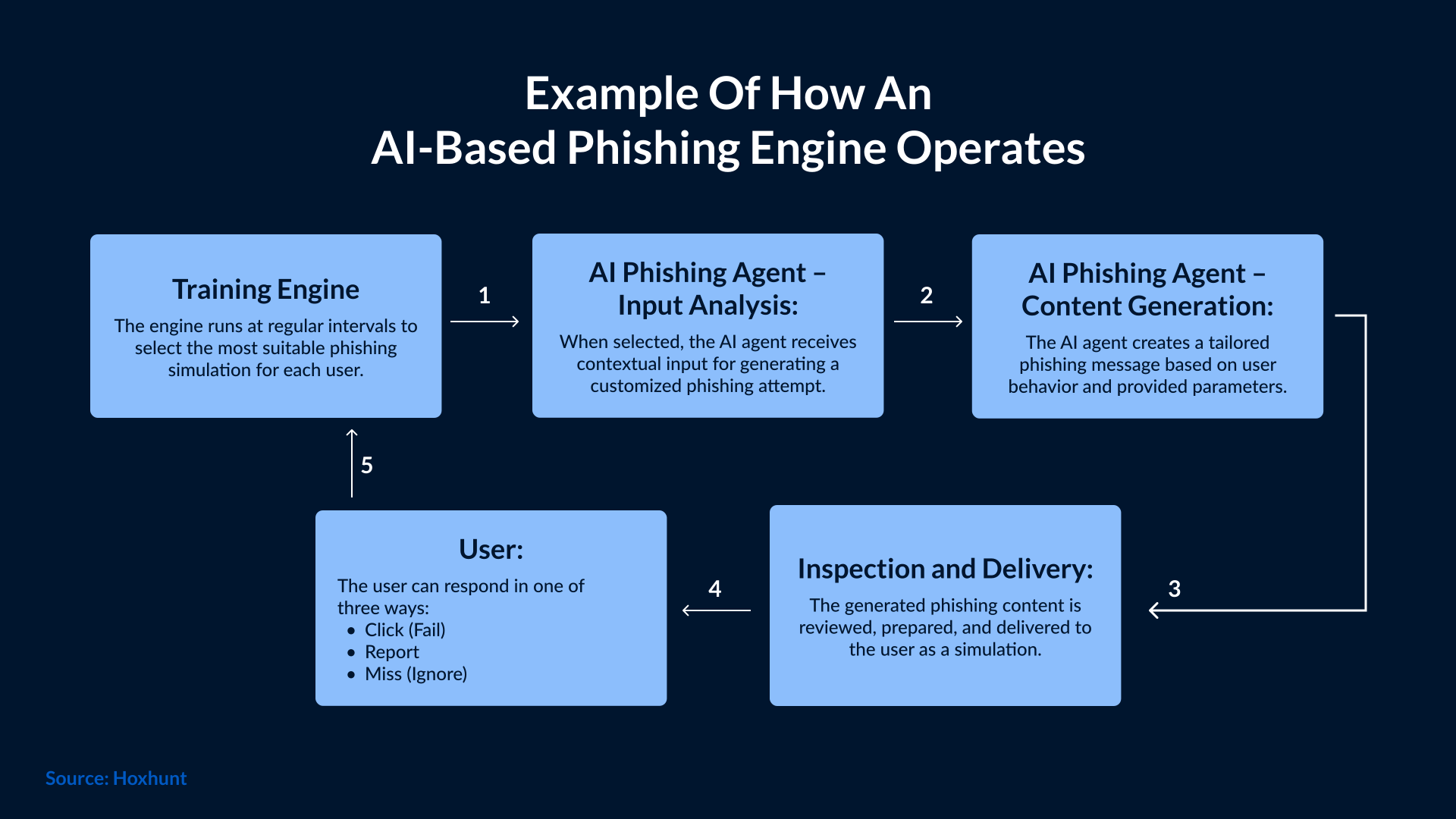
With so many advanced AI systems available, an organization won’t be able to secure itself unless employees are aware and well-trained. Employees need to use simulations using AI-generated phishing messages and deepfake voice tests to have a better understanding of these attacks to learn how to respond to them with a critical mindset.
Enhanced Authentication and Technology Controls
Modern security solutions can identify AI-generated content. They can analyze metadata and compression patterns that humans do not see. Additionally, the chance of unauthorized access has significantly decreased with multi-layered authentication, like biometrics, MFA, and physical tokens.
Live video verification with liveness checks is also available. This is combined with cryptographic signatures to verify that no unauthorized access occurs to the network. Some security teams have reached a level of maturity that actually have defensive AI models that learn the normal behavior of users and will flag anything unusual automatically. Progress is being made in the right direction against AI-based phishing.
Organizations should implement SPF, DKIM, DMARC, and BIMI to provide further efforts against spoofing attempts. An anti-phishing filter can be useful and can detect unusual communication patterns that traditional filters may not. Systems must always be configured with Zero Trust access policies so that the user is always verified each time, rather than being trusted.
Internal Security Policies
Internal security rules help teams understand what they should check before approving requests or sharing information. These rules keep sensitive actions in control, especially during financial approvals or access requests.
Companies should make sure that unusual money transfers, account changes, or email requests go through extra confirmation steps. This includes verifying who sent the message, checking the request on a separate channel, and using encryption or access logs when handling important data.
These policies should be reviewed regularly, tested through incident simulations, and updated with performance metrics to ensure defenses keep pace with evolving AI-driven threats.
Conclusion
There is no doubt that phishing has become more threatening for the entire world after the rise of AI. The future of phishing looks even more dangerous, as it will involve more personalized attacks and real-time voice cloning to make victims believe that they are interacting with a trusted entity. Companies must prepare in advance. They need to implement stronger authentication, continuous monitoring, AI security tools, and training for their employees. SafeAeon offers support in these areas through managed security expertise and continuous monitoring. They also provide employee training that helps teams recognize fake emails, videos, and voice messages before they become a problem. A proactive approach is essential for staying ahead of these emerging risks.