


Key Takeaways
- Integration of Artificial Intelligence and automation results in near-zero RTO.
- Industries with near-zero RTO include banking, healthcare, and e-commerce.
- Failing to meet RTO targets can result in lost revenue, regulatory issues, and long-term customer distrust.
Introduction
A business experiences numerous threats daily. The survival of a business depends on how quickly it can resume its operations after incidents that compromise critical infrastructure or applications.
Many companies face unexpected situations that cause service interruptions and generate system unavailability. They require rapid restoration to reduce the financial losses.
Competition in the business world is fiercer than ever. Here, a minute of downtime can affect a business's revenue and its credibility with customers and business partners.
This is where RTO becomes important. What is RTO, you may ask? RTO means Recovery Time Objective, and it defines how fast an organization must restore its systems after a disruption to keep operations running.
Dedicated IT teams work on contingency planning and measures that limit interruptions and protect critical data.
As digital services, online transactions, and remote access continue to grow, the need for strong recovery policies and system restoration plans has become essential.
Understanding Recovery Time Objective (RTO)
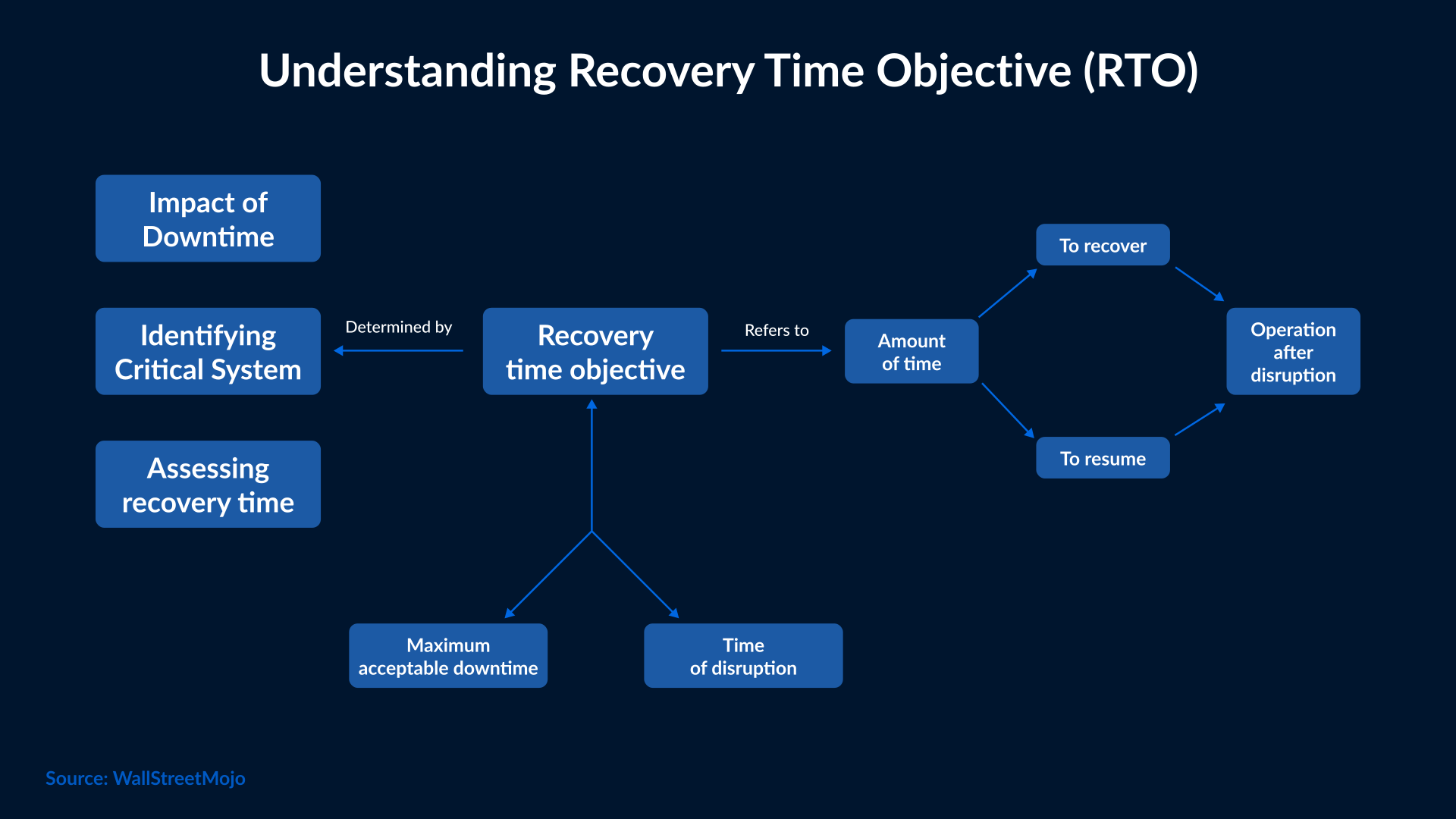
RTO (Recovery Time Objective) is the maximum acceptable period for activities to return to normal operation after a failure, to limit impacts and losses that arise from unexpected downtime. This interval reflects the urgency of restoring crucial systems for the corporation to resume its usual performance.
In other words, this concept determines how fast the company intends to reactivate its essential processes so that downtime does not exceed bearable limits.
The RTO is usually guided by the demands of the business and the expectations of customers or partners, as each organization has specific scenarios that influence the time available to reverse incidents.
A simple example involves an e-commerce company that cannot endure more than two hours of website outage or lose significant sales.
In this sense, defining the RTO corresponds to adopting a clear commitment to agility in the restoration of applications and services.
Why RTO Matters for Businesses
A company’s survival depends heavily on its ability to resume normal operations quickly after an outage or disruption.
Every minute of downtime can lead to financial losses and reputational damage. Your customer and business partners may lose interest in you. So, every online business needs to ensure continuous service availability and operational resilience.
Defining an effective RTO helps companies plan recovery mechanisms that reduce downtime and improve productivity. It also helps maintain compliance with service-level agreements.

How to Determine the Right RTO for Your Organization
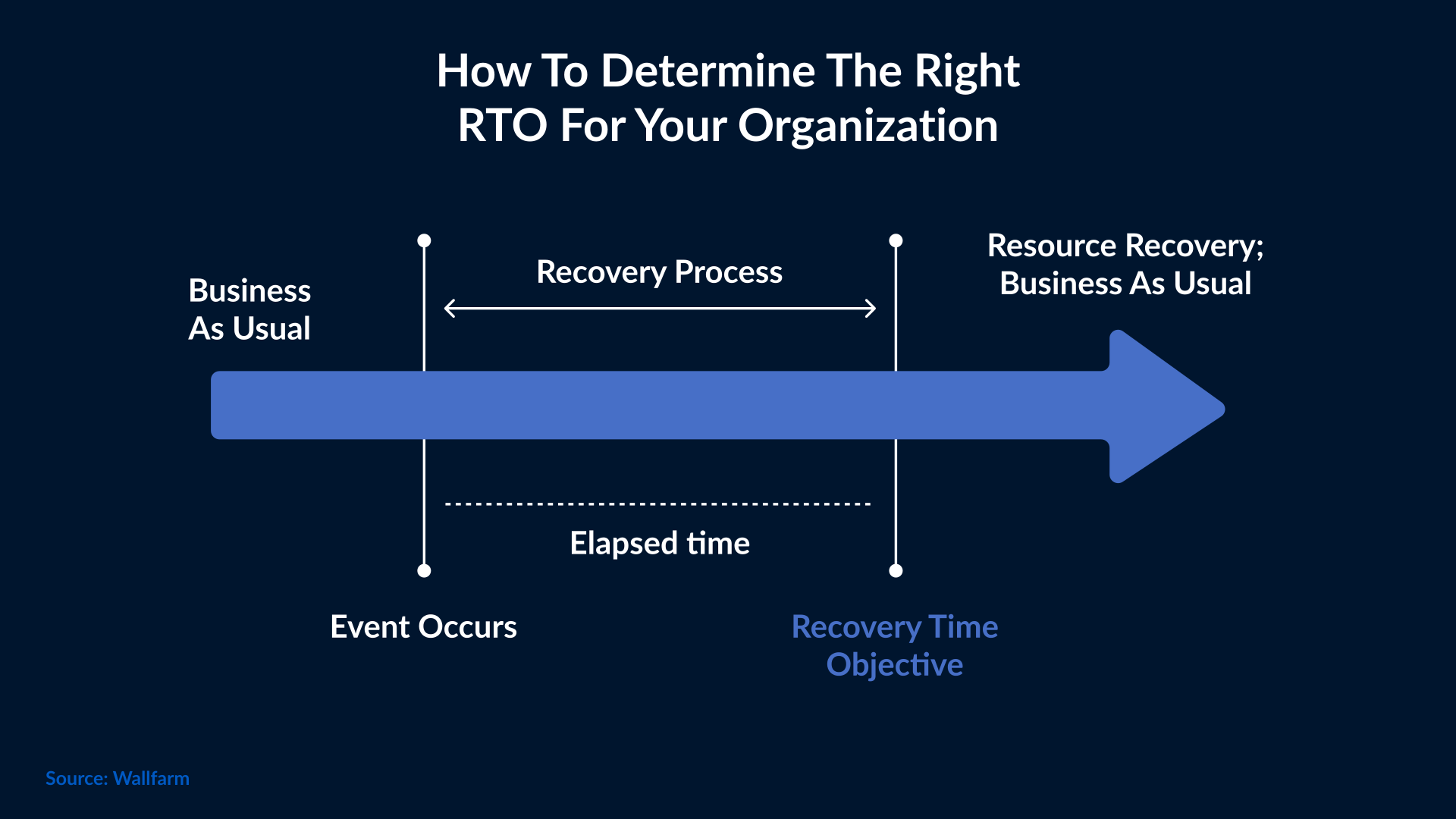
Determining the right RTO requires careful analysis of all your systems. RTO needs to be realistic to be effective. You can’t just enter a random number into the SLA and expect outages to be fixed within that time. Here’s how you should determine the right RTO for your organization:
Identify Critical Operations: You must identify all the critical operations in your organization and the systems depending on those operations.
Assess Interruption Tolerance: Once you have identified critical operations, it’s time to evaluate the tolerance to interruptions. In this, factors like financial losses, reputational damage, and social or regulatory impact are taken into consideration.
Define Maximum Acceptable Recovery Window: You should now establish a maximum period for recovery. For example, if your company identifies that its online sales become unviable after 60 minutes of inactivity, then that becomes your RTO threshold.
Align Technology & Organizational Capabilities: After determining the recovery window, you must align the internal processes and infrastructure. This includes backup plans and cloud recovery to meet the target.
Implement Monitoring & Testing: It’s important to track performance metrics and monitor recovery capabilities regularly to ensure compliance with the RTO. Also, test emergency plans frequently to be able to achieve the defined RTO.
Key Factors That Influence RTO
System restoration involves several components that need to work in harmony.
Complexity of multi-environment workloads: Recovery becomes harder when workloads are deployed in different environments because each depends on specific tools and processes.
Interdependencies across systems and applications: Another thing that increases the difficulty is the interdependencies between the IT infrastructure and applications. The order of restoration will directly influence the result.
Importance of correct restoration order: It’s important to reconnect all devices and applications in the correct sequence to prevent delays in full recovery.
Defined action plans & team roles: There must be proper recovery plans in place, assigned to experts who can execute those plans without causing any delay or error.
Risk of improper recovery sequence: Restoring systems in the wrong order can cause extended downtime and greater operational losses. Always follow the right sequence.
Value of well-planned recovery efforts: A well-planned recovery process reduces internal noise and ensures full resumption within the defined RTO.
Strategies to Achieve or Improve RTO
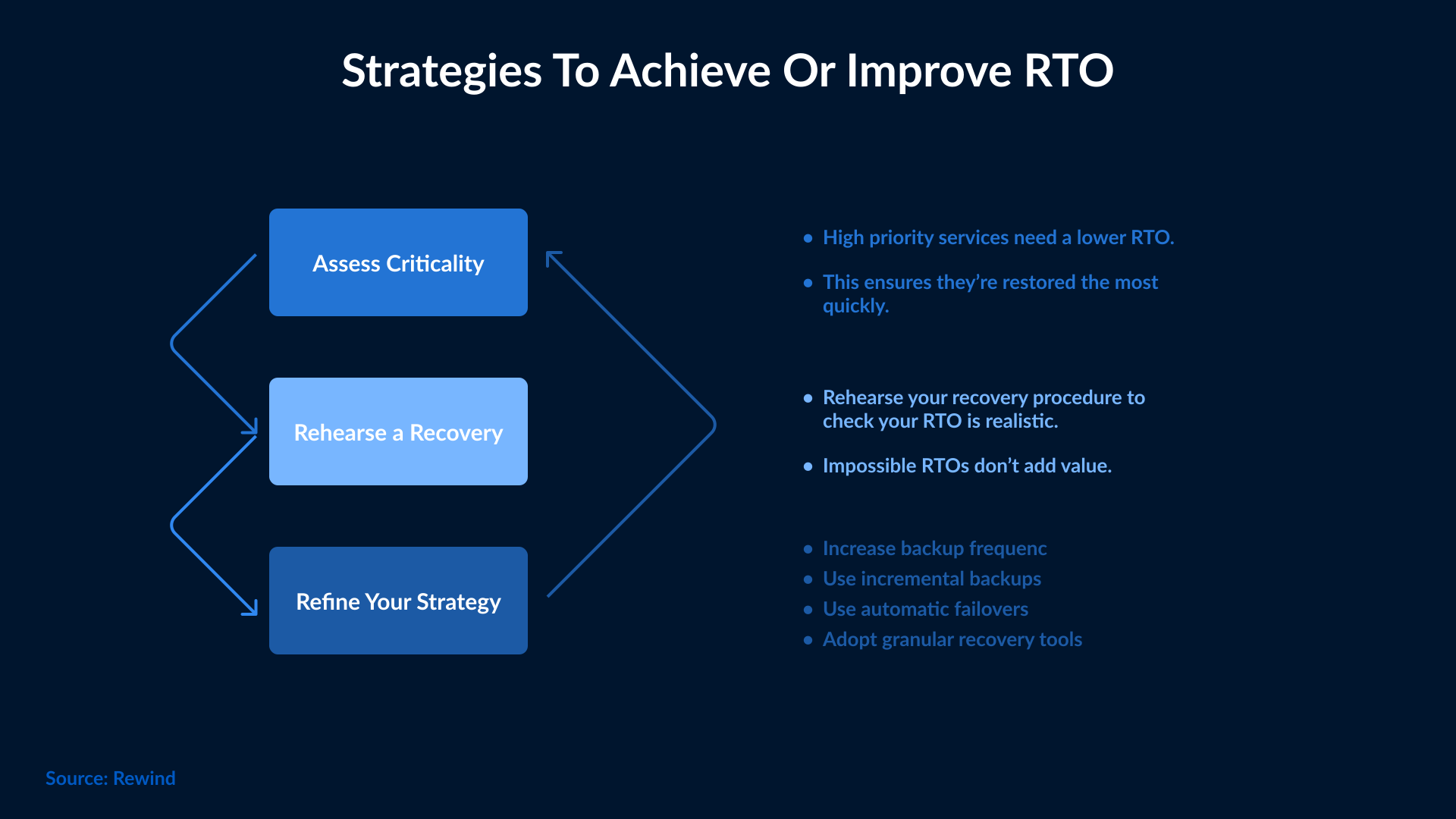
To improve RTO, you must have a well-defined backup policy. Here is what it must include:
Focus on critical systems: You should take a backup of the most critical systems in your organization. It should also consider how often new data is generated.
Frequency of backup: You can set a frequency of backup according to the importance of the data stored on the system. Some businesses back up data once a day, while others need more frequent backups to prevent data loss.
Use reliable backup tools: It’s important to use reliable backup software that can automate tasks and check the integrity of stored data to prevent failures during recovery.
Automate the backup process: Automating the backup process will reduce manual effort and error percentage. It also ensures that recovery happens within the planned time frame.
Application Tiering and Cost Trade-Offs
Consider an online sales company that operates globally and relies heavily on digital platforms for invoicing.
If an outage affects the primary server, every minute of downtime leads to lost sales and customer dissatisfaction.
For this company, the RTO can be stipulated at two hours, as this would be the maximum feasible time to resume the site without causing exorbitant losses to revenue.
At the time the failure occurs, the IT team initiates the activation of backup resources stored in redundant environments, reconnects payment systems, and synchronizes databases to ensure that pending orders are confirmed.
The RTO, in this scenario, guides all emergency work, defining restoration priorities and ensuring that the portal returns to the air within the pre-defined deadline.
This alignment between recovery strategies and the urgency of returning to sales allows the company to suffer less from the shutdown period.
Industry and Compliance Considerations for Recovery Time Objective (RTO)
Recovery expectations vary from industry to industry. In highly regulated sectors, even a short outage can create compliance risks and financial penalties.
Banks and financial institutions need very short RTOs because they handle real-time transactions. Even a few minutes of downtime can stop payments or transfers and trigger strict reporting obligations.
Healthcare organizations also have short RTOs because they are supposed to maintain patients’ data and meet HIPAA compliance requirements.
Similarly, e-commerce can’t afford long service disruptions, as it would lead to lost orders and abandoned carts.
Some industries follow formal standards such as ISO 22301 for business continuity or regional data-protection regulations requiring a defined recovery process. Organizations that meet these expectations show their accountability and help build customer confidence.
To stay compliant, companies should document recovery procedures and assign ownership for each system. They must also carry out regular audits to confirm that RTO targets are realistic and achievable.
Best Practices and Common Mistakes to Avoid
Your company’s recovery plan must include regular testing and monitoring. These steps help confirm that system restoration stays within the defined RTO during an incident. Also, check the backups occasionally to ensure they are working properly. You should also run recovery drills to see how long the process takes to identify improvements.
Make sure to update the recovery documents with every system or process change. Outdated steps can lead to confusion and a waste of time during a crisis.
One of the most common mistakes that teams make is restoring systems in the wrong order. For example, they would bring up a database before the main application. Such mistakes can cause additional errors and delay recovery. Another frequent issue is underestimating the time taken by actual restoration compared to the planned RTO.
To ensure fast and smooth recovery, make sure the recovery steps are clear and that individuals are assigned responsibilities beforehand. Test plans regularly to stay better aligned with the defined RTO and reduce the risk of extended downtime.
Conclusion
Every organization faces downtime risks, but what matters most is how quickly it can recover and resume normal operations. Setting a clear RTO gives structure to that preparation.
A well-planned recovery strategy backed by reliable tools and regular testing reduces the impact of unexpected failures. It also helps IT and management teams make better decisions when time is critical.
It’s impossible to eliminate downtime completely, but you can control it to keep the business running with minimal disruption.
SafeAeon helps organizations achieve this by defining realistic RTOs and ensuring systems recover within the planned time frame. This approach prevents financial and reputational loss, keeping businesses steady and trusted even during their toughest moments.