

Key Takeaways
- DDoS and stresser-tool usage has exponentially increased in 2025. (Cloudflare)
- Attackers launch high-volume attacks using very low-cost stresser/booter services or botnets.
- Legitimate load testing must always be authorized, or else it can cause legal trouble for using an illegal stresser tool.
Introduction
The world is digitally connected, and businesses are running online around the clock. They can’t afford even a few minutes of downtime because it can damage their reputation and revenue. But cybercriminals are constantly looking for ways to disrupt services. Among many methods, IP stressers appear quite often in security reports. On the surface, it may sound like a harmless ‘load-testing tool’ to check a network’s strength. However, most IP stressers are DDoS-for-hire platforms used by criminals to flood networks with traffic and take them offline.
Let’s discuss IP stressers in detail so you can better defend your online business against this sophisticated threat.
What is an IP Stresser?
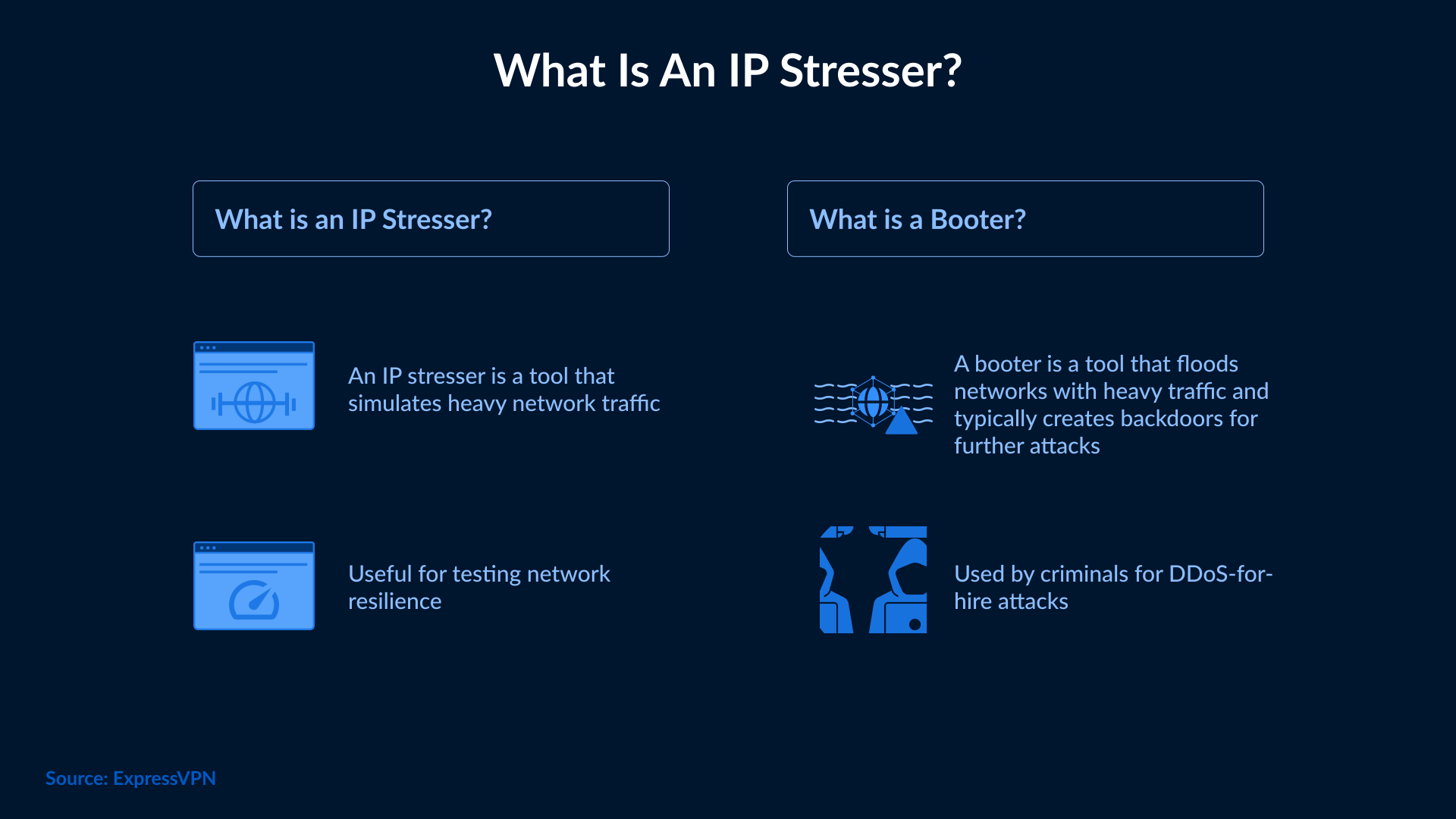
An IP stresser is a tool that simulates heavy traffic on a targeted system. It sends heavy traffic to test the server’s ability to handle high loads. IT professionals use IP stressers to assess the strengths and weaknesses of a network and identify areas for improvement.
While there are legitimate uses of IP stressers, cybercriminals exploit them for malicious purposes as well. They use IP stressers to flood a target network with traffic with the motive to launch a DDoS attack. Some attackers also exploit networks using dynamic IP addresses, though these targets change frequently and are harder to hit repeatedly.
How IP Stressers and IP Booters Work
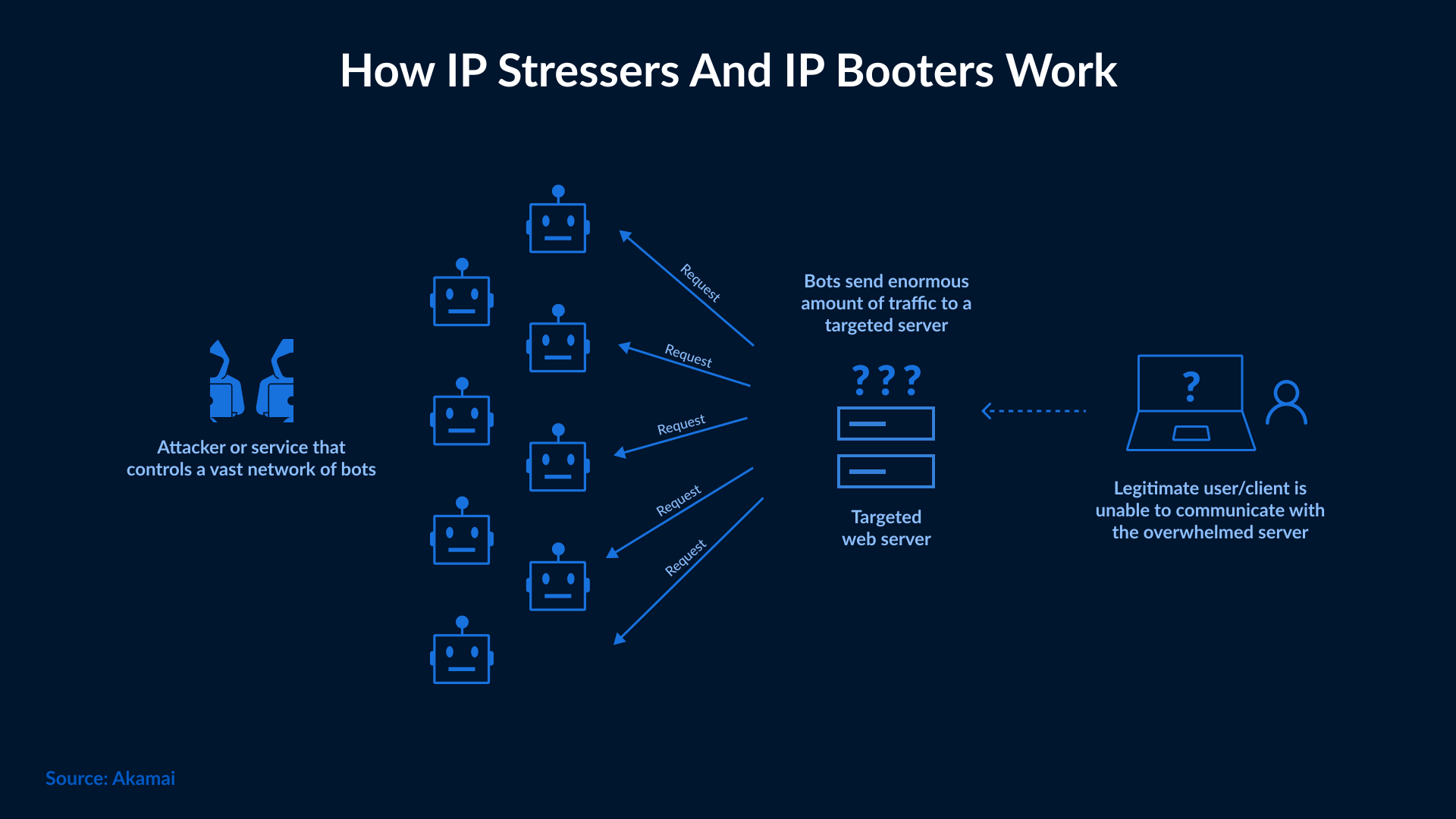
IP stressers, as discussed above, are special tools designed to send a large volume of data packets to the targeted IP. Attackers often target networks with a static IP because it remains constant, making it easier to flood repeatedly. The aim is to check the ability of the network to withstand the large influx of data traffic. When used by IT professionals, the method is legitimate and harmless. If cybercriminals perform the same thing, then it becomes a DDoS attack.
IP stressers leverage networks of compromised devices known as botnets to increase the volume of traffic at the target website. Seeing this large volume of traffic, the victim’s server can’t differentiate between legitimate and malicious requests. As a result, the website experiences service disruptions or downtime.
The process involves initiating a DDoS (Distributed Denial of Service) attack on the target, using multiple sources to overwhelm its resources. In a nutshell, IP stressers exploit vulnerabilities in network protocols and security measures to launch coordinated attacks on specific targets. The motive is to disrupt the service or extort money through threats of sustained attacks if the victim doesn’t fulfill the attacker’s demands.
Many IP stressers increase impact using techniques like reflection and amplification. In a DNS amplification attack, the attacker sends small, spoofed DNS queries to open resolvers. The servers reply with much larger responses sent to the victim. That multiplies the traffic hitting the target without exposing the real IP of the attacker.
Booter services hide these capabilities behind simple web panels. A customer chooses a target and pays the attacker to launch an attack at a specific time. This removes the technical barrier and turns DDoS into a commodity. Sometimes, operators bundle other tools. They may sell access to botnets or offer options to plant malware and backdoors for follow-up attacks.
It's hard to detect these attacks as they can come from many sources and use amplification techniques as well. Let’s discuss why attackers use IP stressers to take websites offline.
Why Attackers Use IP Stressers
Attackers use IP stressers and IP booters to disrupt services or gain leverage against a target. Earlier, IP stressers were dependent mostly on botnets, which are thousands of computers used to flood a target with traffic. Now, modern stressers use multiple powerful resources instead of just infected devices. They exploit high-capacity servers, use proxy networks, or even abuse cloud services to send huge volumes of traffic. The layered approach puts pressure on both network bandwidth and specific services, making it hard to stop the disruption.
Legal and Ethical Risks of Using a Stresser
There are several legitimate benefits for IT professionals who want to use IP stressers for network testing, provided they have proper consent from the network owner. In these cases, IP stressers can be used to:
Conduct a network stress test: IT professionals can use IP stressers to test vulnerabilities within the network during company audits. The stresser will provide information regarding the behavior of the network during high-traffic situations. Based on the data gathered, the network owner can optimize its services or improve security.
Test your DDoS mitigations: IT teams simulate DDoS attacks to check if their mitigation tools are effective against these attacks. This is useful for meeting compliance requirements or preparing for real attacks that could cause service downtime or financial loss.
Cybersecurity research: Ethical hackers or researchers may also use IP stressers on a network to find out its vulnerabilities.
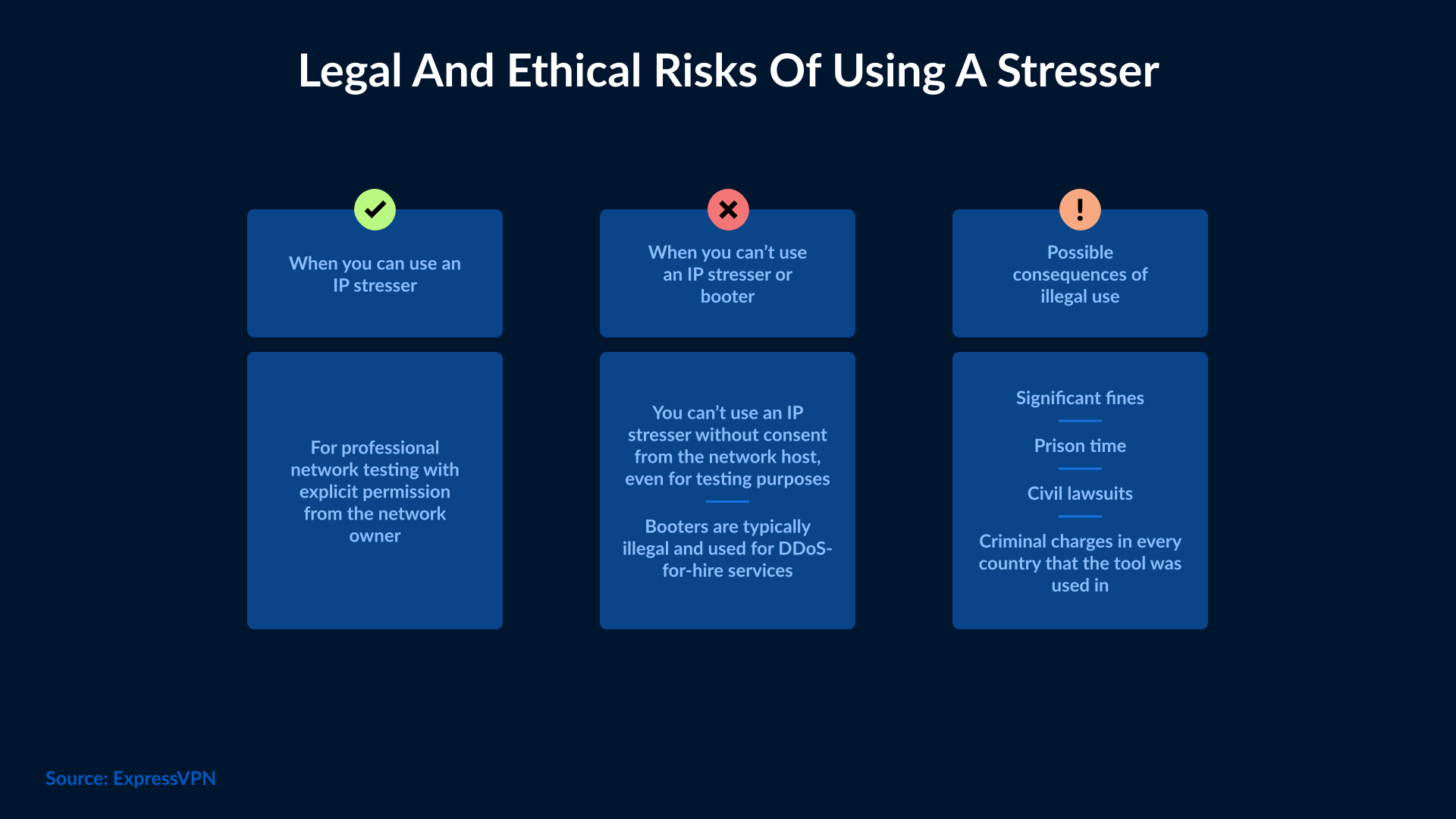
Consequences of using an IP stresser or booter illegally
Using an IP stresser or booter without authorization is illegal. Many countries penalize people for using this tool, while some even impose prison sentences. In the US, anyone found guilty of a felony related to cybercrime may even be banned from using computers under federal law.
Booters are not impossible to trace. In 2019, an Illinois resident named Sergiy P. Usatyuk was arrested and sentenced to 13 months in prison by the U.S. Department of Justice for his role in a DDoS-for-hire service. Detectives followed the breadcrumbs he left behind, like IP address access logs and PayPal transactions, to discover his real identity.
DDoS attacks often impact systems in multiple countries, which means attackers may face international prosecution. As law enforcement agencies work in tandem against individuals involved in DDoS-for-hire schemes, they can face criminal charges in every country where their tools were used.
A prolific hacker named Daniel Kaye was caught in the U.K. for carrying out DDoS attacks on several major companies. He was extradited to Germany, where he was found guilty of hacking Deutsche Telekom. After completing his sentence in Germany, he was taken to the UK to serve his sentence for carrying out a DDoS attack on Lonestar.
Business Impact of IP Stresser Attacks
An IP stresser attack can cause far more damage than temporary downtime. Customers quickly lose trust in a website that becomes unreachable. For an e-commerce business, even a few minutes of outage can result in abandoned carts and lost sales.
Prolonged disruptions can also affect employees who depend on connected systems to work. If multiple services, such as CRM, payment systems, and internal communication tools, stop responding, it can cause operations to slow down. All these factors severely hurt overall business productivity.
Financial losses are always a risk whenever downtime occurs. This is why companies spend heavily on emergency solutions and system recovery. Reputation, once damaged, takes a long time to repair because customers remember poor experiences long after operations return to normal.
How to Detect an IP Stresser Attack
Detecting a stresser attack early gives you time to react. The first warning sign is usually a sudden and unexplained spike in incoming traffic. You may notice a sharp rise in bandwidth usage, even though user behavior metrics remain unchanged.
Web servers become slow, and specific pages stop loading. Network monitoring tools may display a surge of requests from unusual locations or repeated attempts using the same protocols. You can also analyze logs to spot strange activity patterns, such as a rise in SYN packets or failed connection requests.
Another sign is that your upstream provider or CDN may send alerts about unusual traffic directed at your domain. At this point, contacting a professional cybersecurity service provider becomes critical because they can help detect these changes before they cause full outages. Monitoring tools should also track whether attacks shift between static and dynamic IP ranges. This information helps identify adaptive attack patterns.
How to Mitigate and Prevent IP Stresser Attacks
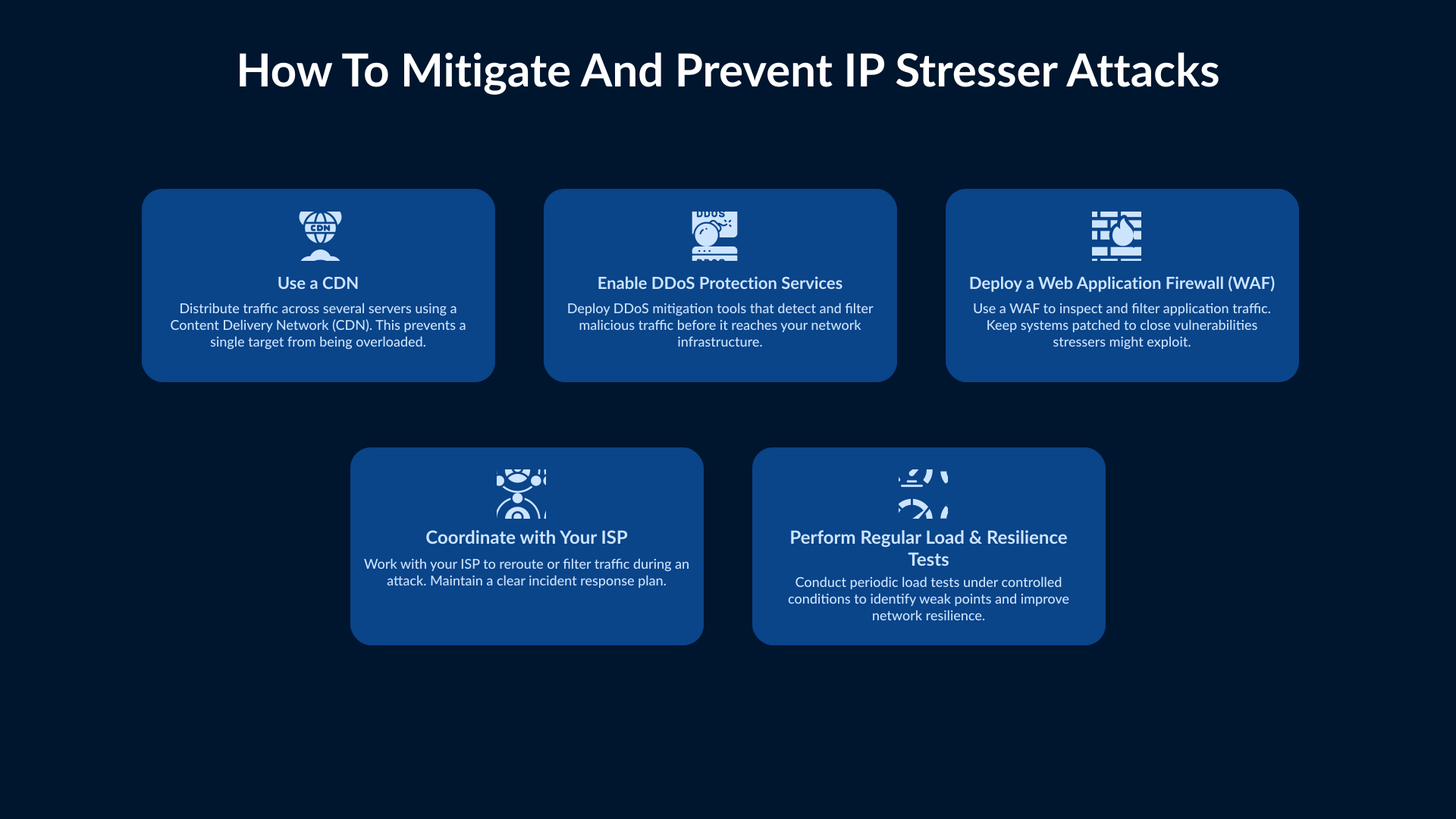
To prevent or reduce the impact of IP stresser attacks, you must strengthen the security of your business website. Here are some key points that help improve the website’s security for better protection:
Use a Content Delivery Network (CDN): A CDN distributes traffic across multiple servers. As the load is divided, the single target won’t be overwhelmed.
Enable DDoS Protection Services: These can identify and filter malicious traffic before it reaches your infrastructure. You can set thresholds and create custom rules to block suspicious requests.
Deploy a Web Application Firewall (WAF): It will inspect and filter traffic directed at your applications. Keep all systems updated to close vulnerabilities that stressers might exploit.
Connect with your Internet Service Provider (ISP): This step is important because your ISP can help redirect or filter traffic during an attack. If your organization uses a static IP, ask your ISP about IP rotation or masking options during active mitigation. You must also have a clear response plan that includes contact lists, escalation steps, and communication templates.
Load & Resilience Tests: You should perform periodic tests on your network under controlled conditions. This helps you identify weak points that attackers could exploit.
Legitimate Load Testing: Safe Alternatives
You can lawfully test the performance of your network under pressure using various tools such as Loader.io, Apache JMeter, and BlazeMeter. These allow organizations to simulate real users and measure system performance.
Make sure to get written consent from the network or application owner. Define clear boundaries for the test and ensure the test traffic stays within the company’s infrastructure. Legitimate tools log all activity, and you can see everything about the test on their dashboards.
It’s always better to work with trusted cybersecurity partners because they follow compliance standards and ensure your testing stays within legal limits.
What to Do If You’re Under Attack
It’s important to act quickly while staying organized. Here are the steps you should follow when you are under attack by an IP stresser:
Confirm the attack: Analyze the traffic. If you find anything unusual, alert your ISP or hosting provider. They will reroute or block malicious traffic at the network edge.
Activate your incident response plan: Disable all non-essential services and preserve network logs, as these records will help identify attack patterns later. Communicate clearly with your internal teams as well as customers using prepared updates instead of ad-hoc messages.
Escalate the incident with a cybersecurity team: If your business uses an MSP or SOC, escalate the event to them. They have the proper tools and expertise to mitigate the attack.
Once the attack stops, document the incident and review your response actions. Based on lessons learned, you will have to update your security to avoid future attacks.
Conclusion
IP stressers and booters are no longer underground tools. They have become more organized as a DDoS-for-hire service model that can target organizations of any size and cause serious financial and reputational losses.
To protect your organization, you must understand how these attacks work and learn to detect them early. SafeAeon helps organizations stay protected against IP stresser and booter attacks by offering layered protection. Strong preparation and regular testing are the only ways to protect your business from such attacks.