

Key Takeaways
Introduction
It is not always malware or a sophisticated tool that results in cyber threats. Sometimes, this happens through a convincing email or a request that appears trustworthy. There have been occasions where attackers created a moment of urgency to lead someone into clicking, sharing, or approving without realizing the consequences. This is social engineering.
But what exactly is social engineering? Well, it is a type of cyberattack in which attackers manipulate people (employees, partners, contractors and customers) into revealing their sensitive information, transferring funds, and granting access. Attackers use phishing, impersonation and other deceptive methods to obtain sensitive data, money, or unauthorised access. Social engineering attacks are successful because they exploit common human emotions such as fear, urgency, and familiarity. This blog looks at the dangers of social engineering attacks and practical steps organizations can take to reduce their exposure to social engineering attacks.
How Social Engineering Attacks Work
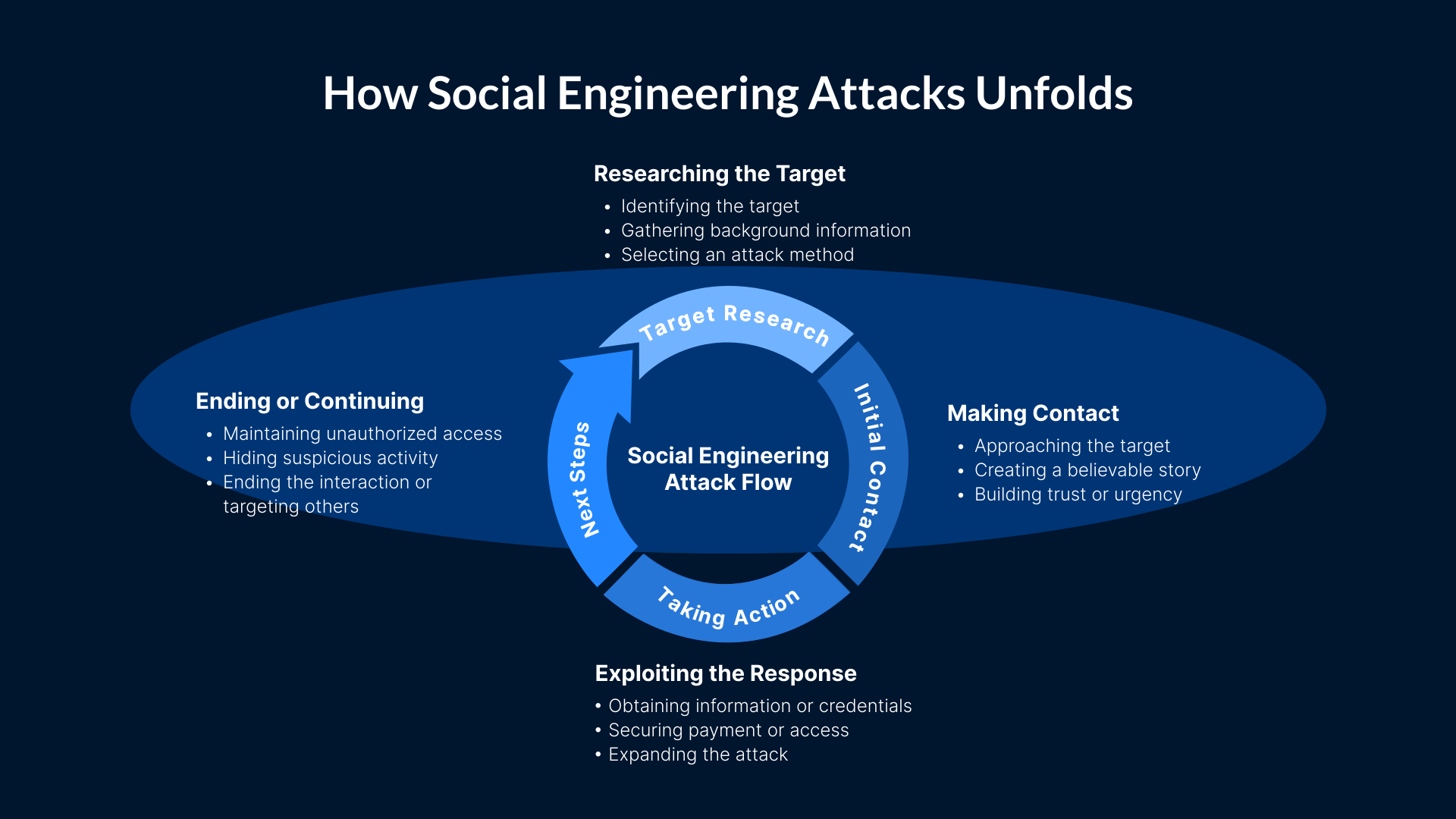
Social engineering is a common technique used in modern cyberattacks. In these attacks, attackers use deception and trust to gain initial access. This makes social engineering a common entry point for larger security incidents.
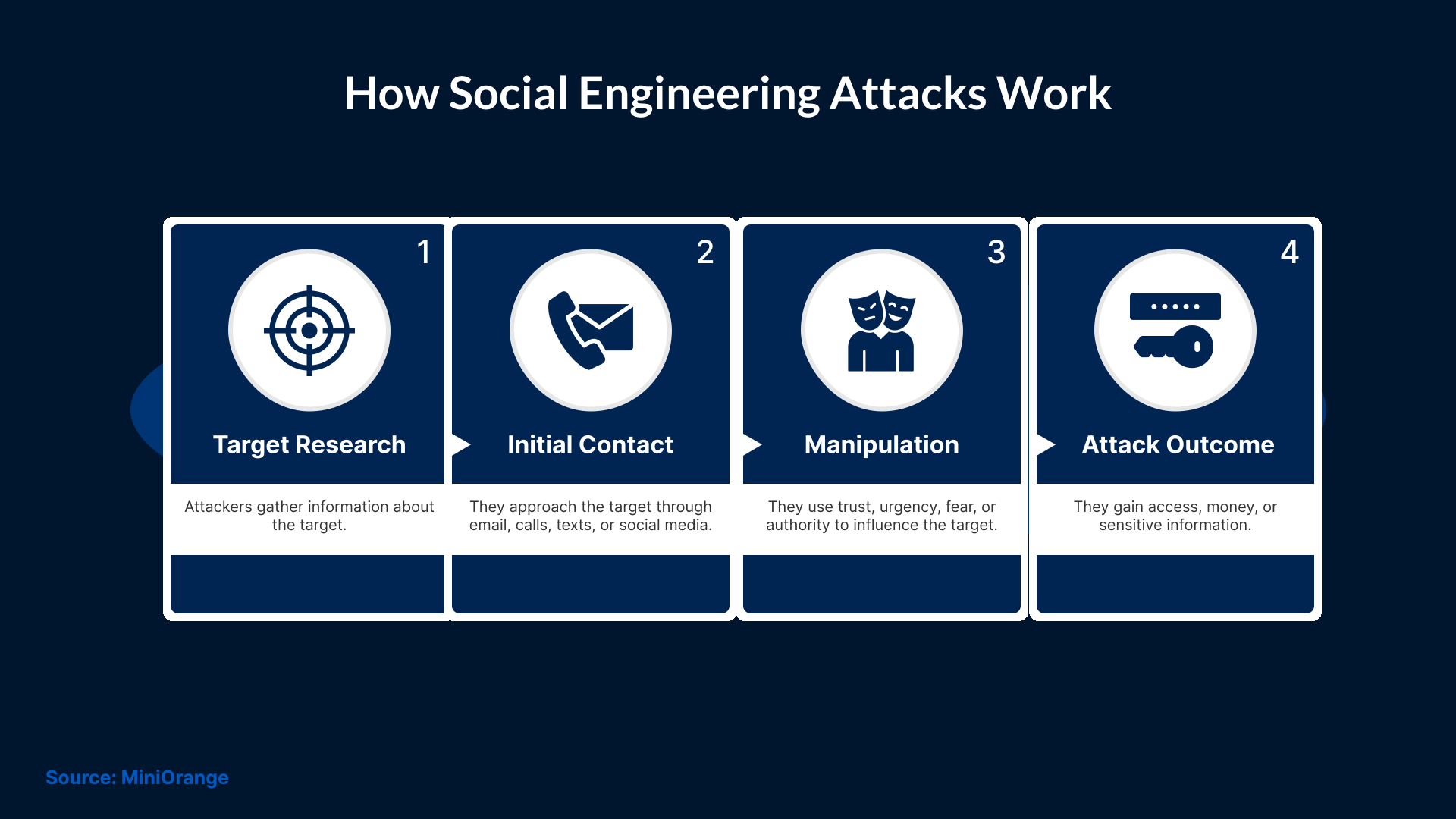
A social engineering attack may begin with someone posing as an executive or trusted partner to bypass verification processes. Attackers may send a convincing email or text message to pressure employees into approving requests or sharing credentials. They may also use phone calls and pose as a senior executive. Once attackers compromise the user’s account, they gain access to internal systems, sensitive data, or privileged workflows. They can also move laterally or escalate privileges.
Why Social Engineering Is Effective
Social engineering is a major cybersecurity threat that is responsible for numerous data breaches and network compromises. But what makes social engineering so effective? Let’s discuss:
- Exploiting Human Emotions: Social engineering exploits human emotions, including greed, fear, urgency, and sympathy. Attackers exploit the natural desire of humans to be helpful. They portray themselves as someone who needs help, making it hard for people to refuse their requests.
- Trust in Authority: Attackers impersonate senior executives or other trusted authority figures of the same organization and request sensitive information or ask employees to approve payments, which employees are most likely to assume as if it has come from an authoritative figure.
- Willingness to Help: Sometimes, the personality of people makes them susceptible to social engineering. Attackers exploit employees’ willingness to help, especially when a request appears urgent or comes from a trusted person.
- Targeted Information: To carry out successful social engineering attacks, attackers spend time gaining as much intelligence as they can about their targets through social media and corporate websites. That information is used to create personalized and convincing narratives, which help establish trust and rapport. Some attackers build trust over several conversations, while others use the information they collect to make an email, message, or phone call appear legitimate.
- Fear of Missing Out (FOMO): This is another psychological phenomenon exploited by attackers to prey on victims. They may use fake offers, urgent rewards or exclusive access to lure people into clicking links or sharing personal information. Seeing such messages, many people go into FOMO mode and act impulsively without verifying the authenticity of the email or message.
- Influence of Social Proof: People are more likely to respond to messages that are supported by their colleagues or recognized Organizations. Attackers exploit this psychology by using fake reviews, endorsements, references, or claims to make a request appear trustworthy.
Types of Social Engineering Attacks
Social engineering attacks take many different forms. To prevent these attacks, you need to understand what they look like and how you might be targeted. So, without any further ado, let’s discuss each social engineering attack.
Phishing
Phishing is one of the most common types of social engineering attacks. In this, attackers use spoofed email addresses and links to trick people into providing personal information such as login credentials, credit card numbers, and more. Phishing has several variants, and each uses a different method or targets a specific type of victim.
Spear Phishing
Spear Phishing goes a step beyond the phishing concept as attackers create tailored messages to a specific individual or organization. They carry out deep research to personalize the content, in which they add names of the target’s colleagues or current projects they are involved in. This helps make the email appear credible and relevant. Spear phishing is harder to detect than regular phishing because it appears to be a genuine message from a colleague or trusted business contact. Spear phishing often paves the way for deeper network intrusions.
Whaling
Whaling is a type of phishing attack in which attackers target C-level executives and top government officials. They spoof the email addresses of other high-ranking people in the company to send messages about a fake emergency or time-sensitive opportunity. The objective is to obtain confidential, sensitive information, payments, or privileged access.
Business Email Compromise
Popularly known as ‘BEC’, it uses messages that appear to come from a trusted business contact. Attackers may use compromised accounts, spoofed addresses, or lookalike domains. They often request login credentials, fund transfers, or other sensitive information. Phishing is often considered the root cause of compromise for BEC attacks.
Smishing
Smishing, or SMS phishing, involves text messages that include malicious links or prompts. People believe these messages because they assume they come from trusted sources. They click links or prompts without verifying the authenticity of the message. As a result, people unintentionally disclose credentials, make payments, or download malware on their devices.
Vishing
Vishing is the short form of Voice Phishing. This tactic uses phone calls to manipulate victims into disclosing sensitive information. Attackers impersonate bank officials, law enforcement, or IT support to establish credibility. Attackers create direct pressure on the victims through conversations, even using persuasive dialogue or threatening language to overwhelm victims.
Quishing
Quishing is a social engineering tactic where attackers use malicious QR codes to trick victims into downloading malware or visiting fraudulent websites. Attackers typically embed these codes in phishing emails or paste them over legitimate QR codes in public places. Because QR codes hide the destination from immediate view, users may find it difficult to assess the link before scanning it.
Pretexting
Pretexting is a sophisticated type of social engineering attack in which a scammer creates a fabricated scenario to trick a victim into providing sensitive information, such as login credentials, credit card details, or access to secure systems. This attack occurs not only online but also offline, in which an attacker impersonates a vendor or delivery driver to gain access to your data by first earning your staff’s trust.
Baiting
Baiting uses an attractive offer or reward to persuade targets into taking an unsafe action. It could be a free gift card for taking a survey or anything similar. As a user clicks the link to take the survey, they are redirected to a spoofed Office 365 login page that captures their email address and password and sends them to the attackers.
Quid Pro Quo
Quid Pro Quo is a Latin phrase that means ‘Something for Something’. In this attack, attackers trick victims into providing sensitive information or system access in exchange for a desirable service or benefit. The scam takes advantage of human nature to reciprocate good gestures. Unlike phishing campaigns that target several people at once, Quid Pro Quo usually involves direct, conversational engagement. Here, attackers build trust and a sense of obligation before requesting sensitive information or access.
Scareware
In this type of attack, scammers insert malicious code into a webpage that causes pop-up warnings and alarming sounds to trick you into believing your device is infected with a virus. The goal is to create a panic so that you download the fake antivirus software that they suggest or pay for the unnecessary services that actually install malware or steal your data.
Tailgating
Also known as Piggybacking, tailgating is a physical social engineering technique where an attacker follows an authorized person into a secure or restricted area and then pretends to have forgotten their access card. They also try to engage the target in a conversation by showing great courtesy and helpful behavior. The motive is to bypass security barriers to steal sensitive information from restricted areas.
Impersonation Attacks
These attacks occur when an attacker pretends to be a trusted person or organization to request sensitive information or fund transfers from employees. Traditionally, these attacks occurred through phone calls and emails, but now attackers use artificial intelligence (AI) to clone the voices of top-level management or create deepfakes that look and feel almost real.
Watering Hole
In this attack, attackers compromise a legitimate website that their targets often visit. The website may then deliver malware or exploit a vulnerability. In some cases, it often redirects users to another site where attackers steal sensitive information and use it to breach the targets' network or install a backdoor Trojan to access it.
Social Engineering Attack Comparison Table
The table below compares common social engineering attacks based on how they are delivered, what attackers typically want, and what makes each method different.
| Attack Type | Main Channel or Approach | Common Objective | Key Difference |
|---|---|---|---|
| Phishing | Mass emails or messages | Steal credentials, data, or money | Targets a broad group with generic messages |
| Spear Phishing | Personalized emails or messages | Gain access or obtain sensitive information | Targets a specific person or organisation |
| Whaling | Targeted executive communication | Obtain payments, access, or confidential data | Focuses on senior executives and high-value targets |
| Business Email Compromise (BEC) | Compromised or impersonated business email | Redirect payments or obtain sensitive business data | Uses trusted business relationships and payment workflows |
| Smishing | SMS or mobile messages | Steal credentials or encourage malicious actions | Uses text messages instead of email |
| Vishing | Phone calls or voice messages | Obtain credentials, verification codes, or payments | Relies on voice-based persuasion |
| Quishing | Malicious QR codes | Redirect users to fake websites or malware | Hides the destination behind a QR code |
| Pretexting | Fabricated identity or situation | Obtain information, access, or approval | Uses a believable story to gain trust |
| Impersonation Attacks | Email, calls, messaging platforms, or social media | Gain access, information, or payments | Involves posing as a trusted person or organisation |
| Baiting | Free downloads, devices, offers, or rewards | Deliver malware or steal information | Uses something attractive to encourage action |
| Quid Pro Quo | Offer of help, service, or benefit | Obtain credentials or sensitive information | Promises something in exchange for cooperation |
| Scareware | Fake security alerts or warnings | Force users to install software or make payments | Uses fear to trigger immediate action |
| Tailgating | Physical access to restricted areas | Enter secure locations without authorization | Relies on another person providing physical access |
| Watering Hole Attack | Compromised trusted website | Infect devices or steal credentials | Targets websites commonly used by a specific group |
Real-World Examples of Social Engineering Attacks
Social engineering attacks have become prevalent in recent years. Here are three famous incidents in which various social engineering tactics were used to obtain sensitive information, money, or unauthorized access.
1. The $25 Million Deepfake Meeting (Arup)
This incident took place in January 2024. What happened was that a finance worker at Arup, a UK-based engineering company, received an email supposedly from their ‘boss’ asking for a fund transfer. The worker didn’t approve the request due to suspicion, so they were invited to a video call. The victim took part in the video call, where top executives were present, who were later found to be AI-generated versions of company executives. But the worker believed the video and transferred $25.6 million to scammers.
2. The Transit System Phone Hack (Transport for London)
This incident occurred in Autumn 2024, when attackers called the transit company’s IT help desk. They pretended to be real employees who were locked out of their accounts. They convinced the IT help desk workers to reset the passwords. As a result, they were able to access the system and steal bank details of 5,000 customers. This caused $38 million in damages.
3. The Fake Advertising Video Call (WPP)
This is another famous incident that occurred in mid-2024. Fraudsters targeted a massive advertising agency using the same deepfake video trick used against Arup. They created a fake video of the company’s CEO to demand money. But this time, things didn’t go as planned when alert employees noticed subtle, strange movements and glitches during the video call. They realized it was a scam and stopped the transfer. No financial loss occurred in this case.
Warning Signs of a Social Engineering Attack
To prevent social engineering attacks, you must understand the warning signs. AI has made some social engineering attempts more convincing, but traditional warning signs remain relevant. Here are the common warning signs to detect a social engineering attack:
- Urgent Action: If you receive any request where you’ve been asked to act immediately without verifying, be very careful.
- Unusual Request: If a known contact requests something outside their normal behavior or responsibilities, consider it a warning sign.
- Bypass Procedures: Be cautious if someone pressures you to bypass normal approval processes or keep the request confidential.
- Payment or Credentials: Independently verify requests involving payment, credentials, or access changes made through phone or text message.
- Unusual Timing: Treat requests made outside business hours or from unfamiliar numbers with caution.
- Voice or Video: Verify unexpected payment instructions received through voice or video calls, even if the person looks or sounds familiar.
It’s important to verify the requests through other trusted channels before approving them, especially involving payments, credentials, or access.
How Organizations Can Prevent Social Engineering Attacks
As social engineering attacks have become more personal and attackers use multiple channels to carry them out, it’s difficult to identify a single method to defend against them. Organizations need to amp up their security measures and invest time in employee training to prevent social engineering attacks. Here’s what organizations need to do to protect themselves against social engineering.
- Create a positive environment where employees don’t feel hesitant while reporting suspicious activities.
- Organizations need to set clear guidelines on how employees handle sensitive information. There must be a clear process for responding to potential threats. Employees must know who to contact if they suspect a security breach.
- Employee training is one of the most important aspects to prevent social engineering tactics like phishing emails and phone scams. Organizations must teach employees how to spot suspicious requests and verify requests before sharing sensitive data.
- Conduct simulated attacks to test the readiness of the team. With this, organizations can identify areas where additional training might be required.
- Implement multi-factor authentication (MFA) to add protection beyond passwords and make unauthorized account access more difficult.
- Use advanced security tools like antivirus, firewalls, and email filters to protect the environment against malicious activities.
- Keep software programs up to date with the latest patches. This prevents attackers from exploiting known vulnerabilities in your systems.
- Monitor your network on a regular basis for any unusual activity. This will help identify and contain potential threats early.
- Physical security is also important, so make sure you are using access controls and surveillance to protect sensitive areas from unauthorized entry.
What to Do After a Social Engineering Attack
A social engineering attack can occur even if an organization has implemented strong security controls. So, it’s important to be prepared for these attacks to reduce recovery time. Here’s what organizations should do after a social engineering attack:
Quick Reporting: Employees who were targeted by attackers should know what steps to take if they disclosed sensitive information or granted access. With quick and clear reporting, security teams can act before the issue spreads.
Sharing Details: Employees will need to provide all the details, such as how the attackers interacted with them, whether the attack began by clicking a link or downloading an attachment. Employees will also need to provide information about what the attackers requested, whether they asked for credentials, fund transfers, or access. Based on this information, security teams can take the appropriate actions, such as resetting affected passwords, isolating compromised devices, or stopping or recalling the fraudulent transfer.
Reviewing Access: Organizations should check for any unusual activity. All access must be reviewed after the incident. Accounts that were involved in the attack should be reset to prevent further damage.
Checking Payments: Get in touch with the finance team or banking officials to confirm whether any fraudulent payments were made. Keep all evidence safe, including call details, messages, and system logs, as they will help during the investigation.
Notifying Teams: Keep all the relevant teams in the loop, including legal, finance, and compliance. This becomes even more important when the incident involves financial fraud or data exposure.
Incident Response: It’s important for teams not to treat social engineering as a user error; instead, they should consider it an incident type. This will help them respond more calmly and reduce the long-term impact.
Updating Controls: Once the incident is contained, organizations should review what happened and update security controls. They should also conduct training sessions for employees to address gaps that attackers exploited.
Conclusion
What makes social engineering effective is its ability to align naturally with how people work and communicate. No single control can prevent these attacks on its own. Organizations need to implement clear processes to reduce exposure. Apart from that, they need to raise employee awareness through regular training.
When organizations address human behavior and limit unnecessary information, they can reduce the likelihood of social engineering attacks. Organizations can also provide employees with clear verification steps. Technical controls can provide an additional layer of protection. When teams know how to respond when something goes wrong, they can contain the damage and recover faster.
SafeAeon helps organizations enhance security controls and improve employee awareness through phishing simulations and security training.