

Key Takeaways
- Vulnerabilities are no longer a slow-moving risk. The 2024 Verizon DBIR reported a 180% rise in exploitation as an initial entry point, with web application flaws playing a major role.
- Ransomware damage costs reached $42 billion in 2024 and are projected to climb to $265 billion annually by 2031, according to Cybersecurity Ventures.
Introduction
Malware remains a serious threat to organizations of all sizes. It can steal data and disrupt the entire business operations. Delayed detection can also open the door to larger attacks.
Attackers now use malware in more targeted ways. In some attacks, they deploy ransomware while in others, they rely on credential theft or unauthorized access. Detecting malware can be difficult, especially when attackers are using fileless techniques and automation.
Basic security tools are not sufficient to detect and contain malware. This is why organizations need a clear incident response plan. Additionally, they need threat intelligence to help teams understand the threats they face.
Incident response enables security teams to adopt a structured approach to handling malware incidents. They can confirm the threat and remove the malware. As a result, limited damage is done, and affected systems are restored quickly.
Threat intelligence adds context throughout the process, enabling teams to understand attackers' behavior, the campaigns they run, and signs of compromise.
Why Are Incident Response and Threat Intelligence Important?
Responding to incidents and gathering information about threats are important parts of a strong cybersecurity plan. When a company follows a structured process to detect, contain, eradicate, and recover from a malware incident, this is called incident response. Threat intelligence focuses on gathering, analyzing, and sharing information about new threats and attacker tactics.
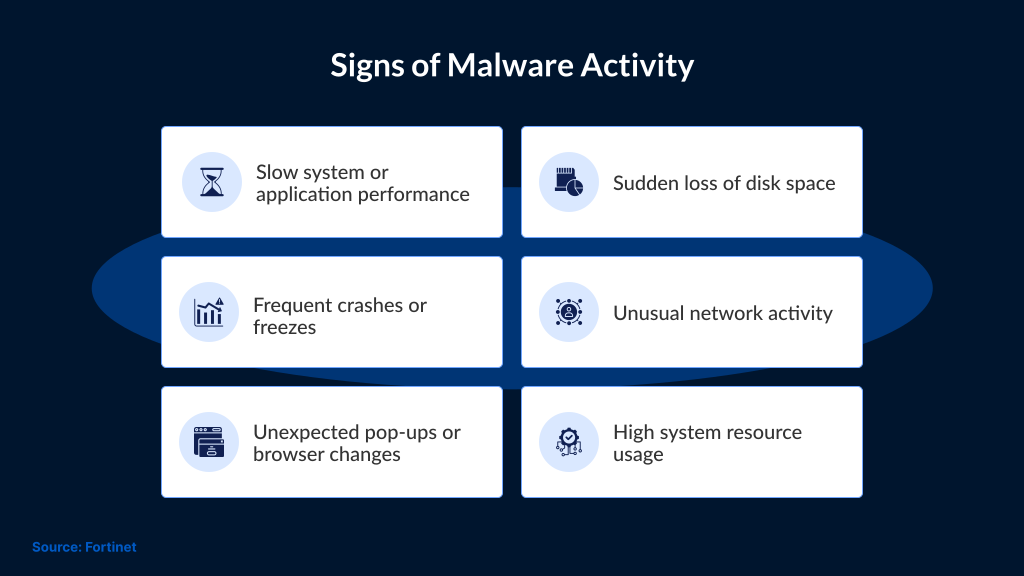
Threat intelligence works better when there is a clear incident response plan in place. It is important to clearly define each team’s roles and responsibilities in this plan. Besides, it is crucial to have the right tools and platforms in place. Through those tools, teams can quickly detect and contain malware threats. Threat intelligence helps organizations stay up to date with current malware activity. It also highlights risks that may affect their systems.
Organizations can be more proactive by combining incident response and threat intelligence. Not only that, but they become more effective against cyberattacks. This can help reduce the risk of malware attacks and minimize damage if they occur.
This blog explains how incident response helps teams handle malware incidents in a structured way. Each step allows teams to take suitable actions during an active threat.
It also explains how threat intelligence supports this process. It helps teams understand what kind of threat they are dealing with and how attackers may be operating.
Having a clear response process allows teams to act quickly when malware is detected. Threat intelligence adds context to that response, allowing teams to better understand the threat and decide the next action.
The Basics of Responding to An Incident
Finding and stopping incidents
- Using Security Tools: Security teams can use security tools like intrusion detection systems (IDS), intrusion prevention systems (IPS), and endpoint protection solutions to detect and contain malicious activity.
- Checking Network Traffic: Network traffic can show early signs of malware activity. Therefore, security teams should review unusual transfers, unknown connections, and access attempts that do not match normal behavior.
- Looking at Logs: Logs help teams understand what happened before and during an incident. They can help teams identify failed logins and file access changes. Even system activity that needs further review can be viewed in logs.
- Using Threat Intelligence: Use threat intelligence feeds to identify known indicators of compromise (IOCs) and detect possible malware activity earlier.
- Using Anomaly Detection: There are different anomaly detection techniques that teams can use to identify behavior that differs from normal activity and may indicate a security incident.
Eradication and Recovery
- Isolating Infected Systems: Doing this will help limit malware spread and reduce the risk of data theft.
- Getting Rid of Malware: Use approved malware removal, forensic, or reimaging methods to remove malware and any associated rootkits.
- Installing Security Updates and Patches: Try to keep systems up to date and apply patches on time in order to fix known vulnerabilities that attackers may exploit.
- Restoring Systems and Data: Always use clean and verified backups to restore systems and data after the threat has been removed.
- Forensic Analysis: Conduct a forensic analysis to understand what happened and identify the root cause. Based on the findings, teams can improve their future response.
Strategies for Threat Intelligence
Getting Threat Intelligence
- Open-Source Intelligence (OSINT): Use public sources such as news articles, security blogs, forums, and social media to learn about new threats and attacker tactics.
- Commercial Threat Intelligence Feeds: Use paid threat intelligence services that offer tailored threat data, such as indicators of compromise (IOCs), indicators of attack (IOAs), and threat actor profiles.
- Internal Threat Intelligence: External feeds show known threats. Internal data shows whether similar activity is happening in your own environment.
- Partner Collaboration: Some threats affect more than one organization. Trusted partners can help confirm if the same activity appears elsewhere.
Threat Intelligence Analysis
- Identifying Trends and Patterns: Review attack data to find patterns, trends, and new threats that could affect your business.
- Prioritizing Threats: Assess the likelihood and potential impact of threats to enable security teams to prioritize response efforts and resources.
- Understanding Attacker Behavior: Learn about adversaries’ goals, tactics, techniques, and procedures to better predict activity and improve defenses.
- Correlating Threat Intelligence with Security Events: Compare threat intelligence data with security events to identify possible incidents and take appropriate action.
Sharing Threat Intelligence
- Sharing Threat Information with the Right Teams: The same threat details may not matter to every team. SOC analysts may need technical indicators, while IT teams may need clear action steps.
- Adding Threat Intelligence to Security Tools: Threat intelligence works better when teams use it inside existing tools. This gives alerts a good amount of context during investigation.
- Making Threat Intelligence Playbooks: Create playbooks that define specific response steps for different threat types.
- Providing Threat Intelligence Training: Employees do not need deep knowledge of threat research. It's important to inform them what suspicious activity looks like and when to report it.
Best Practices for Incident Response and Threat Intelligence
Building a Strong Security Foundation
For incident response and threat intelligence to work well, organizations need a strong security foundation. This includes:
Creating a Full Incident Response Plan
When it comes to mitigating the impact of a malware attack, a proper incident response plan plays a crucial role. The plan should include the following:
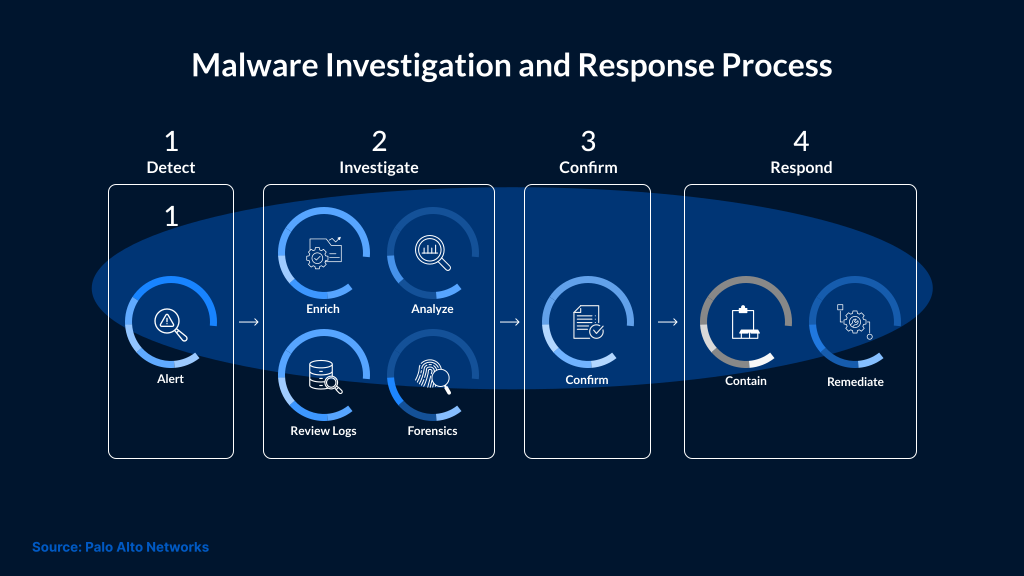
- Incident Detection: Teams must set up processes to identify and report security events.
- Containment: Once the infected systems are identified, teams should isolate them to reduce further damage and data loss.
- Eradication: Remove the threat or malware and then verify that affected systems are clean.
- Recovery: Restore systems and data from verified clean backups.
- Post -Incident Analysis: Teams must analyze as to what exactly happened and find the root cause of the incident to take corrective action.
- Response and Intelligence Integration: Use threat intelligence throughout the process to improve detection, investigation, and containment. It will also help teams get ready for the future.
Using Threat Intelligence
Threat intelligence provides information about new risks, attacker behavior, and potential weaknesses. Here are some of the important ways to use threat intelligence:
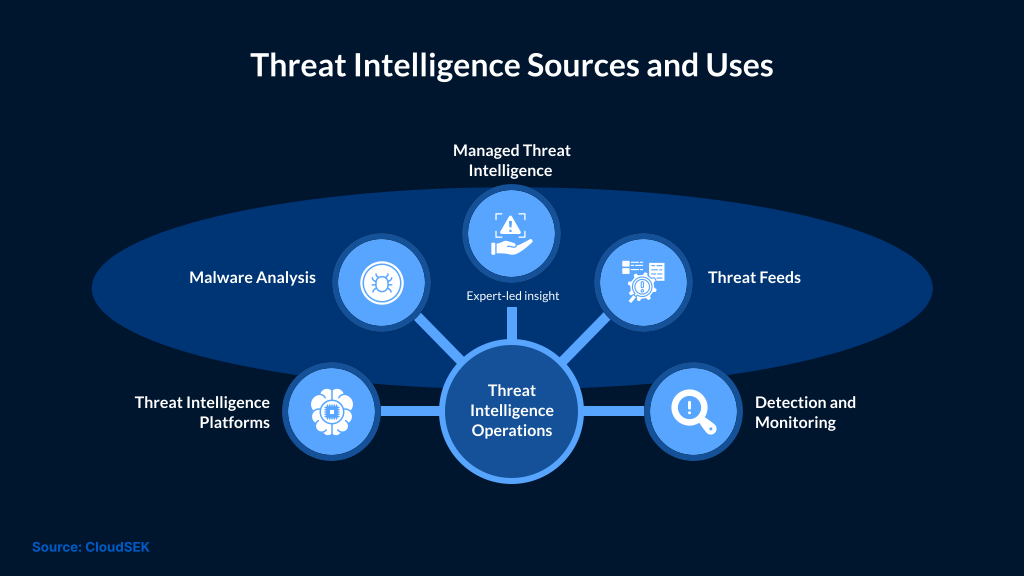
- Collecting Threat Data: Teams should gather data from different sources, such as open-source intelligence, commercial threat feeds, and internal threat intelligence.
- Analyzing Threat Data: Review threat data to see which risks may affect the organization.
- Sharing Threat Intelligence: Share threat information with the teams that need to act on it.
- Operational Use: Use threat intelligence to update detection rules. It can also help teams choose the right response steps.
Continuous Improvement
Incident response should not stay the same for years. Malware changes, so the response process must change too.
- Testing the Plan: Test the response plan before a real incident. This helps teams find unclear roles or slow approval steps.
- Tracking Current Threats: Follow how malware tactics change. This helps teams update their response before attackers use the same gaps again.
- Sharing Incident Findings: Share useful findings with trusted partners when it helps them spot the same threat. Do not share sensitive internal details unless needed.
- Reviewing Security Tools: Check whether security tools help the team act faster. Tune them if they create too many alerts or miss important activity.
A stronger response process provides teams with greater clarity during a malware incident. It also helps reduce business disruption.
Conclusion
Malware response is not only about removing the threat. It’s also important for teams to understand what triggered the alert in the first place and what it could lead to next. They can use threat intelligence for this purpose.
Organizations need a comprehensive approach to improve their security posture. The approach is based on early detection, containment, and removal of the threat. Also, part of the approach is how recovery is done and the post-incident analysis. An organization that stays up to date on new threats can protect its valuable assets and reduce the potential damage from malware attacks.
Continuously improving response plans is key to reducing risk. If you are looking to improve cybersecurity and prepare for current malware threats, consider partnering with SafeAeon for expert incident response and threat intelligence support.