

Key Takeaways
- Over 70% of cloud breaches come from compromised identities, and this trend grows quickly as attackers use AI to exploit IAM weaknesses. (SentinelOne)
- It takes an average of 276 days to identify and contain breaches across hybrid cloud environments. (IBM)
Introduction
As businesses increasingly adopt hybrid cloud environments to gain flexibility and scalability, ensuring their security becomes a top priority. The hybrid cloud mixes resources from both public and private clouds, making operations more efficient than ever. But this connected design also poses significant risks, including data breaches, misconfigured systems, and unauthorized access. According to new studies, 82% of businesses had security incidents in their cloud environments in 2023. This shows how important it is to quickly implement more advanced security measures.
A key part of finding and fixing vulnerabilities in these settings is using a well-functioning cloud security posture management (CSPM) tool. It enforces policy compliance and reduces the risk of misconfiguration. To protect themselves against potential threats, businesses need to adopt comprehensive hybrid cloud risk management plans that include real-time monitoring and logging, encryption protocols, and zero-trust frameworks. In today's digital-first world, it's not enough to have hybrid cloud systems; you also have to actively protect them.
How to Reduce Risks in Hybrid Cloud Security?
To successfully reduce risk, businesses need to use a multi-layered security approach tailored to the unique features of the hybrid cloud. CSPM solutions are necessary to continuously monitor cloud setups and ensure they align with best practices. Identity and access management (IAM) tools prevent unauthorized users from accessing sensitive data, and encryption methods protect it.
Hybrid cloud risk management also involves using technology to identify and address threats. Businesses can identify and address risks more effectively by using behavioral analytics and anomaly-detection platforms. Regular security checks and employee training further strengthen defenses, ensuring comprehensive cybersecurity. Businesses can protect their valuable assets and encourage growth and innovation by prioritizing hybrid cloud security. Businesses can succeed in a competitive, cloud-based market by using proactive tactics.
Understanding Hybrid Cloud Security
The tools and methods used to keep private data, apps, and resources safe in hybrid cloud environments are known as hybrid cloud security. On-premises, private, and public cloud systems are all used in these settings. For businesses to properly protect their hybrid cloud infrastructure, they need strong security across all of their complex deployments. This gives security teams a way to control rules, permissions, and access all from one place.
Hybrid cloud security is an important part of data protection because it ensures that private data is kept and transmitted safely between hybrid cloud platforms. Public clouds like Amazon Web Services (AWS), Microsoft Azure, and Google Cloud let you access tools and apps from afar. These service providers are responsible for protecting infrastructure, but organizations remain responsible for protecting their own data. Private cloud environments, on the other hand, offer organizations greater flexibility but are more expensive and harder to set up.
Most of the time, private clouds are used to store sensitive data, while public clouds handle less sensitive data. As hybrid cloud strategies become more common, companies gain greater freedom and a wider range of deployment options for their data. Effective security governance is essential for operating hybrid cloud environments securely.
According to David Smith, Gartner, “Most enterprises will adopt a hybrid cloud strategy, as almost no company can afford to put everything in a public cloud or do everything itself."
Security Benefits of Hybrid Cloud Architecture
A hybrid cloud architecture provides several security advantages, including:
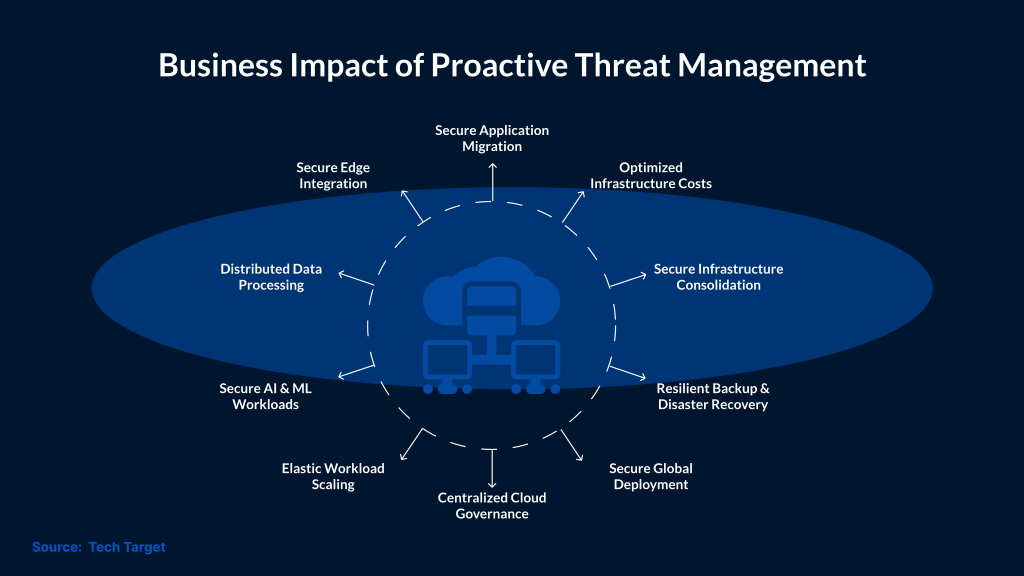
- Managing security risk: Hybrid clouds let businesses store less sensitive data with third-party providers and keep sensitive data in their own private systems.
- Avoiding single points of failure: Cyberattacks like ransomware are less likely to cause data loss when data is spread across various clouds.
- Meeting cross-border data residency and regulatory requirements: Hybrid clouds help businesses follow privacy rules like GDPR or CCPA.
Organizations can strengthen their defenses by implementing appropriate hybrid cloud security solutions:
- Cutting down on the number of places an attacker can get in is important for modern security tools like microsegmentation.
- Zero-trust architecture enforces identity verification and least privilege access to ensure that users only access data and apps that they are allowed. This helps reduce the chances of unauthorized access.
Common Hybrid Cloud Security Challenges
It can be hard to keep hybrid cloud environments secure, especially for businesses that must comply with strict rules. Some common problems are:
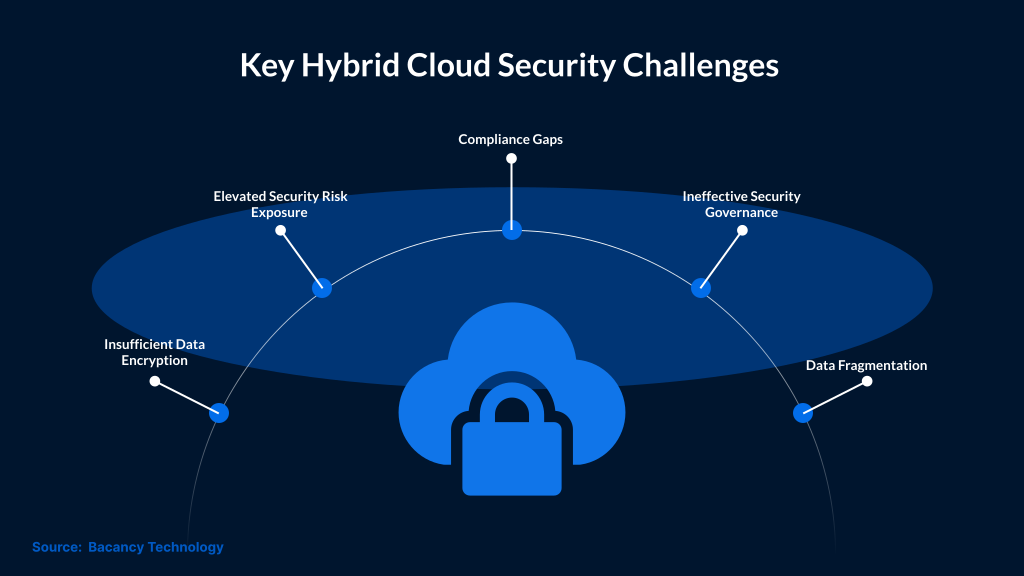
- Shared security responsibility: Organizations must clearly understand the shared responsibility model between cloud providers and customers.
- Incident response coordination: Coordinating incident response across multiple cloud provider infrastructures can be complex and operationally challenging.
- Security for applications: A comprehensive application security strategy is required to make sure that cloud applications are safe from a wide range of threats.
- Identity and access management (IAM): Multifactor authentication (MFA) is often needed along with IAM to keep access to cloud services safe.
Core Components of Hybrid Cloud Security
There are many important parts that make up hybrid cloud security. All of them work together to keep data and resources safe in hybrid settings. These components collectively establish governance, visibility, and control across hybrid environments. Important parts include:
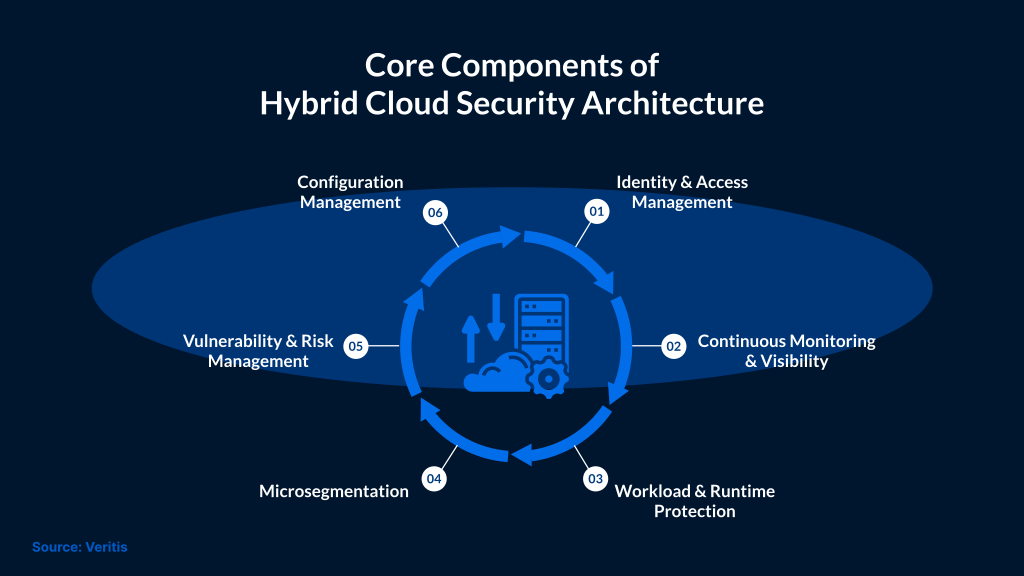
Authentication: Identity and access management (IAM) tools verify users and control access, ensuring only authorized users can access resources.
Configuration Management: This includes maintaining cloud access and security rules, ensuring they remain safe and up to date with the latest best practices by managing, auditing, and updating them.
Vulnerability Scanning: Both private and public cloud systems are scanned regularly to find, evaluate, and fix any vulnerabilities that are found.
Microsegmentation: Networks are split up into several manageable zones. This lets network managers control traffic going east to west and stop attackers from moving laterally within the network.
Compliance Management: Tools ensure that an organization complies with regulatory requirements, helping it avoid legal trouble and financial losses.
Security Information and Event Management (SIEM): SIEM systems monitor security events across the hybrid cloud, generate alerts, and analyze them in real time.
Workload Security: This protects the apps, services, and workloads running in the hybrid cloud from cyber threats. Perimeter defense means protecting the edges of the network with firewalls, VPNs, and API gateways, and secure ingress controls to prevent unauthorized access from outside the network.
Data Transfer Security: Encrypts and protects data at rest and in transit, preventing data breaches. These components collectively establish governance, visibility, and control across hybrid environments.
Best Practices for Hybrid Cloud Security
For hybrid cloud security to work, organizations should follow several best practices:
- Data Encryption: Encrypt sensitive data using strong encryption standards and inspect encrypted traffic where appropriate.
- Configuration Monitoring: Continuously monitor cloud configurations to prevent misconfigurations.
- Vulnerability Management: Automate vulnerability scanning and prioritize remediation based on risk severity.
- Patch Management: Apply patches promptly to reduce exposure to known vulnerabilities.
- Zero Trust: Enforce continuous identity verification and least-privilege access controls.
- Disaster Recovery: Maintain backup and recovery plans to ensure business continuity after incidents.
- Endpoint Protection: Extend security controls to mobile and IoT devices connected to cloud environments.
Conclusion
To keep sensitive data safe and ensure compliance, you need strong hybrid cloud security methods. Businesses need to deal with the risks that come with hybrid environments. Using tools such as encryption, zero-trust models, and continuous monitoring to reduce risk works well. Being cautious not only protects important assets but also earns customer trust. It makes businesses stronger against ever-changing cyber risks. To protect your hybrid cloud environment and help your business grow, choose SafeAeon for comprehensive, tailored options.