

Key Takeaways
- SMEs are increasingly adopting Cybersecurity as a Service (CSaaS) due to a rise in cyberattacks and higher costs of data breaches.
- Organizations have matured their approach to cybersecurity as a service by opting for a full-scope cybersecurity program instead of a bits-and-pieces approach.
- Research And Markets predicted that the CSaaS market could touch approximately $346 billion by 2029.
Introduction
Cyberattacks are on the rise, and businesses are being targeted from all possible angles. What they need is an efficient service that can provide continuous protection and quick response against threats. That’s exactly what cybersecurity as a service does. Popularly known as CSaaS, this is an outsourced cybersecurity model that operates via the cloud.
Businesses rely on a cloud-based outsourced model to manage endpoints, applications, and network security, while managing threat detection and incident response. But, the question arises, “What’s the need for hiring a team from outside instead of building one in-house?” There are two reasons: first, the growing shortage of cybersecurity professionals in the world, and second, many companies find it easier to outsource cybersecurity to experts than to hire in-house.
Companies can’t ignore the importance of cybersecurity. According to VikingCloud, cybercrime is expected to cost businesses up to $10.5 trillion by 2025, and this figure could increase to as high as $15.63 trillion by 2029. Therefore, investing in cybersecurity is no longer optional, and for many companies, it’s likely the most prudent choice.
Core Components of CSaaS
| Component | Functionality |
|---|---|
| Managed Detection & Response | 24/7 threat monitoring, rapid incident response, and forensic analysis |
| Identity & Access Management | Zero Trust architectures, continuous authentication, and access control |
| Endpoint Protection | AI-powered threat detection and automated remediation |
| Cloud Security | Security for cloud workloads, containers, and SaaS applications |
| Vulnerability Management | Proactive scanning, patch deployment, and risk prioritization |
| Compliance Management | Automated reporting, policy enforcement, and regulation alignment |
| Security Awareness Training | Continuous employee training against phishing and social engineering |
Managed Detection & Response (MDR)
Considered the backbone of CSaaS, MDR delivers 24/7 monitoring and fast response to active threats. It also carries out forensic investigations to identify the root causes of threats and vulnerabilities to prevent recurring incidents.
Identity & Access Management (IAM)
The role of IAM is to enforce ‘Zero Trust’, which means it’ll validate every user and device. It prevents unauthorized access with continuous authentication and strict privilege controls.
Endpoint Protection
Endpoints mean the devices being used in an organization, such as desktop computers, laptops, printers, routers, and mobile devices, etc. Attackers mainly target all these endpoints to steal data. This is where CSaaS can be very handy with its AI-powered detection and automated remediation. The objective of CSaaS is to neutralize malware and ransomware as quickly as possible.
Cloud Security
Physical drives are difficult to manage, and companies understood this a long time ago. This is the reason that most businesses have moved workloads to the cloud. CSaaS offers protection to SaaS platforms, containers, and multi-cloud environments. This protects sensitive data from breaches and prevents misconfigurations.
Vulnerability Management
CSaaS is responsible for managing all the vulnerabilities present in an organization’s security system. They’ll ensure regular scanning and patch deployment to reduce risks from becoming exploitable flaws. CSaaS will also prioritize vulnerabilities so teams can fix the urgent ones first.
Compliance Management
This has become an important step, as regulatory authorities have tightened compliance-related requirements. CSaaS can help automate reporting and enforcement of security policies to meet regulatory requirements. This helps organizations stay ready for audits without overwhelming IT teams.
Security Awareness Training
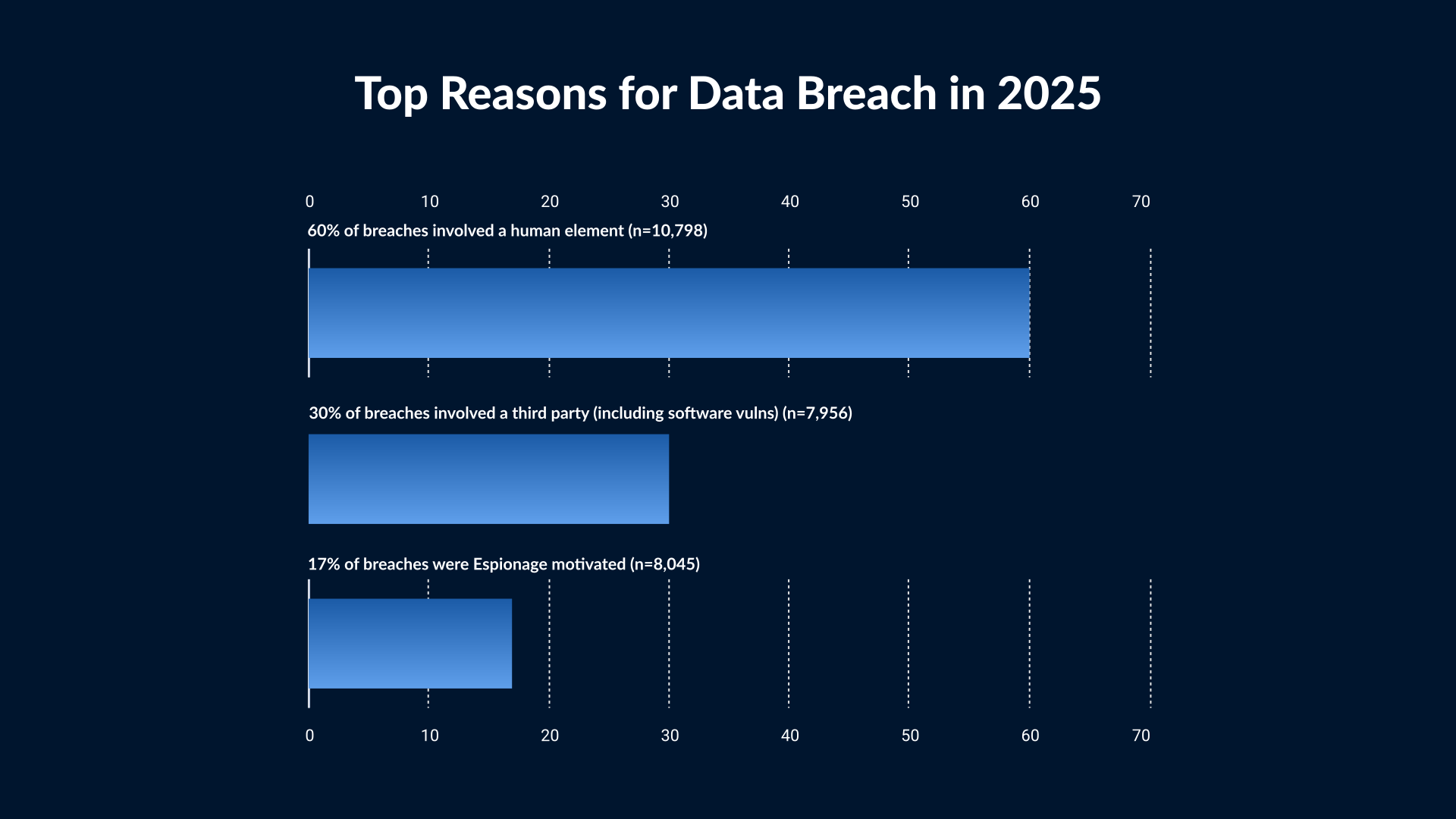
Employees are often the weakest link in security. Organizations must arrange awareness training sessions because Verizon’s data breach investigations report of 2025 shows that around 60% of total data breaches happened due to human error. This number needs to go down, and for that, regular training against phishing and social engineering is crucial.
Types and Models of Cybersecurity as a Service (CSaaS)
Cybersecurity as a Service is not a one-size-fits-all solution. Providers package their services according to the needs of the organization. If we talk about the types, then CSaaS is grouped into 6 different types:
1. Managed Detection and Response (MDR-as-a-Service)
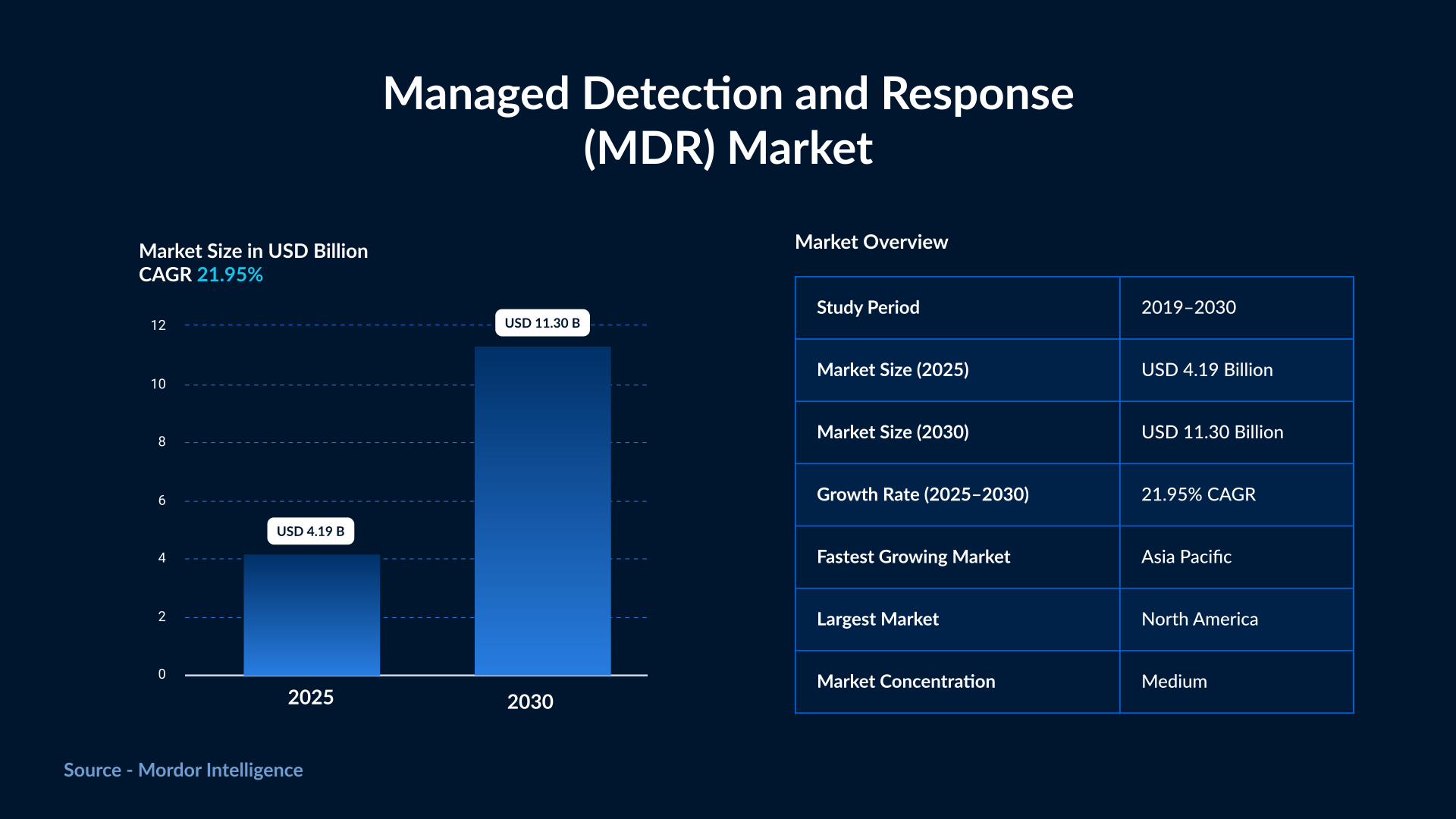
MDR is ideal for businesses that don’t have the time or resources to run their own security operations center. This service offers 24/7 monitoring and quick response to threats. Businesses get all the expertise of a full SOC team without the cost of building one in-house. Mordor Intelligence predicts that the MDR market will compound at the rate of 28.4% annually to reach $11 billion by 2030.
2. SOC-as-a-Service
This model is similar to MDR with the addition of offering a security operations center in the cloud. It will cover log monitoring, incident response, threat intelligence, and reporting. For mid-sized companies, SOC-as-a-Service provides enterprise-level protection without the burden of managing tools and staff.
3. Endpoint & Cloud Security Services
Endpoints refer to the devices being used in an organization that include desktop computers, laptops, printers, routers, and mobile devices. CSaaS protects these entry points through continuous monitoring and threat detection. When it comes to data, companies prefer to keep workloads on the cloud for easy access and sharing. CSaaS offers cloud security with identity and access controls, encryption, and continuous monitoring to prevent data leaks and misconfigurations.
4. Identity & Access Management (IAM)
IAM is a key part of CSaaS that implements Zero Trust by using tools like multi-factor authentication, single sign-on, and biometrics. The whole purpose is to block unauthorized access to the company’s security network.
5. Compliance-as-a-Service
Many businesses are still struggling with cybersecurity compliance due to the overwhelming number of regulations. But being non-compliant can lead to heavy penalties and reputational damage. CSaaS can help meet regulations such as GDPR, HIPAA, or PCI-DSS. It also helps automate reporting, enforce policies, and ensure companies always stay audit-ready.
6. Specialized Security Services
Providers also offer various standalone services like email security, application security, phishing protection, or vulnerability scanning. These are given as add-ons to the existing subscription, allowing companies to cover specific risks if required.
Coming to the delivery models, there are two models of CSaaS:
Full-Stack CSaaS
In this, the provider bundles most security services, such as MDR, Endpoint, Cloud, and Compliance, into one subscription. It’s ideal for SMBs that are looking for an all-in-one solution.
Specialized CSaaS
Here, providers focus on one area, which could be MDR or cloud security. Larger enterprises usually go for this model, as they already have internal teams, but need assistance in a specific area.
Key Benefits of Cybersecurity as a Service
Traditional security is incapable of delivering all-inclusive protection to businesses. This is why businesses are switching to CSaaS. Here are the key benefits of Cybersecurity as a Service:
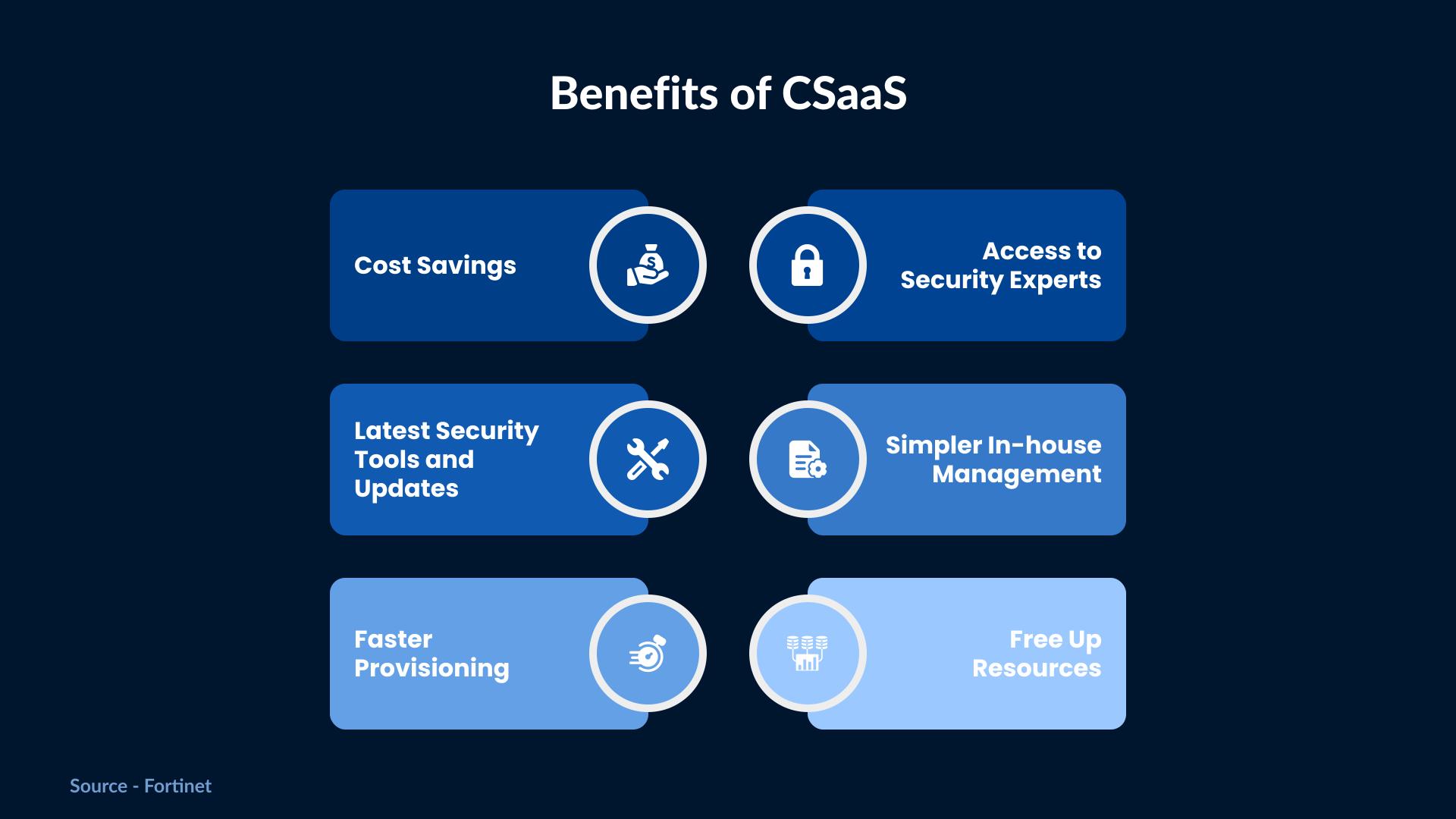
- Businesses grow over time, and so do the cybersecurity needs. CSaaS is very easy to scale, providing a safety umbrella to your organization.
- CSaaS allows 24/7 monitoring and easy management. A team of experts is always available to assist clients.
- CSaaS provider will solely be responsible for security maintenance.
- A subscription-based model doesn’t let budget go out of control. Instead, things remain very cost-effective throughout.
- Businesses don’t have to pay salaries or training costs.
CSaaS is gradually becoming an integral part of many businesses. It’s estimated that if the CSaaS market continues at a compound annual growth rate of 9.38%, then it will reach $346.39 billion by 2029.
Challenges of Hiring a CSaaS Provider & Things to Consider
While there are several benefits of outsourcing security to a Cybersecurity as a Service, there are some challenges as well, which businesses should be aware of:
- Vendor Dependence: Relying too much on one provider can be risky. Make sure to outsource security to a reputable CSaaS provider and check service level agreements (SLAs) before subscribing to the service.
- Data Privacy & Control: Make sure the provider is following strict data protection standards and stores information securely.
- Integration with Existing Tools: If you are already using a few security tools, then make sure CSaaS solutions blend smoothly with those. Poor integration can create gaps in monitoring and duplicate alerts.
- Compliance Across Regions: If your business operates in multiple countries, then ensure that the provider understands and meets all regional compliance requirements.
- Cost Transparency: Usually, CSaaS providers are cost-effective, but hidden fees for add-on services can come as a big surprise. Make sure to review the pricing model in advance to avoid budget-related issues later.
- Customization vs. Standard Packages: Every business has unique risks, so you must check how much customization they are willing to do before committing.
How CSaaS Works in Practice
Cybersecurity as a Service runs mostly in the background, but its impact is clear. Providers track all the activities 24/7 using monitoring tools and a team of experts. Upon detecting suspicious behavior, alerts are raised, and the response team begins their investigation and response. This can include blocking an IP, isolating an endpoint, or applying a patch. Reports are then shared with the businesses to let them know what happened and how it was resolved.
CSaaS vs. MSSPs vs. Traditional Security
| Approach | How It Works | Pros | Cons |
|---|---|---|---|
| Traditional Security (In-House) | The company builds its own security team, tools, and infrastructure. | Full control, tailored setup, data stays in-house. | Very expensive, hard to scale, shortage of skilled staff, slower to adapt. |
| MSSPs (Managed Security Service Providers) | An external provider manages certain security functions, such as firewalls, log monitoring, or threat detection. | Offloads daily tasks, brings external expertise, often cheaper than in-house. | Limited flexibility, may lack 24/7 coverage, less focus on rapid response. |
| CSaaS (Cybersecurity as a Service) | Cloud-based subscription that covers multiple security needs (MDR, SOC, cloud, compliance, etc.). | Scalable, 24/7 monitoring, cost-effective, faster deployment, easy access to experts. | Data stored offsite, depends on provider reliability, some packages may need customization. |
Industry Use Cases
CSaaS is being extensively used in industries where data protection is a priority, not just for security purposes, but also as a compliance and legal requirement.
For example, financial institutions outsource to CSaaS to ensure the efficiency and security of their systems and apps against the latest threats. The financial sector is among the fastest-growing sectors in the world, so it makes complete sense to outsource managed security and protect sensitive data.
Another example would be of healthcare organizations, which are constantly in the radar of cyber criminals. They use CSaaS to enhance access control and encrypt the new data they create.
Choosing the Right CSaaS Provider
Don’t pick a CSaaS provider solely because it worked for another business, as your needs may be very different. Here are some key factors you should check before choosing a CSaaS provider:

- Proven Expertise & Certifications – Check if the provider holds recognized certifications such as ISO 27001, SOC 2, or GDPR compliance. These prove that they follow strict security practices.
- 24/7 Monitoring & Support – Make sure the provider offers round-the-clock monitoring and fast incident response.
- Range of Services – Some businesses need a full stack of services, such as MDR, SOC, endpoint, cloud, and compliance, while others need help in certain areas. So, choose a provider that matches your needs and allows flexibility as you grow.
- Integration with Existing Tools – Some businesses already use firewalls, SIEMs, or cloud platforms. The provider should be able to integrate with the existing tools instead of forcing a company to replace everything.
- Transparency in Pricing – Ask for a clear breakdown of costs. Subscription models should be predictable without hidden charges for things like extra monitoring hours or storage.
- Data Protection & Privacy – As sensitive data is stored in the cloud, the provider must follow strict encryption, access control, and data residency requirements to protect the data.
- Customer References & Case Studies – A trusted provider should be able to show success stories or connect you with existing clients.
Future of Cybersecurity as a Service
With threats continuing to grow and becoming more dangerous, businesses are looking for new methods to defend themselves. CSaaS has already shown that it’s a smarter and more flexible alternative to traditional models, but its future looks even more promising. Here are some trends to find out where CSaaS is heading:
- AI and automation will play a bigger role. Machine learning will be used to detect threats and reduce false alarms. Automated response will handle routine incidents within seconds, allowing human experts to focus on other complex attacks.
- Zero Trust is already becoming the standard for modern businesses. In the future, CSaaS providers will integrate stronger identity and access control, including adaptive authentication and behavior-based monitoring.
- Many CSaaS providers are integrating technologies like Secure Access Service Edge (SASE) to merge networking and security into a single, unified service.
- SMBs are rapidly adopting CSaaS, gaining enterprise-grade protection at a fraction of the cost.
- Global regulations are tightening as well, compelling CSaaS providers to add more built-in compliance tools along with providing options for local data storage to meet regional laws.
- Every sector faces unique threats, and future CSaaS solutions will come with specialized protections designed to cater to each sector efficiently.
Conclusion
Cybersecurity as a Service offers a perfect solution to businesses facing the risk of threats growing in both scale and complexity. It’s impossible to rely on traditional, in-house approaches alone. A smart service like CSaaS is required, as it carries out 24/7 monitoring, scalable protection, and expert support in a cost-effective package.
CSaaS allows organizations to select the tools they need without the burden of building everything on their own. SafeAeon provides CSaaS solutions, allowing businesses to choose from MDR and SOC services to compliance support and cloud security. Advanced options like Zero Trust, AI-driven monitoring, and SASE can also be added to enhance security.