

Key Takeaways
Introduction
It is not always malware or a sophisticated tool that results in cyber threats. Sometimes, this happens through a convincing email or a request that appears trustworthy. There have been occasions where attackers created a moment of urgency to lead someone into clicking, sharing, or approving without realizing the consequences. This is social engineering.
Social engineering threats are becoming more dangerous. Attackers not only use phishing emails now, but they also use impersonation attacks and multi-channel manipulation to access sensitive data and escalate into full-scale breaches. This makes reducing exposure to social engineering a critical part of lowering overall data breach risk.
This blog looks at practical steps organizations can take to reduce their exposure to social engineering attacks.
Understanding How Social Engineering Increases Data Breach Risk
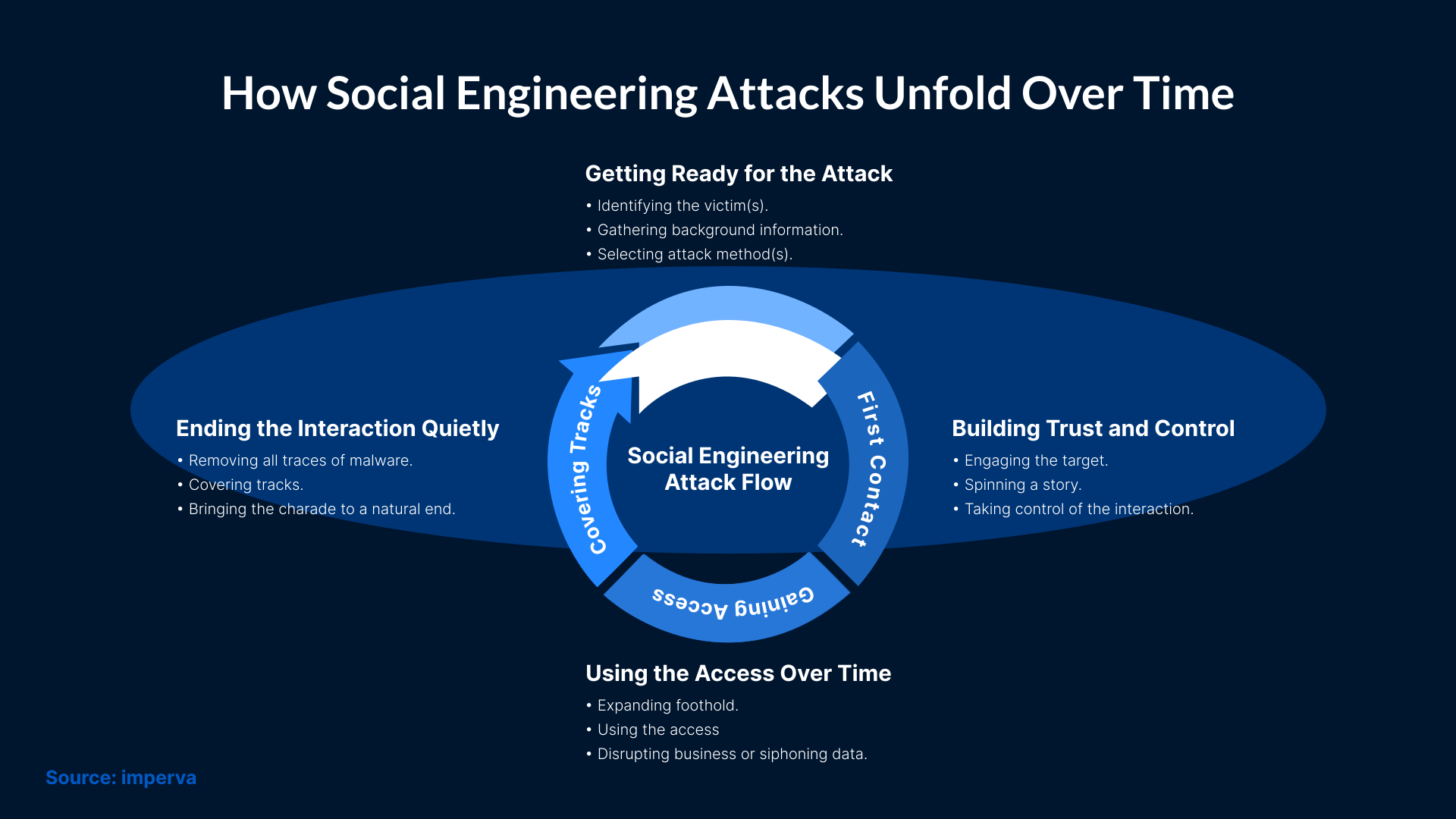
Social engineering is one of the most effective techniques used in modern cyberattacks. In these attacks, attackers use deception and trust to gain initial access. There is no direct attack on systems to break in. This is why social engineering becomes a common entry point for larger security incidents.
Many data breaches start with human-based cyberattacks such as phishing, pretexting, or impersonation attacks. A single compromised user account can provide attackers with access to internal systems, sensitive data, or privileged workflows. After gaining access, attackers can move laterally or escalate privileges.
When social engineering is used along with impersonation, the risk of a data breach becomes even higher. Attackers pose as executives or trusted partners to bypass verification processes and pressure employees into approving requests or sharing credentials. These attacks are difficult to detect because they usually appear legitimate and exploit established trust relationships.
Social engineering depends on timing and human judgment. These attacks can expose even organizations with strong security controls if human risk is not addressed. It’s important to understand how social engineering enables access, accelerates attack progression, and increases the breach impact. Without this information, organizations will only be relying on perimeter defenses while the most exploited attack surfaces are left unprotected.
Creating a Risk-Aware Security Culture
It’s not possible to reduce exposure to social engineering using tools alone. Here, people’s ability to think and respond matters much more. A risk-aware security culture is one where social engineering attacks are considered a shared organizational risk instead of individual mistakes. When people start taking responsibility for security, they will question unusual requests and report suspicious activity early.
Social engineering threats become successful when employees feel pressured to act quickly or fear consequences for slowing down a process. This pressure is removed in the risk-aware culture. Here, it is acceptable to verify requests even from trusted sources. This is especially important given the rise of impersonation attacks targeting finance teams and C-level executives.
Organizations must encourage open and judgment-free reporting. This will allow employees to report suspected human-based cyberattacks without the fear of blame or disciplinary action. Early reporting also helps security teams contain incidents before they escalate. This helps reduce the overall risk of data breaches.
The support of leadership is also crucial in promoting this culture. If they support cautious behavior and verification processes, then security awareness can really become part of daily operations instead of being only a compliance exercise. Employees who were once potential targets can become an active layer of defense against social engineering.
Continuous Security Awareness Training Focused on Real Attacks
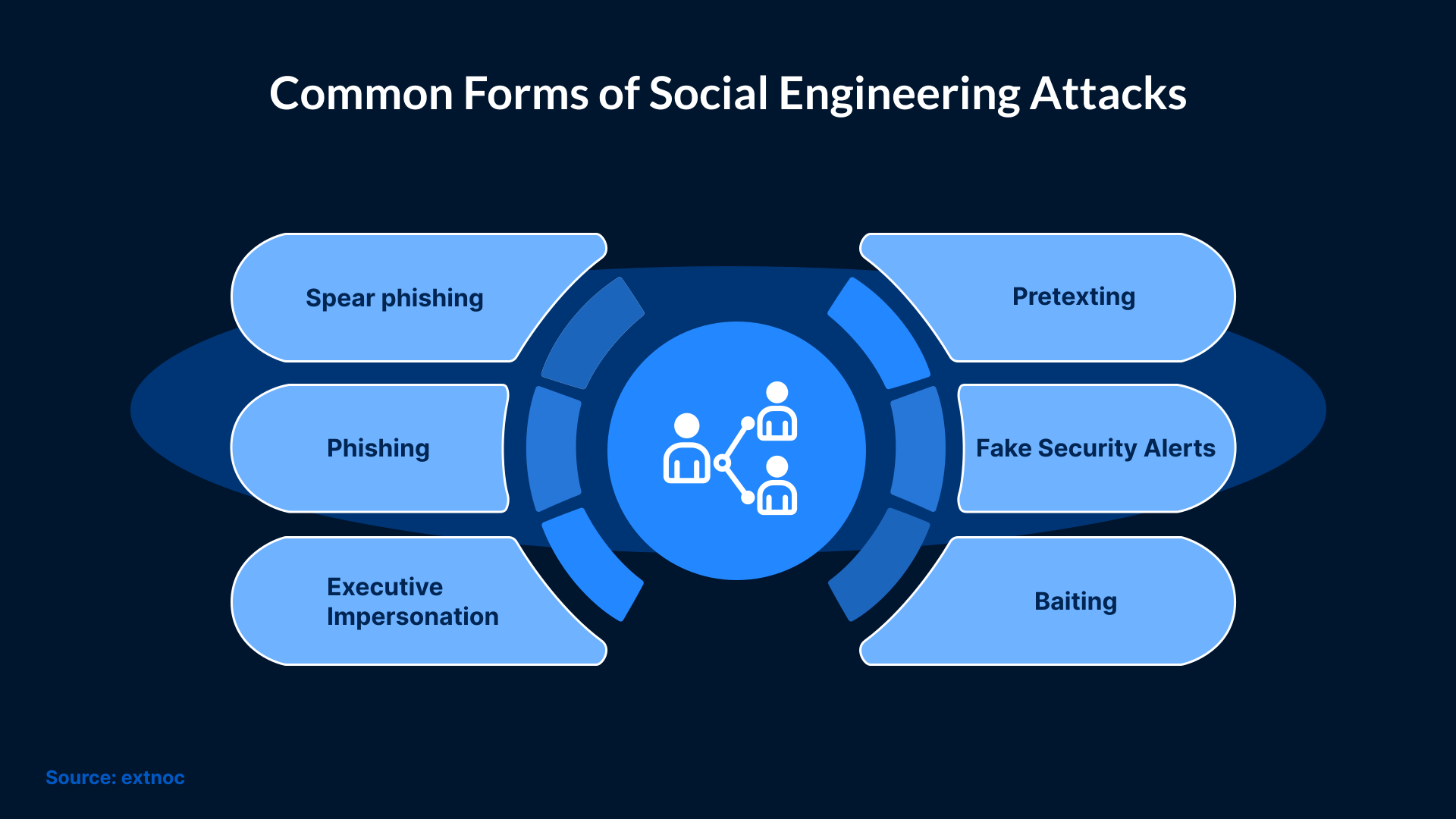
Security awareness training is most effective when it is based on the attacks that employees face in their daily work. Generic modules or one-time sessions won’t be helpful in preparing employees for real social engineering attacks.
Training must include real-world scenarios. Employees are better prepared when training looks like real situations they deal with every day. When examples use the same tone and pressure that attackers rely on, it becomes easier to pause and question what’s happening.
Training should be continuous. As social engineering tactics change frequently, it’s important to have short and recurring training sessions. This will help reinforce awareness in employees without overwhelming them.
Training needs to have some context. Employees must understand why a particular request is risky and when they need to verify someone, even if the message appears legitimate. Training becomes more effective when employees see their daily actions resulting in the identification of real security incidents, including data breaches.
Simulating Social Engineering Attacks to Identify Weaknesses
Training prepares employees for different types of social engineering, but training alone is not enough for employees to respond under real-world pressure.
Simulations can help organizations see how a social engineering attack plays out. They can test how employees react to realistic scenarios after receiving unexpected requests or impersonation attempts.
Simulations reveal patterns that training often misses. Over time, it becomes clear which teams get targeted more and where daily work can go wrong. This helps organizations identify and fix small gaps before a real attack happens.
Simulations should be used regularly because they provide valuable feedback to organizations. This makes it easier to see progress and identify issues before they turn into bigger incidents.

Reducing Impersonation Attacks Through Identity and Access Controls
Impersonation attacks succeed because attackers appear legitimate. They use familiar names or trusted roles to bypass normal scrutiny. Identity and access controls limit how far attacks can spread, even when the initial deception was successful.
People only get access to what they actually need for their work. This limits what an attacker can do, even if someone is fooled. For financial approvals or access changes, organizations can also consider having additional verification.
Multi-factor authentication and session monitoring also play an important role, but these controls should extend beyond login. When teams start monitoring identity usage and privileges, it becomes easier to contain impersonation attempts before they escalate into bigger security incidents.
Using Technical Controls to Detect and Block Social Engineering
Where human judgment fails, technology helps limit social engineering. Technical controls can successfully catch unusual activity before it causes serious damage.
Basic controls, such as email filtering, help block suspicious messages before they reach employees. Unexpected login activity can be an early sign that an account is no longer secure. These signs often appear when a social engineering attempt has already been successful.
Technical controls work best when they focus on behavior. For example, a login to a system that someone never uses, or activity happening at unusual hours, can raise red flags. Security teams need to flag these signals early to prevent the spread of an attack.
These controls cannot replace awareness or training. Consider them a safety net, which will help organizations detect and contain social engineering attempts that human defenses fail to contain.
How Too Much Information Helps Attackers
Social engineering succeeds because attackers already know something about the organization or the people they are targeting. They gather as much information about their targets from public websites, social media profiles, and even internal documents. Small details about the victims can help attackers sound legitimate.
If organizations can limit the public sharing of information and access to internal details, they can reduce the chances of a social engineering attack. Within the organization, access to documents and systems should be based on need, not convenience. As sensitive information is shared with only the right people, it won’t be easy for attackers to build convincing stories. Reducing available details will not stop social engineering entirely, but it makes attacks less effective and easier to spot.
Establishing Clear Verification and Approval Processes
Believable requests make social engineering a lot more successful. When an employee receives an email from a trusted person asking for payment approval or access to a certain system, it’s hard to decline the request. But with clear verification and approval processes, employees can verify the sender of the request.
Organizations need to define when verification is required and make those steps easy to follow. For example, sensitive actions such as financial transfers or access changes should always require a second review. This also removes pressure from employees to act quickly.
Clear processes help streamline approvals over time. Employees will be able to handle approvals properly. Verification should not be considered a sign of mistrust, but as a standard step to secure the accounts and data.
What to Do After a Social Engineering Incident
Social engineering incidents can occur even if an organization has implemented strong controls. Preparing for these situations helps organizations minimize damage and recover more quickly when something goes wrong.
Employees should know the next steps to take after they have made a mistake or received a suspicious request. Clear reporting paths will help raise concerns quickly. Security teams can act before the issue spreads. Early reporting will contain a minor incident to prevent it from escalating into a larger breach.
Recovery planning also plays a key role. Organizations need to check for any unusual activity and review access after an incident. They need to reset accounts to prevent further damage. Teams should not treat social engineering as a user error, but as an incident type. This will help them respond more calmly and reduce the long-term impact.
Conclusion
Social engineering is highly effective because it aligns naturally with how people work and communicate. There is no single control that can prevent these attacks on its own. Organizations can implement clear processes and raise awareness to reduce exposure to social engineering attacks.
When organizations address human behavior and limit unnecessary information, they can reduce the likelihood of social engineering attacks. Organizations can also provide employees with clear verification steps and technical controls. When teams know how to respond when something goes wrong, it can help contain the damage and recover faster. SafeAeon helps organizations enhance security controls and set up employee awareness programs to reduce exposure to social engineering attacks.