

Key Takeaways
Introduction
Online security threats have increased in recent years. One of the main sources of these threats is the dark web, a notorious hub for illegal activities. Cybercriminals use the dark web to trade personal data, such as credit card details and login credentials. The motive is to harm victims financially and reputationally. But businesses can prevent this by using dark web monitoring services to identify exposed data and leaked credentials early.
Understanding the Dark Web
The dark web is a specific section of the internet that standard search engines do not index. Moreover, accessing the dark web requires specialized search engines due to its anonymous nature. Cybercriminals use dark web forums and marketplaces to buy, sell, and share stolen data, including credit card numbers, login credentials, and personally identifiable information (PII). Using the stolen data, they carry out a wide range of attacks, including identity theft, financial fraud, and business espionage.
Why is Dark Web Monitoring Important?
Dark web monitoring actively scans hidden forums and marketplaces for stolen credentials and other sensitive data. The reason it is important is that it provides early warnings of data breaches, which allows individuals or businesses to take necessary actions on time. Without dark web monitoring, there will be no alerts, and cybercriminals could easily carry out malicious activities such as identity theft and account takeover.
Key Benefits of Dark Web Monitoring
There are several ways dark web monitoring can be useful for individuals and businesses:
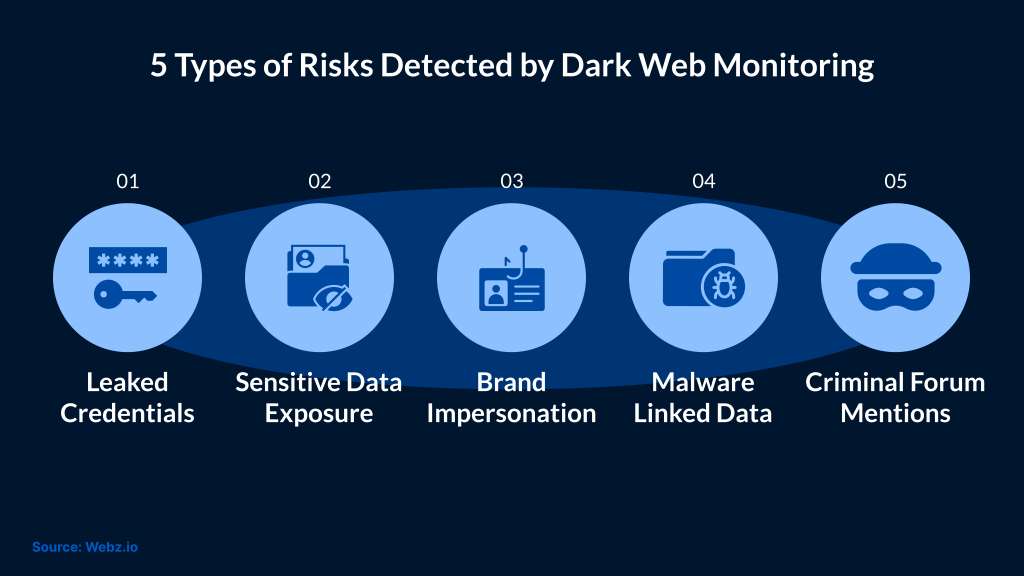
Early Threat Detection: Businesses can identify exposed credentials, leaked data, or other malicious activity early. This helps reduce the impact of attacks, as well as financial losses and reputational damage.
Data Exposure Detection: When data leaks or compromised credentials are identified early, businesses respond faster to these situations to reduce further misuse.
Brand Protection: Dark web monitoring can help businesses identify fake products, brand impersonation, leaked documents, or brand mentions on criminal forums.
Compliance Support: Dark web monitoring helps find exposed data before the situation worsens. This functionality supports compliance work, especially when a company needs to review or report a security incident. It is not always a legal requirement, but still useful as proof that the business is monitoring external risks.
Threat Intelligence: Companies can monitor all the relevant dark web forums and criminal marketplaces to learn about emerging threats, exposed credentials, attack trends, and possible risks.
What Does It Mean If Your Data Is on the Dark Web?
Finding your personal information on the dark web can be catastrophic. So, it’s important to take immediate action, such as changing the passwords of affected accounts and systems, enabling MFA, and monitoring financial records. If your personal information was part of a large-scale data breach, then it will most likely be available for sale. But there is no need to panic. Just take the necessary security measures to mitigate the damage.
For businesses, the impact can be more severe. They are responsible for keeping customer data safe, and if that data is exposed, the consequences can be serious. These may include lawsuits, reputational damage, regulatory fines, and more detailed audits. The risk of further attacks also increases because stolen passwords can be used in credential stuffing and other cyberattacks.
If you receive an alert that your personal data has been exposed on the dark web, you should begin an immediate investigation. Cybercriminals are quick to use the login credentials and personal information for identity theft or unauthorized account access. So, taking an action early will reduce the risk of further misuse of your personal data.

Limitations of Dark Web Monitoring
Dark web monitoring is useful, but it cannot prevent every cyberattack or data breach. The main role of dark web monitoring is to help organizations identify leaked data, login credentials, and brand misuse. There is a possibility that cybercriminals have already used the stolen data or are in the process of using it to inflict further damage.
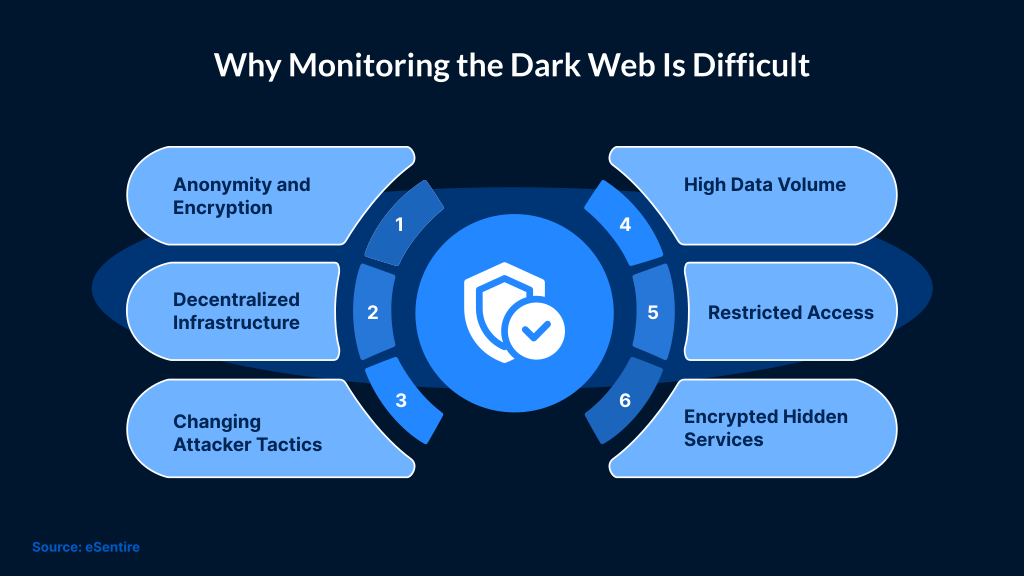
To increase the effectiveness of dark web monitoring, it should be used alongside other security controls such as endpoint protection, identity security, MFA, SIEM monitoring, vulnerability management, and incident response.
Who Needs Dark Web Monitoring Services?
Dark web monitoring identifies external risks that may not appear in standard endpoint, firewall, or SIEM alerts. So, companies looking for broader security visibility should consider dark web monitoring. It serves as an additional layer of intelligence, highlighting risks that might otherwise go unnoticed.
Organizations that handle sensitive data, customer information, employee credentials, intellectual property, or regulated records should consider dark web monitoring.
If your business handles private customer information, owns valuable intellectual property, or faces risk from hacktivists, nation-state actors, or criminal groups, you should consider using dark web monitoring tools.
How Does Private Data Get on the Dark Web?
Hacks, malware, phishing, credential theft, and data breaches are some of the ways private information ends up on the dark web. Attackers obtain private data by exploiting system vulnerabilities, stealing credentials, or tricking users into sharing sensitive information. Then, this stolen information is bought, sold, or shared on dark web marketplaces, criminal forums, paste sites, and private channels.
Attackers also increasingly use stolen credentials and legitimate system tools to avoid detection. Using built-in administrative tools during an intrusion is commonly known as living off the land. This approach can help attackers blend into normal activity and avoid detection by traditional security tools. According to CrowdStrike’s 2026 Global Threat Report, 82% of detections in 2025 were malware-free, as attackers used valid credentials, trusted identity flows, and approved SaaS integrations to move across environments.
Cybercriminals get personal information in several ways, such as:
- Phishing: Attackers send fraudulent emails, messages, or links that trick users into sharing credentials or sensitive information.
- Malware, Loaders, and Botnets: Attackers use malicious software to collect credentials, browser data, session tokens, and other sensitive information.
- Unsecured Public Wi-Fi: Attackers may try to steal session information or intercept data as soon as users connect to untrusted or poorly secured public networks.
- Vulnerabilities and Exploits: Attackers look for weaknesses in systems or software that can be exploited to run malicious code or gain access to steal data.
- Keylogging: Keyloggers record keystrokes, allowing attackers to steal passwords and other sensitive data.
- Screen Scraping or Screen Capture: Some malware can capture information displayed on the screen, including sensitive data entered into forms or applications.
Cybercriminals may group stolen personal information into “fullz,” which are complete identity packages that can include a person’s name, date of birth, Social Security number, address, and other details. Depending on the victim profile, data type, freshness, and demand, these packages may be sold at different prices. In many cases, stolen business data is packaged and sold in bulk on dark web forums or marketplaces.
How to Stay Safer with Dark Web Monitoring
To reduce risks associated with exposure to the dark web, businesses should use tools and security practices to protect sensitive information and reduce the risk of identity theft. Here are some ways to monitor dark web risks and improve security.
Build a Culture of Cybersecurity: End users play an important role in reducing breach risk. To reduce phishing and other forms of social engineering, it’s important to raise awareness among users about these risks. Companies can identify and reduce security gaps using regular phishing simulations, security awareness training, tabletop exercises, and incident response drills.
Protect All Workloads: Security is only as strong as the least protected asset, account, or system. Critical assets should be protected, including endpoints, cloud workloads, identities, applications, and data. To reduce the risk of data exposure, use security solutions that support continuous monitoring, automated protection, threat hunting, and vulnerability management.
Maintain Good IT Hygiene: Maintain an accurate asset inventory and continuously perform risk management. You cannot protect what you do not know about, so make sure systems, accounts, applications, and assets are identified and secured.
Identity Management: Use identity and access management tools to manage user access, enforce MFA, review privileges, and remove access when it is no longer needed. These tools can help revoke risky access, enforce risk-based conditional access, and separate privileged accounts from standard user accounts.
Dark Web Monitoring: Several tools can help companies detect stolen data, exposed credentials, impersonation attempts, and leaked information on criminal forums or marketplaces. With early detection, companies can significantly reduce further damage.
Conclusion
Dark web monitoring services can help companies protect sensitive data and take a more proactive approach to security. Traditional security measures may not always show when stolen information, exposed credentials, or company data appear on dark web forums and marketplaces.
SafeAeon can help businesses with continuous dark web monitoring to identify exposed data, assess risks, and respond before damage spreads further. As businesses continue to rely on digital systems, dark web monitoring can serve as an important layer of visibility within a broader cybersecurity strategy.